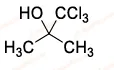
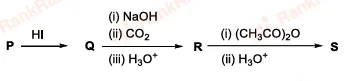
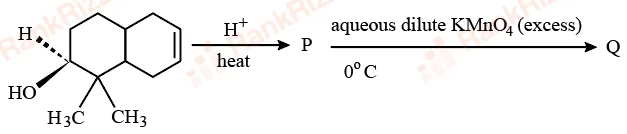
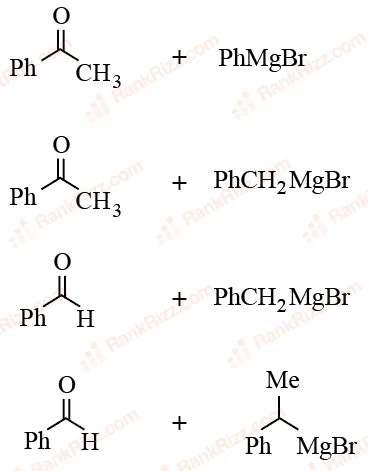
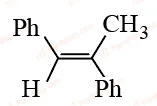
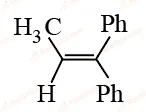
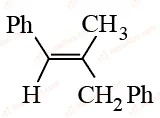
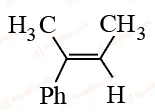
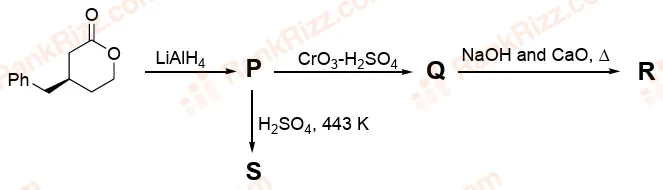
For the reaction sequence given below, the correct statement(s) is(are)

- A
P is optically active.
- B
S gives Bayer's test.
- C
Q gives effervescence with aq. NaHCO.
- D
R is an alkyne.
Every Alcohols, Phenols and Ethers question JEE Advanced has set from 2007–2025, grouped by the idea it tests rather than the order of the syllabus. 21 questions across 3 distinct ideas. Free to read, answer key on every one.
Questions
21
Distinct ideas
3
Share of marks
1.4%
Difficulty
MEDIUM
A chapter is not one subject — it is a handful of procedures the examiner reuses. These are the ones Alcohols, Phenols and Ethers questions actually test.
The share of each year’s Chemistry questions that came from Alcohols, Phenols and Ethers, counted from the 19 papers we hold for the last 10 years, and paper by paper inside a year.
Rising: 2.0% of Chemistry questions in 2024–2026, up from 1.3% in 2017–2023. Its heaviest year was 2018, at 5.6%. Not asked at all in 2017, 2019, 2021, 2022, 2026.
“QS” is Alcohols, Phenols and Ethers questions out of all Chemistry questions that year. A year with more sittings asks more questions, which is why the share, not the count, is the number to compare.
21 questions from 2007–2025. Over the last 20 papers, Alcohols, Phenols and Ethers carried about 1.4% of Chemistry marks.
Reactions of phenols (13 questions), Properties and reactions of alcohols (6 questions), Ethers (2 questions). Start with these, they are what the examiner keeps coming back to.
Rising: 2.0% of Chemistry questions in 2024–2026, up from 1.3% in 2017–2023. Its heaviest year was 2018, at 5.6%. Not asked at all in 2017, 2019, 2021, 2022, 2026. It has carried about 1.4% of Chemistry marks in recent papers, rated medium on our difficulty scale. The year-by-year table above shows how that has moved.
Yes. Every question shows its official answer key, and a worked solution opens on the question’s own page wherever we have one. Reading and checking answers is free, no sign-up needed.
Do one past question per idea first: Alcohols, Phenols and Ethers has 3 distinct ideas, listed above. Then practise the topics you get wrong, or build a timed test from this chapter.
1–20 OF 21 · NEWEST FIRST
For the reaction sequence given below, the correct statement(s) is(are)

P is optically active.
S gives Bayer's test.
Q gives effervescence with aq. NaHCO.
R is an alkyne.
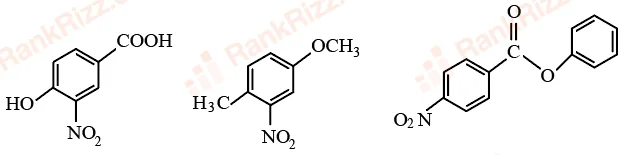
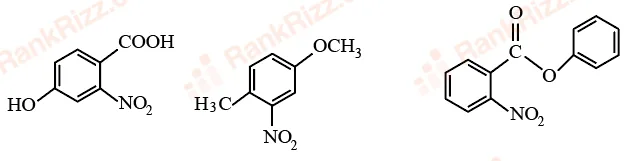
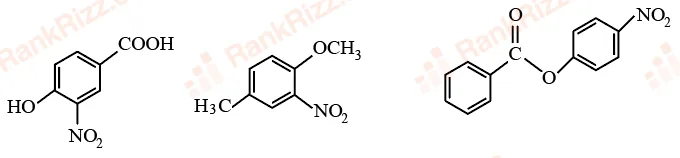
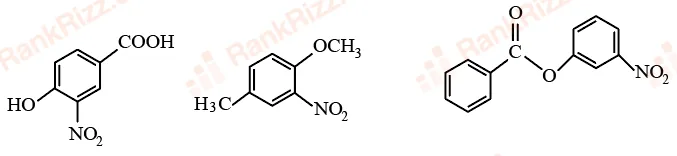
Reaction of iso-propylbenzene with followed by the treatment with forms phenol and a by-product P. Reaction of P with 3 equivalents of gives compound Q. Treatment of Q with produces compound R and calcium salt S.
The correct statement(s) regarding P, Q, R and S is(are)
Reaction of P with R in the presence of KOH followed by acidification gives

Reaction of R with in the presence of light gives phosgene gas
Q reacts with aqueous NaOH to produce and
S on heating gives P
In the given reaction scheme, P is a phenyl alkyl ether, Q is an aromatic compound; R and S are the major products.
The correct statement about S is
It primarily inhibits noradrenaline degrading enzymes.
It inhibits the synthesis of prostaglandin.
It is a narcotic drug.
It is ortho-acetylbenzoic acid.
An organic compound rotates plane-polarized light. It produces pink color with neutral solution. What is the total number of all the possible isomers for this compound?
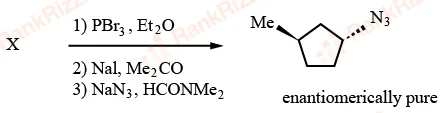
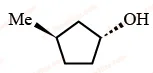
In the following reaction sequence, the correct structure(s) of X is (are)


The number of hydroxyl group(s) in Q is

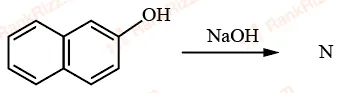
The number of resonance structures for N is

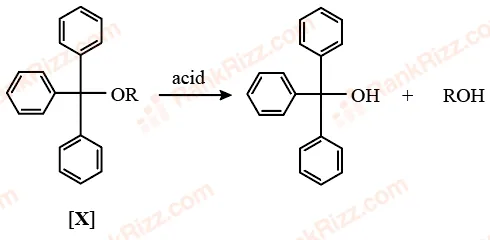
The acidic hydrolysis of ether (X) shown below is fastest when

one phenyl group is replaced by a methyl group.
one phenyl group is replaced by a para-methoxyphenyl group.
two phenyl groups are replaced by two para-methoxyphenyl groups.
no structural change is made to X.
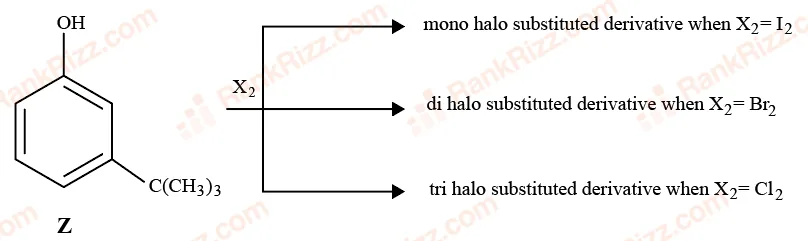
he reactivity of compound Z with different halogens under appropriate conditions is given below:

The observed pattern of electrophilic substitution can be explained by
the steric effect of the halogen
the steric effect of the tert-butyl group
the electronic effect of the phenolic group
the electronic effect of the tert-butyl group
For the identification of -naphthol using dye test, it is necessary to use
dichloromethane solution of -naphthol
acidic solution of -naphthol
neutral solution of -naphthol
alkaline solution of -naphthol
The compound that does NOT liberate , on treatment with aqueous sodium bicarbonate solution, is
Benzoic acid
Benzenesulphonic acid
Salicylic acid
Carbolic acid (Phenol)
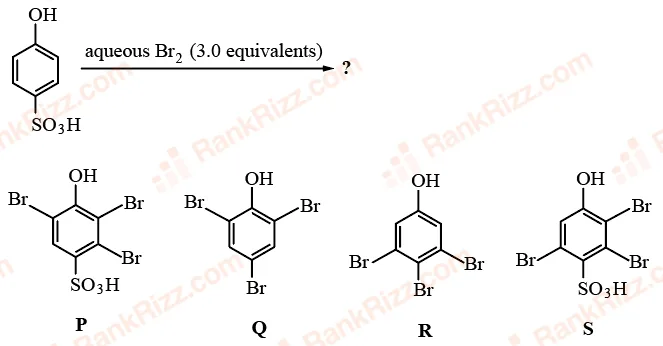
In the following reaction, the product(s) formed is(are)

P (major)
Q (minor)
R (minor)
S (major)
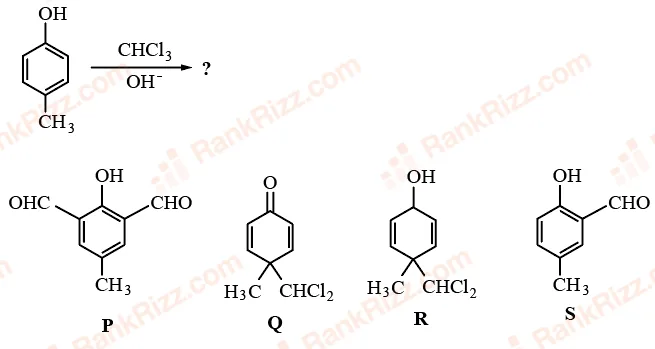
The major product(s) of the following reaction is(are)

P
Q
R
S
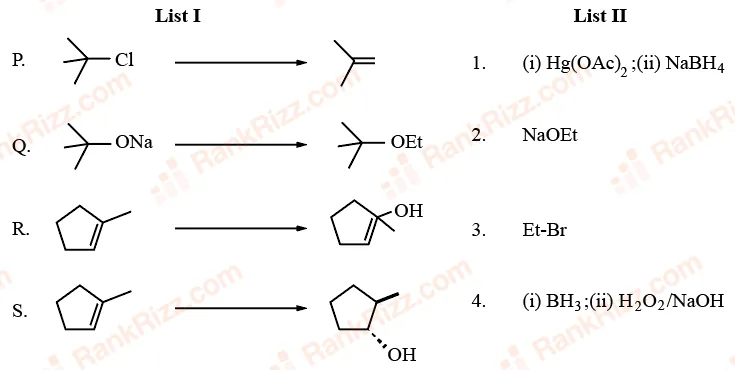
Match the chemical conversions in List I with the appropriate reagents in List II and select the correct answer using the code given below the lists:

P-2, Q-3, R-1, S-4
P-3, Q-2, R-1, S-4
P-2, Q-3, R-4, S-1
P-3, Q-2, R-4, S-1
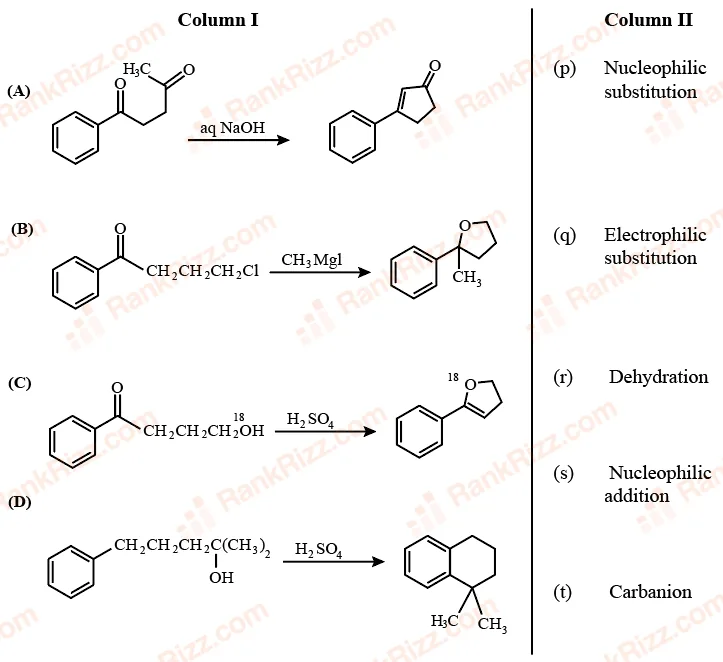
Match the reactions in column I with appropriate types of steps/reactive intermediate involved in these reactions as given in column II

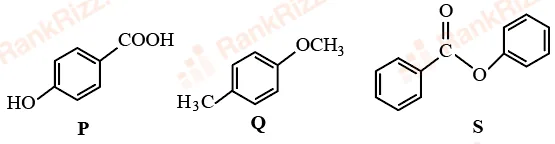
The compounds P, Q and S
were separately subjected to nitration using mixture. The major product formed in each case respectively, is


Compound H is formed by the reaction of

Figure 1
Figure 2
Figure 3
Figure 4
The structure of compound I is


Which one of the following reagents is used in the above reaction?
The electrophile in this reaction is
JEE Main has set 182 Alcohols, Phenols and Ethers questions too. Alcohols, Phenols and Ethers JEE Main PYQs →
OTHER CHEMISTRY CHAPTERS