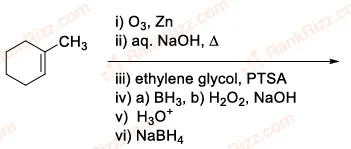
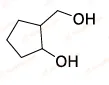
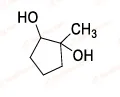
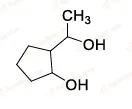
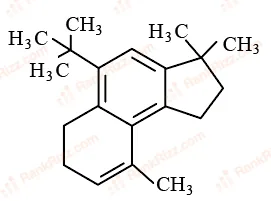
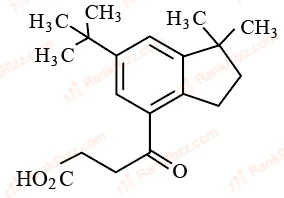
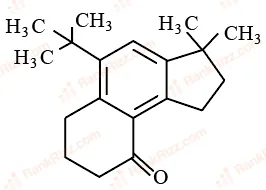
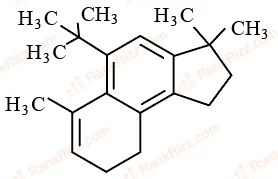
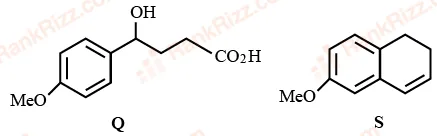
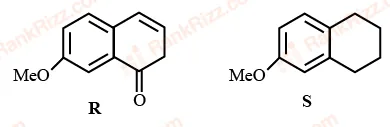
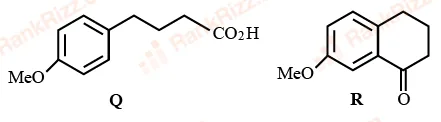
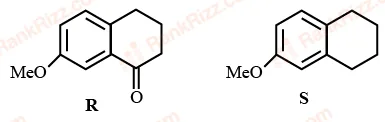
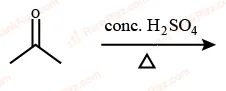
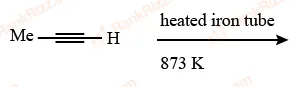
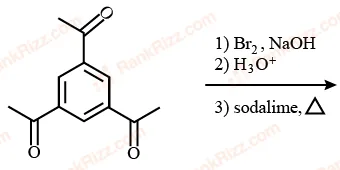
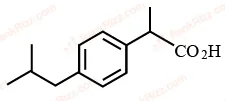
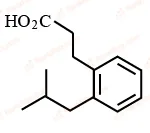
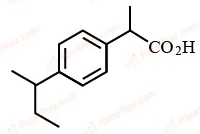
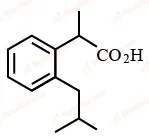
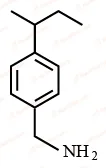
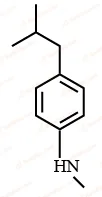
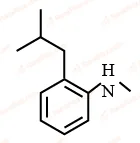
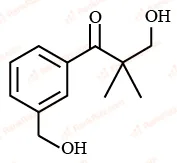
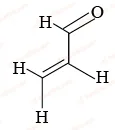
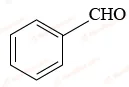
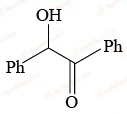
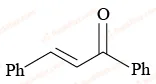
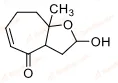
Natural rubber on complete ozonolysis (/Zn-) gives compound X as the major product. X gives positive iodoform and Tollen's tests. X on heating with aqueous NaOH gives Y as the major product. Y is
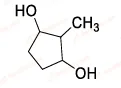
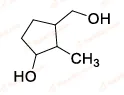
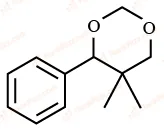
- A

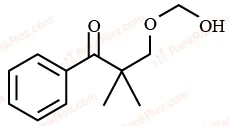
- B

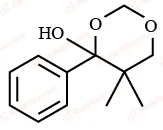
- C
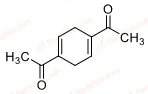
- D
Every Aldehydes and Ketones question JEE Advanced has set from 2007–2026, grouped by the idea it tests rather than the order of the syllabus. 47 questions across 4 distinct ideas. Free to read, answer key on every one.
Questions
47
Distinct ideas
4
Share of marks
5.4%
Difficulty
HARD
A chapter is not one subject — it is a handful of procedures the examiner reuses. These are the ones Aldehydes and Ketones questions actually test.
The share of each year’s Chemistry questions that came from Aldehydes and Ketones, counted from the 19 papers we hold for the last 10 years, and paper by paper inside a year.
Rising: 9.0% of Chemistry questions in 2024–2026, up from 3.8% in 2017–2023. Its heaviest year was 2018, at 16.7%. Not asked at all in 2022.
“QS” is Aldehydes and Ketones questions out of all Chemistry questions that year. A year with more sittings asks more questions, which is why the share, not the count, is the number to compare.
47 questions from 2007–2026. Over the last 20 papers, Aldehydes and Ketones carried about 5.4% of Chemistry marks.
Aldol condensation, Cannizzaro and related reactions (31 questions), Nucleophilic addition reactions of carbonyl compounds (9 questions), Preparation of aldehydes and ketones (4 questions). Start with these, they are what the examiner keeps coming back to.
Rising: 9.0% of Chemistry questions in 2024–2026, up from 3.8% in 2017–2023. Its heaviest year was 2018, at 16.7%. Not asked at all in 2022. It has carried about 5.4% of Chemistry marks in recent papers, rated hard on our difficulty scale. The year-by-year table above shows how that has moved.
Yes. Every question shows its official answer key, and a worked solution opens on the question’s own page wherever we have one. Reading and checking answers is free, no sign-up needed.
Do one past question per idea first: Aldehydes and Ketones has 4 distinct ideas, listed above. Then practise the topics you get wrong, or build a timed test from this chapter.
1–20 OF 47 · NEWEST FIRST
Natural rubber on complete ozonolysis (/Zn-) gives compound X as the major product. X gives positive iodoform and Tollen's tests. X on heating with aqueous NaOH gives Y as the major product. Y is


In the following reaction sequence, , , and are the major products.
The correct statement(s) about , , and is(are)
on warming with ammoniacal results in the formation of silver mirror.
on treatment with (excess)/UV gives gammaxane.
is a heterocyclic compound.
on acid catalyzed intramolecular cyclization followed by treatment with gives -dihydroxyanthracene.
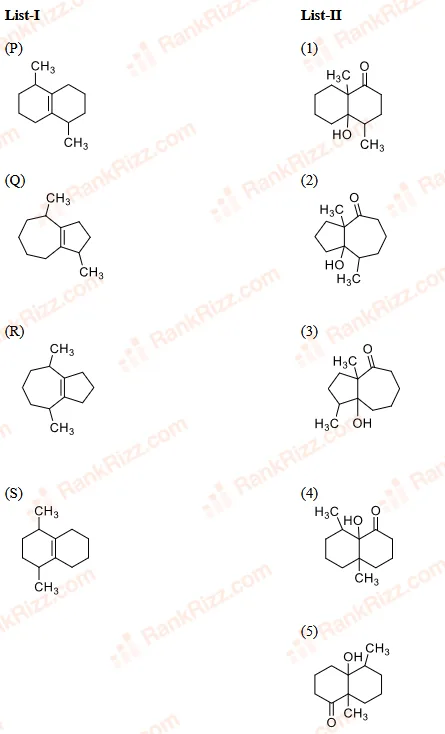
The List-II contains products obtained from the reaction of compounds in List-I with /- followed by cyclization (via more stable enolate) in the presence of aqueous . Match each entry in List-I with appropriate entry in List-II and choose the correct option.

(P)(2), (Q)(4), (R)(1), (S)(3)
(P)(3), (Q)(4), (R)(5), (S)(2)
(P)(2), (Q)(1), (R)(5), (S)(3)
(P)(3), (Q)(5), (R)(4), (S)(2)
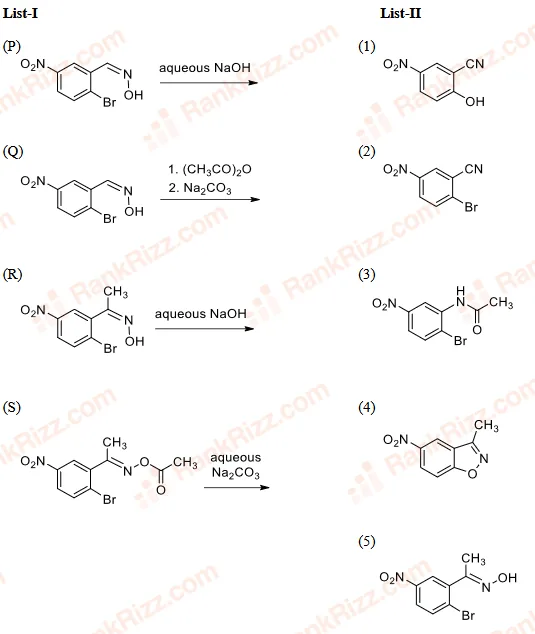
Match the major products obtained in the reactions given in List-I with the corresponding structures in List-II and choose the correct option.

(P)(2), (Q)(1), (R)(5), (S)(4)
(P)(1), (Q)(2), (R)(4), (S)(5)
(P)(1), (Q)(2), (R)(3), (S)(4)
(P)(2), (Q)(1), (R)(3), (S)(5)
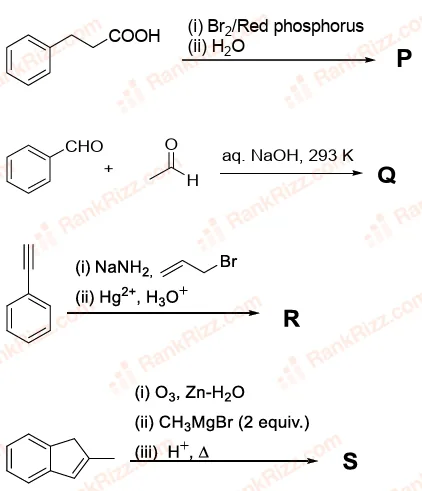
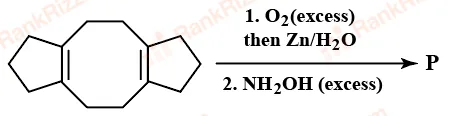
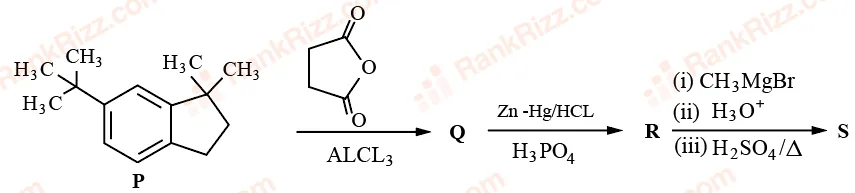
Monocyclic compounds P, Q, R and S are the major products formed in the reaction sequences given below.

The product having the highest number of unsaturated carbon atom(s) is
P
Q
R
S
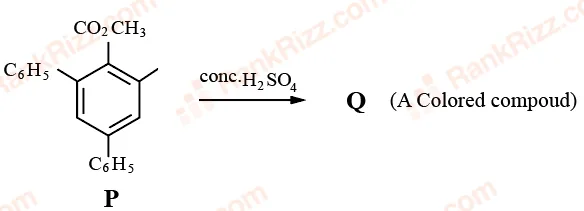
Complete reaction of acetaldehyde with excess formaldehyde, upon heating with conc. NaOH solution, gives P and Q. Compound P does not give Tollens' test, whereas Q on acidification gives positive Tollens' test. Treatment of P with excess cyclohexanone in the presence of catalytic amount of p-toluenesulfonic acid (PTSA) gives product R.
Sum of the number of methylene groups () and oxygen atoms in R is ______.
An organic compound P having molecular formula gives ferric chloride test and does not have intramolecular hydrogen bond. The compound P reacts with 3 equivalents of to produce oxime Q. Treatment of P with excess methyl iodide in the presence of KOH produces compound R as the major product. Reaction of R with excess iso-butylmagnesium bromide followed by treatment with gives compound S as the major product.
The total number of methyl () group(s) in compound S is ______.
Sum of number of oxygen atoms in S and T is ______.
List-I contains various reaction sequences and List-II contains the possible products. Match each entry in List-I with the appropriate entry in List-II and choose the correct option.
| List-I | List-II | ||
|---|---|---|---|
| (P) | ![]() | (1) | ![]() |
| (Q) | ![]() | (2) | ![]() |
| (R) | ![]() | (3) | ![]() |
| (S) | ![]() | (4) | ![]() |
| (5) | ![]() | ||
P-3, Q-5, R-4, S-1
P-3, Q-2, R-4, S-1
P-3, Q-5, R-1, S-4
P-5, Q-2, R-4, S-1
The major products obtained from the reactions in List-II are the reactants for the named reactions mentioned in List-I. Match List-I with List-II and choose the correct option.
| List-I | List-II | ||
|---|---|---|---|
| (P) | Etard reaction | (1) | Acetophenone |
| (Q) | Gattermann reaction | (2) | Toluene |
| (R) | Gattermann-Koch reaction | (3) | ![]() |
| (S) | Rosenmund reduction | (4) | ![]() |
| (5) | Phenol | ||
P 2; Q 4; R 1; S 3
P 1; Q 3; R 5; S 2
P 3; Q 2; R 1; S 4
P 3; Q 4; R 5; S 2
In the reaction given below, the total number of atoms having hybridization in the major product P is ___.

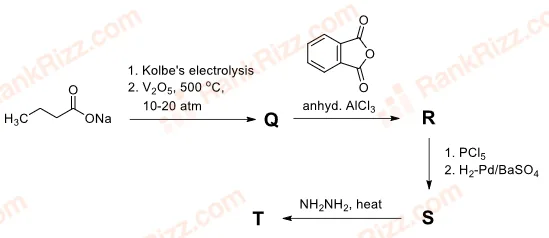
In the reaction scheme shown below, Q, R, and S are the major products.
The correct structure of


In the following reaction, compound Q is obtained from compound P via an ionic intermediate.
What is the degree of unsaturation of Q?
Choose the correct option(s) for the following reaction sequence
Consider Q, R and S as major products


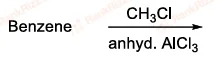
The reaction(s) leading to the formation of 1, 3, 5-trimethylbenzene is (are)


The compound R is


The compound S


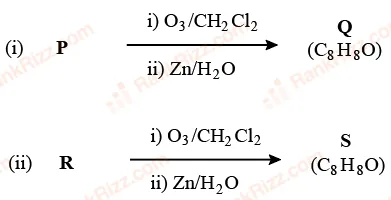
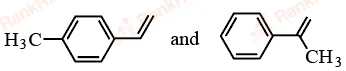
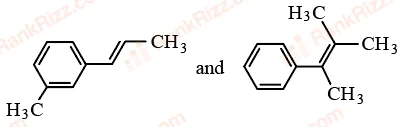
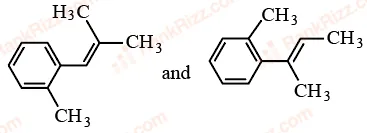
Compounds P and R upon ozonolysis produce Q and S, respectively. The molecular formula of Q and S is . Q undergoes Cannizzaro reaction but not haloform reaction, whereas S undergoes haloform reaction but not Cannizzaro reaction.
The option(s) with suitable combination of P and R, respectively, is(are)


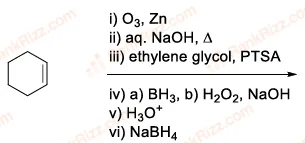
The major product of the following reaction sequence is


Positive Tollen’s test is observed for


JEE Main has set 214 Aldehydes and Ketones questions too. Aldehydes and Ketones JEE Main PYQs →
OTHER CHEMISTRY CHAPTERS