RankRizz

States of Matter: Gases and Liquids — JEE Advanced Previous Year Questions

Every States of Matter: Gases and Liquids question JEE Advanced has set from 2007–2026, grouped by the idea it tests rather than the order of the syllabus. 19 questions across 4 distinct ideas. Free to read, answer key on every one.

Questions

19

Distinct ideas

4

Share of marks

2.3%

Difficulty

EASY

The ideas inside States of Matter: Gases and Liquids

A chapter is not one subject — it is a handful of procedures the examiner reuses. These are the ones States of Matter: Gases and Liquids questions actually test.

01Gas laws and ideal gas equationset 5×
02Dalton's law of partial pressuresNot set in Advanced
03Graham's law of diffusion and effusionset 2×
04Kinetic theory of gases and molecular speedsset 5×
05Real gases, compressibility factor and van der Waals equationset 7×
06Critical constants, liquefaction and properties of liquidsNot set in Advanced

States of Matter: Gases and Liquids weightage, year by year

The share of each year’s Chemistry questions that came from States of Matter: Gases and Liquids, counted from the 19 papers we hold for the last 10 years, and paper by paper inside a year.

Rising: 3.0% of Chemistry questions in 2024–2026, up from 2.1% in 2017–2023. Its heaviest year was 2018, at 5.6%. Not asked at all in 2017, 2021, 2022.

20261 / 342.9%PAPER 1 6.3%PAPER 2 0.0%
20251 / 323.1%PAPER 1 6.3%PAPER 2 0.0%
20241 / 342.9%PAPER 1 5.9%PAPER 2 0.0%
20231 / 342.9%PAPER 1 5.9%PAPER 2 0.0%
20220 / 360.0%PAPER 1 0.0%PAPER 2 0.0%
20210 / 380.0%PAPER 1 0.0%PAPER 2 0.0%
20202 / 365.6%PAPER 1 11.1%PAPER 2 0.0%
20191 / 362.8%PAPER 1 5.6%PAPER 2 0.0%
20181 / 185.6%1 PAPER
20170 / 360.0%PAPER 1 0.0%PAPER 2 0.0%

“QS” is States of Matter: Gases and Liquids questions out of all Chemistry questions that year. A year with more sittings asks more questions, which is why the share, not the count, is the number to compare.

States of Matter: Gases and Liquids: quick answers

How many States of Matter: Gases and Liquids questions has JEE Advanced asked?

19 questions from 2007–2026. Over the last 20 papers, States of Matter: Gases and Liquids carried about 2.3% of Chemistry marks.

Which States of Matter: Gases and Liquids topics come up most?

Real gases, compressibility factor and van der Waals equation (7 questions), Gas laws and ideal gas equation (5 questions), Kinetic theory of gases and molecular speeds (5 questions). Start with these, they are what the examiner keeps coming back to.

Is States of Matter: Gases and Liquids important for JEE Advanced?

Rising: 3.0% of Chemistry questions in 2024–2026, up from 2.1% in 2017–2023. Its heaviest year was 2018, at 5.6%. Not asked at all in 2017, 2021, 2022. It has carried about 2.3% of Chemistry marks in recent papers, rated easy on our difficulty scale. The year-by-year table above shows how that has moved.

Do these States of Matter: Gases and Liquids PYQs have answers and solutions?

Yes. Every question shows its official answer key, and a worked solution opens on the question’s own page wherever we have one. Reading and checking answers is free, no sign-up needed.

What’s the fastest way to revise States of Matter: Gases and Liquids?

Do one past question per idea first: States of Matter: Gases and Liquids has 4 distinct ideas, listed above. Then practise the topics you get wrong, or build a timed test from this chapter.

Every States of Matter: Gases and Liquids question

1–19 OF 19 · NEWEST FIRST

JEE ADVANCED 2026 · PAPER 1Gas laws and ideal gas equationTRANSCRIBED

Two cylinders, both fitted with frictionless pistons, are filled with mixtures of He\mathrm{He} and Ar\mathrm{Ar} gases. In the first cylinder, the masses of He\mathrm{He} and Ar\mathrm{Ar} are m1m_1 and m2m_2, respectively. In the second cylinder, the masses of He\mathrm{He} and Ar\mathrm{Ar} are m2m_2 and m1m_1, respectively. The molar mass of Ar\mathrm{Ar} is 1010 times the molar mass of He\mathrm{He}. The external pressure applied by the piston on the first cylinder needs to be 55 times that on the second cylinder so that the volume of the gas mixtures in both the cylinders are equal at the same temperature. Assuming He\mathrm{He} and Ar\mathrm{Ar} behave like ideal gases, the value of (m1/m2)(m_1/m_2) is ___.

JEE ADVANCED 2025 · PAPER 1Real gases, compressibility factor and van der Waals equationTRANSCRIBED

Molar volume (VmV_m) of a van der Waals gas can be calculated by expressing the van der Waals equation as a cubic equation with VmV_m as the variable. The ratio (in mol dm−3^{-3}) of the coefficient of Vm2V_m^2 to the coefficient of VmV_m for a gas having van der Waals constants a=6.0a = 6.0 dm6^6 atm mol−2^{-2} and b=0.060b = 0.060 dm3^3 mol−1^{-1} at 300 K and 300 atm is ________.

Use: Universal gas constant (R) = 0.082 dm3^3 atm mol−1^{-1} K−1^{-1}

JEE ADVANCED 2024 · PAPER 1Gas laws and ideal gas equationTRANSCRIBED

A closed vessel contains 10 g of an ideal gas X at 300 K, which exerts 2 atm pressure. At the same temperature, 80 g of another ideal gas Y is added to it and the pressure becomes 6 atm. The ratio of root mean square velocities of X and Y at 300 K is

  1. A

    22:32\sqrt{2} : \sqrt{3}

  2. B

    22:12\sqrt{2} : 1

  3. C

    1:21 : 2

  4. D

    2:12 : 1

JEE ADVANCED 2023 · PAPER 1Real gases, compressibility factor and van der Waals equationTRANSCRIBED

A gas has a compressibility factor of 0.5 and a molar volume of 0.4 dm3^3 mol−1^{-1} at a temperature of 800 K and pressure x atm. If it shows ideal gas behaviour at the same temperature and pressure, the molar volume will be y dm3^3 mol−1^{-1}. The value of x/y is ____.

[Use: Gas constant, R = 8×10⁻²⁸ \times 10^{-2} L atm K−1^{-1} mol−1^{-1}]

JEE ADVANCED 2020 · PAPER 1Kinetic theory of gases and molecular speedsTRANSCRIBED

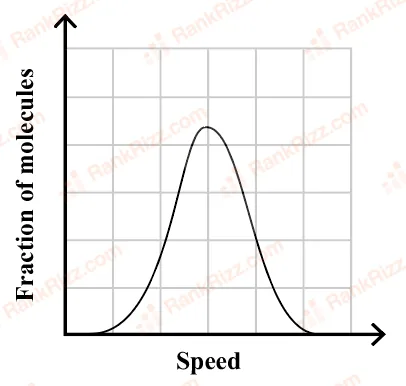
If the distribution of molecular speeds of a gas is as per the figure shown below, then the ratio of the most probable, the average, and the root mean square speeds, respectively, is

Figure for JEE Advanced 2020 Chemistry question on Kinetic theory of gases and molecular speeds
  1. A

    1 : 1 : 1

  2. B

    1 : 1 : 1.224

  3. C

    1 : 1.128 : 1.224

  4. D

    1 : 1.128 : 1

JEE ADVANCED 2020 · PAPER 1Gas laws and ideal gas equationTRANSCRIBED

Aluminium reacts with sulfuric acid to form aluminium sulfate and hydrogen. What is the volume of hydrogen gas in liters (L) produced at 300 K and 1.0 atm pressure, when 5.4 g of aluminium and 50.0 mL of 5.0 M sulfuric acid are combined for the reaction?
(Use molar mass of aluminium as 27.0gmol−1,𝑅=0.082atmLmol−1K−127.0 g mol^{−1}, 𝑅 = 0.082 atm L mol^{−1} K^{−1})

JEE ADVANCED 2019 · PAPER 1Kinetic theory of gases and molecular speedsTRANSCRIBED

Which of the following statement(s) is (are) correct regarding the root mean square speed (μrms)(\mu_{rms}) and average translational kinetic energy (ϵav)(\epsilon_{av}) of a molecule in a gas at equilibrium ?

  1. A

    (μrms)(\mu_{rms}) is doubled when its temperature is increased four times

  2. B

    (ϵav)(\epsilon_{av}) is doubled when its temperature is increased four times

  3. C

    (ϵav)(\epsilon_{av}) at a given temperature does not depend on its molecular mass

  4. D

    (μrms)(\mu_{rms}) is inversely proportional to the square rootof its molecular mass

JEE ADVANCED 2018 · PAPER 1Gas laws and ideal gas equationTRANSCRIBED

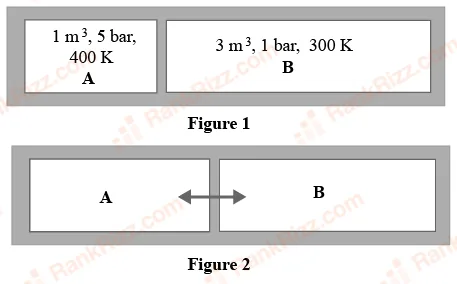
A closed tank has two compartments A and B, both filled with oxygen (assumed to be ideal gas). The partition separating the two compartments is fixed and is a perfect heat insulator (Figure 1). If the old partition is replaced by a new partition which can slide and conduct heat but does NOT allow the gas to leak across (Figure 2), the volume (in m3m^{3}) of the compartment A after the system attains equilibrium is ____.

Figure for JEE Advanced 2018 Chemistry question on Gas laws and ideal gas equation
JEE ADVANCED 2016 · PAPER 1Graham's law of diffusion and effusionTRANSCRIBED

The diffusion coefficient of an ideal gas is proportional to its mean free path and meanspeed. The absolute temperature of an ideal gas is increased 4 times and its pressure is increased 2 times. As a result, the diffusion coefficient of this gas increases x times. The value of x is

JEE ADVANCED 2015 · PAPER 2Real gases, compressibility factor and van der Waals equationTRANSCRIBED

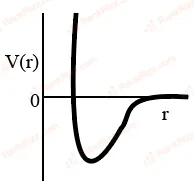
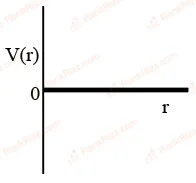
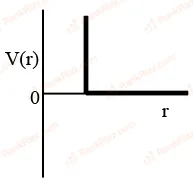
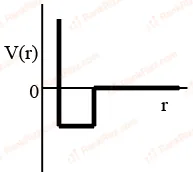
One mole of a monoatomic real gas satisfies the equation p(V−b)=RTp(V - b) = RT where b is a constant. The relationship of interatomic potential V(r) and interatomic distance r for the gas is given by

  1. A
    Figure for JEE Advanced 2015 Chemistry question on Real gases, compressibility factor and van der Waals equation
  2. B
    Figure for JEE Advanced 2015 Chemistry question on Real gases, compressibility factor and van der Waals equation
  3. C
    Figure for JEE Advanced 2015 Chemistry question on Real gases, compressibility factor and van der Waals equation
  4. D
    Figure for JEE Advanced 2015 Chemistry question on Real gases, compressibility factor and van der Waals equation
JEE ADVANCED 2014 · PAPER 2Graham's law of diffusion and effusionTRANSCRIBED

The value of d in cm (shown in the figure), as estimated from Graham’s law, is

  1. A

    8

  2. B

    12

  3. C

    16

  4. D

    20

JEE ADVANCED 2014 · PAPER 2Kinetic theory of gases and molecular speedsTRANSCRIBED

The experimental value of d is found to be smaller than the estimate obtained using Graham’s law. This is due to

  1. A

    larger mean free path for X as compared to that of Y.

  2. B

    larger mean free path for Y as compared to that of X.

  3. C

    increased collision frequency of Y with the inert gas as compared to that of X with the inert gas.

  4. D

    increased collision frequency of X with the inert gas as compared to that of Y with the inert gas.

JEE ADVANCED 2012 · PAPER 1Real gases, compressibility factor and van der Waals equationTRANSCRIBED

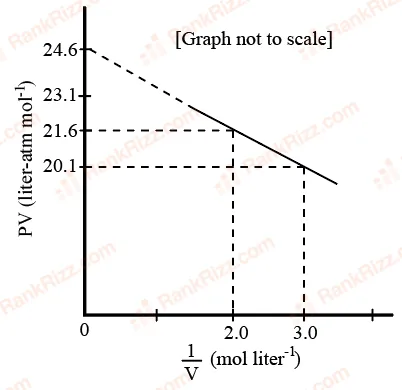
For one mole of a van der Waals gas when b= 0 and T= 300 K, the PV vs. 1/V plot is shown below. The value of the van der Waals constant a (atm.liter2mol−2)(atm.liter^2 mol^{-2}) is

Figure for JEE Advanced 2012 Chemistry question on Real gases, compressibility factor and van der Waals equation
  1. A

    1.0

  2. B

    4.5

  3. C

    1.5

  4. D

    3.0

JEE ADVANCED 2011 · PAPER 1Kinetic theory of gases and molecular speedsTRANSCRIBED

According to kinetic theory of gases -

  1. A

    collisions are always elastic

  2. B

    heavier molecules transfer more momentum to the wall of the container

  3. C

    only a small number of molecules have very high velocity

  4. D

    between collisions, the molecules move in straight lines with constant velocities

JEE ADVANCED 2011 · PAPER 1Gas laws and ideal gas equationTRANSCRIBED

To an evacuated vessel with movable piston under external pressure of 1 atm., 0.1 mol of He and 1.0 mol of an unknown compound (vapour pressure 0.68 atm, at 0∘C0^\circ C) are introduced. Considering the ideal gas behaviour, the total volume (in litre) of the gases at 0ºC is close to.

JEE ADVANCED 2009 · PAPER 1Real gases, compressibility factor and van der Waals equationTRANSCRIBED

The term that correct for the attractive forces present in a real gas in the van der Waals equation is

  1. A

    nbnb

  2. B

    an2V2\frac{an^{2}}{V^{2}}

  3. C

    −an2V2-\frac{an^{2}}{V^{2}}

  4. D

    −nb-nb

JEE ADVANCED 2009 · PAPER 2Kinetic theory of gases and molecular speedsTRANSCRIBED

At 400 K, the root mean square (rms) speed of a gas X (molecular weight = 40) is equal to the most probable speed of gas Y at 60K. The molecular weight of the gas Y is

JEE ADVANCED 2008 · PAPER 1Real gases, compressibility factor and van der Waals equationTRANSCRIBED

A gas described by van der Waals equation

  1. A

    behaves similar to an ideal gasin the limit of large molar volumes

  2. B

    behaves similar to an ideal gas in the limit of large pressures

  3. C

    is characterised by van der Waals coefficients that are dependent on the identity of the gas but are independent of the temperature

  4. D

    has the pressure that is lower than the pressure exerted by the same gas behaving ideally

JEE ADVANCED 2007 · PAPER 1Real gases, compressibility factor and van der Waals equationTRANSCRIBED

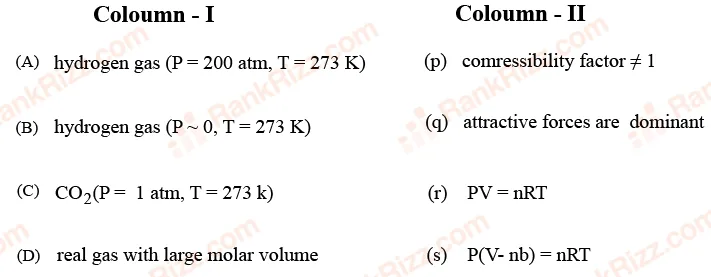
Match gases under specified conditions listed in Column I with their properties/laws in Column II. Indicate your answer by darkening the appropriate bubbles of the 4×44 \times 4 matrix given in the ORS.

Figure for JEE Advanced 2007 Chemistry question on Real gases, compressibility factor and van der Waals equation