RankRizzStart free

Chemical and Ionic Equilibrium — JEE Main Previous Year Questions

Every Chemical and Ionic Equilibrium question JEE Main has set, grouped by the idea it tests rather than the order of the syllabus. 274 questions across 10 distinct ideas. Free to read, answer key on every one.

Questions

274

Distinct ideas

10

Share of marks

5.7%

Difficulty

MEDIUM

The ideas inside Chemical and Ionic Equilibrium

A chapter is not one subject — it is a handful of procedures the examiner reuses. These are the ones Chemical and Ionic Equilibrium questions actually test.

01Law of mass action and equilibrium constants Kc and Kpset 93×
02Reaction quotient, degree of dissociation and equilibrium calculationsset 12×
03Le Chatelier's principle and factors affecting equilibriumset 24×
04Arrhenius, Bronsted-Lowry and Lewis acid-base conceptsset 8×
05Ionisation of weak electrolytes and Ostwald's dilution lawset 17×
06pH of acids, bases and their mixturesset 60×
07Buffer solutionsset 1×
08Hydrolysis of saltsset 7×
09Acid-base indicators and titration curvesset 1×
10Solubility product and common ion effectset 51×

Every Chemical and Ionic Equilibrium question

1–20 OF 274 · NEWEST FIRST

JEE MAIN 2026 · 28 JAN S1pH of acids, bases and their mixturesTRANSCRIBED

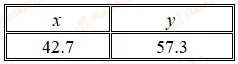
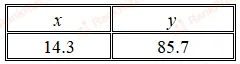
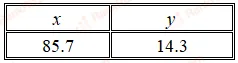
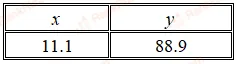
Consider a weak base 'B' of . 'x' mL of 0.02 M HCI and 'y' mL of 0.02 M weak base 'B' are mixed to make 100 mL of a buffer of pH 9 at 25 °C. The values of 'x' and 'y' respectively are:
[Given: log 2 = 0.3010, log 3 = 0.4771, log 5 = 0.699]

  1. A
    52-1
  2. B
    52-2
  3. C
    52-3
  4. D
    52-4
JEE MAIN 2026 · 24 JAN S2Le Chatelier's principle and factors affecting equilibriumTRANSCRIBED

Consider the following gaseous equilibrimn in a closed container of volume 'V' at T(K).

2 moles each of , and PQ(g) are present at equilibrium. Now one mole each of'' and '' are added to the equilibrium keeping the temperature at T(K). The number of moles of , and PQ at the new equilibrium, respectively, are

  1. A

    2.67, 2.67, 2.67

  2. B

    1.21, 2.24, 1.56

  3. C

    1.66, 1.66, 1.66

  4. D

    2.56, 1.62, 2.24

JEE MAIN 2026 · 04 APR S1Law of mass action and equilibrium constants Kc and KpTRANSCRIBED

At (K), the equilibrium constant of is . What is the equilibrium constant for at the same temperature?

  1. A

  2. B

  3. C

  4. D

JEE MAIN 2026 · 04 APR S2pH of acids, bases and their mixturesTRANSCRIBED

20 mL of a solution of acetic acid required 28.4 mL of 0.1 M NaOH for its neutralization. A solution (X) was prepared by mixing 20 mL of the above acetic acid and 14.2 mL of 0.1 M NaOH solution. What is the pH of the solution (X)? (pK value of acetic acid is 4.75).

  1. A

  2. B

  3. C

  4. D

JEE MAIN 2026 · 08 APR S2Law of mass action and equilibrium constants Kc and KpTRANSCRIBED

Consider the following reactions in which all the reactants and products are present in gaseous state


The value of for the equilibrium is :

  1. A

  2. B

  3. C

  4. D

JEE MAIN 2026 · 05 APR S1Solubility product and common ion effectTRANSCRIBED

is a sparingly soluble salt of molar mass g mol and solubility g L. The ratio of the molar concentration of the anion () to the solubility product of the salt is

  1. A

  2. B

  3. C

  4. D

JEE MAIN 2026 · 02 APR S1Solubility product and common ion effectTRANSCRIBED

The solubility product constants of AgCrO and AgBr are 32x and 4y respectively at 298 K. The value of can be expressed as :

  1. A

  2. B

  3. C

  4. D

JEE MAIN 2026 · 05 APR S2Law of mass action and equilibrium constants Kc and KpTRANSCRIBED

The reaction was initiated with the amount `` of . At equilibrium it is found that the amount of remaining is at a total pressure of .
The equilibrium constant of the reaction can be calculated from the expression:

  1. A

  2. B

  3. C

  4. D

JEE MAIN 2026 · 06 APR S2Ionisation of weak electrolytes and Ostwald's dilution lawTRANSCRIBED

Given is a concentrated solution of a weak electrolyte of concentration 'c' and dissociation constant 'K'. The degree of dissociation is given by :

  1. A

  2. B

  3. C

  4. D

JEE MAIN 2026 · 05 APR S1pH of acids, bases and their mixturesTRANSCRIBED

Arrange the following resultant mixtures in increasing order of their pH values
A. 10 mL 0.2 M Ca(OH) + 25 mL 0.1 M HCl
B. 10 mL 0.01 M HSO + 10 mL 0.01 M Ca(OH)
C. 10 mL 0.1 M HSO + 10 mL 0.1 M KOH
Choose the correct answer from the options given below:

  1. A

    B < C < A

  2. B

    C < A < B

  3. C

    C < B < A

  4. D

    A < C < B

JEE MAIN 2026 · 28 JAN S2Law of mass action and equilibrium constants Kc and KpTRANSCRIBED

Observe the following equilibrium in a 1 L flask.

At T(K), the equilibrium concentrations of A and B are 0.5 Mand 0.375 M respectively. 0.1 moles of A is added into the flask and heated to T(K) to establish the equilibrium again. The new equilibrium concentrations (in M) of A and B are respectively

  1. A

    0.557, 0.418.

  2. B

    0.53, 0.4.

  3. C

    0.742, 0.557.

  4. D

    0.367, 0.275.

JEE MAIN 2026 · 02 APR S2Ionisation of weak electrolytes and Ostwald's dilution lawTRANSCRIBED

The first and second ionization constants of a weak dibasic acid are and respectively. 0.1 mol of was dissolved in 1 L of 0.1 M HCl solution. The concentration of in the resultant solution is :

  1. A

    M

  2. B

    M

  3. C

    M

  4. D

    M

JEE MAIN 2026 · 06 APR S1Law of mass action and equilibrium constants Kc and KpTRANSCRIBED

One mole each of He and A(g) are taken in a 10 L closed flask and heated to 400 K to establish the following equilibrium.
A(g) B(g)
K for this reaction at 400 K is 4.0. The partial pressures (in atm) of He and B(g) are respectively (at equilibrium)
(Assume He, A(g) and B(g) behave as ideal gases)
(Given: R = 0.082 L atm K mol)

  1. A

    3.28, 2.624

  2. B

    2.624, 3.28

  3. C

    3.28, 0.656

  4. D

    0.656, 6.56

JEE MAIN 2026 · 22 JAN S2pH of acids, bases and their mixturesTRANSCRIBED

Which of the followmg mixture gives a buffer solution with pH=9.25?
Given : = 4.75

  1. A

    0.2 M (0.4 L) + 0.1 M HCl (1 L)

  2. B

    0.4 M (1 L) + 0.1 M HCl (1 L)

  3. C

    0.5 M (0.2 L) + 0.2 M HCl (0.5 L)

  4. D

    0.2 M (0.5 L) + 0.1 M HCl (0.5 L)

JEE MAIN 2026 · 02 APR S2pH of acids, bases and their mixturesTRANSCRIBED

At 25°C, 20.0 mL of 0.2 M weak monoprotic acid HX is titrated against 0.2 M NaOH. The pH of the solution (a) at the start of the titration (when NaOH has not been added) and (b) when 10 mL of NaOH is added respectively, are :
Given: ,
,

  1. A

    (a) 0.7, (b) 2.0

  2. B

    (a) 2.0, (b) 3.3

  3. C

    (a) 1.1, (b) 2.2

  4. D

    (a) 3.0, (b) 2.2

JEE MAIN 2026 · 23 JAN S1Law of mass action and equilibrium constants Kc and KpTRANSCRIBED

Consider the general reaction given below at 400 K
.
The values of are studied under the same condition of temperature but variation in x and y
(i) appropriate units
(ii) appropriate units
The values of x and yin (i) and (ii) respectively are:

  1. A

    (i)1,2 (ii)2,1

  2. B

    (i)1,3 (ii)2,1

  3. C

    (i)4,1 (ii)4,1

  4. D

    (i)3,1 (ii)3,1

JEE MAIN 2026 · 28 JAN S2Le Chatelier's principle and factors affecting equilibriumTRANSCRIBED

The plot of gives a straight Line. The intercept and slope respectively are
(where K is equilibrium constant).

  1. A

  2. B

  3. C

  4. D

JEE MAIN 2026 · 21 JAN S2Ionisation of weak electrolytes and Ostwald's dilution lawTRANSCRIBED

The first and second ionization constants of are and respectively. The concentration of in solution is _________ . (Nearest Integer)

JEE MAIN 2026 · 22 JAN S1Law of mass action and equilibrium constants Kc and KpTRANSCRIBED

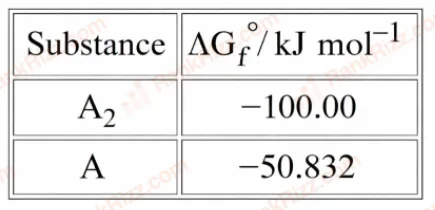
Dissociation of a gas takes place according to the following chemical reaction.
At equilibrium, the total pressure is 1 bar at 300K.

The standard Gibbs energy of formation of the involved substances has been
provided below:

22nd slot 1 72


The degree of dissociation of is given by where =
_____ . (Nearest integer).
[Given:
Assume degree of dissociation is not negligible.

JEE MAIN 2026 · 24 JAN S1Solubility product and common ion effectTRANSCRIBED

Consider two Group IV metal ious
A solution containing is satmated with . The pH at which the metal sulphide YS will form as a precipitate is __ . (Nearest integer)