JEE MAIN 2026AromaticityTRANSCRIBED
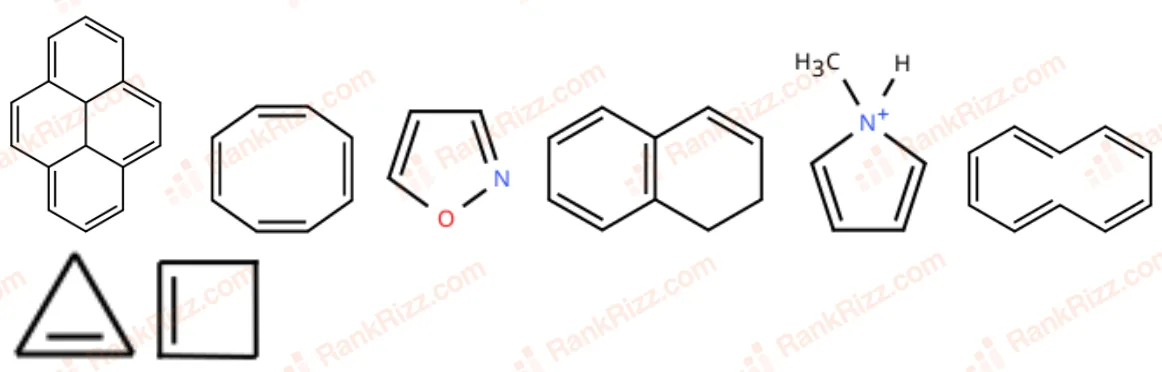
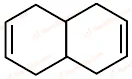
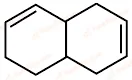
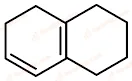
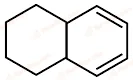
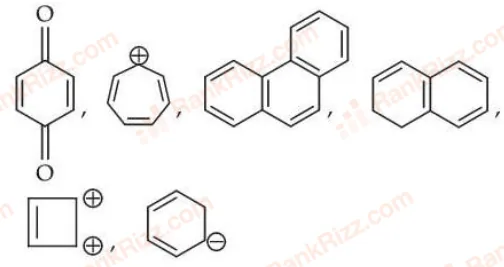
How many of the following compound(s) is/are aromatic?
Every General Organic Chemistry question JEE Main has set from 2004–2026, grouped by the idea it tests rather than the order of the syllabus. 258 questions across 12 distinct ideas. Free to read, answer key on every one.
Questions
258
Distinct ideas
12
Share of marks
5.7%
Difficulty
MEDIUM
A chapter is not one subject — it is a handful of procedures the examiner reuses. These are the ones General Organic Chemistry questions actually test.
The share of each year’s Chemistry questions that came from General Organic Chemistry, counted from the 168 papers we hold for the last 10 years, and session by session inside a year.
Rising: 7.3% of Chemistry questions in 2024–2026, up from 3.0% in 2017–2023. Its heaviest year was 2024, at 9.5%.
“QS” is General Organic Chemistry questions out of all Chemistry questions that year. A year with more sittings asks more questions, which is why the share, not the count, is the number to compare.
258 questions from 2004–2026. Over the last 20 papers, General Organic Chemistry carried about 5.7% of Chemistry marks.
Structural isomerism (57 questions), IUPAC nomenclature of organic compounds (47 questions), Reactive intermediates and rearrangements (36 questions). Start with these, they are what the examiner keeps coming back to.
Rising: 7.3% of Chemistry questions in 2024–2026, up from 3.0% in 2017–2023. Its heaviest year was 2024, at 9.5%. It has carried about 5.7% of Chemistry marks in recent papers, rated medium on our difficulty scale. The year-by-year table above shows how that has moved.
Yes. Every question shows its official answer key, and a worked solution opens on the question’s own page wherever we have one. Reading and checking answers is free, no sign-up needed.
Do one past question per idea first: General Organic Chemistry has 12 distinct ideas, listed above. Then practise the topics you get wrong, or build a timed test from this chapter.
1–20 OF 258 · NEWEST FIRST
How many of the following compound(s) is/are aromatic?
The most stable canonical structure of given molecule is:
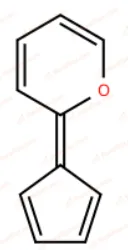
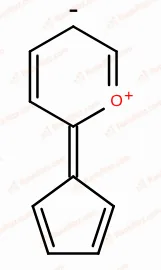
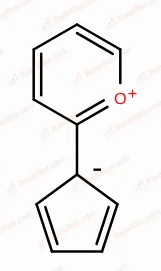
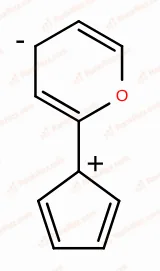
None of these
Among the following, the Newmann projections of meso-2,3-butanediol are:
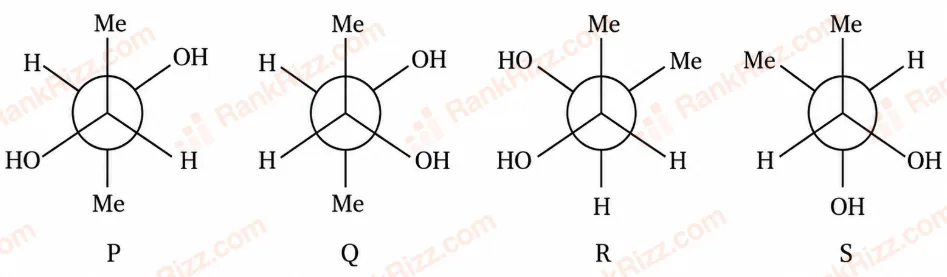
P, Q
P, R
R, S
Q, S
From the following, the least stable structure is :
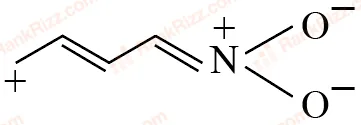
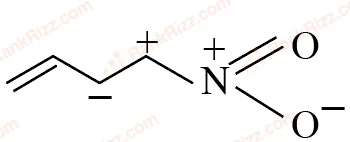
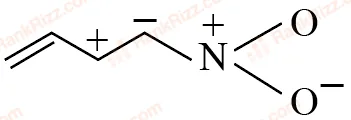
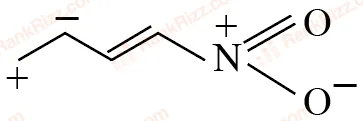
Given below are four compounds :
(a) n-propyl choride
(b) iso-propyl chloride
(c) sec-butyl chloride
(d) neo-pentyl chloride
Percentage of carbon in the one which exhibits optical isomerism is:
40
52
46
56
Arrange the following carbanions in the decreasing order of stability.
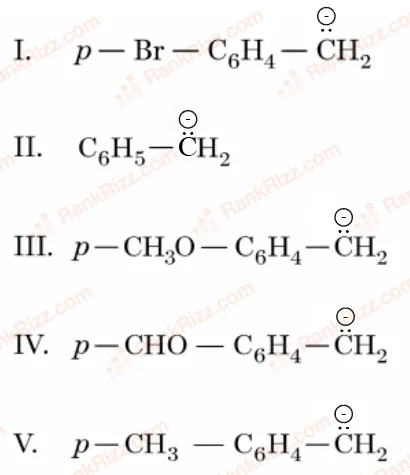
Choose the correct answer from the options given below:
I > II > IV > V > III
I > IV > II > V > III
IV > II > I > III > V
IV > I > II > V > III
Find out the statements which are not true.
A. Resonating structures with more number of covalent bonds and lesser charge separntion are more stable.
B. In electromeric effect, an unsaturated system shows +E effect with nucleophile and -E effect with electrophile.
C. Inductive effect is responsible for high melting point, boiling point and dipole moment of polar compotmds.
D. The greater the number of alkyl groups attached to the doubly bonded carbon atoms, higher is the heat of hydrogenation.
E. Stability of carbanion increases with the increase in s - character of the carbon carrying the negative charge.
Choose the correct answer from the options given below:
A, C & D only
B, D & E only
A, D & E only
B & D only
The IUPAC name of the following compound is :
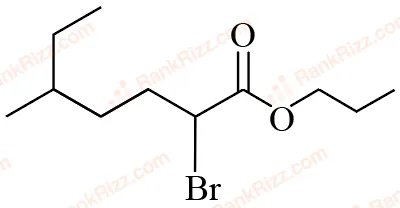
2-bromo-5-methylpropanoate
n-propyl-2-bromo-5-methylheptanoate
n-propyl-1-bromo-4-methylhexanoate
2-bromo-5-methylhexylpropanoate
Match the List I with List II:
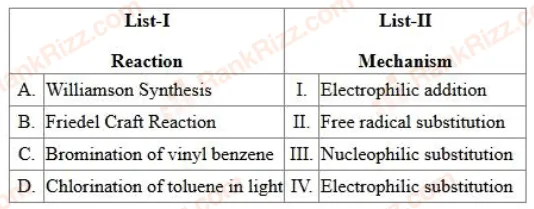
Choose the correct answer from the options given below
A-III, B-I, C-II, D-IV
A-III, B-IV, C-II, D-I
A-III, B-IV, C-I, D-II
A-I, B-III, C-IV, D-II
Consider the following molecules/species:
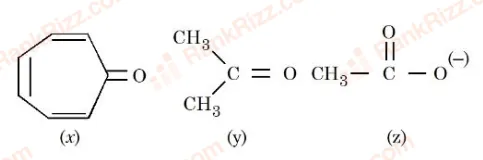
The correct order of carbon-oxygen double bond length is:
x > y > z
y > z > x
z > x > y
x > z > y
Given below are two statements:
Statement I: is more stable than as nine hyperconjugation interactions are possible in .
Statement II: is less stable than as only three hyperconjugation interactions are possible in .
In the light of the above statements, choose the correct answer from the options given below
Both Statement I and Statement II are false
Statement I is false but Statement II is true
Statement I is true but Statement II is false
Both Statement I and Statement II are true
Match List - I with List - II.
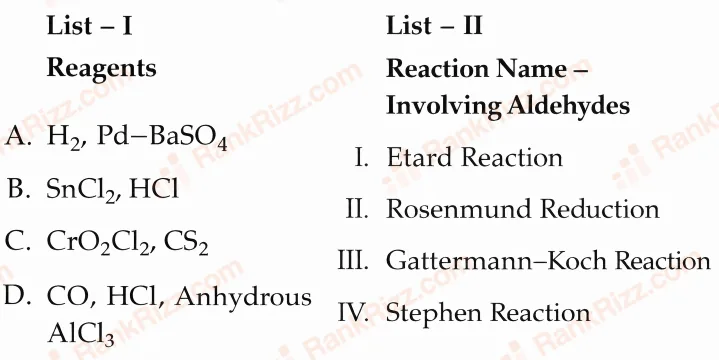
Choose the correct answer from the options given below:
A-IV, B-I, C-II, D-III
A-II, B-III, C-IV, D-I
A-II, B-IV C-I, D-III
A-IV, B-III C-I, D-II
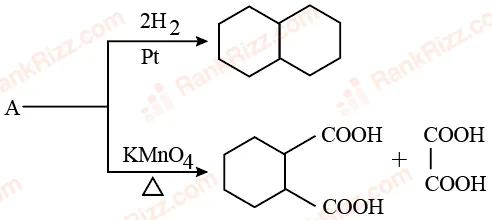
Identify A in the following reaction.
Increasing order of electron withdrawing power of following functional groups is:
a. , b. , c. , d.
Shown below is the structure of methyl acetate with three different , and carbon-oxygen bonds.
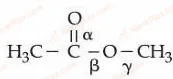
The correct order of bond lengths of these bonds is :
The major product of which of the following reaction is not obtained by rearrangement reaction?
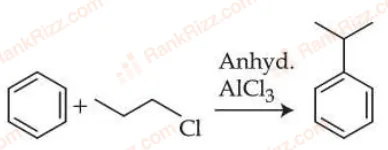
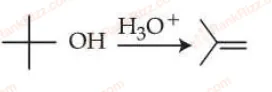
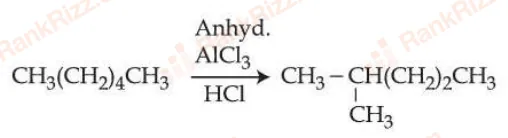
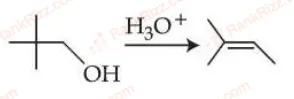
Given below are two statements:
Statement I: On the basis of inductive effect, the order of stability of alkyl carbanions is .
Statement II: Allyl and benzyl carbanions are more stabilised by inductive effect and not by resonance effect.
In the light of the above statements, choose the correct answer from the options given below
Both Statement I and Statement II are correct
Both Statement I and Statement II are incorrect
Statement I is correct but Statement II is incorrect
Statement I is incorrect but Statement II is correct
Given below are two statements:
Statement I: There are several conformers for n-butane. Out of those conformers,
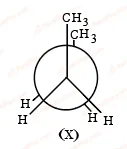
is the least stable and most stable conformer is
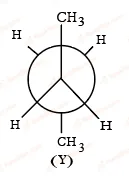
Statement II: As the dihedral angle increases, torsional strain decreases from (X) to (Y).
In the light of the above statements, choose the correct answer from the options given below
Statement I is false but Statement II is true
Both Statement I and Statement II are true
Statement I is true but Statement II is false
Both Statement I and Statement II are false
Given below are two statements:
Statement I: 2,6-diethylcyclohexanone and 6-methyl-2-n-propylcyclohexanone are metamers.
Statement II: 2,2,6,6-tetramethylcyclohexanone exhibits keto-enol tautomerism.
In the light of the above statements, choose the correct answer from the options given below:
Both Statement I and Statement II are true
Both Statement I and Statement II are false
Statement I is true but Statement II is false
Statement I is false but Statement II is true
The total number of aromatic compounds/species from the following is
6
4
3
5
JEE Advanced has set 66 General Organic Chemistry questions too. General Organic Chemistry JEE Advanced PYQs →
OTHER CHEMISTRY CHAPTERS