RankRizz

Chemical Kinetics — JEE Advanced Previous Year Questions

Every Chemical Kinetics question JEE Advanced has set from 2007–2026, grouped by the idea it tests rather than the order of the syllabus. 33 questions across 5 distinct ideas. Free to read, answer key on every one.

Questions

33

Distinct ideas

5

Share of marks

4%

Difficulty

EASY

The ideas inside Chemical Kinetics

A chapter is not one subject — it is a handful of procedures the examiner reuses. These are the ones Chemical Kinetics questions actually test.

01Rate of reactionNot set in Advanced
02Rate law, order and molecularityset 6×
03Integrated rate laws and half-life (zero and first order)set 7×
04Methods to determine order of reactionset 5×
05Parallel, consecutive and reversible reactionsNot set in Advanced
06Arrhenius equation and activation energyNot set in Advanced
07Collision theory and effect of catalyst on rateset 4×
08Radioactivity and nuclear reactionsset 11×

Every Chemical Kinetics question

21–33 OF 33 · NEWEST FIRST

JEE ADVANCED 2012 · PAPER 1Radioactivity and nuclear reactionsTRANSCRIBED

The periodic table consists of 18 groups. An isotope of copper, on bombardment with protons, undergoes a nuclear reaction yielding element X as shown below. To which group, element X belongs in the periodic table ?
2963Cu+11H→601n+α+211H+X_{29}^{63}Cu + _{1}^{1}H \rightarrow 6_{0}^{1}n + \alpha + 2 _{1}^{1}H + X

JEE ADVANCED 2012 · PAPER 1Integrated rate laws and half-life (zero and first order)TRANSCRIBED

An organic compound undergoes first-order decomposition. The time taken for its decomposition to 18\frac{1}{8} and 110\frac{1}{10} of its initial concentration are t18t_{\frac{1}{8}} and t110t_{\frac{1}{10}} respectively. What is the value of [t18][t110]×10\frac{[t_{\frac{1}{8}}]}{[t_{\frac{1}{10}}]} \times 10? (take log⁡102=0.3\log_{10} 2 = 0.3)

JEE ADVANCED 2011 · PAPER 1Radioactivity and nuclear reactionsTRANSCRIBED

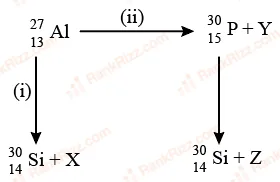
Bombardment of aluminum by α\alpha- particle leads to its artificial disintegration in two ways, (i) and (ii) as shown. Products X, Y and Z respectively are-

Figure for JEE Advanced 2011 Chemistry question on Radioactivity and nuclear reactions
  1. A

    proton, neutron, positron

  2. B

    neutron, positron, proton

  3. C

    proton, positron, neutron

  4. D

    positron, proton, neutron

JEE ADVANCED 2011 · PAPER 2Integrated rate laws and half-life (zero and first order)TRANSCRIBED

For the first order reaction
2N2O5(g)→4NO2(g)+O2(g)2N_2O_5(g) \rightarrow 4NO_2(g) + O_2(g)

  1. A

    the concentration of the reactant decreases exponentially with time.

  2. B

    the half-life of the reaction decreases with increasing temperature.

  3. C

    the half-life of the reaction depends on the initial concentration of the reactant.

  4. D

    the reaction proceeds to 99.6 % completion in eight half-life duration.

JEE ADVANCED 2010 · PAPER 1Collision theory and effect of catalyst on rateTRANSCRIBED

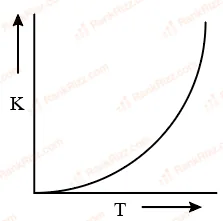
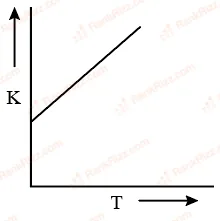
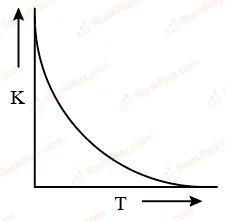
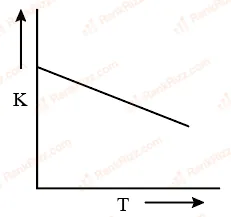
Plots showing the variation of the rate constant (k) with temperature (T) are given below. The plot that follows Arrhenius equation is

  1. A
    Figure for JEE Advanced 2010 Chemistry question on Collision theory and effect of catalyst on rate
  2. B
    Figure for JEE Advanced 2010 Chemistry question on Collision theory and effect of catalyst on rate
  3. C
    Figure for JEE Advanced 2010 Chemistry question on Collision theory and effect of catalyst on rate
  4. D
    Figure for JEE Advanced 2010 Chemistry question on Collision theory and effect of catalyst on rate
JEE ADVANCED 2010 · PAPER 1Methods to determine order of reactionTRANSCRIBED

The concentration of R in the reaction R→PR\rightarrow P was measured as a function of time and the following data is obtained:

Figure for JEE Advanced 2010 Chemistry question on Methods to determine order of reaction


The order of the reaction is

JEE ADVANCED 2010 · PAPER 1Radioactivity and nuclear reactionsTRANSCRIBED

The number of neutrons emitted when 92235U_{92}^{235}U undergoes controlled nuclear fission to 54142Xe_{54}^{142}Xe and 3890Sr_{38}^{90}Sr is

JEE ADVANCED 2009 · PAPER 2Collision theory and effect of catalyst on rateTRANSCRIBED

For a first order reaction A→PA \rightarrow P, the temperature (T) dependent rate constant (k) was found to follow the equation log⁡k=−(2000)1T+6.0\log k = -(2000)\frac{1}{T} + 6.0. The pre-exponential factor A and the activation energy EaE_a, respectively, are

  1. A

    1.0×10⁶s−11.0 \times 10^6 s^{-1} and 9.2 kJ mol−1^{-1}

  2. B

    6.0s−16.0 s^{-1} and 16.6 kJ mol−1^{-1}

  3. C

    1.0×10⁶s−11.0 \times 10^6 s^{-1} and 16.6 kJ mol−1^{-1}

  4. D

    1.0×10⁶s−11.0 \times 10^6 s^{-1} and 38.3 kJ mol−1^{-1}

JEE ADVANCED 2009 · PAPER 2Radioactivity and nuclear reactionsTRANSCRIBED

The total number of α\alpha and β\beta particles emitted in the nuclear reaction 92238U→82214Pb_{92}^{238}U \rightarrow _{82}^{214}Pb is

JEE ADVANCED 2008 · PAPER 1Integrated rate laws and half-life (zero and first order)TRANSCRIBED

Under the same reaction conditions, initial concentration of 1.386 mol dm−3^{-3} of a substance becomes half in 40 seconds and 20 seconds through first order and zero order kinetics, respectively. Ratio (k1k0)\left(\frac{k_1}{k_0}\right) of the rate constants for first order (k1)(k_1) and zero order (k0)(k_0) of the reactions is

  1. A

    0.5 mol−1^{-1} dm3^{3}

  2. B

    1.0 mol dm−3^{-3}

  3. C

    1.5 mol dm−3^{-3}

  4. D

    2.0 mol−1^{-1} dm3^{3}

JEE ADVANCED 2008 · PAPER 1Radioactivity and nuclear reactionsTRANSCRIBED

STATEMENT-1: The plot of atomic number (y-axis) versus number of neutrons (x-axis) for stable nuclei shows a curvature towards x-axis from the line of 45∘45^\circ slope as the atomic numberis increased.
and
STATEMENT-2: Proton-proton electrostatic repulsions begin to overcome attractive forces involving protons and neutrons in heavier nuclides.

  1. A

    STATEMENT-1 is True, STATEMENT-2 is True; STATEMENT-2 is a correct explanation for STATEMENT-1

  2. B

    STATEMENT-1 is True, STATEMENT-2 is True; STATEMENT-2 is NOT a correct explanation for STATEMENT-1

  3. C

    STATEMENT-1 is True, STATEMENT-2 is False

  4. D

    STATEMENT-1 is False, STATEMENT-2 is True

JEE ADVANCED 2007 · PAPER 2Radioactivity and nuclear reactionsTRANSCRIBED

A positron is emitted from 1123Na_{11}^{23}Na. The ratio of the atomic mass and atomic number of the resulting nuclide is

  1. A

    2210\frac{22}{10}

  2. B

    2211\frac{22}{11}

  3. C

    2310\frac{23}{10}

  4. D

    2312\frac{23}{12}

JEE ADVANCED 2007 · PAPER 2Methods to determine order of reactionTRANSCRIBED

Consider a reaction aG+bH→aG + bH \rightarrow Products. When concentration of both the reactants G and is doubled, the rate increases by eight times. However, when concentration of G is doubled keeping the concentration of H fixed, the rate is doubled. The overall order of the reaction is

  1. A

    0

  2. B

    1

  3. C

    2

  4. D

    3