JEE ADVANCED 2008 · PAPER 2Carbohydrates: classification and monosaccharidesTRANSCRIBED
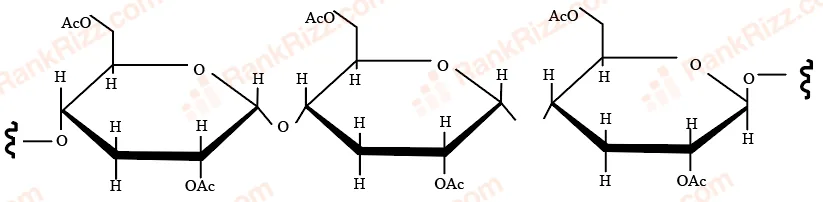
Cellulose upon acetylation with excess acetic anhydride/ (catalytic) gives cellulose triacetate whose structure is
- A
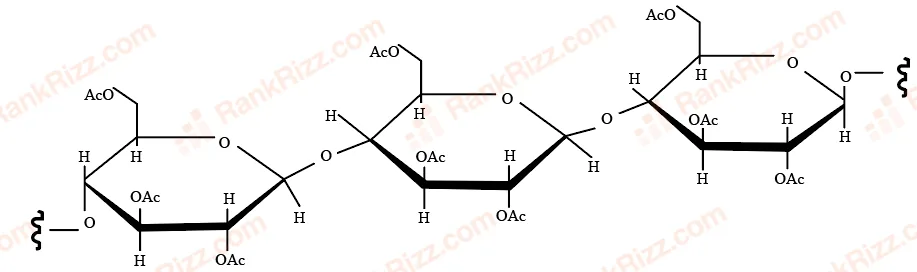
- B
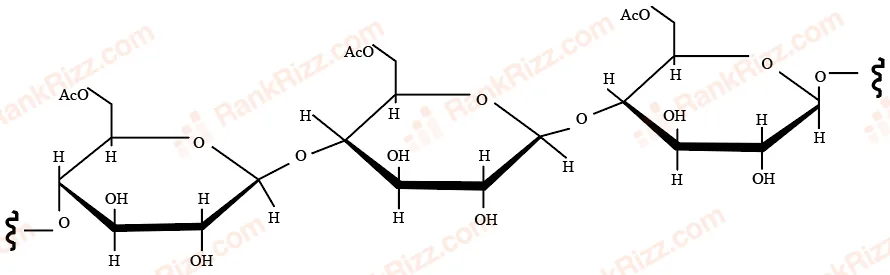
- C
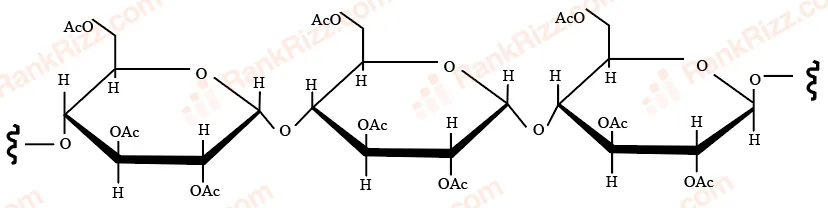
- D
Every Biomolecules question JEE Advanced has set from 2007–2026, grouped by the idea it tests rather than the order of the syllabus. 22 questions across 3 distinct ideas. Free to read, answer key on every one.
Questions
22
Distinct ideas
3
Share of marks
3.1%
Difficulty
EASY
A chapter is not one subject — it is a handful of procedures the examiner reuses. These are the ones Biomolecules questions actually test.
21–22 OF 22 · NEWEST FIRST
Cellulose upon acetylation with excess acetic anhydride/ (catalytic) gives cellulose triacetate whose structure is
STATEMENT-1: Glucose gives a reddish-brown precipitate with Fehling’s solution.
because
STATEMENT-2: Reaction of glucose with Fehling’s solution gives CuO and gluconic acid.
Statement-1 is True, Statement-2 is True; Statement-2 is a correct explanation for Statement-1
Statement-1 is True, Statement-2 is True; Statement-2 is NOT a correct explanation for Statement-1
Statement-1 is True, Statement-2 is False
Statement-1 is False, Statement-2 is True
JEE Main has set 210 Biomolecules questions too. Biomolecules JEE Main PYQs →
OTHER CHEMISTRY CHAPTERS