RankRizz

Atoms & Nuclei — JEE Advanced Previous Year Questions

Every Atoms & Nuclei question JEE Advanced has set from 2007–2026, grouped by the idea it tests rather than the order of the syllabus. 53 questions across 6 distinct ideas. Free to read, answer key on every one.

Questions

53

Distinct ideas

6

Share of marks

6%

Difficulty

EASY

The ideas inside Atoms & Nuclei

A chapter is not one subject — it is a handful of procedures the examiner reuses. These are the ones Atoms & Nuclei questions actually test.

01Alpha-particle scattering and Rutherford modelNot set in Advanced
02Bohr model of hydrogen-like atomsset 1×
03Hydrogen spectrum and spectral seriesset 17×
04X-rays: continuous and characteristic spectra, Moseley's lawset 2×
05Nuclear size, mass defect and binding energyset 1×
06Nuclear fission, fusion and Q-valueset 12×
07Radioactivity: decay law, half-life and decay modesset 20×

Every Atoms & Nuclei question

41–53 OF 53 · NEWEST FIRST

JEE ADVANCED 2010 · PAPER 2Hydrogen spectrum and spectral seriesTRANSCRIBED

A diatomic molecule has momentof inertia I By Bohr's quantization condition its rotational energy in the nthn^{th} level (n = O is not allowed) is

  1. A

    1n2(h28π2I)\frac{1}{n^2}\left(\frac{h^2}{8 \pi^2 I}\right)

  2. B

    1n(h28π2I)\frac{1}{n}\left(\frac{h^2}{8 \pi^2 I}\right)

  3. C

    n(h28π2I)n \left(\frac{h^2}{8 \pi^2 I}\right)

  4. D

    n2(h28π2I)n^2 \left(\frac{h^2}{8 \pi^2 I}\right)

JEE ADVANCED 2010 · PAPER 2Hydrogen spectrum and spectral seriesTRANSCRIBED

It is found that the excitation frequency from ground to thefirst excited state of rotation for the CO molecule is close to 4π×1011\frac{4}{\pi} \times 10^{11} Hz. Then the moment of inertia of
CO molecule about its center of massis close to (Take h=2π×10−34h = 2 \pi \times 10^{-34} J s)

  1. A

    2.76×10−46kgm22.76 \times 10^{-46}kg m^2

  2. B

    1.87×10−46kgm21.87 \times 10^{-46}kg m^2

  3. C

    4.67×10−47kgm24.67 \times 10^{-47}kg m^2

  4. D

    1.17×10−47kgm21.17 \times 10^{-47}kg m^2

JEE ADVANCED 2010 · PAPER 2Hydrogen spectrum and spectral seriesTRANSCRIBED

In a CO molecule, the distance between C (mass = 12 a.m.u.) and O (mass = 16 a.m.u.), where 1 a.m.u. =53×10−27= \frac{5}{3} \times 10^{-27} kg, is close to

  1. A

    2.4×10−102.4 \times 10^{-10} m

  2. B

    1.9×10−101.9 \times 10^{-10} m

  3. C

    1.3×10−101.3 \times 10^{-10} m

  4. D

    4.4×10−114.4 \times 10^{-11} m

JEE ADVANCED 2009 · PAPER 1Nuclear fission, fusion and Q-valueTRANSCRIBED

In the core of nuclear fusion reactor, the gas becomes plasma because of -

  1. A

    Strong nuclear force acting between the deuterons

  2. B

    Coulomb force acting between the deuterons

  3. C

    Coulomb force acting between deuteron-electron pairs

  4. D

    the high temperature maintained inside the reactor core

JEE ADVANCED 2009 · PAPER 1Nuclear fission, fusion and Q-valueTRANSCRIBED

Assume that two deuteron nuclei in the core of fusion reactor at temperature T are moving towards each other, each with kinetic energy 1.5 kT, when the separation between them is large enough to neglect Coulomb potential energy. Also neglect any interaction from other particles in the core. The minimum temperature T required for them to reach a separation of 4×10−154 \times 10^{-15} m is in the range-

  1. A

    1.0×10⁹K<T<2.0×10⁹K1.0 \times 10^9 K < T < 2.0 \times 10^9 K

  2. B

    2.0×10⁹K<T<3.0×10⁹K2.0 \times 10^9 K < T < 3.0 \times 10^9 K

  3. C

    3.0×10⁹K<T<4.0×10⁹K3.0 \times 10^9 K < T < 4.0 \times 10^9 K

  4. D

    4.0×10⁹K<T<5.0×10⁹K4.0 \times 10^9 K < T < 5.0 \times 10^9 K

JEE ADVANCED 2009 · PAPER 1Nuclear fission, fusion and Q-valueTRANSCRIBED

Results of calculations for four different designs of a fusion reactor using D-D reaction are given below. Which of these is most promising based on Lawson criterion ?

  1. A

    deuteron density = 2.0×1012cm−32.0 \times 10^{12} cm^{-3}, confinement time = 5.0×10−35.0 \times 10^{-3} s

  2. B

    deuteron density = 8.0×1014cm−38.0 \times 10^{14} cm^{-3}, confinement time = 9.0×10−19.0 \times 10^{-1} s

  3. C

    deuteron density = 4.0×1023cm−34.0 \times 10^{23} cm^{-3}, confinement time = 1.0×10−111.0 \times 10^{-11} s

  4. D

    deuteron density = 1.0×1024cm−31.0 \times 10^{24} cm^{-3}, confinement time = 4.0×10−124.0 \times 10^{-12} s

JEE ADVANCED 2008 · PAPER 2Radioactivity: decay law, half-life and decay modesTRANSCRIBED

A radioactive sample S1 having an activity of 5μCi5 \mu Ci has twice the number of nuclei as another sample S2 which has anactivity of 10μCi10 \mu Ci. The half lives of S1 and S2
can be

  1. A

    20 years and 5 years, respectively

  2. B

    20 years and 10 years, respectively

  3. C

    10 years each

  4. D

    5 years each

JEE ADVANCED 2008 · PAPER 1Nuclear fission, fusion and Q-valueTRANSCRIBED

Assume that the nuclear binding energy per nucleon (B/A) versus mass number (A) is as shown in the figure. Use this plot to choose the correct choice(s) given below.
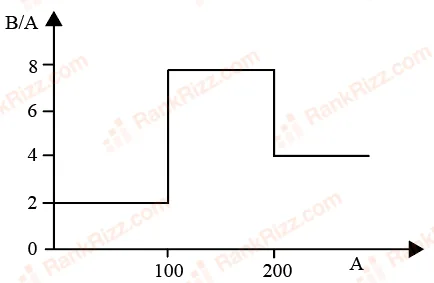
Figure for JEE Advanced 2008 Physics question on Nuclear fission, fusion and Q-value
  1. A

    Fusion of two nuclei with mass numbers lying in the range of 1 < A < 50 will release energy

  2. B

    Fusion of two nuclei with mass numbers lying in the range of 51 < A < 100 will release energy

  3. C

    Fission of a nucleus lying in the mass range of 100 < A < 200 will release energy when broken into two equal fragments

  4. D

    Fission of a nucleus lying in the mass range of 200 < A < 260 will release energy when broken into two equal fragments

JEE ADVANCED 2008 · PAPER 1Hydrogen spectrum and spectral seriesTRANSCRIBED

The quantum number n ofthe state finally populated in He+He^+ ions is

  1. A

    2

  2. B

    3

  3. C

    4

  4. D

    5

JEE ADVANCED 2008 · PAPER 1Hydrogen spectrum and spectral seriesTRANSCRIBED

The wave length of light emitted in the visible region by He+He^+ ions after collisions with H atoms is

  1. A

    6.5×10−76.5 \times 10^{-7} m

  2. B

    5.6×10−75.6 \times 10^{-7} m

  3. C

    4.8×10−74.8 \times 10^{-7} m

  4. D

    4.0×10−74.0 \times 10^{-7} m

JEE ADVANCED 2008 · PAPER 1Hydrogen spectrum and spectral seriesTRANSCRIBED

The ratio of the kinetic energy of the n = 2 electron for the H atom to that of He+He^{+} ion is

  1. A

    14\frac{1}{4}

  2. B

    12\frac{1}{2}

  3. C

    11

  4. D

    22

JEE ADVANCED 2007 · PAPER 1Nuclear fission, fusion and Q-valueTRANSCRIBED

In the options given below, let E denote the rest mass energy of a nucleus and n aneutron. The correct option is

  1. A

    E(92236U)>E(53137I)+E(3997Y)+2E(n)E\left(_{92}^{236}U\right) > E\left(_{53}^{137}I\right) + E\left(_{39}^{97}Y\right) + 2E(n)

  2. B

    E(92236U)<E(53137I)+E(3997Y)+2E(n)E\left(_{92}^{236}U\right) < E\left(_{53}^{137}I\right) + E\left(_{39}^{97}Y\right) + 2E(n)

  3. C

    E(92236U)<E(56140Ba)+E(3694Kr)+2E(n)E\left(_{92}^{236}U\right) < E\left(_{56}^{140}Ba\right) + E\left(_{36}^{94}Kr\right) + 2E(n)

  4. D

    E(92236U)=E(56140Ba)+E(3694Kr)+2E(n)E\left(_{92}^{236}U\right) = E\left(_{56}^{140}Ba\right) + E\left(_{36}^{94}Kr\right) + 2E(n)

JEE ADVANCED 2007 · PAPER 1Hydrogen spectrum and spectral seriesTRANSCRIBED

The largest wavelength in the ultraviolet region of the hydrogen spectrum is 122 nm. The smallest wavelength in the infrared region of the hydrogen spectrum (to the nearest integer) is

  1. A

    802 nm

  2. B

    823 nm

  3. C

    1882 nm

  4. D

    1648 nm