RankRizz

Coordination Compounds — JEE Main Previous Year Questions

Every Coordination Compounds question JEE Main has set from 2004–2026, grouped by the idea it tests rather than the order of the syllabus. 373 questions across 10 distinct ideas. Free to read, answer key on every one.

Questions

373

Distinct ideas

10

Share of marks

7.7%

Difficulty

MEDIUM

The ideas inside Coordination Compounds

A chapter is not one subject — it is a handful of procedures the examiner reuses. These are the ones Coordination Compounds questions actually test.

Every Coordination Compounds question

301–320 OF 373 · NEWEST FIRST

JEE MAIN 2019 · 10 JAN S1Stability and applications of coordination compoundsTRANSCRIBED

Wilkinson catalyst is:

  1. A

    [(Et3P)3IrCl][(Et_3P)_3IrCl] (Et=C2H5Et = C_2H_5)

  2. B

    [(Ph3P)3RhCl][(Ph_3P)_3RhCl]

  3. C

    [(Ph3P)3IrCl][(Ph_3P)_3IrCl]

  4. D

    [(Et3P)3RhCl][(Et_3P)_3RhCl]

JEE MAIN 2019 · 09 APR S1Structural isomerism in complexesTRANSCRIBED

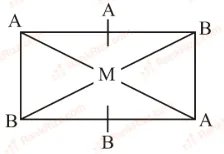
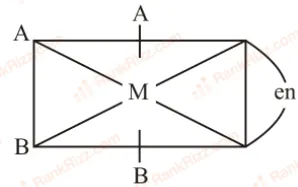
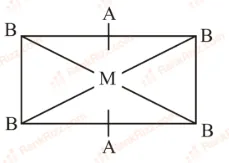
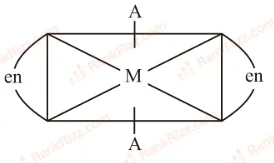
The one that will show optical activity is (en = ethane-1, 2-diamine):
  1. A
    Figure for JEE Main 2019 Chemistry question on Structural isomerism in complexes
  2. B
    Figure for JEE Main 2019 Chemistry question on Structural isomerism in complexes
  3. C
    Figure for JEE Main 2019 Chemistry question on Structural isomerism in complexes
  4. D
    Figure for JEE Main 2019 Chemistry question on Structural isomerism in complexes

    Option (4)

JEE MAIN 2019 · 12 APR S1Colour and magnetic behaviour of complexes from CFTTRANSCRIBED

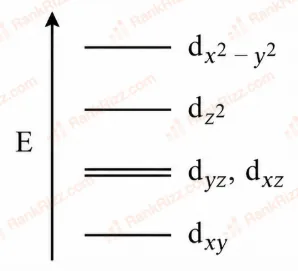
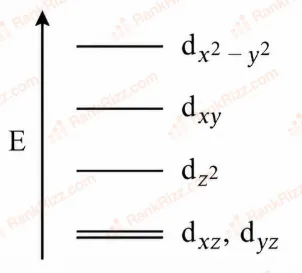
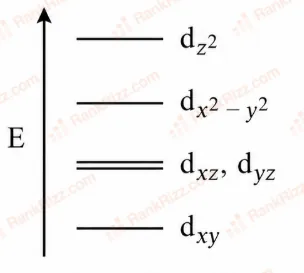
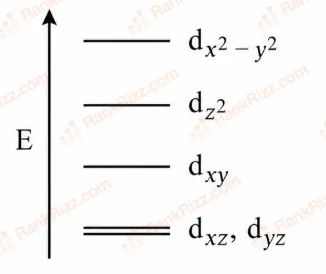
Complete removal of both the axial ligands (along the z-axis) from an octahedral complex leads to which of the following splitting patterns? (relative orbital energies not on scale).
  1. A
    Figure for JEE Main 2019 Chemistry question on Colour and magnetic behaviour of complexes from CFT
  2. B
    Figure for JEE Main 2019 Chemistry question on Colour and magnetic behaviour of complexes from CFT
  3. C
    Figure for JEE Main 2019 Chemistry question on Colour and magnetic behaviour of complexes from CFT
  4. D
    Figure for JEE Main 2019 Chemistry question on Colour and magnetic behaviour of complexes from CFT
JEE MAIN 2019 · 12 APR S2Stability and applications of coordination compoundsTRANSCRIBED

The compound used in the treatment of lead poisoning is:

  1. A

    Desferrioxime B

  2. B

    EDTA

  3. C

    Cis-platin

  4. D

    D-penicillamine

JEE MAIN 2019 · 09 JAN S1Valence bond theory of complexesTRANSCRIBED

The highest value of the calculated spin only magnetic moment (in BM) among all the transition metal complexes is:

  1. A

    4.90 BM

  2. B

    3.87 BM

  3. C

    6.93 BM

  4. D

    5.92 BM

JEE MAIN 2019 · 11 JAN S1Stability and applications of coordination compoundsTRANSCRIBED

Match the metals (column I) with the coordination compound(s)/enzyme(s) (column II):
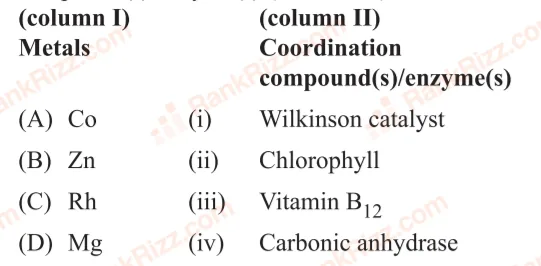
Figure for JEE Main 2019 Chemistry question on Stability and applications of coordination compounds
  1. A

    (A)-(iii); (B)-(iv); (C)-(i); (D)-(ii)

  2. B

    (A)-(i); (B)-(ii); (C)-(iii); (D)-(iv)

  3. C

    (A)-(ii); (B)-(i); (C)-(iv); (D)-(iii)

  4. D

    (A)-(iv); (B)-(iii); (C)-(i); (D)-(ii)

JEE MAIN 2018 · 08 APR OFFLINECrystal field splitting, CFSE and spectrochemical seriesTRANSCRIBED

Consider the following reaction and statements:
[Co(NH3)4Br2]++Br−→[Co(NH3)3Br3]+NH3[Co(NH_3)_4Br_2]^+ + Br^- \rightarrow [Co(NH_3)_3Br_3] + NH_3
(i) Two isomers are produced if the reactant complex ion is a cis-isomer.
(ii) Two isomers are produced if the reactant complex ion is a trans-isomer.
(iii) Only one isomer is produced if the reactant complex ion is a trans-isomer.
(iv) Only one isomer is produced if the reactant complex ion is a cis-isomer.
The correct statements are:

  1. A

    (ii) and (iv)

  2. B

    (i) and (ii)

  3. C

    (i) and (iii)

  4. D

    (iii) and (iv)

JEE MAIN 2018 · 16 APR ONLINEValence bond theory of complexesTRANSCRIBED

In Wilkinson's catalyst, the hybridization of central metal ion and its shape are respectively:

  1. A

    sp3dsp^3d, trigonal bipyramidal

  2. B

    d2sp3d^2sp^3, octahedral

  3. C

    dsp2dsp^2, square planar

  4. D

    sp3sp^3, tetrahedral

JEE MAIN 2018 · 08 APR OFFLINECrystal field splitting, CFSE and spectrochemical seriesTRANSCRIBED

The oxidation states of Cr in [Cr(H2_2O)6_6]Cl3_3, [Cr(C6_6H6_6)2_2] and K2_2[Cr(CN)2_2(O)2_2(O2_2)(NH3_3)], respectively, are:

  1. A

    +3, 0 and +4

  2. B

    +3, +4 and +6

  3. C

    +3, +2 and +4

  4. D

    +3, 0 and +6

JEE MAIN 2018 · 16 APR ONLINEStructural isomerism in complexesTRANSCRIBED

Which of the following complexes will show geometrical isomerism?

  1. A

    Potassium tris(oxalato)chromate(III)

  2. B

    Pentaaquachlorochromium(II)chloride

  3. C

    Aquachlorobis(ethylenediamine)cobalt(II)chloride

  4. D

    Potassiumamminetrichloroplatinate(II)

JEE MAIN 2018 · 15 APR S2Valence bond theory of complexesTRANSCRIBED

The correct order of spin-only magnetic moments among the following is: (Atomic number: Mn = 25, Co = 27, Ni = 28, Zn = 30)

  1. A

    [ZnCl4_4]2−^{2-} > [NiCl4_4]2−^{2-} > [CoCl4_4]2−^{2-} > [MnCl4_4]2−^{2-}

  2. B

    [CoCl4_4]2−^{2-} > [MnCl4_4]2−^{2-} > [NiCl4_4]2−^{2-} > [ZnCl4_4]2−^{2-}

  3. C

    [NiCl4_4]2−^{2-} > [CoCl4_4]2−^{2-} > [MnCl4_4]2−^{2-} > [ZnCl4_4]2−^{2-}

  4. D

    [MnCl4_4]2−^{2-} > [CoCl4_4]2−^{2-} > [NiCl4_4]2−^{2-} > [ZnCl4_4]2−^{2-}

JEE MAIN 2018 · 15 APR S2Structural isomerism in complexesTRANSCRIBED

The total number of possible isomers for square planar [Pt(Cl)(NO2_2)(NO3_3)(SCN)]2−^{2-} is:

  1. A

    16

  2. B

    12

  3. C

    8

  4. D

    24

JEE MAIN 2018 · 15 APR S1Valence bond theory of complexesTRANSCRIBED

The correct combination is:

  1. A

    [NiCl4_4]2−^{2-} - square-planar; [Ni(CN)4_4]2−^{2-} - paramagnetic

  2. B

    [Ni(CN)4_4]2−^{2-} - tetrahedral; [Ni(CO)4_4] - paramagnetic

  3. C

    [NiCl4_4]2−^{2-} - paramagnetic; [Ni(CO)4_4] - tetrahedral

  4. D

    [NiCl4_4]2−^{2-} - diamagnetic; [Ni(CO)4_4] - square-planar

JEE MAIN 2017 · 02 APR OFFLINEValence bond theory of complexesTRANSCRIBED

On treatment of 100 mL of 0.1 M solution of CoCl3_{3}.6H2_{2}O with excess AgNO3_{3}; 1.2×10221.2 \times 10^{22} ions are precipitated. The complex is:

  1. A

    [CoH2_{2}O3_{3}]Cl3_{3}.3H2_{2}O

  2. B

    [CoH2_{2}O6_{6}]Cl3_{3}

  3. C

    [CoH2_{2}O5_{5}Cl]Cl2_{2}.H2_{2}O

  4. D

    [CoH2_{2}O4_{4}Cl2_{2}]Cl.2H2_{2}O

JEE MAIN 2017 · 09 APR ONLINEWerner's theory and coordination terminologyTRANSCRIBED

[Co2_2(CO)8_8] displays

  1. A

    no Co −- Co bonds, six terminal CO and two bridging CO.

  2. B

    no Co −- Co bonds, four terminal CO and four bridging CO.

  3. C

    one Co −- Co bonds, six terminal CO and two bridging CO.

  4. D

    one Co −- Co bonds, four terminal CO and four bridging CO.

JEE MAIN 2016 · 10 APR ONLINEWerner's theory and coordination terminologyTRANSCRIBED

Which of the following is an example of homoleptic complex?

  1. A

    [Co(NH3)6]Cl3[Co(NH_3)_6]Cl_3

  2. B

    [Pt(NH3)2Cl2][Pt(NH_3)_2Cl_2]

  3. C

    [Co(NH3)4Cl2][Co(NH_3)_4Cl_2]

  4. D

    [Co(NH3)5Cl]Cl2[Co(NH_3)_5Cl]Cl_2

JEE MAIN 2016 · 03 APR OFFLINEStructural isomerism in complexesTRANSCRIBED

Which one of the following complexes shows optical isomerism? (en=ethylenediamine)

  1. A

    trans [Co(en)2Cl2][Co(en)_2 Cl_2] Cl

  2. B

    [Co(NH3)4Cl2][Co(NH_3)_4 Cl_2] Cl

  3. C

    [Co(NH3)3Cl3][Co(NH_3)_3 Cl_3]

  4. D

    cis [Co(en)2Cl2][Co(en)_2 Cl_2] Cl

JEE MAIN 2016 · 09 APR ONLINEValence bond theory of complexesTRANSCRIBED

Which one of the following complexes will consume more equivalents of aqueous solution of AgNO3AgNO_3?

  1. A

    Na2[CrCl5(H2O)]Na_2[CrCl_5(H_2O)]

  2. B

    Na3[CrCl6]Na_3[CrCl_6]

  3. C

    [Cr(H2O)5Cl]Cl2[Cr(H_2O)_5Cl]Cl_2

  4. D

    [Cr(H2O)6]Cl3[Cr(H_2O)_6]Cl_3

JEE MAIN 2016 · 03 APR OFFLINEValence bond theory of complexesTRANSCRIBED

The pair having the same magnetic moment is: [At. No.: Cr = 24, Mn = 25, Fe = 26, Co = 27]

  1. A

    [Mn(H2O)6]2+[Mn(H_2O)_6]^{2+} and [Cr(H2O)6]2+[Cr(H_2O)_6]^{2+}

  2. B

    [CoCl4]2−[CoCl_4]^{2-} and [Fe(H2O)6]2+[Fe(H_2O)_6]^{2+}

  3. C

    [Cr(H2O)6]2+[Cr(H_2O)_6]^{2+} and [CoCl4]2−[CoCl_4]^{2-}

  4. D

    [Cr(H2O)6]2+[Cr(H_2O)_6]^{2+} and [Fe(H2O)6]2+[Fe(H_2O)_6]^{2+}

JEE MAIN 2016 · 09 APR ONLINEColour and magnetic behaviour of complexes from CFTTRANSCRIBED

Identify the correct trend given below:
(Atomic No. = Ti : 22, Cr : 24 and Mo : 42)

  1. A

    Δ\Delta of [Cr(H2O)6]2+>[Mo(H2O)6]2+[Cr(H_2O)_6]^{2+} > [Mo(H_2O)_6]^{2+} and Δ\Delta of [Ti(H2O)6]3+>[Ti(H2O)6]2+[Ti(H_2O)_6]^{3+} > [Ti(H_2O)_6]^{2+}

  2. B

    Δ\Delta of [Cr(H2O)6]2+>[Mo(H2O)6]2+[Cr(H_2O)_6]^{2+} > [Mo(H_2O)_6]^{2+} and Δ\Delta of [Ti(H2O)6]3+<[Ti(H2O)6]2+[Ti(H_2O)_6]^{3+} < [Ti(H_2O)_6]^{2+}

  3. C

    Δ\Delta of [Cr(H2O)6]2+<[Mo(H2O)6]2+[Cr(H_2O)_6]^{2+} < [Mo(H_2O)_6]^{2+} and Δ\Delta of [Ti(H2O)6]3+>[Ti(H2O)6]2+[Ti(H_2O)_6]^{3+} > [Ti(H_2O)_6]^{2+}

  4. D

    Δ\Delta of [Cr(H2O)6]2+<[Mo(H2O)6]2+[Cr(H_2O)_6]^{2+} < [Mo(H_2O)_6]^{2+} and Δ\Delta of [Ti(H2O)6]3+<[Ti(H2O)6]2+[Ti(H_2O)_6]^{3+} < [Ti(H_2O)_6]^{2+}