JEE MAIN 2020 · 07 JAN S2Nucleophilic substitution (SN1 and SN2)TRANSCRIBED
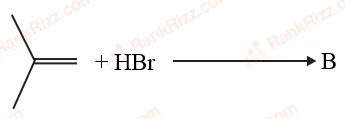
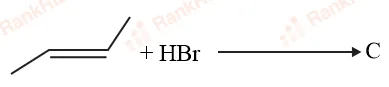
For the following reactions
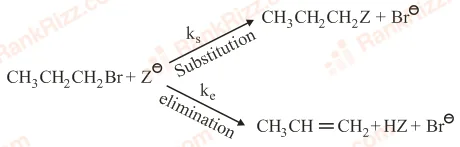
where:
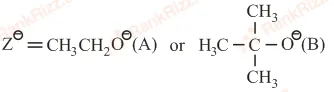
k and k are respectively the rate constants for substitution and elimination, and , the correct option is
- A
and
- B
and
- C
and
- D
and
Every Haloalkanes and Haloarenes question JEE Main has set from 2004–2026, grouped by the idea it tests rather than the order of the syllabus. 188 questions across 6 distinct ideas. Free to read, answer key on every one.
Questions
188
Distinct ideas
6
Share of marks
3.4%
Difficulty
MEDIUM
A chapter is not one subject — it is a handful of procedures the examiner reuses. These are the ones Haloalkanes and Haloarenes questions actually test.
121–140 OF 188 · NEWEST FIRST
For the following reactions
where:
k and k are respectively the rate constants for substitution and elimination, and , the correct option is
and
and
and
and
The decreasing order of reactivity towards dehydrohalogenation (E) reaction of the following compounds is:
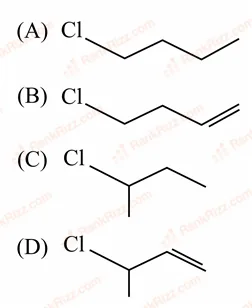
D > B > C > A
B > D > A > C
B > D > C > A
B > A > D > C
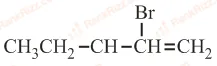
The major product obtained from -elimination of 3-bromo-2-fluoropentane is:
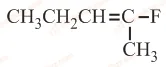
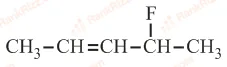
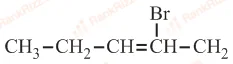
The increasing order of the boiling points of the major products A, B and C of the following reactions will be:
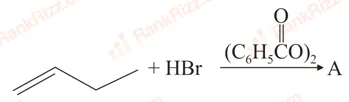
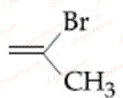
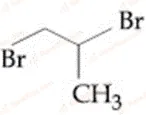
1-methyl ethylene oxide when treated with an excess of HBr produces
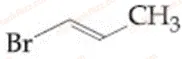
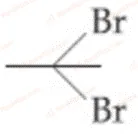
Which of these will produce the highest yield Friedel Crafts reaction?

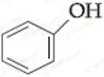

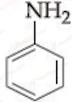
Consider the following reactions:
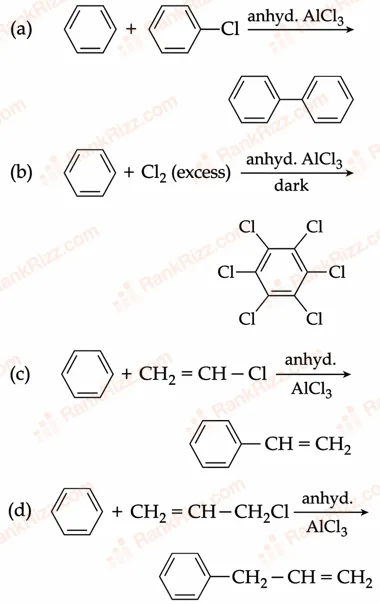
Which of these reactions are possible?
(a) and (b)
(a) and (d)
(b), (c) and (d)
(b) and (d)
Consider the reaction sequence given below:
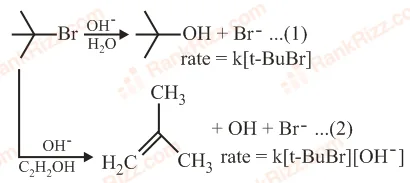
Which of the following statements is true:
Changing the base from to will have no effect on reaction (2)
Changing the concentration of base will have no effect on reaction (1)
Doubling the concentration of base will double the rate of both the reactions
Changing the concentration of base will have no effect on reaction (2)
The mechanism of Sn1 reaction is given as:
Ion pair Solvent separated ion pair
A student writes general characteristics based on the given mechanism as:
(a) The reaction is favoured by weak nucleophiles.
(b) would be easily formed if the substituents are bulky
(c) The reaction is accompanied by racemization
(d) The reaction is favoured by non-polar solvents.
Which observations are correct?
(a) and (b)
(a) and (c)
(a), (b) and (c)
(b) and (d)
Which of the following compounds will show retention in configuration on nucleophilic substitution by ion?
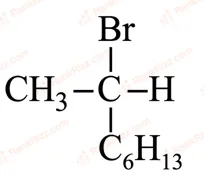
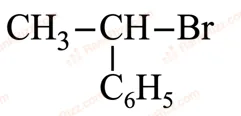
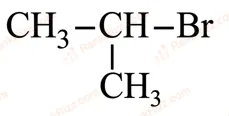
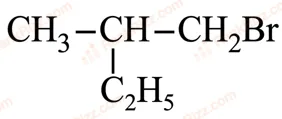
Which of the following compounds will produce a precipitate with ?
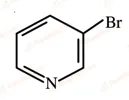
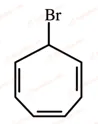
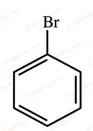
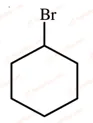
Which one of the following is likely to give a precipitate with AgNO solution?
CH = CH - Cl
(CH)CCl
CCl
CHCl
Which one of the following alkenes when treated with HCl yields majorly an anti Markovnikov product?
CHO - CH = CH
Cl - CH = CH
HN - CH = CH
FC - CH = CH
The compounds A and B in the following reaction are, respectively:
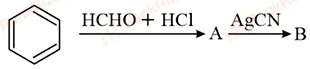
A = Benzyl alcohol, B = Benzyl isocyanide
A = Benzyl chloride, B = Benzyl isocyanide
A = Benzyl alcohol, B = Benzyl cyanide
A = Benzyl chloride, B = Benzyl cyanide
Heating of 2-chloro-1-phenylbutane with EtOK/EtOH gives X as the major product. Reaction X with Hg(OAc)/HO followed by NaBH gives Y as the major product. Y is:
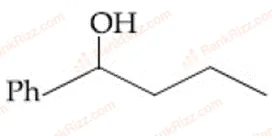
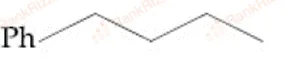
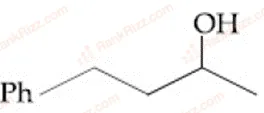
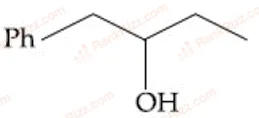
The major product obtained in the given reaction is:

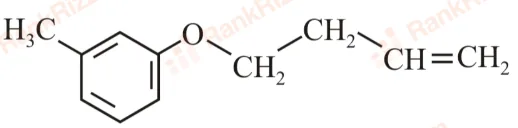
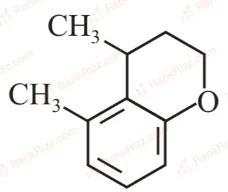
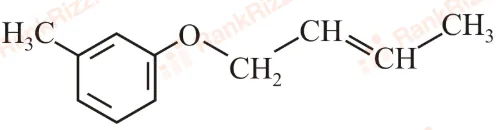
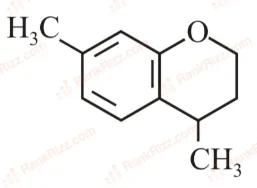
Which hydrogen in compound (E) is easily replaceable during bromination reaction in presence of light?
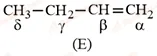
-hydrogen
-hydrogen
-hydrogen
-hydrogen
Increasing order of reactivity of the following compounds for S1 substitution is:

B < C < D < A
B < A < D < C
A < B < D < C
B < C < A < D
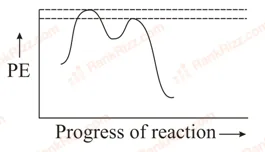
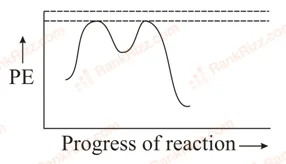
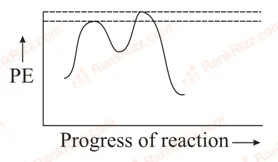
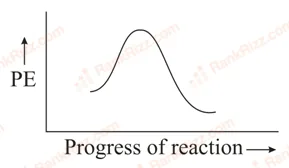
Which of the following potential energy (P.E.) diagrams represents the S1 reaction?
Increasing rate of S1 reaction in the following compounds is:
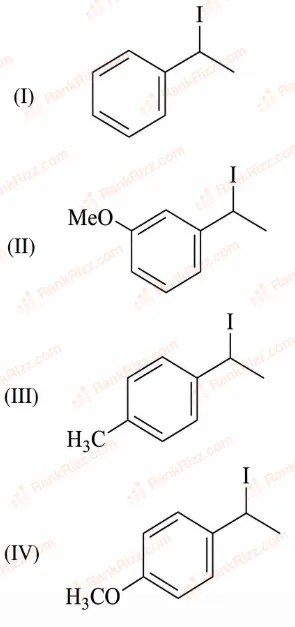
(I) < (II) < (III) < (IV)
(II) < (I) < (III) < (IV)
(II) < (I) < (IV) < (III)
(I) < (II) < (IV) < (III)
JEE Advanced has set 8 Haloalkanes and Haloarenes questions too. Haloalkanes and Haloarenes JEE Advanced PYQs →
OTHER CHEMISTRY CHAPTERS