RankRizz

Chemical Bonding and Molecular Structure — JEE Main Previous Year Questions

Every Chemical Bonding and Molecular Structure question JEE Main has set from 2004–2026, grouped by the idea it tests rather than the order of the syllabus. 316 questions across 11 distinct ideas. Free to read, answer key on every one.

Questions

316

Distinct ideas

11

Share of marks

4.8%

Difficulty

MEDIUM

The ideas inside Chemical Bonding and Molecular Structure

A chapter is not one subject — it is a handful of procedures the examiner reuses. These are the ones Chemical Bonding and Molecular Structure questions actually test.

Every Chemical Bonding and Molecular Structure question

221–240 OF 316 · NEWEST FIRST

JEE MAIN 2019 · 08 APR S2Molecular orbital theory of diatomic speciesTRANSCRIBED

Among the following molecules/ions, C22−C_2^{2-}, N22−N_2^{2-}, O22−O_2^{2-}, O2O_2, which one is diamagnetic and has the shortest bond length?

  1. A

    N22−N_2^{2-}

  2. B

    O22−O_2^{2-}

  3. C

    O2O_2

  4. D

    C22−C_2^{2-}

JEE MAIN 2019 · 08 APR S2Fajans' rules, polarisation and covalent characterTRANSCRIBED

The covalent alkaline earth metal halide X = Cl, Br, I is:

  1. A

    CaX2_2

  2. B

    MgX2_2

  3. C

    SrX2_2

  4. D

    BeX2_2

JEE MAIN 2019 · 09 APR S2Hydrogen bonding and intermolecular forcesTRANSCRIBED

HF has highest boiling point among hydrogen halides, because it has:

  1. A

    lowest dissociation enthalpy

  2. B

    strongest van der Waals' interactions

  3. C

    strongest hydrogen bonding

  4. D

    lowest ionic character

JEE MAIN 2019 · 08 APR S2VSEPR theory and shapes of molecules and ionsTRANSCRIBED

The ion that has sp3^3d2^2 hybridization for the central atom is:

  1. A

    BrF2−_2^{-}

  2. B

    ICl4−_4^{-}

  3. C

    IF6−_6^{-}

  4. D

    ICl2−_2^{-}

JEE MAIN 2019 · 08 APR S2VSEPR theory and shapes of molecules and ionsTRANSCRIBED

The correct statement about ICl5_5 and ICl4−_4^{-} is:

  1. A

    ICl5_5 is trigonal bipyramidal and ICl4−_4^{-} is tetrahedral.

  2. B

    Both are isostructural.

  3. C

    ICl5_5 is square pyramidal and ICl4−_4^{-} is tetrahedral.

  4. D

    ICl5_5 is square pyramidal and ICl4−_4^{-} is square planar.

JEE MAIN 2019 · 09 APR S1Hydrogen bonding and intermolecular forcesTRANSCRIBED

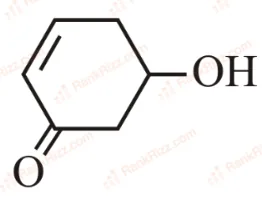
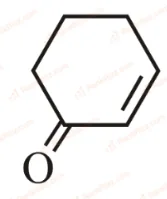
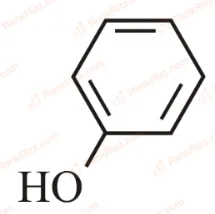
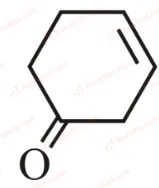
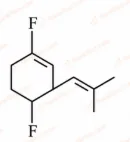
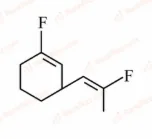
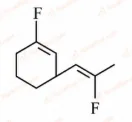
The major product of the following reaction is:
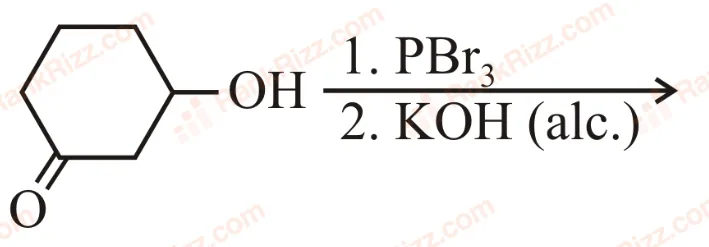
Figure for JEE Main 2019 Chemistry question on Hydrogen bonding and intermolecular forces


1. PBr3_3
2. KOH (alc.)

  1. A
    Figure for JEE Main 2019 Chemistry question on Hydrogen bonding and intermolecular forces
  2. B
    Figure for JEE Main 2019 Chemistry question on Hydrogen bonding and intermolecular forces
  3. C
    Figure for JEE Main 2019 Chemistry question on Hydrogen bonding and intermolecular forces
  4. D
    Figure for JEE Main 2019 Chemistry question on Hydrogen bonding and intermolecular forces
JEE MAIN 2018 · 08 APR OFFLINEMolecular orbital theory of diatomic speciesTRANSCRIBED

According to molecular orbital theory, which of the following molecule will not be available?

  1. A

    H22−H_2^{2-}

  2. B

    He22+He_2^{2+}

  3. C

    He2+He_2^+

  4. D

    H2−H_2^-

JEE MAIN 2018 · 08 APR OFFLINEMolecular orbital theory of diatomic speciesTRANSCRIBED

Which of the following compounds contain(s) no covalent bond(s)?
KCl, PH3_3, O2_2, B2_2H6_6, H2_2SO4_4

  1. A

    KCl, B2_2H6_6

  2. B

    KCl, B2_2H6_6, PH3_3

  3. C

    KCl, H2_2SO4_4

  4. D

    KCl

JEE MAIN 2018 · 16 APR ONLINEVSEPR theory and shapes of molecules and ionsTRANSCRIBED

Which of the following conversions involves change in both shape and hybridisation?

  1. A

    H2O→H3O+H_2O \rightarrow H_3O^+

  2. B

    BF3→BF4−BF_3 \rightarrow BF_4^-

  3. C

    CH4→C2H6CH_4 \rightarrow C_2H_6

  4. D

    NH3→NH4+NH_3 \rightarrow NH_4^+

JEE MAIN 2018 · 08 APR OFFLINEMolecular orbital theory of diatomic speciesTRANSCRIBED

Total number of lone pair of electrons in I3−_3^- ion is:

  1. A

    12

  2. B

    3

  3. C

    6

  4. D

    9

JEE MAIN 2018 · 15 APR S2Molecular orbital theory of diatomic speciesTRANSCRIBED

Which of the following best describes the diagram of molecular orbital?
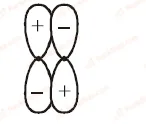
Figure for JEE Main 2018 Chemistry question on Molecular orbital theory of diatomic species
  1. A

    A bonding π\pi orbital

  2. B

    A non-bonding orbital

  3. C

    An antibonding σ\sigma orbital

  4. D

    An antibonding π\pi orbital

JEE MAIN 2018 · 16 APR ONLINEDipole moment and molecular polarityTRANSCRIBED

The most polar compound among the following is:
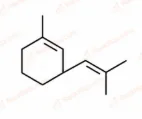
  1. A
    Figure for JEE Main 2018 Chemistry question on Dipole moment and molecular polarity
  2. B
    Figure for JEE Main 2018 Chemistry question on Dipole moment and molecular polarity
  3. C
    Figure for JEE Main 2018 Chemistry question on Dipole moment and molecular polarity
  4. D
    Figure for JEE Main 2018 Chemistry question on Dipole moment and molecular polarity
JEE MAIN 2018 · 15 APR S1Molecular orbital theory of diatomic speciesTRANSCRIBED

In the molecular orbital diagram for the molecular ion, N2+_2^+, the number of electrons in the σ2p\sigma_{2p} molecular orbital is:

  1. A

    0

  2. B

    2

  3. C

    3

  4. D

    1

JEE MAIN 2018 · 16 APR ONLINEVSEPR theory and shapes of molecules and ionsTRANSCRIBED

The incorrect geometry is represented by:

  1. A

    NF3_3 - trigonal planar

  2. B

    BF3_3 - trigonal planar

  3. C

    AsF5_5 - trigonal bipyramidal

  4. D

    H2_2O - bent

JEE MAIN 2018 · 15 APR S1VSEPR theory and shapes of molecules and ionsTRANSCRIBED

Identify the pair in which the geometry of the species is T-shape and square pyramidal, respectively:

  1. A

    ICl2−_2^- and ICl5_5

  2. B

    IO3−_3^- and IO2_2F2−_2^-

  3. C

    ClF3_3 and IO4−_4^-

  4. D

    XeOF2_2 and XeOF4_4

JEE MAIN 2018 · 15 APR S1Resonance and bond parametersTRANSCRIBED
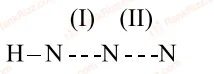
Figure for JEE Main 2018 Chemistry question on Resonance and bond parameters
In hydrogen azide, the bond orders of bonds (I) and (II) are:
  1. A

    I < 2, II > 2

  2. B

    I > 2, II > 2

  3. C

    I > 2, II < 2

  4. D

    I < 2, II < 2

JEE MAIN 2018 · 15 APR S1VSEPR theory and shapes of molecules and ionsTRANSCRIBED

The decreasing order of bond angles in BF3_3, NH3_3, PF3_3 and I3−_3^- is:

  1. A

    I3−_3^- > BF3_3 > NH3_3 > PF3_3

  2. B

    BF3_3 > I3−_3^- > PF3_3 > NH3_3

  3. C

    BF3_3 > NH3_3 > PF3_3 > I3−_3^-

  4. D

    I3−_3^- > NH3_3 > PF3_3 > BF3_3

JEE MAIN 2018 · 08 APR OFFLINEMolecular orbital theory of diatomic speciesTRANSCRIBED

Which of the following are Lewis acids?

  1. A

    BCl3_3 and AlCl3_3

  2. B

    PH3_3 and BCl3_3

  3. C

    AlCl3_3 and CCl4_4

  4. D

    PH3_3 and CCl4_4

JEE MAIN 2018 · 15 APR S2Hydrogen bonding and intermolecular forcesTRANSCRIBED

On the treatment of the following compound with a strong acid, the most susceptible site for bond cleavage is:
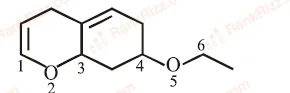
Figure for JEE Main 2018 Chemistry question on Hydrogen bonding and intermolecular forces
  1. A

    O2 - C3

  2. B

    O5 - C6

  3. C

    C4 - O5

  4. D

    C1 - O2

JEE MAIN 2018 · 08 APR OFFLINEMolecular orbital theory of diatomic speciesTRANSCRIBED

Which type of 'defect' has the presence of cations in the interstitial sites?

  1. A

    Metal deficiency defect

  2. B

    Schottky defect

  3. C

    Vacancy defect

  4. D

    Frenkel defect