JEE MAIN 2025 · 24 JAN S2Hybridisation and bond anglesTRANSCRIBED
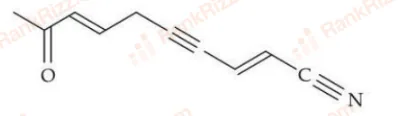
In the given structure, the number of hybridized carbon atoms present respectively are:
- A
4 and 5
- B
3 and 5
- C
3 and 6
- D
4 and 6
Every JEE Main question on Hybridisation and bond angles, one of the ideas inside Chemical Bonding and Molecular Structure: 8 questions from 2004–2025, 4 of them in the last five years. Newest first, answer key on every one. Free to read.
Questions
8
Years asked
7
Since
2004
Of the chapter
3%
Questions on Hybridisation and bond angles in each year it was asked.
1–8 OF 8 · NEWEST FIRST
In the given structure, the number of hybridized carbon atoms present respectively are:
4 and 5
3 and 5
3 and 6
4 and 6
Match List I with List II :
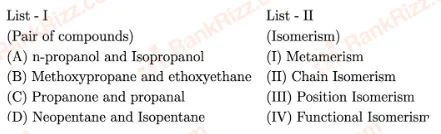
Choose the correct answer from the options given below :
(A)-(II), (B)-(I), (C)-(IV), (D)-(III)
(A)-(III), (B)-(I), (C)-(II), (D)-(IV)
(A)-(I), (B)-(III), (C)-(IV), (D)-(II)
(A)-(III), (B)-(I), (C)-(IV), (D)-(II)
The compound which does not exist is
NaO
BeH
PbEt
NHBeF
In
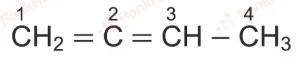
molecule, the hybridization of carbon 1, 2, 3 and 4 respectively, are:
The formation of molecular complex results in a change in hybridization of boron
from to
from to
from to
from to
The hybridization of orbitals of N atom in , and are respectively:
The states of hybridization of boron and oxygen atoms in boric acid are respectively
and
and
and
and
The maximum number of angles between bond pair of electrons is observed in
hybridization
hybridization
hybridization
hybridization
RELATED CHEMICAL BONDING AND MOLECULAR STRUCTURE TOPICS