RankRizz

Chemical Bonding and Molecular Structure — JEE Main Previous Year Questions

Every Chemical Bonding and Molecular Structure question JEE Main has set from 2004–2026, grouped by the idea it tests rather than the order of the syllabus. 316 questions across 11 distinct ideas. Free to read, answer key on every one.

Questions

316

Distinct ideas

11

Share of marks

4.8%

Difficulty

MEDIUM

The ideas inside Chemical Bonding and Molecular Structure

A chapter is not one subject — it is a handful of procedures the examiner reuses. These are the ones Chemical Bonding and Molecular Structure questions actually test.

Every Chemical Bonding and Molecular Structure question

281–300 OF 316 · NEWEST FIRST

JEE MAIN 2012Hydrogen bonding and intermolecular forcesTRANSCRIBED

Ortho-Nitrophenol is less soluble in water than p−p- and m−m- Nitrophenols because :

  1. A

    o−o-Nitrophenol is more volatile in steam than those of m−m- and p−p- isomers

  2. B

    o−o-Nitrophenol shows Intramolecular H−H-bonding

  3. C

    o−o-Nitrophenol shows Intermolecular H−H-bonding

  4. D

    Melting point of o−o-Nitrophenol is lower than those of m−m- and p−p- isomers.

JEE MAIN 2012Molecular orbital theory of diatomic speciesTRANSCRIBED

Among the following, the species having the smallest bond is

  1. A

    NO−\text{NO}^-

  2. B

    NO+\text{NO}^+

  3. C

    O2\text{O}_2

  4. D

    NO

JEE MAIN 2012Fajans' rules, polarisation and covalent characterTRANSCRIBED

Based on lattice energy and other considerations, which one of the following alkali metal chloride is expected to have the highest melting point?

  1. A

    NaCl

  2. B

    KCl

  3. C

    LiCl

  4. D

    RbCl

JEE MAIN 2012VSEPR theory and shapes of molecules and ionsTRANSCRIBED

Among the following species which two have trigonal pyramidal shape? (I) NI3NI_3 (II) I3−I_3^- (III) SO32−SO_3^{2-} (IV) NO3−NO_3^-

  1. A

    I and III

  2. B

    III and IV

  3. C

    I and IV

  4. D

    II and III

JEE MAIN 2012Dipole moment and molecular polarityTRANSCRIBED

Dipole moment is shown by

  1. A

    1,2-dichlorobenzene

  2. B

    trans 2, 3-dichloro-2-butene

  3. C

    1,4-chlorobenzene

  4. D

    trans-1,2-dinitroethene

JEE MAIN 2012Dipole moment and molecular polarityTRANSCRIBED

Among the following, the molecule with the lowest dipole moment is

  1. A

    CHCl3_3

  2. B

    CH3_3Cl

  3. C

    CH2_2Cl2_2

  4. D

    CCl4_4

JEE MAIN 2012VSEPR theory and shapes of molecules and ionsTRANSCRIBED

Which of the following has the square planar structure?

  1. A

    XeF4_4

  2. B

    NH4+_4^+

  3. C

    BF4−_4^-

  4. D

    CCl4_4

JEE MAIN 2012Hybridisation and bond anglesTRANSCRIBED

The formation of molecular complex BF3−NH3\text{BF}_3 - \text{NH}_3 results in a change in hybridization of boron

  1. A

    from sp2sp^2 to dsp2dsp^2

  2. B

    from sp2sp^2 to sp3sp^3

  3. C

    from sp3sp^3 to sp2sp^2

  4. D

    from sp3sp^3 to sp3dsp^3d

JEE MAIN 2012Dipole moment and molecular polarityTRANSCRIBED

Although CN−^- ion and N2_2 molecule are isoelectronic, yet N2_2 molecule is chemically inert because of

  1. A

    presence of more number of electrons in bonding

  2. B

    lone bond energy orbitals

  3. C

    absence of bond polarity

  4. D

    uneven electron distribution.

JEE MAIN 2012Dipole moment and molecular polarityTRANSCRIBED

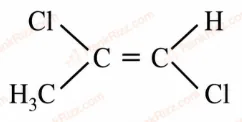
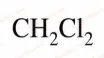
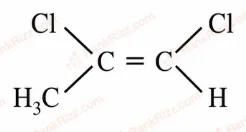
Among the following chloro-compound having the lowest dipole moment is

  1. A
    Figure for JEE Main 2012 Chemistry question on Dipole moment and molecular polarity
  2. B
    Figure for JEE Main 2012 Chemistry question on Dipole moment and molecular polarity
  3. C
    Figure for JEE Main 2012 Chemistry question on Dipole moment and molecular polarity
  4. D
    Figure for JEE Main 2012 Chemistry question on Dipole moment and molecular polarity
JEE MAIN 2011Fajans' rules, polarisation and covalent characterTRANSCRIBED

Among the following the maximum covalent character is shown by the compound:

  1. A

    SnCl2\text{SnCl}_2

  2. B

    AlCl3\text{AlCl}_3

  3. C

    MgCl2\text{MgCl}_2

  4. D

    FeCl2\text{FeCl}_2

JEE MAIN 2011Hybridisation and bond anglesTRANSCRIBED

The hybridization of orbitals of N atom in NO3−\text{NO}_3^-, NO2+\text{NO}_2^+ and NH4+\text{NH}_4^+ are respectively:

  1. A

    sp2,sp,sp3sp^2, sp, sp^3

  2. B

    sp,sp3,sp2sp, sp^3, sp^2

  3. C

    sp2,sp3,spsp^2, sp^3, sp

  4. D

    sp,sp2,sp3sp, sp^2, sp^3

JEE MAIN 2011VSEPR theory and shapes of molecules and ionsTRANSCRIBED

The structure of IF7\text{IF}_7 is:

  1. A

    trigonal bipyramid

  2. B

    octahedral

  3. C

    pentagonal bipyramid

  4. D

    square pyramid

JEE MAIN 2009Molecular orbital theory of diatomic speciesTRANSCRIBED

Using MO theory predict which of the following species has the shortest bond length?

  1. A

    O22+O_2^{2+}

  2. B

    O2+O_2^+

  3. C

    O2−O_2^-

  4. D

    O22−O_2^{2-}

JEE MAIN 2009Back bonding and electron-deficient bondingTRANSCRIBED

The bond dissociation energy of B−-F in BF3_3 is 646646 kJ mol−1^{-1} whereas that of C−-F in CF4_4 is 515515 kJ mol−1^{-1}. The correct reason for higher B-F bond dissociation energy as compared to that of C−FC - F is :

  1. A

    smaller size of B-atom as compared to that of C- atom

  2. B

    stronger σ\sigma bond between B and F in BF3_3 as compared to that between C and F in CF4_4

  3. C

    significant pπ\pi −- pπ\pi interaction between B and F in BF3_3 whereas there is no possibility of such interaction between C and F in CF4_4.

  4. D

    lower degree of pπ\pi −- pπ\pi interaction between B and F in BF3_3 than that between C and F in CF4_4.

JEE MAIN 2008Molecular orbital theory of diatomic speciesTRANSCRIBED

Which one of the following constitutes a group of the isoelectronic species?

  1. A

    C22−,O2−,CO,NOC_2^{2-}, O_2^{-}, CO, NO

  2. B

    NO+,C22−,CN−,N2NO^{+}, C_2^{2-}, CN^{-}, N_2

  3. C

    CN−,N2,O22−,C22−CN^{-}, N_2, O_2^{2-}, C_2^{2-}

  4. D

    N2,O2−,NO+,CON_2, O_2^{-}, NO^{+}, CO

JEE MAIN 2008Molecular orbital theory of diatomic speciesTRANSCRIBED

Which one of the following pairs of species have the same bond order?

  1. A

    CN−CN^{-} and NO+NO^{+}

  2. B

    CN−CN^{-} and CN+CN^{+}

  3. C

    O2−O_2^{-} and CN−CN^{-}

  4. D

    NO+NO^{+} and CN+CN^{+}

JEE MAIN 2007Molecular orbital theory of diatomic speciesTRANSCRIBED

In which of the following ionization processes, the bond order has increased and the magnetic behaviour has changed?

  1. A

    C2⟶C2+C_2 \longrightarrow C_2^+

  2. B

    NO⟶NO+NO \longrightarrow NO^+

  3. C

    O2⟶O2+O_2 \longrightarrow O_2^+

  4. D

    N2⟶N2+N_2 \longrightarrow N_2^+

JEE MAIN 2007Hydrogen bonding and intermolecular forcesTRANSCRIBED

Which of the following hydrogen bonds is the strongest?

  1. A

    O−H⋯NO - H \cdots N

  2. B

    F−H⋯FF - H \cdots F

  3. C

    O−H⋯OO - H \cdots O

  4. D

    O−H⋯FO - H \cdots F

JEE MAIN 2007Molecular orbital theory of diatomic speciesTRANSCRIBED

Which of the following species exhibits the diamagnetic behaviour?

  1. A

    O22−O_2^{2-}

  2. B

    O2+O_2^+

  3. C

    O2O_2

  4. D

    NONO