JEE MAIN 2026Molecular orbital theory of diatomic speciesTRANSCRIBED
Which of the following statement is correct?
- A
O₂, B₂, C₂ are paramagnetic
- B
C₂, NO, B₂ are diamagnetic
- C
NO, B₂, O₂ are paramagnetic
- D
O₂, NO, C₂ are diamagnetic
Every JEE Main question on Molecular orbital theory of diatomic species, one of the ideas inside Chemical Bonding and Molecular Structure: 79 questions from 2004–2026, 31 of them in the last five years. Newest first, answer key on every one. Free to read.
Questions
79
Years asked
20
Since
2004
Of the chapter
25%
Questions on Molecular orbital theory of diatomic species in each year it was asked, the latest 12 of 20.
1–20 OF 79 · NEWEST FIRST
Which of the following statement is correct?
O₂, B₂, C₂ are paramagnetic
C₂, NO, B₂ are diamagnetic
NO, B₂, O₂ are paramagnetic
O₂, NO, C₂ are diamagnetic
Given below are two statements : **Statement (I) :** The correct sequence of bond lengths in the following species is : **Statement (II) :** The correct sequence of number of unpaired electrons in the following species is : In the light of the above statements, choose the correct answer from the options given below :
Both Statement I and Statement II are true
Both Statement I and Statement II are false
Statement I is true but Statement II is false
Statement I is false but Statement II is true
Which of the following pictorial diagram most correctly represents the ( - antibonding) molecular orbital between two atoms if the internuclear axis is taken to be in the z-direction ?

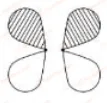
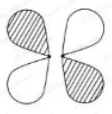
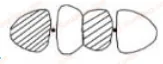
Pair of species among the following having same bond order as well as paramagnetic character will be-
Which of the following molecules show/s paramagnetic behavior?
(A) (B) (C) (D) (E)
Choose the correct answer:
B only
A & C only
A & E only
A & D only
Which of the following linear combination of atomic orbitals will lead to formation of molecular orbitals in homonuclear diatomic molecules [internuclear axis in -direction] ? A. and B. 2 s and C. 3 and 3 D. 2 s and E. and Choose the correct answer from the options given below:
A and B Only
D Only
E Only
C and D Only
Total number of molecules/species from following which will be paramagnetic is ______
, , , , , , , ,
The linear combination of atomic orbitals to form molecular orbitals takes place only when the combining atomic orbitals A. have the same energy B. have the minimum overlap C. have same symmetry about the molecular axis D. have different symmetry about the molecular axis. Choose the most appropriate from the options given below:
A, B, C only
A and C only
B, C, D only
B and D only
Given below are two statements:
Statement (I): A bonding MO has lower electron density above and below the inter-nuclear axis.
Statement (II): The antibonding MO has a node between the nuclei.
In light of the above statements, choose the most appropriate answer from the options given below:
Both Statement I and Statement II are false
Both Statement I and Statement II are true
Statement I is false but Statement II is true
Statement I is true but Statement II is false
When and are the wave functions of atomic orbitals, then is represented by :
Number of molecules/species from the following having one unpaired electron is ______.
The number of species from the following which are paramagnetic and with bond order equal to one is _______
Number of molecules having bond order 2 from the following molecules is _____ :
The total number of species from the following in which one unpaired electron is present, is _______
Total number of electrons present in molecular orbitals of , and is ______.
Sum of bond order of CO and is _______.
The total number of anti bonding molecular orbitals, formed from and atomic orbitals in a diatomic molecule is ______.
The total number of molecular orbitals formed from and atomic orbitals of a diatomic molecule is _______.
What is the number of unpaired electron(s) in the highest occupied molecular orbital of the following species: N, N, O, O?
0, 1, 2, 1
2, 1, 2, 1
0, 1, 0, 1
2, 1, 0, 1
According to MO theory the bond orders for O, CO and NO respectively, are
and
and
and
and
RELATED CHEMICAL BONDING AND MOLECULAR STRUCTURE TOPICS