JEE MAIN 2025 · 22 JAN S2Dipole moment and molecular polarityTRANSCRIBED
Arrange the following compounds in increasing order of their dipole moment :
- A
- B
- C
- D
Every Chemical Bonding and Molecular Structure question JEE Main has set from 2004–2026, grouped by the idea it tests rather than the order of the syllabus. 316 questions across 11 distinct ideas. Free to read, answer key on every one.
Questions
316
Distinct ideas
11
Share of marks
4.8%
Difficulty
MEDIUM
A chapter is not one subject — it is a handful of procedures the examiner reuses. These are the ones Chemical Bonding and Molecular Structure questions actually test.
41–60 OF 316 · NEWEST FIRST
Arrange the following compounds in increasing order of their dipole moment :
Given below are two statements:
Statement (I) : for
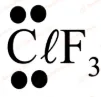
, all three possible structures may be drawn.
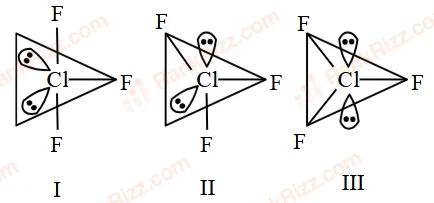
Statement (II) : Structure III is most stable, as the orbitals having the lone pairs are axial, where the repulsion is minimum.
In the light of the above statements, choose the most appropriate answer from the options given below:
Statement I is incorrect but statement II is correct.
Statement I is correct but Statement II is incorrect.
Both Statement I and statement II are correct.
Both Statement I and Statement II are incorrect.
Which of the following linear combination of atomic orbitals will lead to formation of molecular orbitals in homonuclear diatomic molecules [internuclear axis in -direction] ? A. and B. 2 s and C. 3 and 3 D. 2 s and E. and Choose the correct answer from the options given below:
A and B Only
D Only
E Only
C and D Only
Consider is the number of lone pair of electrons present in the equatorial position of the most stable structure of . The ions from the following with number of unpaired electrons are Choose the correct answer from the options given below :
A and C Only
A, D and E Only
B and D Only
B and C Only
A molecule with the formula has all its elements from p-block. Element is rarest, monoatomic, non-radioactive from its group and has the lowest ionization enthalpy value among and . Elements and have first and second highest electronegativity values respectively among all the known elements. The shape of the molecule is:
Square pyramidal
Octahedral
Pentagonal planar
Trigonal bipyramidal
The number of molecules/ions that show linear geometry among the following is ______
, , , , , , , , ,
Total number of molecules/species from following which will be paramagnetic is ______
, , , , , , , ,
Total number of non bonded electrons present in -ion based on Lewis theory is
Given below are two statements:
Statement-I: Since fluorine is more electronegative than nitrogen, the net dipole moment of is greater than .
Statement-II: In , the orbital dipole due to lone pair and the dipole moment of NH bonds are in opposite direction, but in the orbital dipole due to lone pair and dipole moments of N-F bonds are in same direction.
In the light of the above statements, choose the most appropriate from the options given below.
Statement I is true but Statement II is false.
Both Statement I and Statement II are false.
Both Statement I and Statement II are true.
Statement I is false but Statement II is true.
The linear combination of atomic orbitals to form molecular orbitals takes place only when the combining atomic orbitals A. have the same energy B. have the minimum overlap C. have same symmetry about the molecular axis D. have different symmetry about the molecular axis. Choose the most appropriate from the options given below:
A, B, C only
A and C only
B, C, D only
B and D only
The shape of carbocation is :
diagonal pyramidal
trigonal planar
tetrahedral
diagonal
Which one of the following molecules has maximum dipole moment?
Arrange the bonds in order of increasing ionic character in the molecules: , , , and .
Given below are two statements:
Statement (I): A bonding MO has lower electron density above and below the inter-nuclear axis.
Statement (II): The antibonding MO has a node between the nuclei.
In light of the above statements, choose the most appropriate answer from the options given below:
Both Statement I and Statement II are false
Both Statement I and Statement II are true
Statement I is false but Statement II is true
Statement I is true but Statement II is false
Choose the polar molecule from the following :
When and are the wave functions of atomic orbitals, then is represented by :
In which one of the following pairs the central atoms exhibit hybridization ?
and
and
and
and
Number of molecules/ions from the following in which the central atom is involved in sp³ hybridization is:
Given below are two statements: one is labelled as Assertion A and the other is labelled as Reason R. Assertion A: has lower boiling point than . Reason R: In liquid state molecules are associated through Vander Waal's forces, but molecules are associated through hydrogen bonding. In the light of the above statements, choose the most appropriate answer from the options given below:
Both A and R are correct and R is not the correct explanation of A
A is not correct but R is correct
Both A and R are correct but R is the correct explanation of A
A is correct but R is not correct
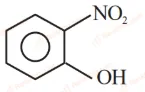
Select the compound from the following that will show intramolecular hydrogen bonding.
JEE Advanced has set 33 Chemical Bonding and Molecular Structure questions too. Chemical Bonding and Molecular Structure JEE Advanced PYQs →
OTHER CHEMISTRY CHAPTERS