JEE MAIN 2024 · 04 APR S1Acidity and basicity of organic compoundsTRANSCRIBED
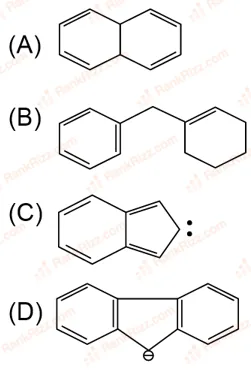
What will be the decreasing order of basic strength of the following conjugate bases?
- A
- B
- C
- D
Every General Organic Chemistry question JEE Main has set from 2004–2026, grouped by the idea it tests rather than the order of the syllabus. 258 questions across 12 distinct ideas. Free to read, answer key on every one.
Questions
258
Distinct ideas
12
Share of marks
5.7%
Difficulty
MEDIUM
A chapter is not one subject — it is a handful of procedures the examiner reuses. These are the ones General Organic Chemistry questions actually test.
101–120 OF 258 · NEWEST FIRST
What will be the decreasing order of basic strength of the following conjugate bases?
In the given compound, the number of carbon atom/s is _______.

Four
Two
One
Three
Total number of isomeric compounds (including stereoisomers) formed by monochlorination of 2-methylbutane is ______.
Number of isomeric products formed by monochlorination of 2-methylbutane in presence of sunlight is
The total number of 'sigma' and 'Pi' bonds in 2-oxohex-4-ynoic acid is ______
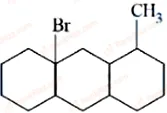
The number of optical isomers in following compound is: ________
Total number of optically active compounds from the following is ____
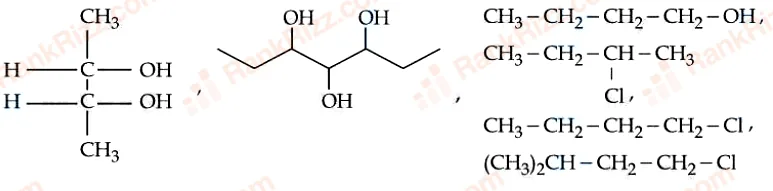
The number of different chain isomers for C₇H₁₆ is ______.
Number of optical isomers possible for 2-chlorobutane is:
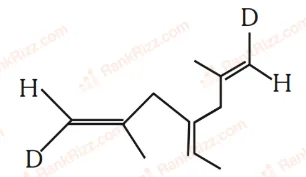
Number of geometrical isomers possible for the given structure is/are ________.
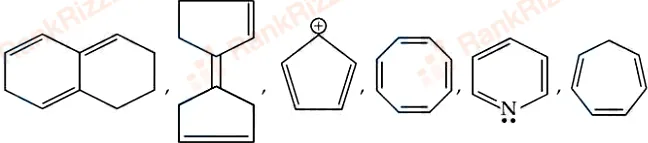
Total number of aromatic compounds among the following compounds is _____
How many compounds among the following compounds show inductive, mesomeric as well as hyperconjugation effects?
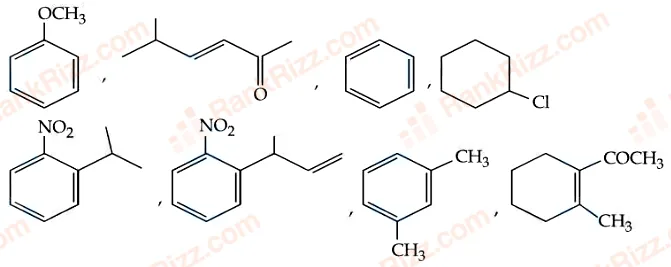
Among the given organic compounds, the total number of aromatic compounds is _______.
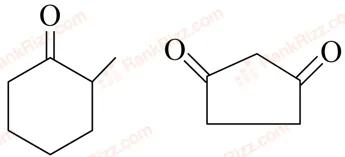
3-Methylhex-2-ene on reaction with HBr in presence of peroxide forms an addition product (A). The number of possible stereoisomers for 'A' is _______.
Total number of compounds with Chiral carbon atoms from following is
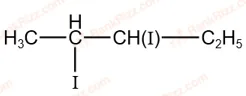
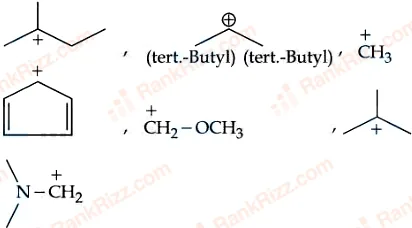
Number of carbocations from the following that are not stabilized by hyperconjugation is __________
_
2-chlorobutane + (isomers)
Total number of optically active isomers shown by , obtained in the above reaction is ________.
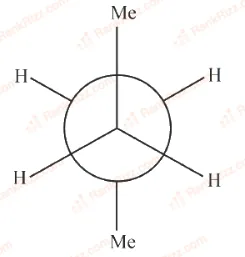
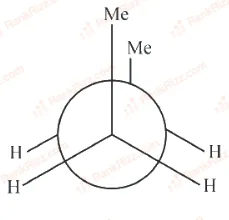
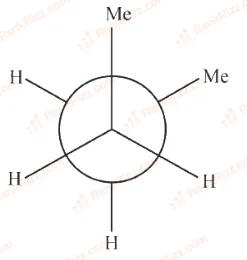
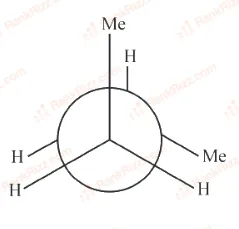
Which of the following conformations will be the most stable?
Resonance in carbonate ion CO is
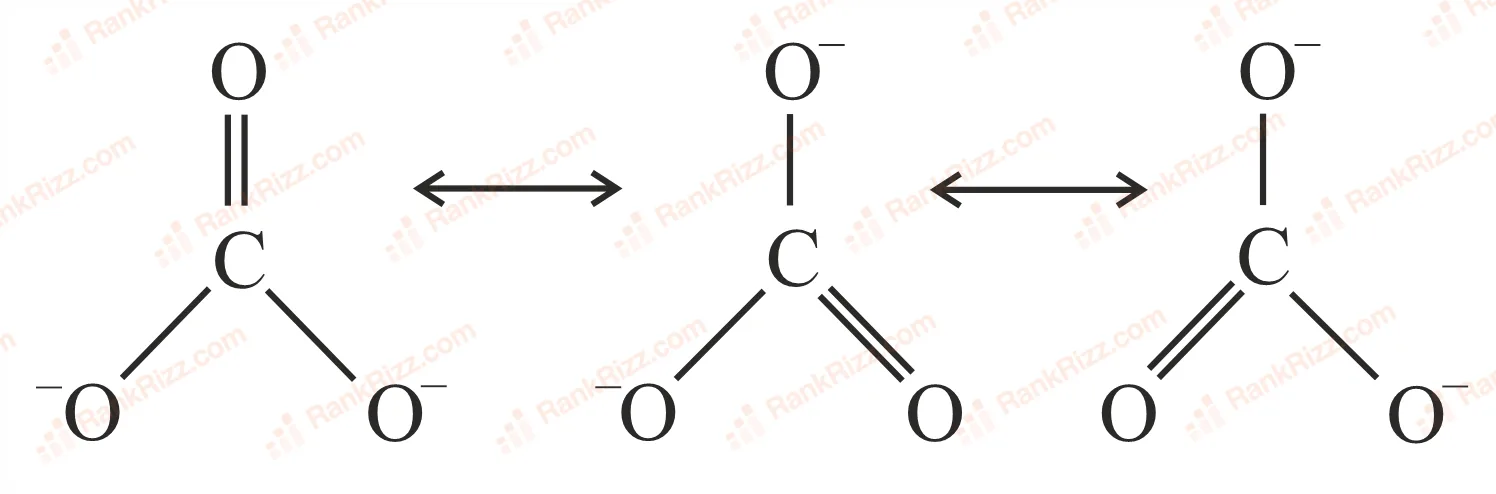
Which of the following is true?
It is possible to identify each structure individually by some physical or chemical method.
All these structures are in dynamic equilibrium with each other.
Each structure exists for equal amount of time.
CO has a single structure i.e., resonance hybrid of the above three structures.
Increasing order of stability of the resonance structure is:
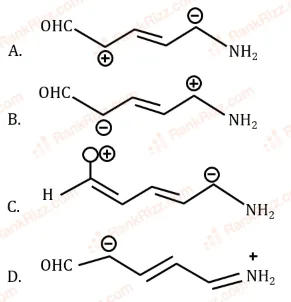
C, D, B, A
C, A, B, D
D, C, A, B
D, C, B, A
JEE Advanced has set 66 General Organic Chemistry questions too. General Organic Chemistry JEE Advanced PYQs →
OTHER CHEMISTRY CHAPTERS