JEE MAIN 2018 · 15 APR S2Reactions of carboxylic acidsTRANSCRIBED
The increasing order of the acidity of the following carboxylic acids is:
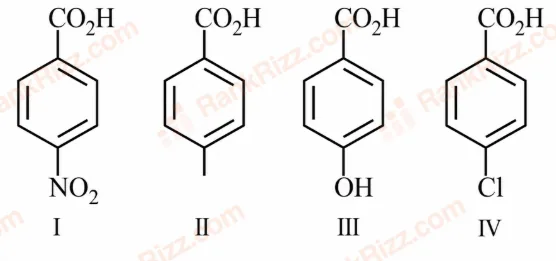
- A
III < II < IV < I
- B
I < III < II < IV
- C
IV < II < III < I
- D
II < IV < III < I
Every Carboxylic Acids and Derivatives question JEE Main has set from 2004–2026, grouped by the idea it tests rather than the order of the syllabus. 76 questions across 4 distinct ideas. Free to read, answer key on every one.
Questions
76
Distinct ideas
4
Share of marks
1.4%
Difficulty
HARD
A chapter is not one subject — it is a handful of procedures the examiner reuses. These are the ones Carboxylic Acids and Derivatives questions actually test.
61–76 OF 76 · NEWEST FIRST
The increasing order of the acidity of the following carboxylic acids is:
III < II < IV < I
I < III < II < IV
IV < II < III < I
II < IV < III < I
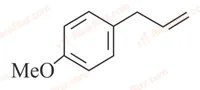
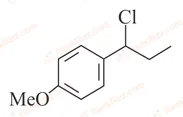
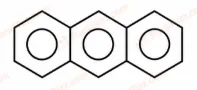
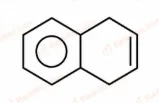
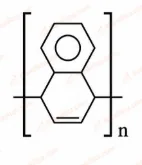
The major product B formed in the following reaction sequence is:
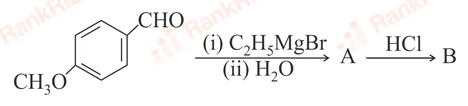
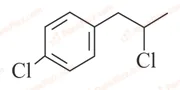
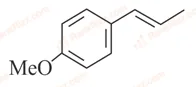
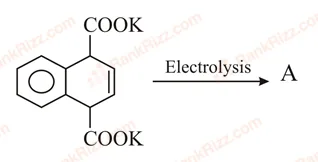
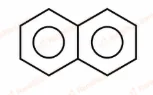
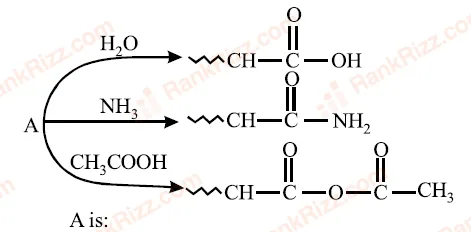
A is:
In the presence of a small amount of phosphorous, aliphatic carboxylic acid reacts with chlorine or bromine to yield a reaction in which, -hydrogen is been replaced by halogen. This reaction is known as
Etard reaction
Wolff-Kischner reaction
Rosenmund reaction
Hell-volhard-zelinsky reaction
The gas liberated by the electrolysis of Dipotassium succinate solution is:
Ethane
Ethyne
Ethene
Propene
An organic compound A, CHO; reacts with HO, NH and CHCOOH as described below:
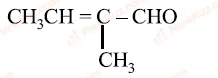
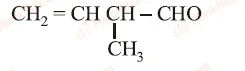
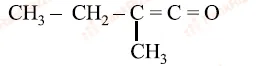
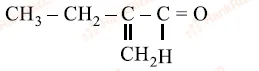
Among the following organic acids, the acid present in rancid butter is:
Pyruvic acid
Acetic acid
Butyric acid
Lactic acid
The strongest acid amongst the following compounds is:
Sodium ethoxide has reacted with ethanoyl chloride. The compound that is produced in the above reaction is:
2-Butanone
Ethyl chloride
Ethyl ethanoate
Diethyl ether
A liquid was mixed with ethanol and a drop of concentrated was added. A compound with a fruity smell was formed. The liquid was:
The correct order of increasing acid strength of the compounds is (a) (b) (c)
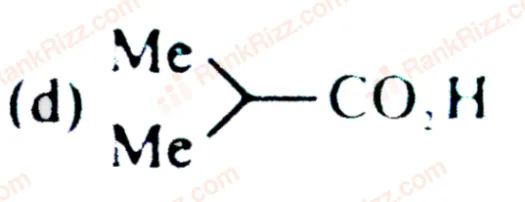
b < d < a < c
d < a < c < b
d < a < b < c
a < d < c < b
Cl
NH
OCH
OCOR
Among the following acids which has the lowest p value
CHCOOH
HCOOH
(CH)COOH
CHCHCOOH
Rate of the reaction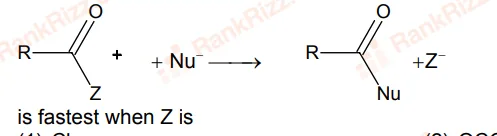
is fastest when Z is
Cl
Consider the acidity of the carboxylic acids:
PhCOOH
On mixing ethyl acetate with aqueous sodium chloride, the composition of the resultant solution is
JEE Advanced has set 27 Carboxylic Acids and Derivatives questions too. Carboxylic Acids and Derivatives JEE Advanced PYQs →
OTHER CHEMISTRY CHAPTERS