RankRizz

JEE Main 12 Jan 2019, Shift 2: Chemistry

The 30 Chemistry questions of JEE Main 12 Jan 2019, Shift 2, numbered across the whole paper. Pick an answer on any question to check it against the key. Free to read, nothing to download.

Chemistry

Q31Concentration terms and their interconversionTRANSCRIBED

8 g of NaOH is dissolved in 18g of H2OH_2O. Mole fraction of NaOH in solution and molality (in mol kg−1^{-1}) of the solution respectively are:

  1. A

    0.167, 11.11

  2. B

    0.167, 22.20

  3. C

    0.2, 11.11

  4. D

    0.2, 22.20

Q32Quantum mechanical model, wave function and probabilityTRANSCRIBED

If the de Broglie wavelength of the electron in nthn^{th} Bohr orbit in a hydrogenic atom is equal to 1.5πa01.5\pi a_0 (a0a_0 is Bohr radius), then the value of nz\frac{n}{z} is:

  1. A

    1.50

  2. B

    1.0

  3. C

    0.4

  4. D

    0.75

Q33Group 14: trends and carbon allotropesTRANSCRIBED

The element that does not show catenation is

  1. A

    Sn

  2. B

    Si

  3. C

    Ge

  4. D

    Pb

Q34Lanthanoids and lanthanoid contractionTRANSCRIBED

The correct order of atomic radii is:

  1. A

    Ce > Eu > Ho > N

  2. B

    N > Ce > Eu > Ho

  3. C

    Ho > N > Eu > Ce

  4. D

    Eu > Ce > Ho > N

Q35Group 14: trends and carbon allotropesTRANSCRIBED

The element that shows greater ability to form pπ−pπp\pi - p\pi multiple bonds is:

  1. A

    Sn

  2. B

    C

  3. C

    Si

  4. D

    Ge

Q36Gas laws and ideal gas equationTRANSCRIBED

An open vessel at 27°C27°C is heated until two fifth of the air (assumed as an ideal gas) in it has escaped from the vessel. Assuming that the volume of the vessel remains constant, the temperature to which the vessel has heated is:

  1. A

    750°C750°C

  2. B

    500°C500°C

  3. C

    750 K

  4. D

    500 K

Q37Enthalpies of reaction and Hess's lawTRANSCRIBED

Given:
(i) C(graphite) + O2_2(g) →\to CO2_2(g); ΔrH⊖=x\Delta_r H^{\ominus} = x kJ mol−1^{-1},
(ii) C(graphite) + 12\frac{1}{2}O2_2(g) →\to CO(g); ΔrH⊖=y\Delta_r H^{\ominus} = y kJ mol−1^{-1},
(iii) CO(g) + 12\frac{1}{2}O2_2(g) →\to CO2_2(g); ΔrH⊖=z\Delta_r H^{\ominus} = z kJ mol−1^{-1}.
Based on the above thermochemical equations, find out which one of the following algebraic relationships is correct?

  1. A

    x = y + z

  2. B

    z = x + y

  3. C

    y = 2z - x

  4. D

    x = y - z

Q38Heat capacity and calorimetryTRANSCRIBED

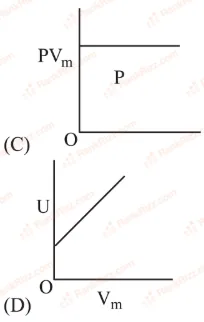
The combination of plots which does not represent isothermal expansion of an ideal gas is
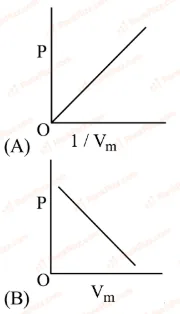
Figure for JEE Main 2019 Chemistry question on Heat capacity and calorimetry Figure for JEE Main 2019 Chemistry question on Heat capacity and calorimetry
  1. A

    (A) and (D)

  2. B

    (B) and (C)

  3. C

    (B) and (D)

  4. D

    (A) and (C)

Q39Solubility product and common ion effectTRANSCRIBED

If KspK_{sp} of Ag2CO3Ag_2CO_3 is 8×10−128 \times 10^{-12}, the molar solubility of Ag2CO3Ag_2CO_3 in 0.1 M AgNO3AgNO_3 is:

  1. A

    8×10−138 \times 10^{-13} M

  2. B

    8×10−118 \times 10^{-11} M

  3. C

    8×10−128 \times 10^{-12} M

  4. D

    8×10−108 \times 10^{-10} M

Q40Hydrogen peroxideTRANSCRIBED

The volume strength of 1M H2O2H_2O_2 is: (Molar mass of H2O2=34H_2O_2 = 34 g mol−1^{-1})

  1. A

    5.6

  2. B

    22.4

  3. C

    11.2

  4. D

    16.8

Q41Alkenes: preparation and stabilityTRANSCRIBED

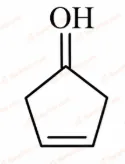
The major product of the following reaction is: 
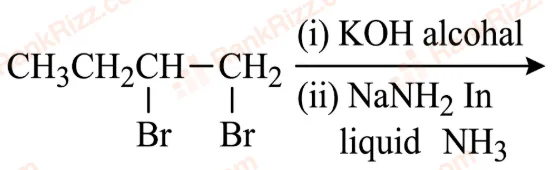
Figure for JEE Main 2019 Chemistry question on Alkenes: preparation and stability
  1. A
    Figure for JEE Main 2019 Chemistry question on Alkenes: preparation and stability
  2. B

    CH3CH=CHCH2NH2CH_3CH=CHCH_2NH_2

  3. C

    CH3CH2C≡CHCH_3CH_2C \equiv CH

  4. D

    CH3CH=C=CH2CH_3CH = C = CH_2

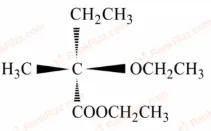
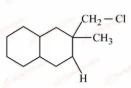
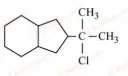
Q42Diazonium saltsTRANSCRIBED

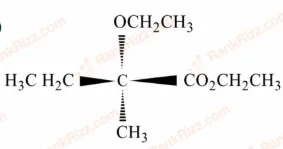
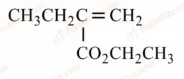
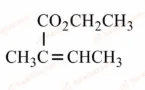
The major product of the following reaction is: (compound with Cl reacting with NaOEt/heat)
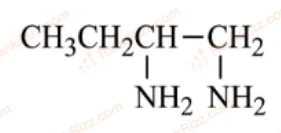
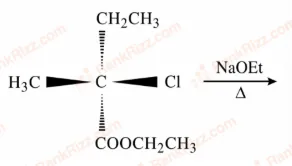
Figure for JEE Main 2019 Chemistry question on Diazonium salts
  1. A
    Figure for JEE Main 2019 Chemistry question on Diazonium salts
  2. B
    Figure for JEE Main 2019 Chemistry question on Diazonium salts
  3. C
    Figure for JEE Main 2019 Chemistry question on Diazonium salts
  4. D
    Figure for JEE Main 2019 Chemistry question on Diazonium salts
Q43Stratospheric pollution and ozone depletionTRANSCRIBED

The compound that is NOT a common component of photochemical smog is:
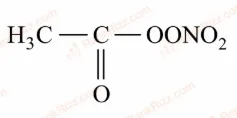
  1. A

    O3O_3

  2. B

    CF2Cl2CF_2Cl_2

  3. C
    Figure for JEE Main 2019 Chemistry question on Stratospheric pollution and ozone depletion
  4. D

    CH2=CHCHOCH_2 = CHCHO

Q44Stratospheric pollution and ozone depletionTRANSCRIBED

The upper stratosphere consisting of the ozone layer, protects us from the sun's radiation that falls in the wavelength region of

  1. A

    200 - 315 nm

  2. B

    600 - 750 nm

  3. C

    400 - 550 nm

  4. D

    0.8 - 1.5 nm

Q45Abnormal molar mass and van't Hoff factorTRANSCRIBED

Molecules of benzoic acid (C6H5COOHC_6H_5COOH) dimerise in 30 g of benzene. 'w' g of benzoic acid shows a depression in freezing point equal to 2 K. If the percentage association of the acid to form dimer in the solution is 80, then w is: (Given that Kf=5K_f = 5 K mol−1^{-1}, molar mass of benzoic acid = 122 g mol−1^{-1})

  1. A

    1.0 g

  2. B

    2.4 g

  3. C

    1.8 g

  4. D

    1.5 g

Q46Conductance, conductivity and molar conductivityTRANSCRIBED

Λm°\Lambda_m^° for NaCl, HCl and NaA are 126.4, 425.9 and 100.5 S cm2^2 mol−1^{-1} respectively. If the conductivity of 0.001 M HA is 5×10−55 \times 10^{-5} S cm−1^{-1}, degree of dissociation of HA is

  1. A

    0.125

  2. B

    0.75

  3. C

    0.25

  4. D

    0.50

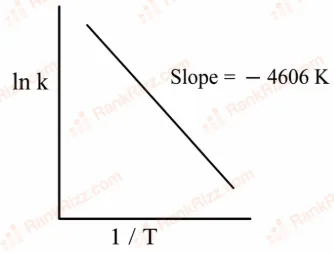
Q47Arrhenius equation and activation energyTRANSCRIBED

For a reaction, consider the plot of ln k versus 1/T given in the figure. If the rate constant of this reaction at 400 K is 10−5s−110^{-5} s^{-1}, then the rate constant at 500 K is:

Figure for JEE Main 2019 Chemistry question on Arrhenius equation and activation energy
  1. A

    10−4s−110^{-4} s^{-1}

  2. B

    10−6s−110^{-6} s^{-1}

  3. C

    2×10⁻⁴s−12 \times 10^{-4} s^{-1}

  4. D

    4×10⁻⁴s−14 \times 10^{-4} s^{-1}

Q48Properties of colloids and coagulationTRANSCRIBED

Among the following, the false statement is:

  1. A

    Latex is a colloidal solution of rubber particles which are positively charged

  2. B

    Tyndall effect can be used to distinguish between a colloidal solution and a true solution.

  3. C

    It is possible to cause artificial rain by throwing electrified sand carrying charge opposite to the one on clouds from an aeroplane.

  4. D

    Lyophilic sols can be coagulated by adding an electrolyte.

Q49Extraction of Fe, Cu, Zn, Al, Ag and AuTRANSCRIBED

The pair that does not require calcination is

  1. A

    ZnO and Fe2_2O3_3 . xH2_2O

  2. B

    ZnO and MgO

  3. C

    ZnCO3_3 and CaO

  4. D

    Fe2_2O3_3 and CaCO3_3 . MgCO3_3

Q50Group 17: halogens and hydrogen halidesTRANSCRIBED

Chlorine on reaction with hot and concentrated sodium hydroxide gives

  1. A

    Cl−Cl^- and ClO2−ClO_2^-

  2. B

    Cl−Cl^- and ClO3−ClO_3^-

  3. C

    Cl−Cl^- and ClO−ClO^-

  4. D

    ClO3−ClO_3^- and ClO2−ClO_2^-

Q51Valence bond theory of complexesTRANSCRIBED

The magnetic moment of an octahedral homoleptic Mn(II) complex is 5.9 B.M. The suitable ligand for this complex is:

  1. A

    CN−CN^-

  2. B

    CO

  3. C

    Ethylenediamine

  4. D

    NCS−NCS^-

Q52Alkenes: preparation and stabilityTRANSCRIBED

The major product of the following reaction is: 
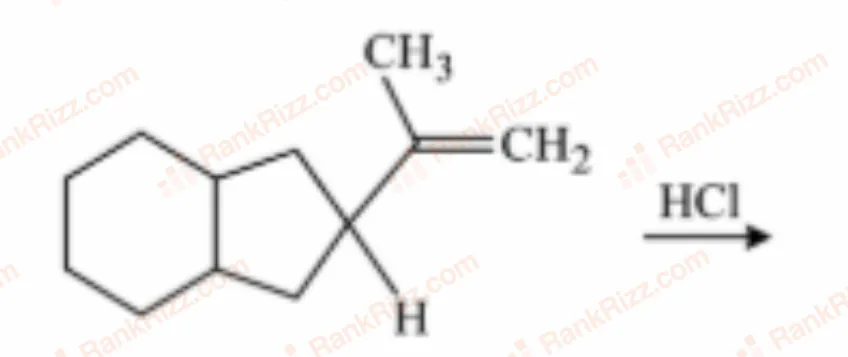
Figure for JEE Main 2019 Chemistry question on Alkenes: preparation and stability
  1. A
    Figure for JEE Main 2019 Chemistry question on Alkenes: preparation and stability
  2. B
    Figure for JEE Main 2019 Chemistry question on Alkenes: preparation and stability
  3. C
    Figure for JEE Main 2019 Chemistry question on Alkenes: preparation and stability
  4. D
    Figure for JEE Main 2019 Chemistry question on Alkenes: preparation and stability
Q54Electrophilic addition to alkenesTRANSCRIBED

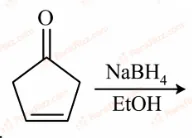
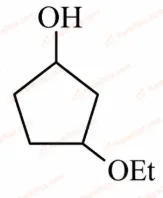
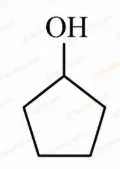
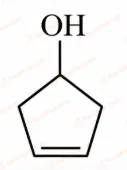
The major product of the following reaction is: 
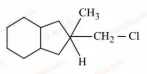
Figure for JEE Main 2019 Chemistry question on Electrophilic addition to alkenes
  1. A
    Figure for JEE Main 2019 Chemistry question on Electrophilic addition to alkenes
  2. B
    Figure for JEE Main 2019 Chemistry question on Electrophilic addition to alkenes
  3. C
    Figure for JEE Main 2019 Chemistry question on Electrophilic addition to alkenes
  4. D
    Figure for JEE Main 2019 Chemistry question on Electrophilic addition to alkenes
Q55Nucleophilic addition reactions of carbonyl compoundsTRANSCRIBED

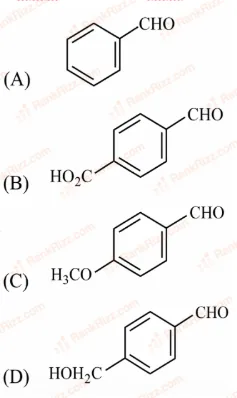
The aldehydes which will not form Grignard product with one equivalent of Grignard reagents are:

Figure for JEE Main 2019 Chemistry question on Nucleophilic addition reactions of carbonyl compounds
  1. A

    (B), (C)

  2. B

    (B), (C), (D)

  3. C

    (C), (D)

  4. D

    (B), (D)

Q56Reactions and tests of aminesTRANSCRIBED

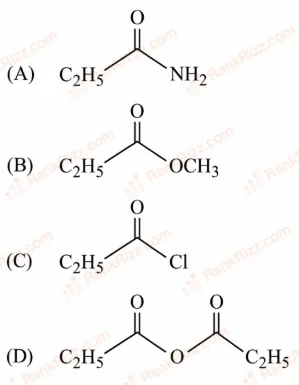
The increasing order of the reactivity of the following with LiAlH4_4 is:

Figure for JEE Main 2019 Chemistry question on Reactions and tests of amines
  1. A

    (B) < (A) < (D) < (C)

  2. B

    (A) < (B) < (C) < (D)

  3. C

    (A) < (B) < (D) < (C)

  4. D

    (B) < (A) < (C) < (D)

Q57Nucleophilic addition reactions of carbonyl compoundsTRANSCRIBED

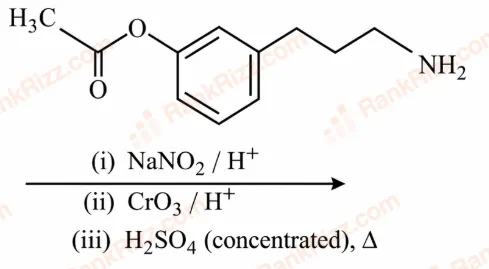
The major product of the following reaction is: 
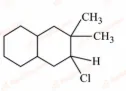
Figure for JEE Main 2019 Chemistry question on Nucleophilic addition reactions of carbonyl compounds
  1. A
    Figure for JEE Main 2019 Chemistry question on Nucleophilic addition reactions of carbonyl compounds
  2. B
    Figure for JEE Main 2019 Chemistry question on Nucleophilic addition reactions of carbonyl compounds
  3. C
    Figure for JEE Main 2019 Chemistry question on Nucleophilic addition reactions of carbonyl compounds
  4. D
    Figure for JEE Main 2019 Chemistry question on Nucleophilic addition reactions of carbonyl compounds
Q58Important polymers and their monomersTRANSCRIBED

The two monomers for the synthesis of nylon 6,6 are

  1. A

    HOOH(CH2_2)4_4COOH, H2_2N(CH2_2)4_4NH2_2

  2. B

    HOOC(CH2_2)4_4COOH, H2_2N(CH2_2)6_6NH2_2

  3. C

    HOOC(CH2_2)6_6COOH, H2_2N(CH2_2)4_4NH2_2

  4. D

    HOOC(CH2_2)6_6COOH, H2_2N(CH2_2)6_6NH2_2

Q59Proteins and enzymesTRANSCRIBED

The correct statement(s) among I to III with respect to potassium ions that are abundant within the cell fluids, is/are: I. They activate many enzymes. II. They participate in the oxidation of glucose to produce ATP. III. Along with sodium ions, they are responsible for the transmission of nerve signals.

  1. A

    I, II and III

  2. B

    III only

  3. C

    I and II only

  4. D

    I and III only

Q60Proteins and enzymesTRANSCRIBED

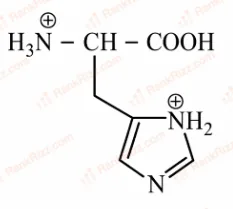
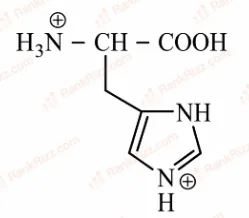
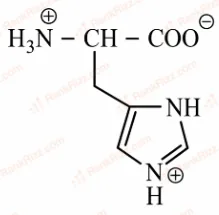
The correct structure of histidine in a strongly acidic solution (pH = 2) is
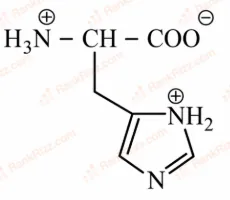
  1. A
    Figure for JEE Main 2019 Chemistry question on Proteins and enzymes
  2. B
    Figure for JEE Main 2019 Chemistry question on Proteins and enzymes
  3. C
    Figure for JEE Main 2019 Chemistry question on Proteins and enzymes
  4. D
    Figure for JEE Main 2019 Chemistry question on Proteins and enzymes
NEXT IN THIS PAPER →Maths, Q61 onwards