RankRizz

Purification and Characterisation of Organic Compounds — JEE Main Previous Year Questions

Every Purification and Characterisation of Organic Compounds question JEE Main has set from 2004–2026, grouped by the idea it tests rather than the order of the syllabus. 151 questions across 4 distinct ideas. Free to read, answer key on every one.

Questions

151

Distinct ideas

4

Share of marks

3.8%

Difficulty

EASY

The ideas inside Purification and Characterisation of Organic Compounds

A chapter is not one subject — it is a handful of procedures the examiner reuses. These are the ones Purification and Characterisation of Organic Compounds questions actually test.

Every Purification and Characterisation of Organic Compounds question

81–100 OF 151 · NEWEST FIRST

JEE MAIN 2022 · 26 JUL S1Methods of purification of organic compoundsTRANSCRIBED

Which technique among the following, is most appropriate in separation of a mixture of 100 mg100 \text{ mg} of pp-nitrophenol and picric acid?

  1. A

    Steam distillation

  2. B

    2−52-5 ft long column of silica gel

  3. C

    Sublimation

  4. D

    Preparative TLC (Thin Layer Chromatography)

JEE MAIN 2022 · 27 JUL S2Methods of purification of organic compoundsTRANSCRIBED

Match List-I with List-II

List-I (Mixture)List-II (Purification Process)
A. Chloroform & AnilineI. Steam distillation
B. Benzoic acid & NaphthaleneII. Sublimation
C. Water & AnilineIII. Distillation
D. Naphthalene & Sodium chlorideIV. Crystallisation
  1. A

    A-IV, B-III, C-I, D-II

  2. B

    A-III, B-I, C-IV, D-II

  3. C

    A-III, B-IV, C-II, D-I

  4. D

    A-III, B-IV, C-I, D-II

JEE MAIN 2022 · 28 JUL S2Methods of purification of organic compoundsTRANSCRIBED

Given below are two statements: One is labelled as Assertion A and the other is labelled as Reason R
Assertion A: Thin layer chromatography is an adsorption chromatography.
Reason R: A thin layer of silica gel is spread over a glass plate of suitable size in thin layer chromatography which acts as an adsorbent.
In the light of the above statements, choose the correct answer from the options given below

  1. A

    Both A and R are true and R is the correct explanation of A

  2. B

    Both A and R are true but R is NOT the correct explanation of A

  3. C

    A is true but R is false

  4. D

    A is false but R is true

JEE MAIN 2022 · 27 JUL S1Quantitative estimation of elementsTRANSCRIBED

In Carius method of estimation of halogen, 0.45 g0.45 \text{ g} of an organic compound gave 0.36 g0.36 \text{ g} of AgBrAgBr. Find out the percentage of bromine in the compound. (Molar masses: AgBr=188 g mol−1;Br=80 g mol−1AgBr = 188 \text{ g mol}^{-1}; Br = 80 \text{ g mol}^{-1})

  1. A

    34.04%34.04\%

  2. B

    40.04%40.04\%

  3. C

    36.03%36.03\%

  4. D

    38.04%38.04\%

JEE MAIN 2022 · 25 JUN S2Quantitative estimation of elementsTRANSCRIBED

During halogen test, sodium fusion extract is boiled with concentrated HNO3HNO_3 to

  1. A

    remove unreacted sodium

  2. B

    decompose cyanide or sulphide of sodium

  3. C

    extract halogen from organic compound

  4. D

    maintain the pH of extract.

JEE MAIN 2022 · 27 JUN S1Methods of purification of organic compoundsTRANSCRIBED

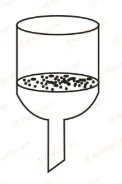
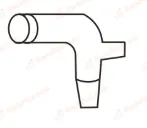
Which of the following is structure of a separating funnel?

  1. A
    Figure for JEE Main 2022 Chemistry question on Methods of purification of organic compounds
  2. B
    Figure for JEE Main 2022 Chemistry question on Methods of purification of organic compounds
  3. C
    Figure for JEE Main 2022 Chemistry question on Methods of purification of organic compounds
  4. D
    Figure for JEE Main 2022 Chemistry question on Methods of purification of organic compounds
JEE MAIN 2022 · 24 JUN S1Quantitative estimation of elementsTRANSCRIBED

A 0.1660.166 g sample of an organic compound was digested with conc. H2SO4H_2SO_4 and then distilled with NaOH. The ammonia gas evolved was passed through 50.050.0 mL of 0.50.5 N H2SO4H_2SO_4. The used acid required 30.030.0 mL of 0.250.25 N NaOH for complete neutralization. The mass percentage of nitrogen in the organic compound is ______

JEE MAIN 2022 · 29 JUN S1Quantitative estimation of elementsTRANSCRIBED

Kjeldahl's method was used for the estimation of nitrogen in an organic compound. The ammonia evolved from 0.55 g of the compound neutralised 12.5 mL of 1M H2_2SO4_4 solution. The percentage of nitrogen in the compound is ______ (Nearest Integer)

JEE MAIN 2022 · 24 JUN S2Quantitative estimation of elementsTRANSCRIBED

0.20.2 g of an organic compound was subjected to estimation of nitrogen by Dumas method in which volume of N2N_2 evolved (at STP) was found to be 22.40022.400 mL. The percentage of nitrogen in the compound is ______ [nearest integer] (Given: Molar mass of N2N_2 is 2828 g mol−1^{-1}, Molar volume of N2N_2 at STP: 22.422.4 L)

JEE MAIN 2022 · 25 JUL S1Quantitative estimation of elementsTRANSCRIBED

While estimating the nitrogen present in an organic compound by Kjeldahl's method, the ammonia evolved from 0.25 g0.25 \text{ g} of the compound neutralized 2.5 mL2.5 \text{ mL} of 2M H2SO42M \text{ } H_2SO_4. The percentage of nitrogen present in organic compound is ______.

JEE MAIN 2022 · 28 JUN S1Methods of purification of organic compoundsTRANSCRIBED

In the estimation of bromine, 0.50.5 g of an organic compound gave 0.400.40 g of silver bromide. The percentage of bromine in the given compound is ______ % (nearest integer)
(Relative atomic masses of Ag and Br are 108u and 80u, respectively).

JEE MAIN 2022 · 27 JUN S2Methods of purification of organic compoundsTRANSCRIBED

0.250.25 g of an organic compound containing chlorine gave 0.400.40 g of silver chloride in Carius estimation. The percentage of chlorine present in the compound is ______ [in nearest integer]
(Given: Molar mass of Ag is 108108 g mol−1^{-1} and that of Cl is 35.535.5 g mol−1^{-1})

JEE MAIN 2022 · 25 JUL S2Methods of purification of organic compoundsTRANSCRIBED

The separation of two coloured substances was done by paper chromatography. The distances travelled by solvent front, substance A and substance B from the base line are 3.25 cm3.25 \text{ cm}, 2.08 cm2.08 \text{ cm} and 1.05 cm1.05 \text{ cm} respectively. The ratio of RfR_f values of A to B is ______ (Answer the nearest integer).

JEE MAIN 2021 · 25 FEB S2Methods of purification of organic compoundsTRANSCRIBED

Which of the following compound is added to the sodium extract before addition of silver nitrate for testing of halogens?

  1. A

    Nitric acid

  2. B

    Sodium hydroxide

  3. C

    Ammonia

  4. D

    Hydrochloric acid

JEE MAIN 2021 · 31 AUG S1Methods of purification of organic compoundsTRANSCRIBED

Given below are two statements : one is labelled as Assertion (A) and the other is labelled as Reason.
Assertion (A): A simple distillation can be used to separate a mixture of propanol and propanone.
Reason (R): Two liquids with a difference of more than 20°C in their boiling points can be separated by simple distillations.
In the light of the above statements, choose the most appropriate answer from the options given below:

  1. A

    Both (A) and (R) are correct but (R) is not the correct explanation of (A).

  2. B

    Both (A) and (R) are correct and (R) is the correct explanation of (A).

  3. C

    (A) is true but (R) is false.

  4. D

    (A) is false but (R) is true.

JEE MAIN 2021 · 27 JUL S2Quantitative estimation of elementsTRANSCRIBED

Which one of the following set of elements can be detected using sodium fusion extract?

  1. A

    Sulfur, Nitrogen, Phosphorus, Halogens

  2. B

    Phosphorus, Oxygen, Nitrogen, Halogens

  3. C

    Nitrogen, Phosphorus, Carbon, Sulfur

  4. D

    Halogens, Nitrogen, Oxygen, Sulfur

JEE MAIN 2021 · 22 JUL S1Methods of purification of organic compoundsTRANSCRIBED

Which purification technique is used for high boiling organic liquid compound (decomposes near its boiling point)?

  1. A

    Simple distillation

  2. B

    Steam distillation

  3. C

    Fractional distillation

  4. D

    Reduced pressure distillation

JEE MAIN 2021 · 16 MAR S1Methods of purification of organic compoundsTRANSCRIBED

In chromatography technique, the purification of a compound is independent of:

  1. A

    Mobility or flow of solvent system

  2. B

    Solubility of the compound

  3. C

    Length of the column or TLC Plate

  4. D

    Physical state of the pure compound

JEE MAIN 2021 · 17 MAR S2Quantitative estimation of elementsTRANSCRIBED

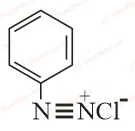
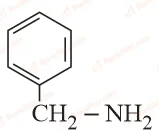
Nitrogen can be estimated by Kjeldahl's method for which of the following compound?

  1. A
    Figure for JEE Main 2021 Chemistry question on Quantitative estimation of elements
  2. B
    Figure for JEE Main 2021 Chemistry question on Quantitative estimation of elements
  3. C
    Figure for JEE Main 2021 Chemistry question on Quantitative estimation of elements
  4. D
    Figure for JEE Main 2021 Chemistry question on Quantitative estimation of elements
JEE MAIN 2021 · 17 MAR S1Methods of purification of organic compoundsTRANSCRIBED

Given below are two statements:
Statement-I: Retardation factor (RfR_f) can be measured in meter/centimetre.
Statement-II: RfR_f value of a compound remains constant in all solvents.
Choose the most appropriate answer from the options given below:

  1. A

    Statement-I is true but statement-II is false

  2. B

    Both statement-I and statement-II are true

  3. C

    Both statement-I and statement-II are false

  4. D

    Statement-I is false but statement-II is true