JEE MAIN 2023 · 11 APR S2HaloarenesTRANSCRIBED
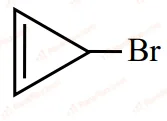
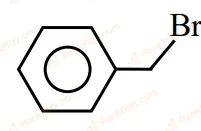
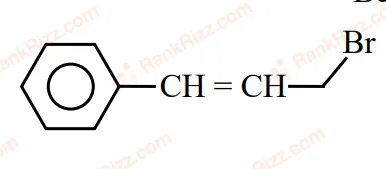
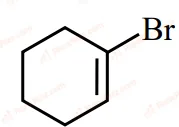
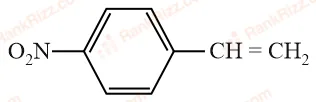
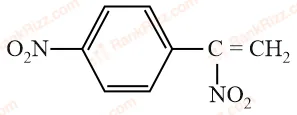
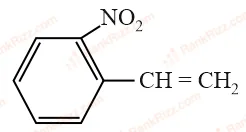
Compound from the following that will not produce precipitate on reaction with AgNO is
- A
- B
- C
- D
Every Haloalkanes and Haloarenes question JEE Main has set, grouped by the idea it tests rather than the order of the syllabus. 188 questions across 6 distinct ideas. Free to read, answer key on every one.
Questions
188
Distinct ideas
6
Share of marks
3.4%
Difficulty
MEDIUM
A chapter is not one subject — it is a handful of procedures the examiner reuses. These are the ones Haloalkanes and Haloarenes questions actually test.
61–80 OF 188 · NEWEST FIRST
Compound from the following that will not produce precipitate on reaction with AgNO is


Where Nu = Nucleophile
Find out the correct statement from the options given below for the above two reactions.
Reaction (I) is of 2 order and reaction (II) is of 1 order
Reactions (I) and (II) both are of 2 order
Reactions (I) is of 1 order and reaction (II) is of 2 order
Reaction (I) and (II) both are of 1st order
Match List I with List II
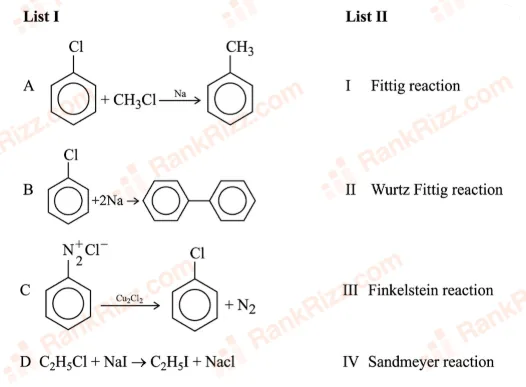
A-II, B-I, C-III, D-IV
A-III, B-II, C-IV, D-I
A-IV, B-II, C-III, D-I
A-II, B-I, C-IV, D-III
Assertion A: Hydrolysis of an alkyl chloride is a slow reaction but in the presence of NaI, the rate of hydrolysis increases.
Reason R: is a good nucleophile as well as a good leaving group.
In the light of the above statements, choose the correct answer from the options given below.
A is false but R is true
A is true but R is false
Both A and R are true and R is the correct explanation of A
Both A and R are true and R is not the correct explanation of A
Assertion A: Hydrolysis of an alkyl chloride is a slow reaction but in the presence of NaI, the rate of hydrolysis increases.
Reason R: I is a good nucleophile as well as a good leaving group.
In the light of the above statements, choose the correct answer from the options given below:
A is false but R is true
A is true but R is false
Both A and R are true and R is the correct explanation of A
Both A and R are true and R is not the correct explanation of A
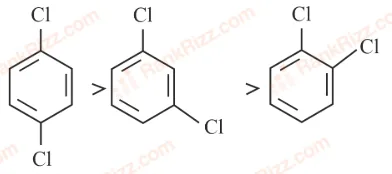
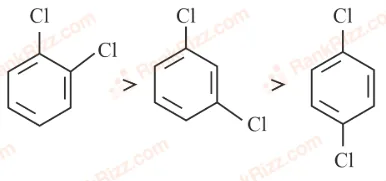
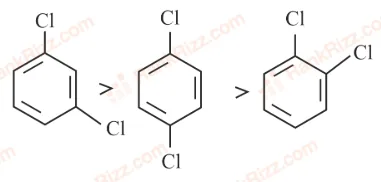
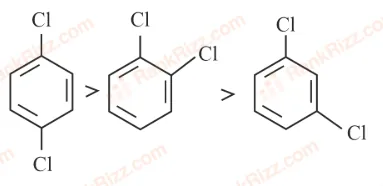
The correct order of melting point of dichlorobenzenes is
2-Methyl propyl bromide reacts with CHO and gives 'A' whereas on reaction with CHOH it gives 'B'. The mechanism followed in these reactions and the products 'A' and 'B' respectively are:
S2, A = iso-butyl ethyl ether; S1, B = tert-butyl ethyl ether
S1, A = tert-butyl ethyl ether; S1, B = 2-butyl ethyl ether
S2, A = 2-butyl ethyl ether; S2, B = iso-butyl ethyl ether
S1, A = tert-butyl ethyl ether; S2, B = iso-butyl ethyl ether
In the following halogenated organic compounds the one with maximum number of chlorine atoms in its structure is:
Chloral
Gammaxene
Chloropicrin
Freon-12
For the reaction

The correct statement is
Br can act as competing nucleophile.
The reaction can occur in acetic acid also.
The transition state formed in the above reaction is less polar than the localised anion.
The solvent used in the reaction solvates the ions formed in rate determining step
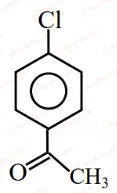
The major product formed in the Friedel-Craft acylation of chlorobenzene is
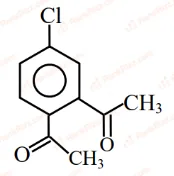
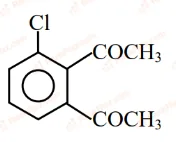
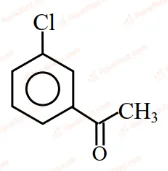
Identify the incorrect option from the following:
Option 1 (see figure)
Option 2 (see figure)
Option 3 (see figure)
Option 4 (see figure)
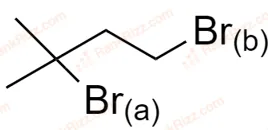
Choose the halogen which is most reactive towards SN1 reaction in the given compounds (A, B, C & D)
A.
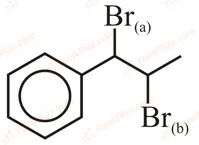
B.
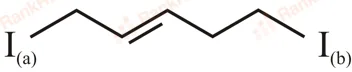
C.
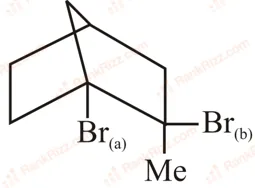
D.
Identify the correct order for the given property for following compounds
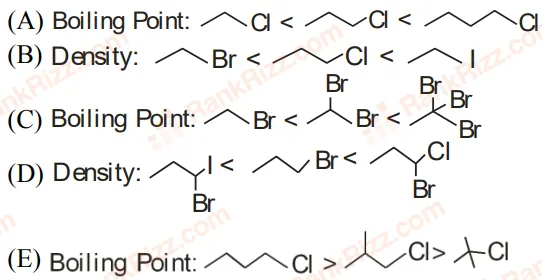
Choose the correct answer from the option below:
(B), (C) and (D) only
(A), (C) and (E) only
(A), (C) and (D) only
(A), (B) and (E) only
Identify the correct order of reactivity for the following pairs towards the respective mechanism
(A)
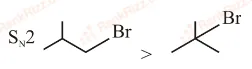
(B)
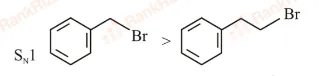
(C) Electrophilic substitution
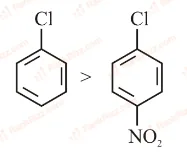
(D) Nucleophilic substitution
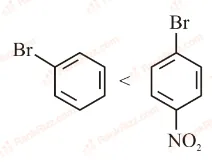
Choose the correct answer from the options given below:
B, C and D only
A, B, C and D
A, B and D only
A, C and D only
Match List-I with List-II.
1-Bromopropane is reacted with reagents in List-I to give product in List-II
| List-I Reagent | List-II Product | ||
|---|---|---|---|
| A | KOH (alc) | I | Nitrile |
| B | KCN (alc) | II | Ester |
| C | AgNO | III | Alkene |
| D | HCCOOAg | IV | Nitroalkane |
A-III, B-I, C-IV, D-II
A-I, B-II, C-III, D-IV
A-I, B-III, C-IV, D-II
A-IV, B-III, C-II, D-I
Decreasing order towards S1 reaction for the following compounds is:
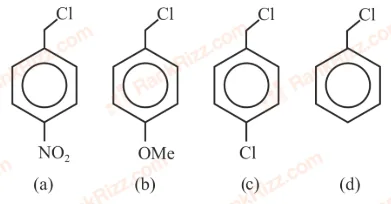
a > c > d > b
a > b > c > d
b > d > c > a
d > b > c > a
The correct order of reactivity of following haloarenes towards nucleophilic substitution with aqueous NaOH is:
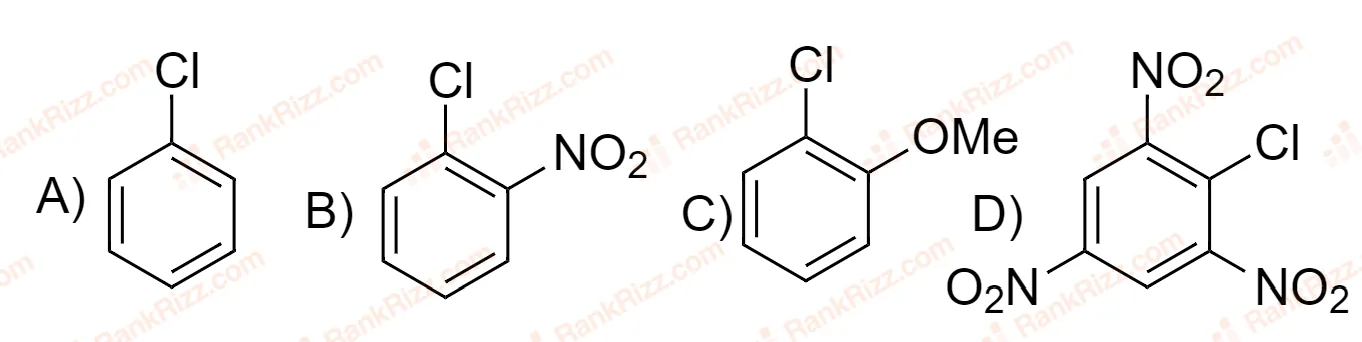
A > B > D > C
C > A > D > B
D > C > B > A
D > B > A > C
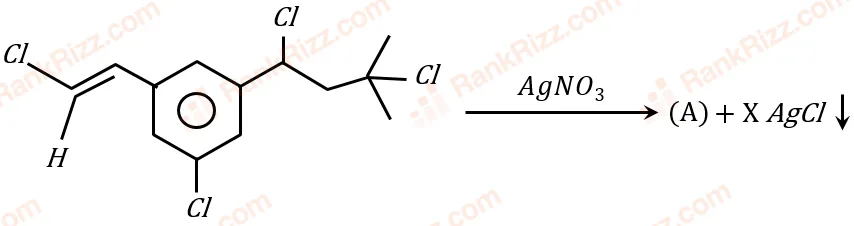
Number of moles of AgCl formed in the following reaction is _____.
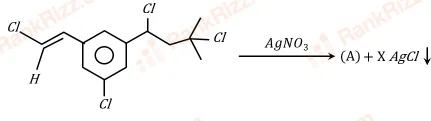
Number of moles of AgCl formed in the following reaction is _____.
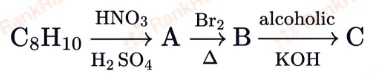
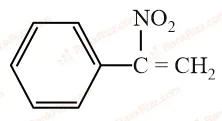
In the given reaction sequence, the major product 'C' is :
OTHER CHEMISTRY CHAPTERS