JEE MAIN 2026 · 21 JAN S2HaloarenesTRANSCRIBED
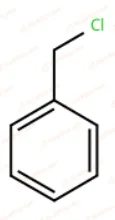
The correct order of reactivity of the following benzyl halides towards reaction with KCN is:
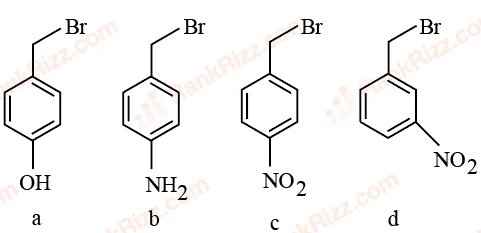
- A
b > a > d > c
- B
a > b > c >d
- C
b> a >c >d
- D
a > b > d > c
Every Haloalkanes and Haloarenes question JEE Main has set, grouped by the idea it tests rather than the order of the syllabus. 188 questions across 6 distinct ideas. Free to read, answer key on every one.
Questions
188
Distinct ideas
6
Share of marks
3.4%
Difficulty
MEDIUM
A chapter is not one subject — it is a handful of procedures the examiner reuses. These are the ones Haloalkanes and Haloarenes questions actually test.
1–20 OF 188 · NEWEST FIRST
The correct order of reactivity of the following benzyl halides towards reaction with KCN is:
b > a > d > c
a > b > c >d
b> a >c >d
a > b > d > c
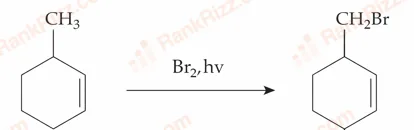
which of the following reaction is NOT correctly represented?
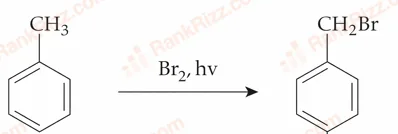
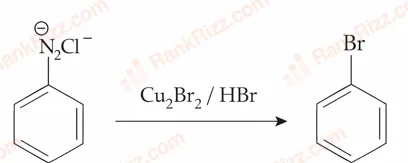
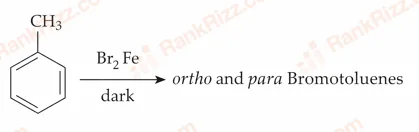
The correct order of the rate of reaction of the following reactants with nucleophile by mechanism is :
(Given: Structures I and II are rigid)
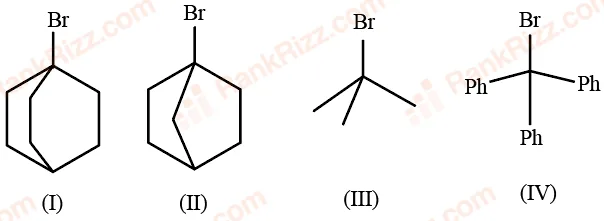
III < I < II < IV
IV < III < II < I
II < I < III < IV
I < II < III < IV
Given below are two statements:
Statement I: 'C - Cl' bond is stronger in
Statement II: The given optically active molecule,
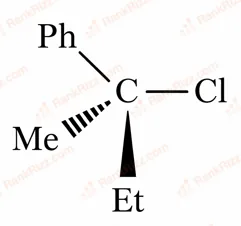
on hydrolysis gives a solution that can rotate the plane polarized light.
In the light of the above statements, choose the correct answer from the options given below
Statement I is true but Statement II is false
Both Statement I and Statement II are false
Statement I is false but Statement II is true
Both Statement I and Statement II are true
As compared with chlorocyclohexane, which of the following statements correctly apply to chlorobenzene?
A. The magnitude of negative charge is more on chlorine atom.
B. The C - Cl bond has partial double bond character.
C. C - Cl bond is less polar.
D. C - Cl bond is longer due to repulsion between delocalised electrons of the aromatic ring and lone pairs of electrons of chlorine.
E. The C - Cl bond is formed using hybridised orbital of carbon.
Choose the correct answer from the options given below:
A, C and E Only
A, D and E Only
B, C and D Only
B, C and E Only
The correct order of the rate of the reaction for the following reaction with respect to nucleophiles is:
{ClO_{4}}^{-} > {CH_{3}COO}^{-} > ^{-}OH > PhO^{-}
^{-}OH > PhO^{-} > CH_{3}COO^{-} > {ClO_{4}}^{-}
PhO^{-} > ^{-} OH > CH_{3}COO^{-} > {ClO_{4}}^{-}
CH_{3}COO^{-} > PhO^{-} > ^{-}OH > {ClO_{4}}^{-}
Match the LIST-I with LIST-II.
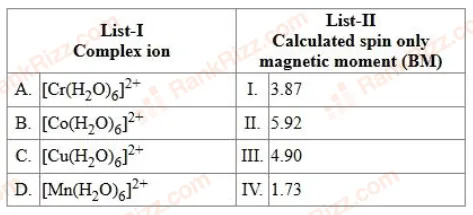
choose the correct answer from the options given below
A-I, B-III, C-IV, D-II
A-II, B-I, C-III, D-IV
A-IV, B-II, C-I, D-III
A-III, B-I, C-IV, D-II
Given below are two statements :
**Statement (I) :** Benzyl chloride reacts faster in S1 mechanism than ethyl chloride.
**Statement (II) :** Ethyl carbocation intermediate is less stabilized by hyperconjugation than benzyl carbocation by resonance.
In the light of the above statements, choose the correct answer from the options given below :
Both Statement I and Statement II are true
Both Statement I and Statement II are false
Statement I is true but Statement II is false
Statement I is false but Statement II is true
Given below are two statements:
Statement I: 3-phenylpropene reacts with HBr and gives secondary alkyl bromide having a chiral carbon atom as the major product.
Statement II: Aryl chlorides and aryl cyanides can be prepared by Sandmeyer reaction as well as Gattermann reaction.
In the light of the above statements, choose the correct answer from the options given below:
Both Statement I and Statement II are true
Both Statement I and Statement II are false
Statement I is true but Statement II is false
Statement I is false but Statement II is true
Given below are two statements :
Statement I : Due to increase in van der Waals forces, the order of boiling points is CHCHCHI > CHCHI > CHI.
Statement II : As
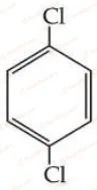
is more symmetric, its melting point is higher than
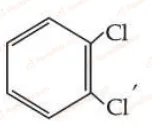
, however its boiling point is lower than
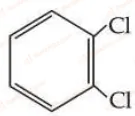
.
In the light of the above statements, choose the correct answer from the options given below :
Both Statement I and Statement II are true
Both Statement I and Statement II are false
Statement I is true but Statement II is false
Statement I is false but Statement II is true
The correct order of reactivity of in methanol with the following
nucleophiles is
and
I^{-} > C_{2}H_{5}O^{-} > C_{6}H_{5}O^{-} > F^{-}
I^{-} > C_{6}H_{5}O^{-} > F^{-} > C_{2}H_{5}O^{-}
I^{-} > C_{2}H_{5}O^{-} > F^{-} > C_{6}H_{5}O^{-}
I^{-} > F^{-} > C_{6}H_{5}O^{-} > C_{2}H_{5}O^{-}
Match the LIST-I with LIST-II
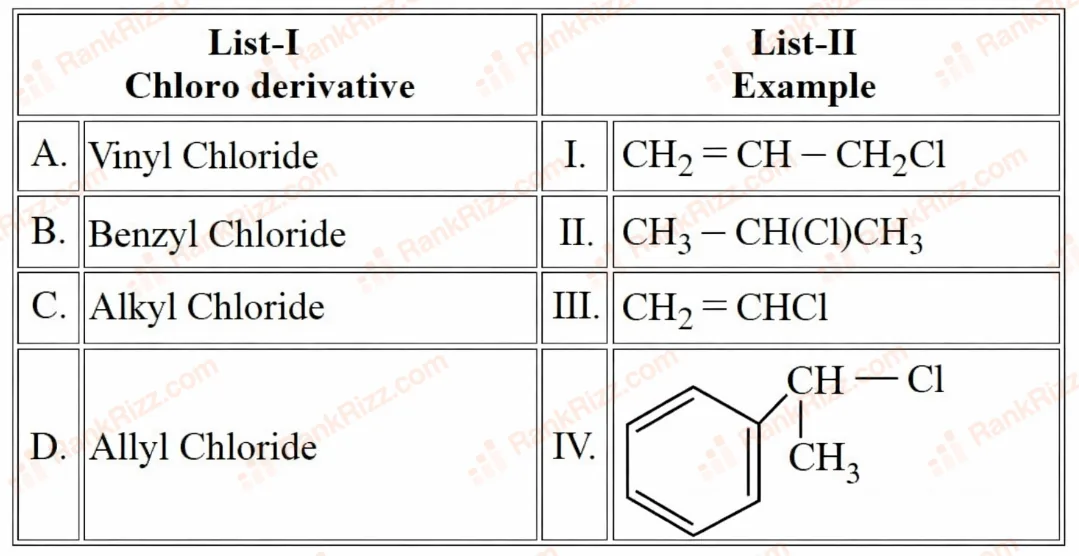
Choose the correct answer from the options given below:
A-IV, B-I, C-III, D-II
A-III, B-IV, C-II, D-I
A-III, B-IV, C-I, D-II
A-I, B-II, C-IV, D-III
Correct statements regarding alkyl halides among the following are :
A. Alcohol being less polar solvent favours elimination with alcoholic KOH favours elimination reaction with
B. Order of reactivity towards is C_6H_5-CH_2-Cl > C_6H_5-CHCl-C_6H_5.
C. Non substituted aryl halides exhibit properties similar to alkyl halides.
D. Vinyl chloride is example of haloalkene and allyl chloride is example of haloalkyne.
E. can be prepared by reacting with but cannot be prepared by reacting with .
Choose the correct answer from the options given below :
A, B and C Only
B and D Only
A and E Only
D and E Only
when treated with ice cold water liberated a gas which occupied at STP. The gas produced is further reacted with iodine in presence of to give compound (X). Compound (X) in presence of Na and dry ether produced compound (Y). Molar mass of compound (Y) is . (Nearest integer)
Consider all the structural isomers with molecular formula are separately treated with KOH(aq) to give respective substitution products, without any rearrangement. The number of products which can exhibit optical isomerism from these is ______.
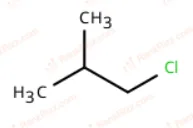
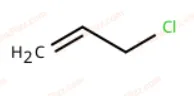
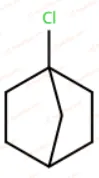
Assertion: In case of isomeric dihalobenzenes, the p-isomers have greater boiling point than the ortho and meta-isomers.
Reason: The greater symmetry of p-isomers allows them to pack more efficiently in the crystal lattice than their ortho and meta counterparts.
Choose the correct option.
Both Assertion and Reason are true, and Reason is the correct explanation of Assertion.
Both Assertion and Reason are true, but Reason is not the correct explanation of Assertion.
Assertion is true, but Reason is false.
Assertion is false, but Reason is true.
Given below are two statements: Statement I: The conversion proceeds well in the less polar medium.
Statement II: The conversion proceeds well in the more polar medium.

In the light of the above statements, choose the correct answer from the options given below
Both Statement I and Statement II are true
Statement I is true but Statement II is false
Statement I is false but Statement II is true
Both Statement I and Statement II are false
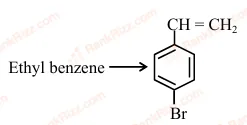
Choose the correct set of reagents for the following conversion:
; ; alc. KOH
; ; aq. KOH
; ; aq. KOH
; ; alc. KOH
OTHER CHEMISTRY CHAPTERS