JEE MAIN 2025 · 22 JAN S2Nucleophilic substitution (SN1 and SN2)TRANSCRIBED
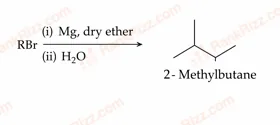
The maximum number of RBr producing 2-methylbutane by above sequence of reactions is ________ -
(Consider the structural isomers only)
- A
5
- B
4
- C
3
- D
1
Every Haloalkanes and Haloarenes question JEE Main has set, grouped by the idea it tests rather than the order of the syllabus. 188 questions across 6 distinct ideas. Free to read, answer key on every one.
Questions
188
Distinct ideas
6
Share of marks
3.4%
Difficulty
MEDIUM
A chapter is not one subject — it is a handful of procedures the examiner reuses. These are the ones Haloalkanes and Haloarenes questions actually test.
21–40 OF 188 · NEWEST FIRST
The maximum number of RBr producing 2-methylbutane by above sequence of reactions is ________ -
(Consider the structural isomers only)
5
4
3
1
The products A and B in the following reactions, respectively are

Given below are two statements :
Statement (I) : Alcohols are formed when alkyl chlorides are treated with aqueous potassium hydroxide by elimination reaction.
Statement (II) : In alcoholic potassium hydroxide, alkyl chlorides form alkenes by abstracting the hydrogen from the -carbon.
In the light of the above statements, choose the most appropriate answer from the option given below :
Both Statement I and Statement II are incorrect
Statement I is incorrect but Statement II is correct
Statement I is correct but Statement II is incorrect
Both Statement I and Statement II are correct
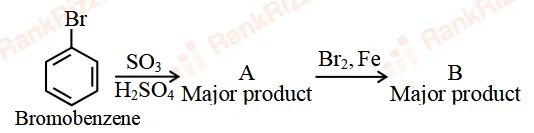
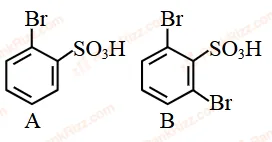
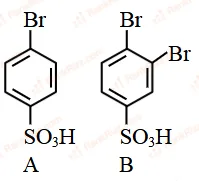
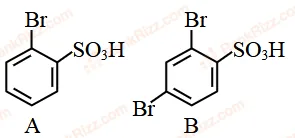
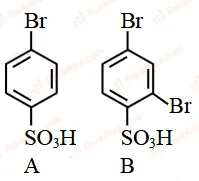
In the following series of reactions identify the major products A & B respectively.
Bromobenzene A (Major product) B (Major product)
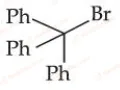
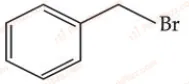
Given below are two statements : Statement I : will undergo reaction though it is a
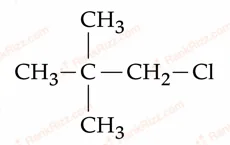
primary halide. Statement II :
will not undergo reaction very easily though it is a primary halide. In the light of the above statements,
choose the most appropriate answer from the options given below :
Both Statement I and Statement II are incorrect
Both Statement I and Statement II are correct
Statement I is incorrect but Statement II is correct
Statement I is correct but Statement II is incorrect
Match List-I with List-II.
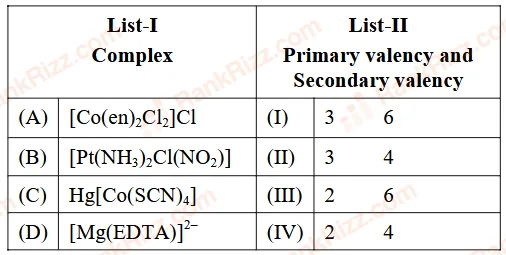
Choose the correct answer from the options given below :
(A)-(III), (B)-(I), (C)-(II), (D)-(IV)
(A)-(I), (B)-(IV), (C)-(II), (D)-(III)
(A)-(I), (B)-(III), (C)-(II), (D)-(IV)
(A)-(II), (B)-(III), (C)-(IV), (D)-(I)
The ascending order of relative rate of solvolysis of following compounds is :
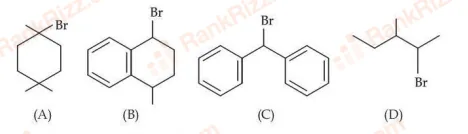
(C) < (B) < (A) < (D)
(D) < (A) < (B) < (C)
(D) < (B) < (A) < (C)
(C) < (D) < (B) < (A)
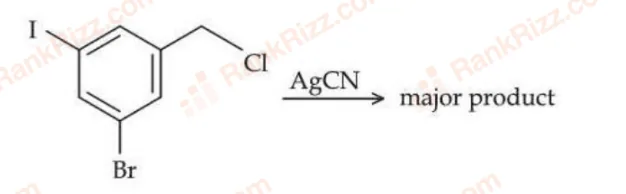
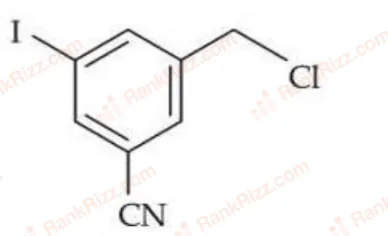
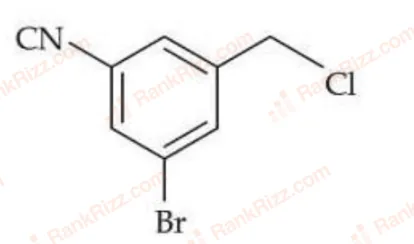
The structure of the major product formed in the following reaction is :
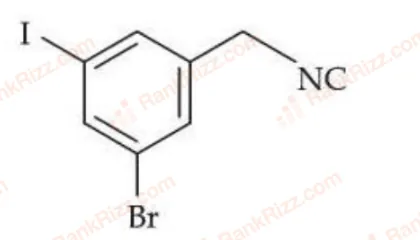
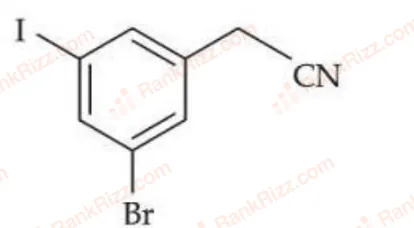
Which among the following halides will generate the most stable carbocation in the nucleophilic substitution reaction?
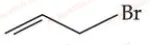
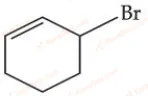
Match List-I with List-II.
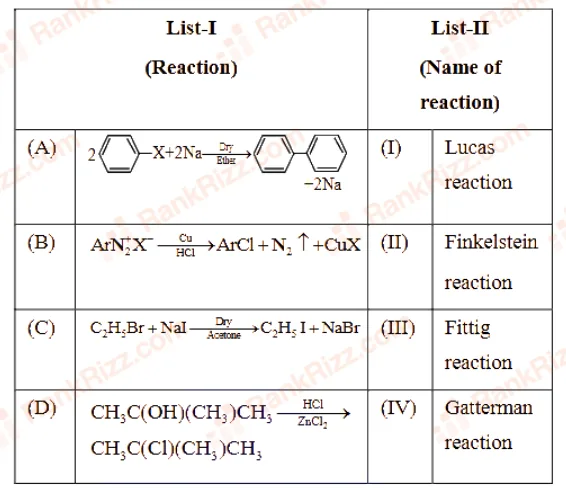
Choose the correct answer from the options given below :
(A)-(III), (B)-(II), (C)-(IV), (D)-(I)
(A)-(III), (B)-(IV), (C)-(II), (D)-(I)
(A)-(IV), (B)-(III), (C)-(I), (D)-(II)
(A)-(IV), (B)-(I), (C)-(II), (D)-(III)
Match the LIST-I with LIST-II
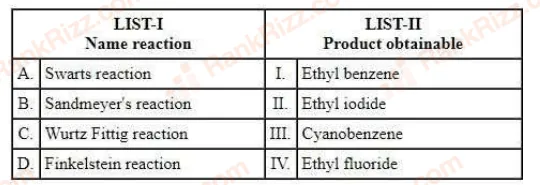
Choose the correct answer from the options given below:
A-II, B-I, C-III, D-IV
A-II, B-III, C-I, D-IV
A-IV, B-I, C-III, D-II
A-IV, B-III, C-I, D-II
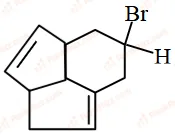
Consider the following molecule (X). The structure of X is
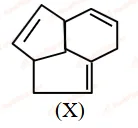
The major product formed when the given molecule (X) is treated with HBr (1 eq) is:
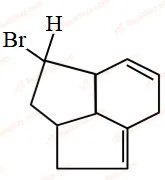
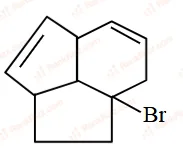
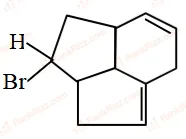
In The following substitution reaction :
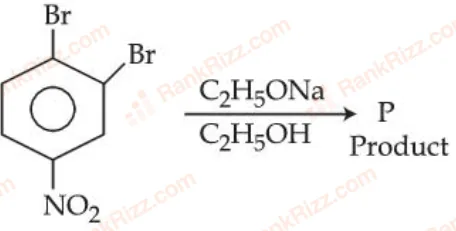
product 'P'formed is :
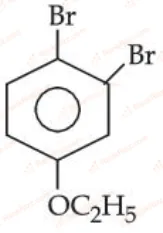
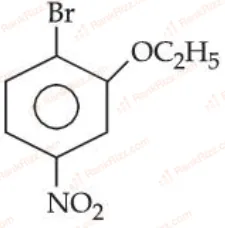
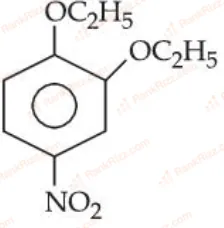
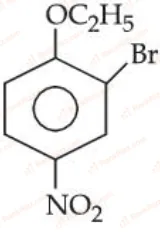
The major product of the following reaction is :
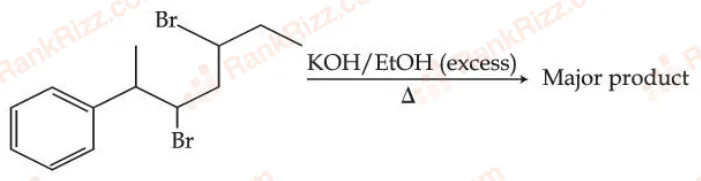
2-Phenylhepta-2,5-diene
6-Phenylhepta-2,4-diene
6-Phenylhepta-3,5-diene
2-Phenylhepta-2,4-diene
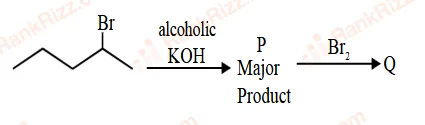
Consider the above sequence of reactions. 151 g of 2-bromopentane is made to react. Yield of major product P is 80% whereas Q is 100%.
Mass of product Q obtained is _________ g.
(Given molar mass in g mol H: 1, C: 12, O: 16, Br: 80)
Example of vinylic halide is
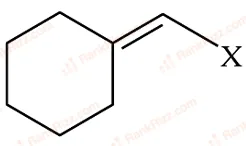
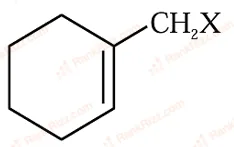
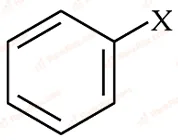
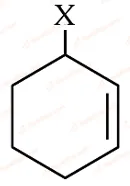
Match List - I with List - II.
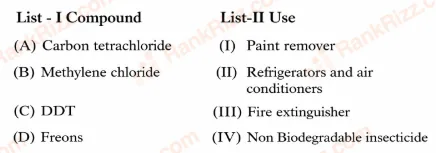
Choose the correct answer from the options given below:
(A)-(I), (B)-(II), (C)-(III), (D)-(IV)
(A)-(III), (B)-(I), (C)-(IV), (D)-(II)
(A)-(IV), (B)-(III), (C)-(II), (D)-(I)
(A)-(II), (B)-(III), (C)-(I), (D)-(IV)
Given below are two statements one is labeled as Assertion (A) and the other is labeled as Reason (R).
Assertion (A): is an example of allyl halide
Reason (R): Allyl halides are the compounds in which the halogen atom is attached to hybridised carbon atom.
In the light of the two above statements, choose the most appropriate answer from the options given below:
(A) is true but (R) is false
Both (A) and (R) are true but (R) is not the correct explanation of A
(A) is false but (R) is true
Both (A) and (R) are true and (R) is the correct explanation of (A)
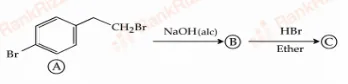
Identify (B) and (C) and how are (A) and (C) related ?




The product (C) in the below mentioned reaction is:
Propan-1-ol
Propene
Propyne
Propan-2-ol
OTHER CHEMISTRY CHAPTERS