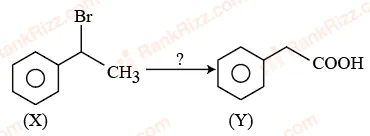
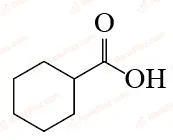
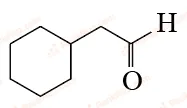
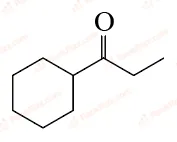
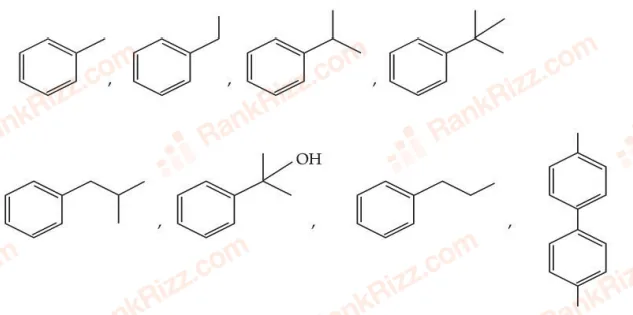
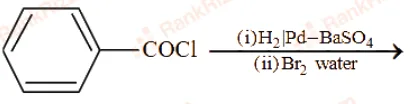
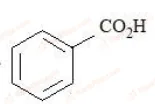
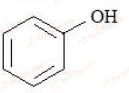
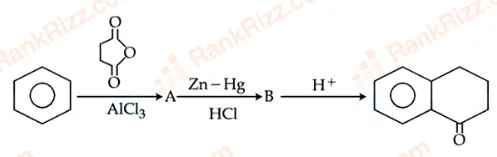
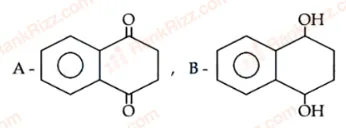
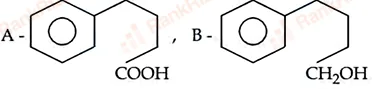
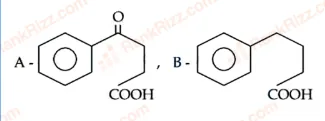
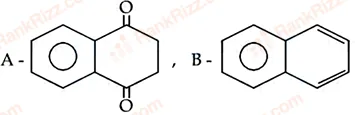
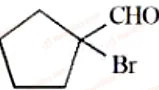
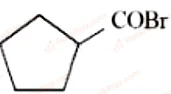
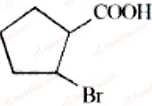
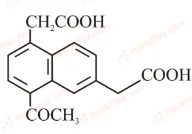
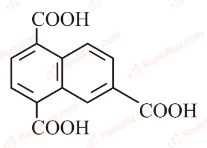
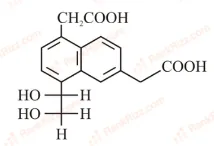
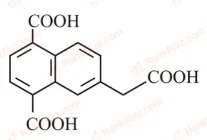
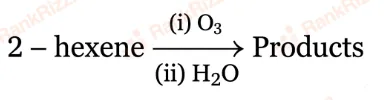
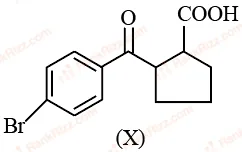
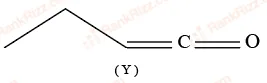
The correct sequence of reagents for the above conversion of X to Y is:
- A
(i) (ii)NaOEt (iii)Jones reagent
- B
(i)NaOEt (i) (iii)Jones reagent
- C
(i)NaOH (aq) (ii)Jones reagent (iii)
- D
(i)Jones reagent (ii)NaOEt (iii)Hot /KOH
Every Carboxylic Acids and Derivatives question JEE Main has set, grouped by the idea it tests rather than the order of the syllabus. 76 questions across 4 distinct ideas. Free to read, answer key on every one.
Questions
76
Distinct ideas
4
Share of marks
1.4%
Difficulty
HARD
A chapter is not one subject — it is a handful of procedures the examiner reuses. These are the ones Carboxylic Acids and Derivatives questions actually test.
1–20 OF 76 · NEWEST FIRST
The correct sequence of reagents for the above conversion of X to Y is:
(i) (ii)NaOEt (iii)Jones reagent
(i)NaOEt (i) (iii)Jones reagent
(i)NaOH (aq) (ii)Jones reagent (iii)
(i)Jones reagent (ii)NaOEt (iii)Hot /KOH
Given below are two statements:
Statement I: Compound (X), shown below, dissolves in solution and has two chiral carbon atoms
Statement II: Compound (Y), shown below, has two carbons with hybridization, one carbon with and one carbon with sp hybridization
In the light of the above statements, choose the correct answer from the options given below:
Both Statement I and Statement II are true
Both Statement I and Statement II are false
Statement I is true but Statement II is false
Statement I is false but statement II is true
Compound 'P' undergoes the following sequence of reactions:
'P' is:


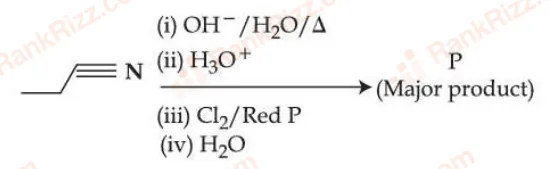
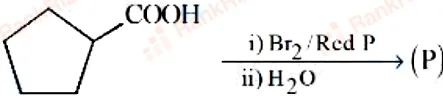
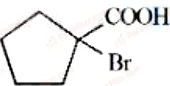
Complete the following reaction sequence and give the name of major product 'P'.

2-Chloropropanoic acid
3-Chloropropanoic acid
1-Chloropropane
2-Chloropropane
The correct order of acidic strength of the major products formed in the given reactions, is:

Choose the correct answer from the options given below :
A > D > C > B
C > B > A > D
A > D > B > C
C > A > D > B
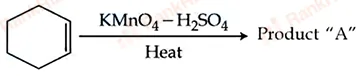
Consider the following sequence of reactions to give the major product :
g of the major product formed is reacted with solution to liberate a gas which occupied 11.2 dm³ at STP. = _____ g.
( Given molar mass in g )
Grignard reagent RMgBr (P) reacts with water and forms a gas (Q). One gram of Q occupies at STP.(P) on reaction with dry ice in dry ether followed by fonns a compound (Z). 0.1 mole of(Z) will weigh ____ g. (Nearest integer)
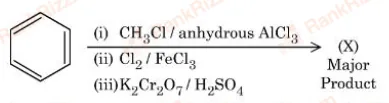
The total number of compounds from below when treated with hot giving benzoic acid is :

6
3
5
4
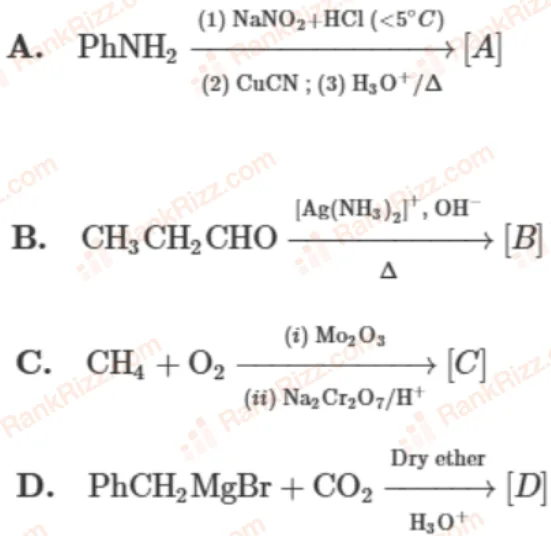
Consider the following reactions. From these reactions which reaction will give carboxylic acid as a major product ?
(A)
(B)
(C)
(D)
(E)
Choose the correct answer from the options given below :
A and D only
A, B and E only
B, C and E only
B and E only
The compounds that produce with aqueous solution are:
A.

B.

C.

D.

E.

Choose the correct answer from the options given below:
A, C and D Only
A, B and E Only
A and C Only
A and B Only
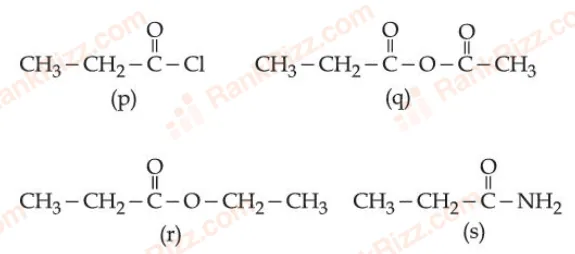
Consider the following molecules:
The correct order of rate of hydrolysis is:
The molecular formula of second homologue in the homologous series of mono carboxylic acids is :
Identify and in the given chemical reaction sequence


Consider the given chemical reaction :

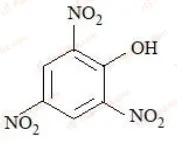
picric acid
acetic acid
adipic acid
oxalic acid
Identify the product (P) in the following reaction:


The total number of 'Sigma' and Pi bonds in 2-formylhex-4-enoic acid is ______.
The product (C) in the following sequence of reactions has ______ bonds.

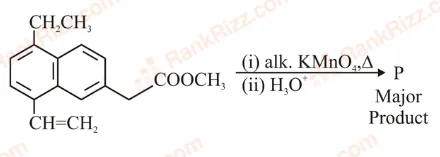
The major product 'P' formed in the given reaction is


The two products formed in above reaction are
Butanal and acetaldehyde
Butanoic acid and acetaldehyde
Butanal and acetic acid
Butanoic acid and acetic acid
Given below are two statements, one is labelled as Assertion A and the other is labelled as Reason R.
Assertion A: A solution of the product obtained by heating a mole of glycine with a mole of chlorine in presence of red phosphorous generates chiral carbon atom.
Reason R: A molecule with 2 chiral carbons is always optically active.
A is true but R is false
Both A and R are true but R is the correct explanation of A
A is false but R is true
Both A and R are true but R is NOT the correct explanation of A
OTHER CHEMISTRY CHAPTERS