JEE MAIN 2025 · 02 APR S2Gibbs energy and spontaneityTRANSCRIBED
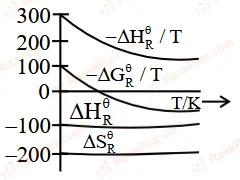
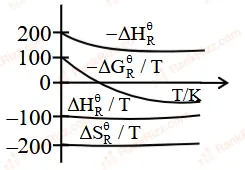
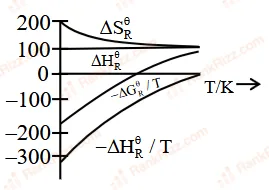
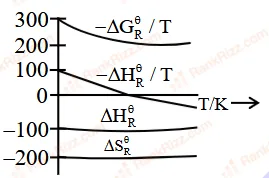
Which of the following graphs correctly represents the variation of thermodynamic properties of Haber's process ?
- A
- B
- C
- D
Every Chemical Thermodynamics question JEE Main has set, grouped by the idea it tests rather than the order of the syllabus. 229 questions across 6 distinct ideas. Free to read, answer key on every one.
Questions
229
Distinct ideas
6
Share of marks
4.6%
Difficulty
MEDIUM
A chapter is not one subject — it is a handful of procedures the examiner reuses. These are the ones Chemical Thermodynamics questions actually test.
41–60 OF 229 · NEWEST FIRST
Which of the following graphs correctly represents the variation of thermodynamic properties of Haber's process ?
Which of the following mixing of 1 M base and 1 M acid leads to the largest increase in temperature?
If at constant temperature. Then
X=-Y+Z
-X=Y+Z
X=Y+Z
X=Y-Z
The formation enthalpies, for and are 220.0 and , respectively, at 298.15 K , and for is at the same temperature. The average bond enthalpy of the bond in water at 298.15 K is __________(nearest integer).
The standard enthalpy and standard entropy of decomposition of to are 55.0 kJ and 175.0 J/K/mol respectively. The standard free energy change for this reaction at in J is ______ (Nearest integer)
Resonance in can be represented as
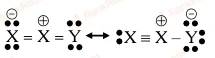
The enthalpy of formation of X_2Y\left( X\equiv X(g)+\frac{1}{2}Y=Y(g)\rightarrow X_2 Y(g)\right) is 80 kJ mol. The magnitude of resonance energy of is _____ kJ mol (nearest integer value). Given: Bond energies of , , and are 940, 410, 500 and 602 kJ mol respectively.
valence X : 3, Y : 2
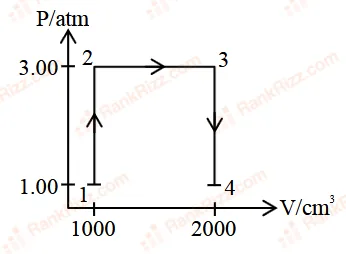
A perfect gas (0.1 mol) having (independent of temperature) undergoes the transformation from point 1 to point 4 as shown in the P-V diagram. If each step is reversible, the total work done (w) while going from point 1 to point 4 is (-) \text{____} J (nearest integer).
[Given: L atm ]
Consider the following cases of standard enthalpy of reaction ( in kJ )
The magnitude of is_______
(Nearest integer).
A sample of n-octane (1.14 g) was completely burnt in excess of oxygen in a bomb calorimeter, whose heat capacity is 5 kJ . As a result of combustion reaction, the temperature of the calorimeter is increased by 5 K. The magnitude of the heat of combustion of octane at constant volume is ________ kJ mol (nearest integer).
Given :
kJ mol
kJ mol
kJ mol
kJ mol
The for is _________ kJ mol
(nearest integer value)
The bond dissociation enthalpy of (ΔHbond) calculated from the given data is ____________ . (Nearest integer)
[Given: () is a pure ionic compound and X forms a diatomic molecule () in gaseous state]
Consider the following data : Heat of formation of (g)= -393.5 kJ Heat of formation of (l) = - 286.0 kJ Heat of combustion of benzene =-3267.0 kJ The heat of formation of benzene is _ . (Nearest integer)
Standard entropies of and are and respectively. The temperature in Kelvin at which the reaction will be at equilibrium is (Nearest integer).}
Which of the following is not correct?
is negative for a spontaneous reaction
is positive for a spontaneous reaction
is zero for a reversible reaction
is positive for a non-spontaneous reaction
Choose the correct option for free expansion of an ideal gas under adiabatic condition from the following :
q = 0, \Delta T < 0, w \neq 0
q \neq 0, \Delta T < 0, w = 0
Given below are two statements : One is labelled as Assertion (A) and the other is labelled as Reason (R).
Assertion (A) : Enthalpy of neutralisation of strong monobasic acid with strong monoacidic base is always .
Reason (R) : Enthalpy of neutralisation is the amount of heat liberated when one mole of ions furnished by acid combine with one mole of ions furnished by base to form one mole of water.
In the light of the above statements, choose the correct answer from the options given below.
(A) is true but (R) is false
Both (A) and (R) are true but (R) is not the correct explanation of (A)
Both (A) and (R) are true and (R) is the correct explanation of (A)
(A) is false but (R) is true
For a certain reaction at 300 K, K = 10, then for the same reaction is - ______ . (Given )
Two reactions are given below:
, kJ/mol
, kJ/mol
Then enthalpy change for following reaction:
The enthalpy of formation of ethane (C₂H₆) from ethylene by addition of hydrogen where the bond-energies of C−H, C−C, C=C, H−H are 414 kJ, 347 kJ, 615 kJ and 435 kJ respectively is ______ kJ.
OTHER CHEMISTRY CHAPTERS