JEE MAIN 2023 · 29 JAN S1Resonance and bond parametersTRANSCRIBED
The bond dissociation energy is highest for
- A
Cl
- B
I
- C
Br
- D
F
Every Chemical Bonding and Molecular Structure question JEE Main has set, grouped by the idea it tests rather than the order of the syllabus. 316 questions across 11 distinct ideas. Free to read, answer key on every one.
Questions
316
Distinct ideas
11
Share of marks
4.8%
Difficulty
MEDIUM
A chapter is not one subject — it is a handful of procedures the examiner reuses. These are the ones Chemical Bonding and Molecular Structure questions actually test.
101–120 OF 316 · NEWEST FIRST
The bond dissociation energy is highest for
Cl
I
Br
F
According to MO theory the bond orders for O, CO and NO respectively, are
and
and
and
and
For OF molecule consider the following:
(A) Number of lone pairs on oxygen is 2.
(B) FOF angle is less than 104.5°.
(C) Oxidation state of O is -2.
(D) Molecule is bent 'V' shaped.
(E) Molecular geometry is linear.
Correct options are:
C, D, E only
B, E, A only
A, C, D only
A, B, D only
Consider the following statement
(A) NF molecules has a trigonal planar structure.
(B) Bond Length of N is shorter than O.
(C) Isoelectronic molecules or ions have identical bond order.
(D) Dipole moment of HS is higher than that of water molecule.
Choose the correct answer from the options given below:
(A) and (B) are correct
(A) and (D) are correct
(C) and (D) are correct
(B) and (C) are correct
The pair from the following pairs having both compounds with net non-zero dipole moment is
1, 4-Dichlorobenzene, 1, 3-Dichlorobenzene
cis-butene, trans-butene
CHCl, CHCl
Benzene, anisidine
Order of Covalent bond;
A.KF > KI; LiF > KF
B. KF < KI; LiF > KF
C. SnCl_4 > SnCl_2; CuCl > NaCl
D. LiF > KF; CuCl > NaCl
E. KF < KI; CuCl > NaCl
C, E Only
B, C Only
B, C, E Only
A, B Only
Order of Covalent bond;
A. KF > KI; LiF > KF
B. KF < KI; LiF > KF
C. SnCl > SnCl; CuCl > NaCl
D. LiF > KF; CuCl > NaCl
E. KF < KI; CuCl > NaCl
C, E Only
B, C Only
B, C, E Only
A, B Only
Match List I with List II
List I List II
A. XeF I. See-saw
B. SF II. Square planar
C. NH III. Bent T-shaped
D. BrF IV. Tetrahedral
Choose the correct answer from the options given below:
A - IV, B - III, C - II, D - I
A - II, B - I, C - III, D - IV
A - IV, B - I, C - II, D - III
A - II, B - I, C - IV, D - III
The bond order and magnetic property of acetylide ion are same as that of
O
N
NO
O
In which of the following processes, the bond order increases and paramagnetic character changes to diamagnetic one?
O O
O O
NO NO
N N
Given below are two statements :
Statement I : SO and HO both possess V-shaped structure
Statement II : The bond angle of SO is less than that of HO.
In the light of the above statements, choose the most appropriate answer from the options given below:
Both Statement I and Statement II are incorrect
Both Statement I and Statement II are correct
Statement I is incorrect but Statement II is correct
Statement I is correct but Statement II is incorrect
Match List I with List II
| List I (molecules/ions) | List II (No. of lone pairs of e on central atom) |
|---|---|
| (A) IF | I. Three |
| (B) ICl | II. One |
| (C) XeF | III. Two |
| (D) XeF | IV. Zero |
Choose the correct answer from the options given below:
A-II, B-III, C-IV, D-I
A-IV, B-III, C-II, D-I
A-II, B-I, C-IV, D-III
A-IV, B-I, C-II, D-III
The compound which does not exist is
NaO
BeH
PbEt
NHBeF
ClF at room temperature is a
Colourless liquid with trigonal bipyramidal geometry
Colourless gas with square pyramidal geometry
Colourless gas with trigonal bipyramidal geometry
Colourless liquid with square pyramidal geometry
The number of species from the following carrying a single lone pair on central atom Xenon is
, , , , , ,
O O bond length in HO is X than the O O bond length in FO. The O H bond length in HO is Y than that of the O F bond in FO. Choose the correct option for X and Y from the given below.
X- shorter, Y shorter
X-shorter, Y-longer
X-longer, Y-longer
X-longer, Y - shorter
The magnetic behaviour of LiO, NaO and KO, respectively, are
diamagnetic, paramagnetic and diamagnetic
paramagnetic, paramagnetic and diamagnetic
paramagnetic, diamagnetic and paramagnetic
diamagnetic, diamagnetic and paramagnetic
Among the following compounds, the one which shows highest dipole moment is
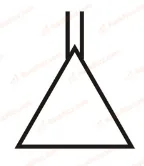
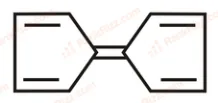
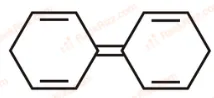
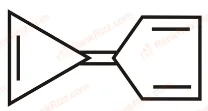
Match List-I with List-II:
| List-I Species | List-II Geometry/Shape | ||
|---|---|---|---|
| A. | HO | I. | Tetrahedral |
| B. | Acetylide anion | II. | Linear |
| C. | NH | III. | Pyramidal |
| D. | ClO | IV. | Bent |
Choose the correct answer from the options given below:
A(III), B(IV), C(I), D(II)
A(III), B(I), C(II), D(IV)
A(III), B(II), C(I), D(IV)
A(III), B(IV), C(II), D(I)
Match List I with List II
List I (Oxide) List II (Type of bond)
A. NO I. 1 N=O bond
B. NO II. 1 N-O-N bond
C. NO III. 1 N-N bond
D. NO IV. 1 N=N/NN bond
A-III, B-I, C-II, D-IV
A-II, B-IV, C-III, D-I
A-III, B-I, C-IV, D-II
A-II, B-I, C-III, D-IV
OTHER CHEMISTRY CHAPTERS