RankRizz

JEE Main 02 Sep 2020, Shift 1: Chemistry

The 25 Chemistry questions of JEE Main 02 Sep 2020, Shift 1, numbered across the whole paper. Pick an answer on any question to check it against the key. Free to read, nothing to download.

Chemistry

Q26Electromagnetic radiation, Planck's quantum theory and photoelectric effectTRANSCRIBED

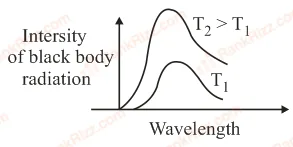
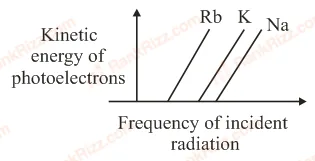
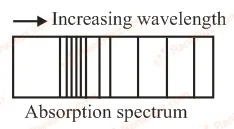
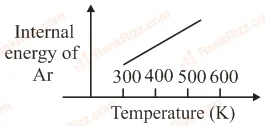
The figure that is not a direct manifestation of the quantum nature of atom is:

  1. A
    Figure for JEE Main 2020 Chemistry question on Electromagnetic radiation, Planck's quantum theory and photoelectric effect
  2. B
    Figure for JEE Main 2020 Chemistry question on Electromagnetic radiation, Planck's quantum theory and photoelectric effect
  3. C
    Figure for JEE Main 2020 Chemistry question on Electromagnetic radiation, Planck's quantum theory and photoelectric effect
  4. D
    Figure for JEE Main 2020 Chemistry question on Electromagnetic radiation, Planck's quantum theory and photoelectric effect
Q27Electronegativity, effective nuclear charge and shieldingTRANSCRIBED

In general, the property (magnitudes only) that shows an opposite trend in comparison to other properties across a period is:

  1. A

    Ionization enthalpy

  2. B

    Electronegativity

  3. C

    Electron gain enthalpy

  4. D

    Atomic radius

Q28VSEPR theory and shapes of molecules and ionsTRANSCRIBED

If AB4AB_4 molecule is a polar molecule, a possible geometry of AB4AB_4 is:

  1. A

    Square pyramidal

  2. B

    Tetrahedral

  3. C

    Rectangular planar

  4. D

    Square planar

Q29Gas laws and ideal gas equationTRANSCRIBED

Which one of the following graphs is not correct for ideal gas?
d = Density, P = Pressure, T = Temperature
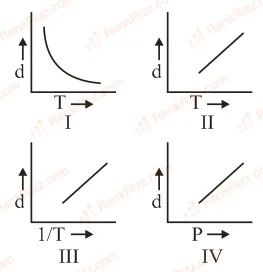
Figure for JEE Main 2020 Chemistry question on Gas laws and ideal gas equation
  1. A

    I

  2. B

    II

  3. C

    IV

  4. D

    III

Q30Solubility product and common ion effectTRANSCRIBED

For the following Assertion and Reason, the correct option is:
Assertion (A): When Cu (II) and sulphide ions are mixed, they react together extremely quickly to give a solid.
Reason (R): The equilibrium constant of Cu2+(aq)+S2−(aq)⇌CuS(s)Cu^{2+}(aq) + S^{2-}(aq) \rightleftharpoons CuS(s) is high because the solubility product is low.

  1. A

    (A) is false and (R) is true.

  2. B

    Both (A) and (R) are false.

  3. C

    Both (A) and (R) are true but (R) is not the explanation for (A).

  4. D

    Both (A) and (R) are true and (R) is the explanation for (A).

Q31Relative lowering of vapour pressureTRANSCRIBED

An open beaker of water in equilibrium with water vapour is in a sealed container. When a few grams of glucose are added to the beaker of water, the rate at which water molecules:

  1. A

    leaves the vapour increases

  2. B

    leaves the solution increases

  3. C

    leaves the solution decreases

  4. D

    leaves the vapour decreases

Q32Redox titrationsTRANSCRIBED

While titration dilute HCl solution with aqueous NaOH, which of the following will not be required?

  1. A

    Burette and porcelain tile

  2. B

    Pipette and distilled water

  3. C

    Clamp and phenolphthalein

  4. D

    Bunsen burner and measuring cylinder

Q33Alkali metals: properties and trendsTRANSCRIBED

The metal mainly used in devising photoelectric cells is:

  1. A

    Na

  2. B

    Li

  3. C

    Rb

  4. D

    Cs

Q34Group 15: trends and hydridesTRANSCRIBED

On heating compound (A) gives a gas (B) which is constituent of air. This gas when treated with H2H_2 in the presence of a catalyst gives another gas (C) which is basic in nature. (A) should not be:

  1. A

    NaN3NaN_3

  2. B

    Pb(NO3)2Pb(NO_3)_2

  3. C

    (NH4)2Cr2O7(NH_4)_2Cr_2O_7

  4. D

    NH4NO2NH_4NO_2

Q35Quantitative estimation of elementsTRANSCRIBED

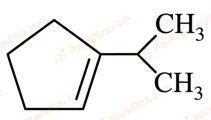
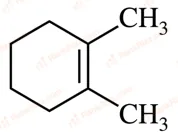
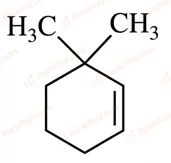
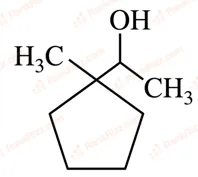
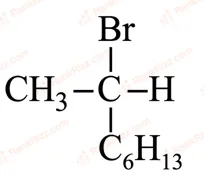
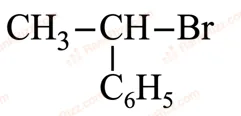
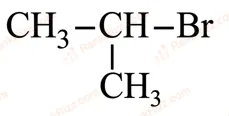
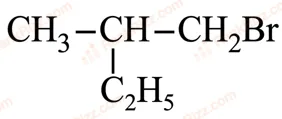
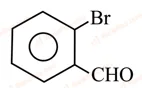
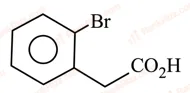
In Carius method of estimation of halogen, 0.172 g of an organic compound showed presence of 0.08 g of bromine. Which of these is the correct structure of the compound?
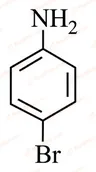
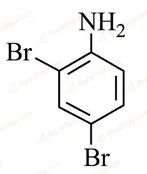
  1. A

    CH3CHBr2CH_3CHBr_2

  2. B
    Figure for JEE Main 2020 Chemistry question on Quantitative estimation of elements
  3. C
    Figure for JEE Main 2020 Chemistry question on Quantitative estimation of elements
  4. D

    H3C−CH2−BrH_3C - CH_2 - Br

Q36Nucleophilic addition reactions of carbonyl compoundsTRANSCRIBED

The increasing order of the following compounds towards HCN addition is:
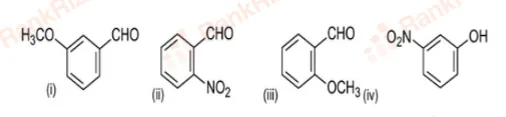
Figure for JEE Main 2020 Chemistry question on Nucleophilic addition reactions of carbonyl compounds
  1. A

    (i)<(iii)<(iv)<(ii)(i) < (iii) < (iv) < (ii)

  2. B

    (iii)<(iv)<(i)<(ii)(iii) < (iv) < (i) < (ii)

  3. C

    (iii)<(i)<(iv)<(ii)(iii) < (i) < (iv) < (ii)

  4. D

    (iii)<(iv)<(ii)<(i)(iii) < (iv) < (ii) < (i)

Q37IUPAC nomenclature of organic compoundsTRANSCRIBED

The IUPAC name for the following compound is:
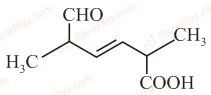
Figure for JEE Main 2020 Chemistry question on IUPAC nomenclature of organic compounds
  1. A

    2, 5-dimethyl-5-carboxy-hex-3-enal

  2. B

    2, 5-dimethyl-6-carboxy-hex-3-enal

  3. C

    2,5-dimethyl-6-oxo-hex-3-enoic acid

  4. D

    6-formyl-2-methyl-hex-3-enoic acid

Q38Electrophilic addition to alkenesTRANSCRIBED

The major product in the following reaction is:
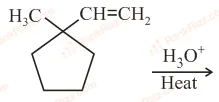
Figure for JEE Main 2020 Chemistry question on Electrophilic addition to alkenes
  1. A
    Figure for JEE Main 2020 Chemistry question on Electrophilic addition to alkenes
  2. B
    Figure for JEE Main 2020 Chemistry question on Electrophilic addition to alkenes
  3. C
    Figure for JEE Main 2020 Chemistry question on Electrophilic addition to alkenes
  4. D
    Figure for JEE Main 2020 Chemistry question on Electrophilic addition to alkenes
Q39Stratospheric pollution and ozone depletionTRANSCRIBED

The statement that is not true about ozone is:

  1. A

    in the stratosphere, CFCs release chlorine free radicals (Cl) which reacts with O3O_3 to give chlorine

  2. B

    in the atmosphere, it is depleted by CFCs.

  3. C

    in the stratosphere, it forms a protective shield against UV radiation.

  4. D

    It is a toxic gas and its reaction with NO gives NO2NO_2

Q40Properties of colloids and coagulationTRANSCRIBED

Which of the following is used for the preparation of colloids?

  1. A

    Ostwald process

  2. B

    Van Arkel Method

  3. C

    Bredig's Arc Method

  4. D

    Mond Process

Q41Colour and magnetic behaviour of complexes from CFTTRANSCRIBED

Consider that d6d^6 metal ion (M2+)(M^{2+}) forms a complex with aqua ligands, and the spin only magnetic moment of the complex is 4.90 BM. The geometry and the crystal field stabilization energy of the complex is:

  1. A

    octahedral and −2.4Δ0+2P-2.4\Delta_0 + 2P

  2. B

    tetrahedral and −0.6Δt-0.6\Delta_t

  3. C

    octahedral and −1.6Δ0-1.6\Delta_0

  4. D

    tetrahedral and −1.6Δt+1P-1.6\Delta_t + 1P

Q42Valence bond theory of complexesTRANSCRIBED

For octahedral Mn(II) and tetrahedral Ni(II) complexes, consider the following statements:
(I) both the complexes can be high spin.
(II) Ni(II) complex can very rarely be of low spin.
(III) with strong field ligands, Mn(II) complexes can be low spin.
(IV) aqueous solution of Mn(II) ions is yellow in color.
The correct statements are:

  1. A

    (I) and (II) only

  2. B

    (I), (II) and (IV) only

  3. C

    (I), (II) and (III) only

  4. D

    (II), (III) and (IV) only

Q43Nucleophilic substitution (SN1 and SN2)TRANSCRIBED

Which of the following compounds will show retention in configuration on nucleophilic substitution by OH−OH^- ion?

  1. A
    Figure for JEE Main 2020 Chemistry question on Nucleophilic substitution (SN1 and SN2)
  2. B
    Figure for JEE Main 2020 Chemistry question on Nucleophilic substitution (SN1 and SN2)
  3. C
    Figure for JEE Main 2020 Chemistry question on Nucleophilic substitution (SN1 and SN2)
  4. D
    Figure for JEE Main 2020 Chemistry question on Nucleophilic substitution (SN1 and SN2)
Q44EthersTRANSCRIBED

The major aromatic product C in the following reaction sequence will be:

Figure for JEE Main 2020 Chemistry question on Ethers
  1. A
    Figure for JEE Main 2020 Chemistry question on Ethers
  2. B
    Figure for JEE Main 2020 Chemistry question on Ethers
  3. C
    Figure for JEE Main 2020 Chemistry question on Ethers
  4. D
    Figure for JEE Main 2020 Chemistry question on Ethers
Q45Carbohydrates: classification and monosaccharidesTRANSCRIBED

Consider the following reactions:
(i) Glucose + ROH →dry  HCl\xrightarrow{dry \; HCl} Acetal →x  eq.  of  (CH3CO)2O\xrightarrow{x \; eq. \; of \; (CH_3CO)_2O} acetyl derivative
(ii) Glucose →Ni/H2\xrightarrow{Ni/H_2} A →y  eq.  of  (CH3CO)2O\xrightarrow{y \; eq. \; of \; (CH_3CO)_2O} acetyl derivative
(iii) Glucose →z  eq.  of  (CH3CO)2O\xrightarrow{z \; eq. \; of \; (CH_3CO)_2O} acetyl derivative
'x', 'y' and 'z' in these reactions are respectively:

  1. A

    5, 4 & 6

  2. B

    4, 6 & 5

  3. C

    4, 5 & 5

  4. D

    5, 6 & 5

Q46Electrode potentials, electrochemical series and cell EMFTRANSCRIBED

The Gibbs energy change (in J) for the given reaction at [Cu2+]=[Sn2+]=1[Cu^{2+}] = [Sn^{2+}] = 1 M and 298 K is:
Cu(s)+Sn2+(aq.)→Cu2+(aq.)+Sn(s)Cu(s) + Sn^{2+}(aq.) \to Cu^{2+}(aq.) + Sn(s);
(ESn2+∣Sn0=−0.16  V,ECu2+∣Cu0=0.34  V,Take F=96500  C  mol−1)(E^0_{Sn^{2+}|Sn} = -0.16 \; V, E^0_{Cu^{2+}|Cu} = 0.34 \; V, \text{Take } F = 96500 \; C \; mol^{-1})

Q47Enthalpies of reaction and Hess's lawTRANSCRIBED

The internal energy change (in J) when 90 g of water undergoes complete evaporation at 100°°C is ___________.
(Given: ΔHvap\Delta H_{vap} for water at 373 K =41= 41 kJ/mol, R =8.314= 8.314 J K−1^{-1} mol−1^{-1})

Q48Structural isomerismTRANSCRIBED

The number of chiral carbons present in the molecule given below is ___________.
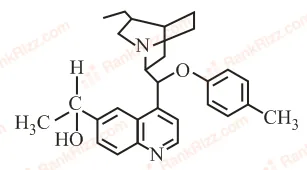
Figure for JEE Main 2020 Chemistry question on Structural isomerism
Q49Adsorption and adsorption isothermsTRANSCRIBED

The mass of gas adsorbed, x, per unit mass of adsorbate, m, was measured at various pressures, p. A graph between log⁡xm\log \frac{x}{m} and log⁡p\log p gives a straight line with slope equal to 2 and the intercept equal to 0.4771. The value of xm\frac{x}{m} at a pressure of 4 atm is:
(Given log⁡3=0.4771\log 3 = 0.4771)

Q50Werner's theory and coordination terminologyTRANSCRIBED

The oxidation states of iron atoms in compounds (A), (B) and (C), respectively, are x, y and z. Then sum of x, y and z is ___________.
(A) Na4[Fe(CN)5(NOS)]Na_4[Fe(CN)_5(NOS)]  (B)  Na4[FeO4]Na_4[FeO_4]  (C)  [Fe2(CO)9][Fe_2(CO)_9]

NEXT IN THIS PAPER →Maths, Q51 onwards