JEE MAIN 2021 · 31 AUG S2Nucleophilic addition reactions of carbonyl compoundsTRANSCRIBED
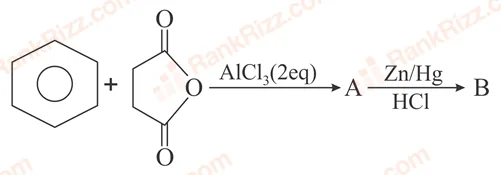
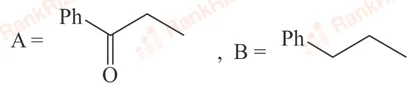
The structures of A and B formed in the following reaction are: Ph = -CH
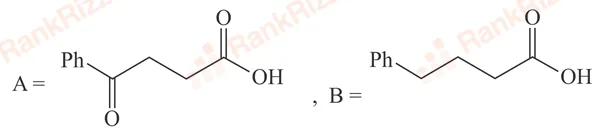
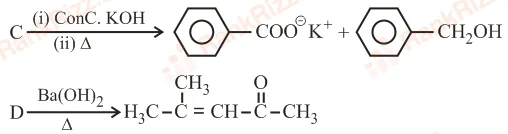
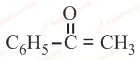
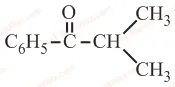
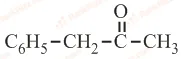
- A
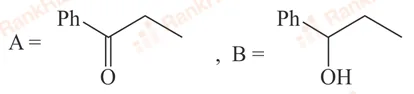
- B
- C
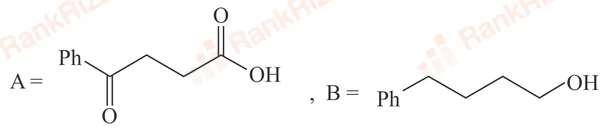
- D
Every Aldehydes and Ketones question JEE Main has set, grouped by the idea it tests rather than the order of the syllabus. 214 questions across 5 distinct ideas. Free to read, answer key on every one.
Questions
214
Distinct ideas
5
Share of marks
4.6%
Difficulty
HARD
A chapter is not one subject — it is a handful of procedures the examiner reuses. These are the ones Aldehydes and Ketones questions actually test.
141–160 OF 214 · NEWEST FIRST
The structures of A and B formed in the following reaction are: Ph = -CH
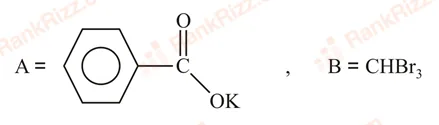
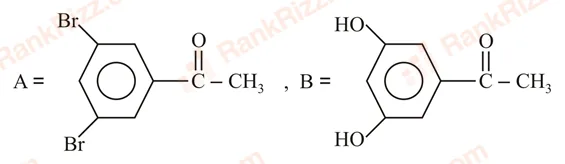
The major products formed in the following reaction sequence A and B are: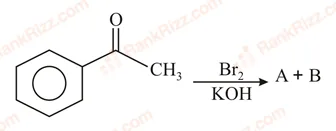
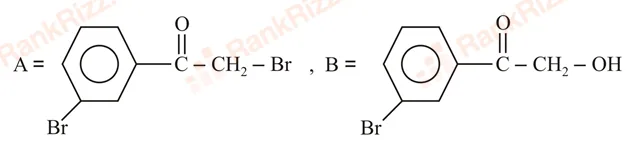
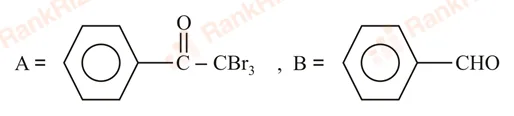
Match List - I with List - II.
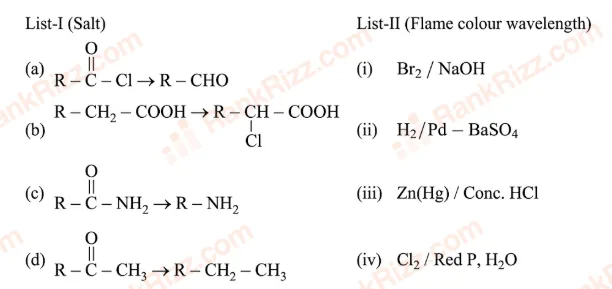
Choose the correct answer from the options given below:
(a)-(ii), (b)-(iv), (c)-(i), (d)-(iii)
(a)-(iii), (b)-(i), (c)-(iv), (d)-(ii)
(a)-(ii), (b)-(i), (c)-(iv), (d)-(iii)
(a)-(iii), (b)-(iv), (c)-(i), (d)-(ii)
The major product of the following chemical reaction is:
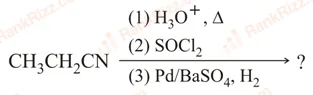
The total number of C-C sigma bond/s in mesityl oxide () is ________ (Round off to the Nearest Integer).
In Tollen's test for aldehyde, the overall number of electron(s) transferred to the Tollen's reagent formula [Ag(NH)] per aldehyde group to form silver mirror is ___. (Round off to the Nearest integer)
The increasing order of the acidity of the -hydrogen of the following compounds is:

(D) < (C) < (A) < (B)
(B) < (C) < (A) < (D)
(A) < (C) < (D) < (B)
(C) < (A) < (B) < (D)
Consider the following reactions:
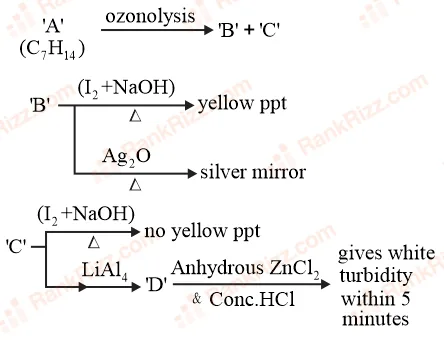
'A' is:
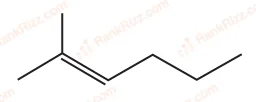
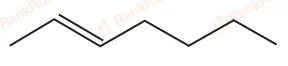
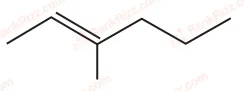
The increasing order of the following compounds towards HCN addition is:
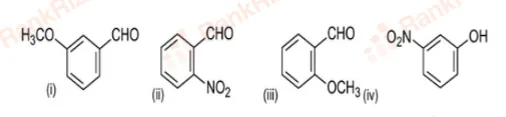
(i) < (iii) < (iv) < (ii)
(iii) < (iv) < (i) < (ii)
(iii) < (i) < (iv) < (ii)
(iii) < (iv) < (ii) < (i)
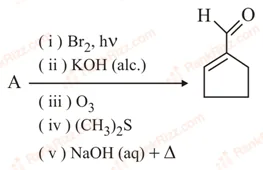
In the following reaction A is:


The increasing order of the reactivity of the following compounds in nucleophile addition reaction is:
Propanal, Benzaldehyde, Propanone, Butanone
Benzaldehyde > Butanone < Propanone < Propanal
Butanone < Propanone < Benzaldehyde < Propanal
Propanal < Propanone < Butanone < Benzaldehyde
Benzaldehyde < Propanal < Propanone < Butanone
An organic compound (A) (molecular formula ) was hydrolysed with dil. to give a carboxylic acid (B) and an alcohol (C). 'C' gives white turbidity immediately when treated with anhydrous and conc. HCl. The organic compound (A) is:
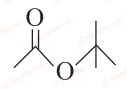
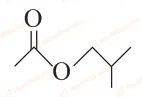
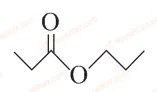
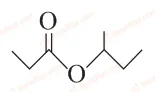
The compound A in the following reactions is:
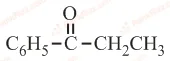
The correct match between Item-I (starting material) and Item-II (reagent) for the preparation of benzaldehyde is:
Item-I Item-II
(I) Benzene (P) HCl and ,
(II) Benzonitrile (Q) , , S and quinoline
(III) Benzoyl Chloride (R) Co, HCl and
(I)-(Q), (II)-(R) and (III)-(P)
(I)-(P), (II)-(Q) and (III)-(R)
(I)-(R), (II)-(P) and (III)-(Q)
(I)-(R), (II)-(Q) and (III)-(P)
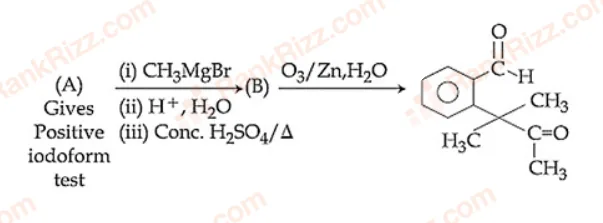
Identify (A) in the following reaction sequence:
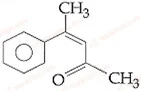
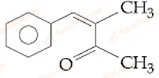
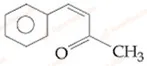
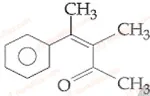
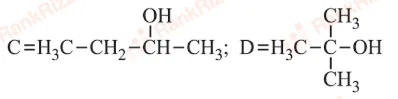
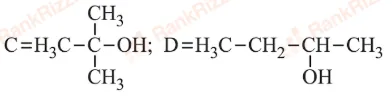
Two compounds A and B with same molecular formula undergo Grignard reaction with methylmagnesium bromide to give products C and D. Products C and D show following chemical tests:
| Test | C | D |
|---|---|---|
| Ceric ammonium nitrate Test | Positive | Positive |
| Lucas Test | Turbidity obtained after five minutes | Turbidity obtained Immediately |
| Iodoform Test | Positive | Negative |
C and D respectively are:
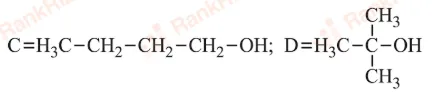

Consider the following reactions: . The mass percentage of carbon in A is ___________.
What will be the major product in the following mononitration reaction?
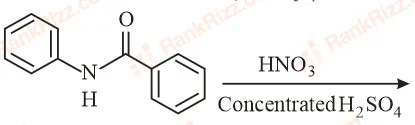
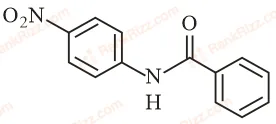
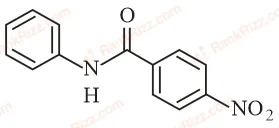
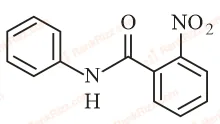
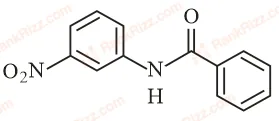
The major product of the following reaction is:
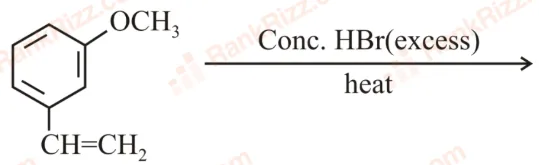
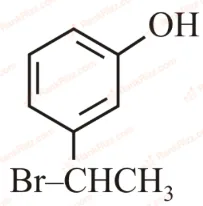
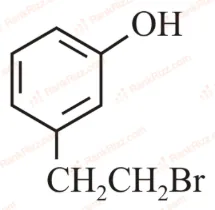
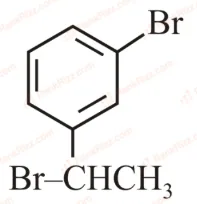
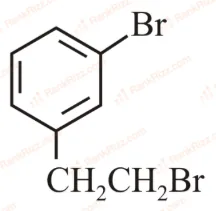
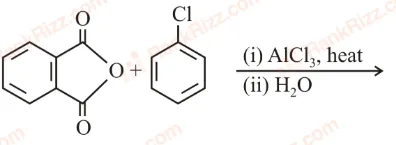
The major product of the following reaction is:
OTHER CHEMISTRY CHAPTERS