RankRizz

JEE Main 10 Jan 2019, Shift 1: Chemistry

The 30 Chemistry questions of JEE Main 10 Jan 2019, Shift 1, numbered across the whole paper. Pick an answer on any question to check it against the key. Free to read, nothing to download.

Chemistry

Q31Electromagnetic radiation, Planck's quantum theory and photoelectric effectTRANSCRIBED

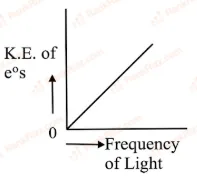
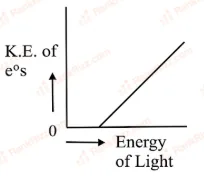
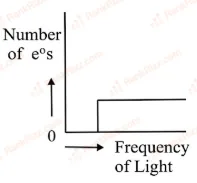
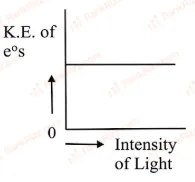
Which of the graphs shown below does not represent the relationship between incident light and the electron ejected from metal surface?

  1. A
    Figure for JEE Main 2019 Chemistry question on Electromagnetic radiation, Planck's quantum theory and photoelectric effect
  2. B
    Figure for JEE Main 2019 Chemistry question on Electromagnetic radiation, Planck's quantum theory and photoelectric effect
  3. C
    Figure for JEE Main 2019 Chemistry question on Electromagnetic radiation, Planck's quantum theory and photoelectric effect
  4. D
    Figure for JEE Main 2019 Chemistry question on Electromagnetic radiation, Planck's quantum theory and photoelectric effect
Q32VSEPR theory and shapes of molecules and ionsTRANSCRIBED

The type of hybridization and no. of lone pair(s) of electron of Xe in XeOF4XeOF_4, respectively, are:

  1. A

    sp3d2sp^3d^2 and 1

  2. B

    sp3d2sp^3d^2 and 2

  3. C

    sp3dsp^3d and 2

  4. D

    sp3dsp^3d and 1

Q33Molecular orbital theory of diatomic speciesTRANSCRIBED

Two pi and half sigma bonds are present in:

  1. A

    O2−O_2^-

  2. B

    N2+N_2^+

  3. C

    N2N_2

  4. D

    O2O_2

Q34Gibbs energy and spontaneityTRANSCRIBED

A process has ΔH=200\Delta H = 200 J mol−1^{-1} and ΔS=40\Delta S = 40 J K−1^{-1} mol−1^{-1}. Out of the values given below choose the minimum temperature above which the process will be spontaneous:

  1. A

    20 K

  2. B

    5 K

  3. C

    12 K

  4. D

    4 K

Q35Law of mass action and equilibrium constants Kc and KpTRANSCRIBED

What are the values of KpKc\frac{K_p}{K_c} for the following reactions at 300 K respectively?
(At 300 K, RT = 24.62 dm2^2 atm mol−1^{-1})
N2(g)+O2(g)⇌2NO(g)N_2(g) + O_2(g) \rightleftharpoons 2NO(g)
N2O4(g)⇌2NO(g)N_2O_4(g) \rightleftharpoons 2NO(g)
N2(g)+3H2(g)⇌2NH3(g)N_2(g) + 3H_2(g) \rightleftharpoons 2NH_3(g)

  1. A

    24.63 dm3^3 atm mol−1^{-1}, 606.0 dm6^6 atm2^2 mol−2^{-2}, 1.65×10−31.65 \times 10^{-3} dm−6^{-6} atm−2^{-2} mol2^2

  2. B

    1, 24.62 dm6^6 atm3^3 mol−1^{-1}, 606.0 dm6^6 atm2^2 mol−2^{-2}

  3. C

    1, 24.62 dm3^3 atm mol−1^{-1}, 1.65×10−31.65 \times 10^{-3} dm−6^{-6} atm−2^{-2} mol2^2

  4. D

    1, 4.1×10−24.1 \times 10^{-2} dm−3^{-3} atm−1^{-1} mol, 606 dm6^6 atm2^2 mol−2^{-2}

Q36Solubility product and common ion effectTRANSCRIBED

A mixture of 100 m mol of Ca(OH)2Ca(OH)_2 and 2 g of sodium sulphate was dissolved in water and the volume was made up to 100 mL. What is the mass of calcium sulphate formed and the concentration of OH−OH^- in resulting solution, respectively? (Molar mass of Ca(OH)2Ca(OH)_2, Na2SO4Na_2SO_4 and CaSO4CaSO_4 are 74, 143 and 136 g mol−1^{-1}, respectively; KspK_{sp} of Ca(OH)2Ca(OH)_2 is 5.5×10−65.5 \times 10^{-6})

  1. A

    1.9 g, 0.14 mol L−1^{-1}

  2. B

    13.6 g, 0.28 mol L−1^{-1}

  3. C

    1.9 g, 0.28 mol L−1^{-1}

  4. D

    13.6 g, 0.14 mol L−1^{-1}

Q37Hydrogen peroxideTRANSCRIBED

The chemical nature of hydrogen peroxide is:

  1. A

    Oxidizing and reducing agent in both acidic and basic medium.

  2. B

    Oxidizing agent in acidic medium, but not in basic medium

  3. C

    Oxidizing and reducing agent in acidic medium, but not in basic medium

  4. D

    Reducing agent in basic medium, but not in acidic medium.

Q38Position, isotopes, preparation and properties of dihydrogenTRANSCRIBED

The total number of isotopes of hydrogen and number of radioactive isotopes among them, respectively, are:

  1. A

    2 and 1

  2. B

    2 and 0

  3. C

    3 and 1

  4. D

    3 and 2

Q39Alkaline earth metals: properties and trendsTRANSCRIBED

The metal used for making X-ray tube window is:

  1. A

    Mg

  2. B

    Na

  3. C

    Be

  4. D

    Ca

Q40Electronegativity, effective nuclear charge and shieldingTRANSCRIBED

The electronegativity of aluminum is similar to:

  1. A

    Beryllium

  2. B

    Boron

  3. C

    Carbon

  4. D

    Lithium

Q41Reactions of phenolsTRANSCRIBED

The increasing order of the pKa values of the following compounds is:
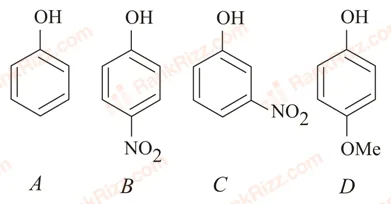
Figure for JEE Main 2019 Chemistry question on Reactions of phenols
  1. A

    B < C < A < D

  2. B

    D < A < C < B

  3. C

    B < C < D < A

  4. D

    C < B < A < D

Q42Methods of purification of organic compoundsTRANSCRIBED

If Dichloromethane (DCM) and water H2OH_2O are used for differential extraction, which one of the following statements is correct?

  1. A

    DCM and H2OH_2O would stay as upper and lower layer respectively in the separating funnel (S.F.)

  2. B

    DCM and H2OH_2O will be miscible clearly

  3. C

    DCM and H2OH_2O would stay as lower and upper layer respectively in the S.F.

  4. D

    DCM and H2OH_2O will make turbid/colloidal mixture

Q43Alkenes: preparation and stabilityTRANSCRIBED

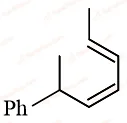
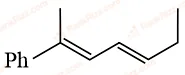
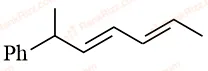
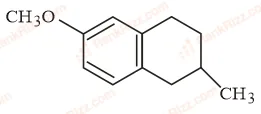
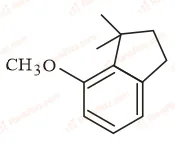
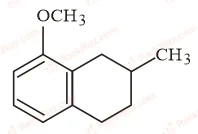
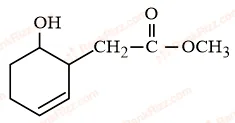
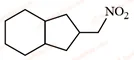
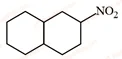
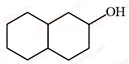
The major product of the following reaction is:
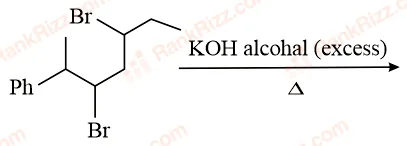
Figure for JEE Main 2019 Chemistry question on Alkenes: preparation and stability
  1. A
    Figure for JEE Main 2019 Chemistry question on Alkenes: preparation and stability
  2. B
    Figure for JEE Main 2019 Chemistry question on Alkenes: preparation and stability
  3. C
    Figure for JEE Main 2019 Chemistry question on Alkenes: preparation and stability
  4. D
    Figure for JEE Main 2019 Chemistry question on Alkenes: preparation and stability
Q44Nucleophilic substitution (SN1 and SN2)TRANSCRIBED

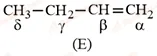
Which hydrogen in compound (E) is easily replaceable during bromination reaction in presence of light?

Figure for JEE Main 2019 Chemistry question on Nucleophilic substitution (SN1 and SN2)
  1. A

    β\beta-hydrogen

  2. B

    δ\delta-hydrogen

  3. C

    α\alpha-hydrogen

  4. D

    γ\gamma-hydrogen

Q45Water pollutionTRANSCRIBED

Water filled in two glasses A and B gave BOD values of 10 and 20, respectively. The correct statement regarding them is:

  1. A

    A is suitable for drinking, whereas B is not

  2. B

    B is more polluted than A

  3. C

    Both A and B are suitable for drinking

  4. D

    A is more polluted than B

Q46Crystal lattices, unit cells and densityTRANSCRIBED

Which primitive unit cell has unequal edge lengths (a≠b≠ca \neq b \neq c) and all axial angles different from 90∘^{\circ}?

  1. A

    Hexagonal

  2. B

    Monoclinic

  3. C

    Triclinic

  4. D

    Tetragonal

Q47Relative lowering of vapour pressureTRANSCRIBED

Liquids A and B form an ideal solution in the entire composition range. At 350K, the vapour pressure of pure A and pure B are 7×1037 \times 10^3 Pa and 12×10312 \times 10^3 Pa, respectively. The composition of the vapour in equilibrium with a solution containing 40 mole percent of A at this temperature is:

  1. A

    xA=0.4;xB=0.6x_A = 0.4; x_B = 0.6

  2. B

    xA=0.76;xB=0.24x_A = 0.76; x_B = 0.24

  3. C

    xA=0.28;xB=0.72x_A = 0.28; x_B = 0.72

  4. D

    xA=0.37;xB=0.63x_A = 0.37; x_B = 0.63

Q48Electrode potentials, electrochemical series and cell EMFTRANSCRIBED

Consider the following reduction processes:
Zn2++2e−→Zn(s);E∘=−0.76Zn^{2+} + 2e^- \rightarrow Zn(s); E^{\circ} = -0.76 V
Ca2++2e−→Ca(s);E∘=−2.87Ca^{2+} + 2e^- \rightarrow Ca(s); E^{\circ} = -2.87 V
Mg2++2e−→Mg(s);E∘=−2.36Mg^{2+} + 2e^- \rightarrow Mg(s); E^{\circ} = -2.36 V
Ni2++2e−→Ni(s);E∘=−0.25Ni^{2+} + 2e^- \rightarrow Ni(s); E^{\circ} = -0.25 V
The reducing power of the metals increases in the order:

  1. A

    Ca < Mg < Zn < Ni

  2. B

    Zn < Mg < Ni < Ca

  3. C

    Ni < Zn < Mg < Ca

  4. D

    Ca < Zn < Ni < Mg

Q49Arrhenius equation and activation energyTRANSCRIBED

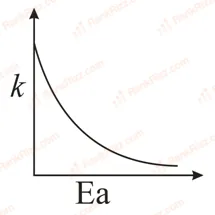
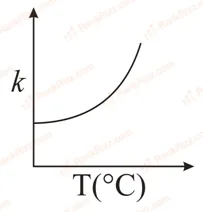
Consider the given plots for a reaction obeying Arrhenius equation (0∘0^{\circ}C < T < 300∘^{\circ}C): (K and EaE_a are rate constant and activation energy, respectively)

Figure for JEE Main 2019 Chemistry question on Arrhenius equation and activation energy Figure for JEE Main 2019 Chemistry question on Arrhenius equation and activation energy
  1. A

    I is wrong but II is right

  2. B

    Both I and II are wrong

  3. C

    I is right but II is wrong

  4. D

    Both I and II are correct

Q50Catalysis: homogeneous, heterogeneous and enzymeTRANSCRIBED

Which of the following is not an example of heterogeneous catalysis reaction?

  1. A

    Combustion of Coal

  2. B

    Hydrogenation of Vegetable oils

  3. C

    Ostwald's process

  4. D

    Haber's process

Q51Extraction of Fe, Cu, Zn, Al, Ag and AuTRANSCRIBED

Hall Heroult's process is given by:

  1. A

    Cr2O3+2Al→Al2O3+CrCr_2O_3 + 2Al \rightarrow Al_2O_3 + Cr

  2. B

    2Al2O3+3C→4Al+3CO22Al_2O_3 + 3C \rightarrow 4Al + 3CO_2

  3. C

    Cu2+(aq)+H2(g)→Cu(s)+2H+(aq)Cu^{2+}(aq) + H_2(g) \rightarrow Cu(s) + 2H^+(aq)

  4. D

    ZnO+C→Coke,1673Zn+COZnO + C \xrightarrow{Coke, 1673} Zn + CO

Q52Lanthanoids and lanthanoid contractionTRANSCRIBED

The effect of lanthanoid contraction in the lanthanoid series of elements by and large means:

  1. A

    increase in atomic radii and decrease in ionic radii

  2. B

    decrease in atomic radii and increase in ionic radii

  3. C

    increase in both atomic and ionic radii

  4. D

    decrease in both atomic and ionic radii

Q53Structural isomerism in complexesTRANSCRIBED

The total number of isomers for a square planar complex: [MCl(F)(NO2)(SCN)][MCl(F)(NO_2)(SCN)] is:

  1. A

    12

  2. B

    16

  3. C

    4

  4. D

    8

Q54Stability and applications of coordination compoundsTRANSCRIBED

Wilkinson catalyst is:

  1. A

    [(Et3P)3IrCl][(Et_3P)_3IrCl] (Et=C2H5Et = C_2H_5)

  2. B

    [(Ph3P)3RhCl][(Ph_3P)_3RhCl]

  3. C

    [(Ph3P)3IrCl][(Ph_3P)_3IrCl]

  4. D

    [(Et3P)3RhCl][(Et_3P)_3RhCl]

Q55Electrophilic addition to alkenesTRANSCRIBED

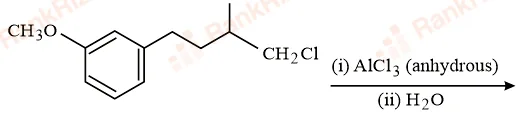
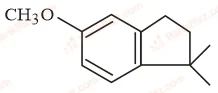
The major product of the following reaction is:
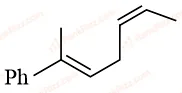
Figure for JEE Main 2019 Chemistry question on Electrophilic addition to alkenes
  1. A
    Figure for JEE Main 2019 Chemistry question on Electrophilic addition to alkenes
  2. B
    Figure for JEE Main 2019 Chemistry question on Electrophilic addition to alkenes
  3. C
    Figure for JEE Main 2019 Chemistry question on Electrophilic addition to alkenes
  4. D
    Figure for JEE Main 2019 Chemistry question on Electrophilic addition to alkenes
Q56Reactions of phenolsTRANSCRIBED

The major product 'X' formed in the following reaction is:
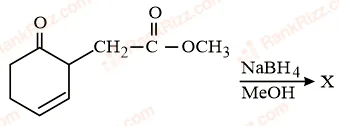
Figure for JEE Main 2019 Chemistry question on Reactions of phenols
  1. A
    Figure for JEE Main 2019 Chemistry question on Reactions of phenols
  2. B
    Figure for JEE Main 2019 Chemistry question on Reactions of phenols
  3. C
    Figure for JEE Main 2019 Chemistry question on Reactions of phenols
  4. D
    Figure for JEE Main 2019 Chemistry question on Reactions of phenols
Q57Reactions of carboxylic acidsTRANSCRIBED

The decreasing order of ease of alkaline hydrolysis for the following esters is:
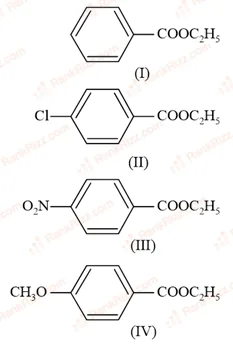
Figure for JEE Main 2019 Chemistry question on Reactions of carboxylic acids
  1. A

    III > II > IV > I

  2. B

    III > II > I > IV

  3. C

    IV > II > III > I

  4. D

    II > III > I > IV

Q58Reactions of carboxylic acidsTRANSCRIBED

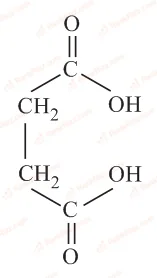
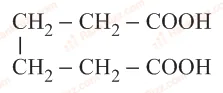
With dehydrating agent present which dicarboxylic acid is least reactive towards forming an anhydride?
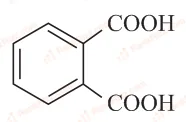
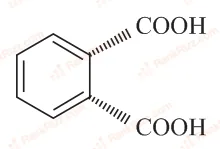
  1. A
    Figure for JEE Main 2019 Chemistry question on Reactions of carboxylic acids
  2. B
    Figure for JEE Main 2019 Chemistry question on Reactions of carboxylic acids
  3. C
    Figure for JEE Main 2019 Chemistry question on Reactions of carboxylic acids
  4. D
    Figure for JEE Main 2019 Chemistry question on Reactions of carboxylic acids
Q59Diazonium saltsTRANSCRIBED

The major product formed in the reaction given below will be:
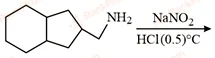
Figure for JEE Main 2019 Chemistry question on Diazonium salts
  1. A
    Figure for JEE Main 2019 Chemistry question on Diazonium salts
  2. B
    Figure for JEE Main 2019 Chemistry question on Diazonium salts
  3. C
    Figure for JEE Main 2019 Chemistry question on Diazonium salts
  4. D
    Figure for JEE Main 2019 Chemistry question on Diazonium salts
Q60Proteins and enzymesTRANSCRIBED

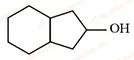
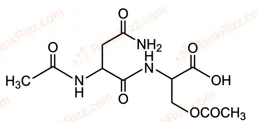
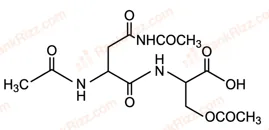
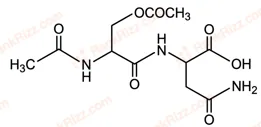
The correct structure of the product 'P' in the following reaction is
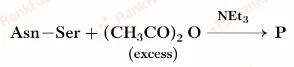
Figure for JEE Main 2019 Chemistry question on Proteins and enzymes
  1. A
    Figure for JEE Main 2019 Chemistry question on Proteins and enzymes
  2. B
    Figure for JEE Main 2019 Chemistry question on Proteins and enzymes
  3. C
    Figure for JEE Main 2019 Chemistry question on Proteins and enzymes
  4. D
    Figure for JEE Main 2019 Chemistry question on Proteins and enzymes
NEXT IN THIS PAPER →Maths, Q61 onwards