RankRizz

SHM: equation, phase, velocity and acceleration — JEE Main Previous Year Questions

Every JEE Main question on SHM: equation, phase, velocity and acceleration, one of the ideas inside Oscillations: 78 questions from 2005–2026, 41 of them in the last five years. Newest first, answer key on every one. Free to read.

Questions

78

Years asked

18

Since

2005

Of the chapter

43%

Every SHM: equation, phase, velocity and acceleration question

61–78 OF 78 · NEWEST FIRST

JEE MAIN 2016 · 03 APR OFFLINESHM: equation, phase, velocity and accelerationTRANSCRIBED

A particle performs simple harmonic motion with amplitude A. Its speed is tripled at the instant that it is at a distance 2A3\frac{2A}{3} from equilibrium position. The new amplitude of the motion is:

  1. A

    A3A\sqrt{3}

  2. B

    7A3\frac{7A}{3}

  3. C

    A341\frac{A}{3}\sqrt{41}

  4. D

    3A

JEE MAIN 2016 · 09 APR ONLINESHM: equation, phase, velocity and accelerationTRANSCRIBED

Two particles are performing simple harmonic motion in a straight line about the same equilibrium point. The amplitude and time period for both particles are same and equal to A and T, respectively. At time t=0t = 0 one particle has displacement A while the other one has displacement −A2-\frac{A}{2} and they are moving towards each other. If they cross each other at time t, then t is:

  1. A

    5T6\frac{5T}{6}

  2. B

    T3\frac{T}{3}

  3. C

    T4\frac{T}{4}

  4. D

    T6\frac{T}{6}

JEE MAIN 2016 · 10 APR ONLINESHM: equation, phase, velocity and accelerationTRANSCRIBED

In an engine the piston undergoes vertical simple harmonic motion with amplitude 7 cm. A washer rests on top of the piston and moves with it. The motor speed is slowly increased. The frequency of the piston at which the washer no longer stays in contact with the piston, is close to:

  1. A

    0.7 Hz

  2. B

    1.9 Hz

  3. C

    1.2 Hz

  4. D

    0.1 Hz

JEE MAIN 2015 · 10 APR ONLINESHM: equation, phase, velocity and accelerationTRANSCRIBED

xx and yy are displacements of a particle are given as x(t)=asin⁡ωtx(t) = a \sin \omega t and y(t)=asin⁡2ωty(t) = a \sin 2\omega t. Its trajectory will look like:

  1. A
    Figure for JEE Main 2015 Physics question on SHM: equation, phase, velocity and acceleration
  2. B
    Figure for JEE Main 2015 Physics question on SHM: equation, phase, velocity and acceleration
  3. C
    Figure for JEE Main 2015 Physics question on SHM: equation, phase, velocity and acceleration
  4. D
    Figure for JEE Main 2015 Physics question on SHM: equation, phase, velocity and acceleration
JEE MAIN 2014 · 06 APR OFFLINESHM: equation, phase, velocity and accelerationTRANSCRIBED

A particle moves with simple harmonic motion in a straight line. In first τ\tau s, after starting from rest it travels a distance a, and in next τ\tau s it travels 2a, in same direction, then:

  1. A

    Amplitude of motion is 3a

  2. B

    Time period of oscillations is 8τ8\tau

  3. C

    Amplitude of motion is 4a

  4. D

    Time period of oscillations is 6τ6\tau

JEE MAIN 2014 · 09 APR ONLINESHM: equation, phase, velocity and accelerationTRANSCRIBED

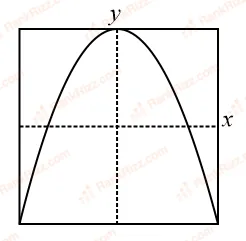
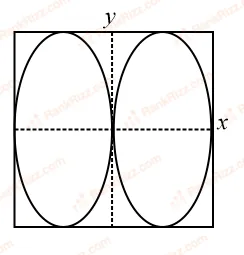
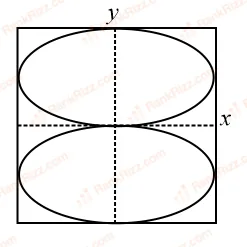
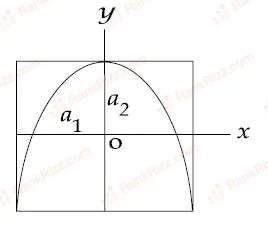
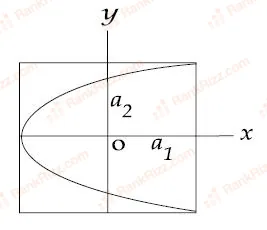
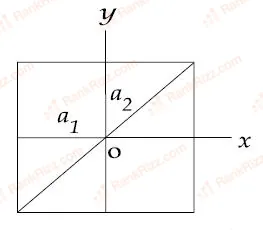
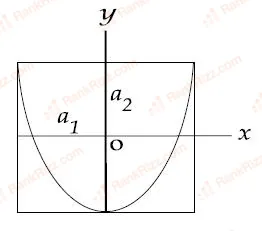
A particle which is simultaneously subjected to two perpendicular simple harmonic motions represented by; x=a1cos⁡ωtx = a_1 \cos \omega t and y=a2cos⁡2ωty = a_2 \cos 2\omega t traces a curve given by:

  1. A
    Figure for JEE Main 2014 Physics question on SHM: equation, phase, velocity and acceleration
  2. B
    Figure for JEE Main 2014 Physics question on SHM: equation, phase, velocity and acceleration
  3. C
    Figure for JEE Main 2014 Physics question on SHM: equation, phase, velocity and acceleration
  4. D
    Figure for JEE Main 2014 Physics question on SHM: equation, phase, velocity and acceleration
JEE MAIN 2014 · 12 APR ONLINESHM: equation, phase, velocity and accelerationTRANSCRIBED

Which of the following expressions corresponds to simple harmonic motion along a straight line, where x is the displacement and a, b, c are positive constants?

  1. A

    a+bx−cx2a + bx - cx^2

  2. B

    bx2bx^2

  3. C

    a−bx+cx2a - bx + cx^2

  4. D

    −bx-bx

JEE MAIN 2014 · 19 APR ONLINESHM: equation, phase, velocity and accelerationTRANSCRIBED

A body is in simple harmonic motion with time period T=0.5T = 0.5 s and amplitude A=1A = 1 cm. Find the average velocity in the interval in which it moves from equilibrium position to half of its amplitude.

  1. A

    16 cm/s

  2. B

    6 cm/s

  3. C

    4 cm/s

  4. D

    12 cm/s

JEE MAIN 2012SHM: equation, phase, velocity and accelerationTRANSCRIBED

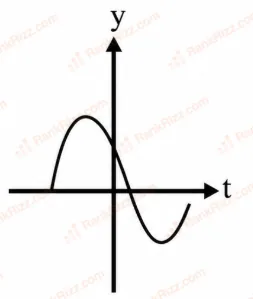
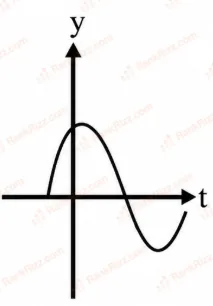
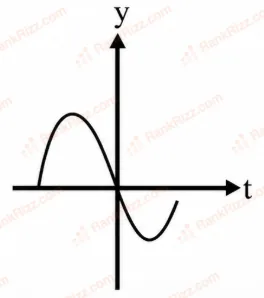
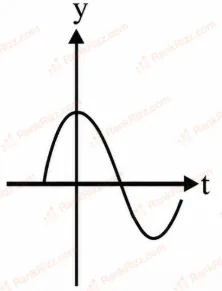
The displacement y(t)=Asin⁡(ωt+ϕ)y(t) = A\sin(\omega t + \phi) of a pendulum for ϕ=2π3\phi = \frac{2\pi}{3} is correctly represented by

  1. A
    Figure for JEE Main 2012 Physics question on SHM: equation, phase, velocity and acceleration
  2. B
    Figure for JEE Main 2012 Physics question on SHM: equation, phase, velocity and acceleration
  3. C
    Figure for JEE Main 2012 Physics question on SHM: equation, phase, velocity and acceleration
  4. D
    Figure for JEE Main 2012 Physics question on SHM: equation, phase, velocity and acceleration
JEE MAIN 2011SHM: equation, phase, velocity and accelerationTRANSCRIBED

Two particles are executing simple harmonic motion of the same amplitude AA and frequency ω\omega along the xx-axis. Their mean position is separated by distance X0 (X0>A)X_0 \, (X_0 > A). If the maximum separation between them is (X0+A)(X_0 + A), the phase difference between their motion is:

  1. A

    π3\dfrac{\pi}{3}

  2. B

    π4\dfrac{\pi}{4}

  3. C

    π6\dfrac{\pi}{6}

  4. D

    π2\dfrac{\pi}{2}

JEE MAIN 2009SHM: equation, phase, velocity and accelerationTRANSCRIBED

If x,vx, v and aa denote the displacement, the velocity and the acceleration of a particle executing simple harmonic motion of time period TT, then, which of the following does not change with time?

  1. A

    a2T2+4π2v2a^2T^2 + 4\pi^2v^2

  2. B

    aTx\frac{aT}{x}

  3. C

    aT+2πvaT + 2\pi v

  4. D

    aTv\frac{aT}{v}

JEE MAIN 2007SHM: equation, phase, velocity and accelerationTRANSCRIBED

The displacement of an object attached to a spring and executing simple harmonic motion is given by x=2×10⁻²cos⁡πtx = 2 \times 10^{-2} \cos \pi t metres. The time at which the maximum speed first occurs is

  1. A

    0.5 s

  2. B

    0.75 s

  3. C

    0.125 s

  4. D

    0.25 s

JEE MAIN 2007SHM: equation, phase, velocity and accelerationTRANSCRIBED

A point mass oscillates along the xx-axis according to the law x=x0cos⁡(ωt−π/4)x = x_0 \cos(\omega t - \pi/4). If the acceleration of the particle is written as a=Acos⁡(ωt+δ)a = A \cos(\omega t + \delta)

  1. A

    A=x0,δ=−π/4A = x_0, \delta = -\pi/4

  2. B

    A=x0ω2,δ=−π/4A = x_0 \omega^2, \delta = -\pi/4

  3. C

    A=x0/ω2,δ=−π/4A = x_0/\omega^2, \delta = -\pi/4

  4. D

    A=x0ω2,δ=3π/4A = x_0 \omega^2, \delta = 3\pi/4

JEE MAIN 2006SHM: equation, phase, velocity and accelerationTRANSCRIBED

The maximum velocity of a particle, executing simple harmonic motion with an amplitude 7 mm7\,mm, is 4.4 m/s4.4\,m/s. The period of oscillation is

  1. A

    100 s

  2. B

    0.01 s

  3. C

    10 s

  4. D

    0.1 s

JEE MAIN 2006SHM: equation, phase, velocity and accelerationTRANSCRIBED

A coin is placed on a horizontal platform which undergoes vertical simple harmonic motion of angular frequency ω\omega. The amplitude of oscillation is gradually increased. The coin will leave contact with the platform for the first time

  1. A

    at the highest position of the platform

  2. B

    at the mean position of the platform

  3. C

    for an amplitude of gω2\dfrac{g}{\omega^2}

  4. D

    for an amplitude of g2ω2\dfrac{g^2}{\omega^2}

JEE MAIN 2005SHM: equation, phase, velocity and accelerationTRANSCRIBED

The function sin⁡2(ωt)\sin^2(\omega t) represents

  1. A

    a periodic, but not simple harmonic motion with a period 2π/ω2\pi/\omega

  2. B

    a periodic, but not simple harmonic motion with a period π/ω\pi/\omega

  3. C

    a simple harmonic motion with a period 2π/ω2\pi/\omega

  4. D

    a simple harmonic motion with a period π/ω\pi/\omega

JEE MAIN 2005SHM: equation, phase, velocity and accelerationTRANSCRIBED

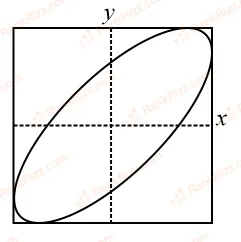
Two simple harmonic motions are represented by the equation y1=0.1sin⁡(100πt+π3)y_1 = 0.1 \sin\left(100\pi t + \frac{\pi}{3}\right) and y2=0.1cos⁡πty_2 = 0.1 \cos \pi t. The phase difference of the velocity of particle 1 w.r.t. the velocity of the particle 2 is
  1. A

    −π/6-\pi/6

  2. B

    π/3\pi/3

  3. C

    −π/3-\pi/3

  4. D

    π/6\pi/6

JEE MAIN 2005SHM: equation, phase, velocity and accelerationTRANSCRIBED

If a simple harmonic motion is represented by d2xdt2+αx=0\frac{d^2 x}{dt^2} + \alpha x = 0, its time period is

  1. A

    2πα\frac{2\pi}{\alpha}

  2. B

    2πα\frac{2\pi}{\sqrt{\alpha}}

  3. C

    2πα2\pi \alpha

  4. D

    2πα2\pi \sqrt{\alpha}