The technique used for purification of steam volatile water immiscible substance is :
- A
Fractional distillation
- B
Fractional distillation under reduced pressure
- C
Distillation
- D
Steam distillation
Every Purification and Characterisation of Organic Compounds question JEE Main has set, grouped by the idea it tests rather than the order of the syllabus. 151 questions across 4 distinct ideas. Free to read, answer key on every one.
Questions
151
Distinct ideas
4
Share of marks
3.8%
Difficulty
EASY
A chapter is not one subject — it is a handful of procedures the examiner reuses. These are the ones Purification and Characterisation of Organic Compounds questions actually test.
41–60 OF 151 · NEWEST FIRST
The technique used for purification of steam volatile water immiscible substance is :
Fractional distillation
Fractional distillation under reduced pressure
Distillation
Steam distillation
'Adsorption' principle is used for which of the following purification method?
Extraction
Chromatography
Distillation
Sublimation
The correct statement among the following, for a "chromatography" purification method is :
Organic compounds run faster than solvent in the thin layer chromatographic plate.
is an integral value.
of a polar compound is smaller than that of a non-polar compound.
Non-polar compounds are retained at top and polar compounds come down in column chromatography.
Chromatographic technique/s based on the principle of differential adsorption is/are
A. Column chromatography B. Thin layer chromatography C. Paper chromatography
Choose the most appropriate answer from the options given below:
B only
A only
A & B only
C only
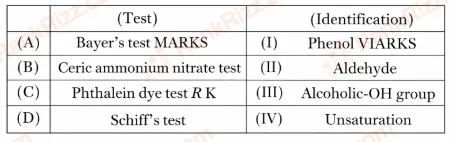
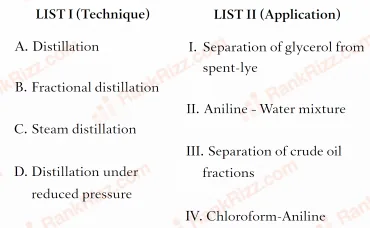
Match List I with List II:
Choose the correct answer from the options given below:
A-IV, B-I, C-II, D-III
A-IV, B-III, C-II, D-I
A-I, B-II, C-IV, D-III
A-II, B-III, C-I, D-IV
Given below are two statements : Statement (I) : Kjeldahl method is applicable to estimate nitrogen in pyridine. Statement (II) : The nitrogen present in pyridine can easily be converted into ammonium sulphate in Kjeldahl method. In the light of the above statements, choose the correct answer from the options given below :
Both Statement I and Statement II are true
Both Statement I and Statement II are false
Statement I is false but Statement II is true
Statement I is true but Statement II is false
Appearance of blood red colour, on treatment of the sodium fusion extract of an organic compound with in presence of concentrated indicates the presence of element/s
Br
N
N and S
S
The fragrance of flowers is due to the presence of some steam volatile organic compounds called essential oils. These are generally insoluble in water at room temperature but are miscible with water vapour in the vapour phase. A suitable method for the extraction of these oils from the flowers is:
crystallisation
distillation under reduced pressure
distillation
steam distillation
The adsorbent used in adsorption chromatography is/are: A. silica gel, B. alumina, C. quick lime, D. magnesia. Choose the most appropriate answer from the options given below:
A only
B only
C and D only
A and B only
Which of the following statements are correct?
A. Glycerol is purified by vacuum distillation because it decomposes at its normal boiling point.
B. Aniline can be purified by steam distillation as aniline is miscible in water.
C. Ethanol can be separated from ethanol water mixture by azeotropic distillation because it forms azeotrope.
D. An organic compound is pure, if mixed M.P. is remained same.
Choose the most appropriate answer from the options given below :
A, B, C only
A, C, D only
A, B, D only
B, C, D only
In qualitative test for identification of presence of phosphorous, the compound is heated with an oxidising agent. Which is further treated with nitric acid and ammonium molybdate respectively. The yellow coloured precipitate obtained is :
In Kjeldahl's method for estimation of nitrogen, acts as :
Reducing agent
Catalytic agent
Hydrolysis agent
Oxidising agent
Lassaigne's test is used for detection of:
Nitrogen and Sulphur only
Nitrogen, Sulphur and Phosphorous Only
Phosphorous and halogens only
Nitrogen, Sulphur, and halogens
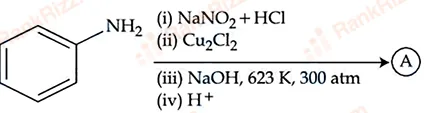
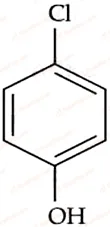
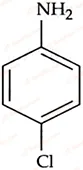
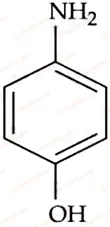
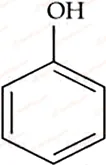
Identify the product (A) in the following reaction.


Match List - I with List - II.
Choose the correct answer from the options given below :
(A)-(IV), (B)-(III), (C)-(I), (D)-(II)
(A)-(II), (B)-(III), (C)-(IV), (D)-(I)
(A)-(IV), (B)-(I), (C)-(II), (D)-(III)
(A)-(III), (B)-(I), (C)-(IV), (D)-(II)
The Lassaigne's extract is boiled with dil before testing for halogens because,
is soluble in
Silver halides are soluble in
is soluble in
and are decomposed by
Following Kjeldahl's method, 1 g of organic compound released ammonia, that neutralised 10 mL of . The percentage of nitrogen in the compound is ______ %.
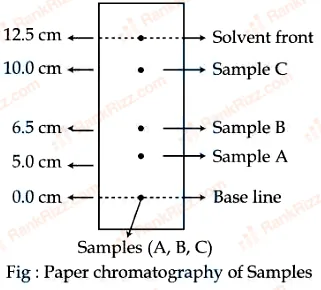
Using the given figure, the ratio of values of sample A and sample C is . Value of is _____

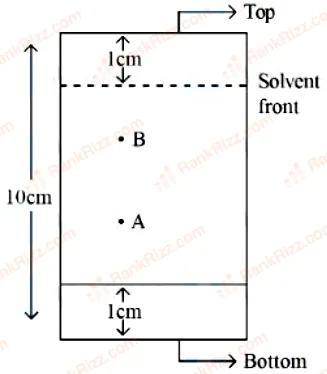
In the given TLC, the distance of spot A & B are & , from the bottom of TLC plate, respectively. value of B is times more than A. The value of is ______.
On a thin layer chromatographic plate, an organic compound moved by , while the solvent moved by . The retardation factor of the organic compound is ____________ .
OTHER CHEMISTRY CHAPTERS