JEE MAIN 2018 · 15 APR S1Important polymers and their monomersTRANSCRIBED
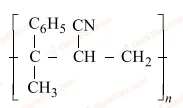
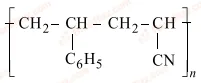
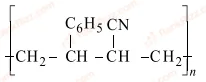
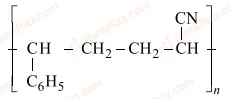
The copolymer formed by addition polymerization of styrene and acrylonitrile in the presence of peroxide is:
- A
- B
- C
- D
Every Polymers question JEE Main has set, grouped by the idea it tests rather than the order of the syllabus. 88 questions across 3 distinct ideas. Free to read, answer key on every one.
Questions
88
Distinct ideas
3
Share of marks
0%
Difficulty
EASY
A chapter is not one subject — it is a handful of procedures the examiner reuses. These are the ones Polymers questions actually test.
61–80 OF 88 · NEWEST FIRST
The copolymer formed by addition polymerization of styrene and acrylonitrile in the presence of peroxide is:
Which of the following statements is not true?
Chain growth polymerisation involves homopolymerisation only
Chain growth polymerisation includes both homo-polymerisation and copolymerisation
Nylon 6 is an example of step-growth polymerisation
Step growth polymerisation requires a bifunctional monomer
The formation of which of the following polymers involves hydrolysis reaction?
Bakelite
Nylon-6,6
Terylene
Nylon-6
Which of the following is a biodegradable polymer?
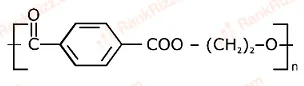
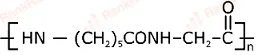
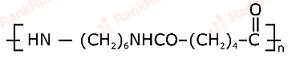
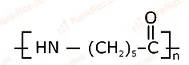
Which of the following statements about low density polythene is FALSE?
Its synthesis required dioxygen or a peroxide initiator as a catalyst
It is used in the manufacture of buckets, dust-bins etc.
Its synthesis requires high pressure
It is a poor conductor of electricity
Assertion: Rayon is a semisynthetic polymer whose properties are better than natural cotton.
Reason: Mechanical and aesthetic properties of cellulose can be improved by acetylation.
Both assertion and reason are correct, but the reason is not the correct explanation for the assertion.
Both assertion and reason are correct, and the reason is the correct explanation for the assertion.
Assertion is incorrect statement, but the reason is correct.
Both assertion and reason are incorrect.
Which of the following polymers is synthesized using a free radical polymerization technique?
Terylene
Melamine polymer
Nylon 6, 6
Teflon
Which polymer is used in the manufacture of paints and lacquers?
Poly vinyl chloride
Bakelite
Glyptal
Polypropene
Match the polymers in column-A with their main uses in column-B and choose the correct answer:
Column - A Column - B
A. Polystyrene i. Paints and lacquers
B. Glyptal ii. Rain coats
C. Polyvinyl chloride iii. Manufacture of toys
D. Bakelite iv. Computer discs
A - iii, B - i, C - ii, D - iv
A - ii, B - i, C - iii, D - iv
A - ii, B - iv, C - iii, D - i
A - iii, B - iv, C - ii, D - i
Which one of the following structures represents the neoprene polymer?
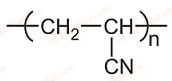
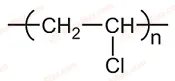
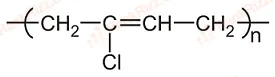
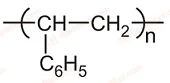
Which one of the following is an example of thermosetting polymer?
Nylon-6,6
Bakelite
Buna-N
Teflon
Which among the following is classified as a condensation polymer?
Dacron
Neoprene
Teflon
Acrylonitrile
Structure of some important polymers are given. Which one represents Buna-S?
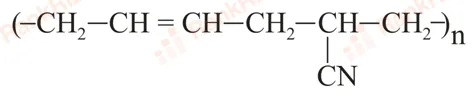
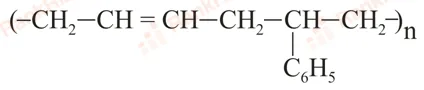
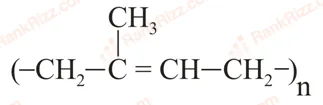
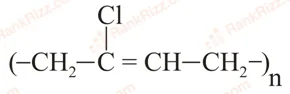
Which one of the following class of compounds is obtained by polymerization of acetylene?
Poly-ene
Poly-amide
Poly-yne
Poly-ester
Which of the following polymer is a polyamide?
Terylene
Nylon
Rubber
Vulcanised rubber
The polymer used for optical lenses is :
polypropylene
polyvinyl chloride
polythene
polymethyl methacrylate
If a polythene sample contains two monodisperse fractions in the ratio 2 : 3 with degree of polymerization 100 and 200, respectively, then its weight average molecular weight will be :
4900
4600
4300
5200
Bakelite is obtained from phenol by reacting with:
Acetal
CHCHO
HCHO
Chlorobenzene
The species which can best serve as an initiator for the cationic polymerization is :
Which one of the following is a chain growth polymerisation?
Nucleic acid
Polystyrene
Protein
Starch
OTHER CHEMISTRY CHAPTERS