RankRizz

Nucleophilic substitution (SN1 and SN2) — JEE Main Previous Year Questions

Every JEE Main question on Nucleophilic substitution (SN1 and SN2), one of the ideas inside Haloalkanes and Haloarenes: 128 questions from 2005–2026, 64 of them in the last five years. Newest first, answer key on every one. Free to read.

Questions

128

Years asked

20

Since

2005

Of the chapter

68%

Every Nucleophilic substitution (SN1 and SN2) question

121–128 OF 128 · NEWEST FIRST

JEE MAIN 2013 · 07 APR ONLINENucleophilic substitution (SN1 and SN2)TRANSCRIBED

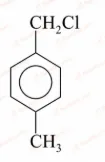
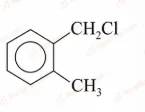
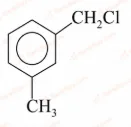
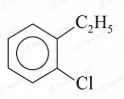
Compound (A), C8H9ClC_8H_9Cl, gives a white precipitate when warmed with alcoholic AgNO3_3. Oxidation of (A) gives an acid (B), C8H6O4C_8H_6O_4. (B) easily forms anhydride on heating. Identify the compound (A).

  1. A
    Figure for JEE Main 2013 Chemistry question on Nucleophilic substitution (SN1 and SN2)
  2. B
    Figure for JEE Main 2013 Chemistry question on Nucleophilic substitution (SN1 and SN2)
  3. C
    Figure for JEE Main 2013 Chemistry question on Nucleophilic substitution (SN1 and SN2)
  4. D
    Figure for JEE Main 2013 Chemistry question on Nucleophilic substitution (SN1 and SN2)
JEE MAIN 2010Nucleophilic substitution (SN1 and SN2)TRANSCRIBED

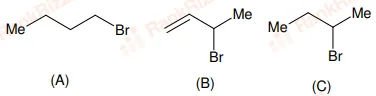
Consider the following bromides:
Figure for JEE Main 2010 Chemistry question on Nucleophilic substitution (SN1 and SN2)
The correct order of SN1S_N1 reactivity is

  1. A

    B>C>AB > C > A

  2. B

    B>A>CB > A > C

  3. C

    C>B>AC > B > A

  4. D

    A>B>CA > B > C

JEE MAIN 2009Nucleophilic substitution (SN1 and SN2)TRANSCRIBED

Which of the following on heating with aqueous KOH, produces acetaldehyde?

  1. A

    CH3COClCH_3COCl

  2. B

    CH3CH2ClCH_3CH_2Cl

  3. C

    CH2ClCH2ClCH_2ClCH_2Cl

  4. D

    CH3CHCl2CH_3CHCl_2

JEE MAIN 2008Nucleophilic substitution (SN1 and SN2)TRANSCRIBED

The organic chloro compound, which shows complete stereochemical inversion during a SN2S_N 2 reaction, is

  1. A

    (C2H5)2CHCl(C_2 H_5)_2 CHCl

  2. B

    (CH3)3CCl(CH_3)_3 CCl

  3. C

    (CH3)2CHCl(CH_3)_2 CHCl

  4. D

    CH3ClCH_3 Cl

JEE MAIN 2007Nucleophilic substitution (SN1 and SN2)TRANSCRIBED

Which of the following is the correct order of decreasing SN2SN^2 reactivity?

  1. A

    RCH2X>R3CX>R2CHXRCH_2 X > R_3 CX > R_2 CHX

  2. B

    RCH2X>R2CHX>R3CXRCH_2 X > R_2 CHX > R_3 CX

  3. C

    R3CX>R2CHX>RCH2XR_3 CX > R_2 CHX > RCH_2 X

  4. D

    R2CHX>R3CX>RCH2XR_2 CHX > R_3 CX > RCH_2 X (X=X = a halogen)

JEE MAIN 2006Nucleophilic substitution (SN1 and SN2)TRANSCRIBED

CH3Br+Nu−⟶CH3−Nu+Br−CH_3Br + Nu^- \longrightarrow CH_3 - Nu + Br^-ThedecreasingorderoftherateoftheabovereactionwithnucleophilesThe decreasing order of the rate of the above reaction with nucleophiles(Nu−)(Nu^-)AtoDisA to D is[Nu−=(A)PhO−,(B)AcO−,(C)HO−,(D)CH3O−][Nu^- = (A)PhO^-, (B) AcO^-, (C) HO^-, (D) CH_3O^-]$

  1. A

    D > C > A > B

  2. B

    D > C > B > A

  3. C

    A > B > C > D

  4. D

    B > D > C > A

JEE MAIN 2006Nucleophilic substitution (SN1 and SN2)TRANSCRIBED

Question:

Consider the reaction of bromoethane (CH3CH2Br)\left(CH_3CH_2Br\right) with two different cyanide reagents in an aqueous ethanolic solution:

Reaction 1:

CH3CH2Br+KCN→Product ACH_3CH_2Br + KCN \rightarrow \text{Product A}

Reaction 2:

CH3CH2Br+AgCN→Product BCH_3CH_2Br + AgCN \rightarrow \text{Product B}

Identify the major products A and B, respectively.

  1. A

    Ethyl isocyanide and Propanenitrile (Ethyl cyanide)

  2. B

    Propanenitrile (Ethyl cyanide) and Ethyl isocyanide

  3. C

    Propanenitrile (Ethyl cyanide) in both reactions

  4. D

    Ethyl isocyanide in both reactions

JEE MAIN 2005Nucleophilic substitution (SN1 and SN2)TRANSCRIBED

Tertiary alkyl halides are practically inert to substitution by SN2S_N 2 mechanism because of

  1. A

    insolubility

  2. B

    instability

  3. C

    inductive effect

  4. D

    steric hindrance

RELATED HALOALKANES AND HALOARENES TOPICS