JEE MAIN 2014 · 09 APR ONLINEReactive intermediates and rearrangementsTRANSCRIBED
In which of the following pairs is A more stable than B?
- A
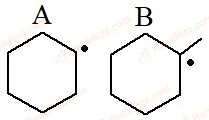
- B
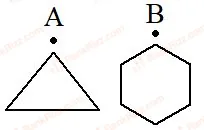
- C
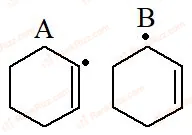
- D
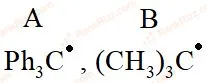
Every General Organic Chemistry question JEE Main has set, grouped by the idea it tests rather than the order of the syllabus. 258 questions across 12 distinct ideas. Free to read, answer key on every one.
Questions
258
Distinct ideas
12
Share of marks
5.7%
Difficulty
MEDIUM
A chapter is not one subject — it is a handful of procedures the examiner reuses. These are the ones General Organic Chemistry questions actually test.
221–240 OF 258 · NEWEST FIRST
In which of the following pairs is A more stable than B?
The correct IUPAC name of the following compound is:
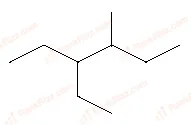
4-methyl-3-ethylhexane
3-ethyl-4-methylhexane
4-ethyl-3-methylhexane
3,4-ethylmethylhexane
Which one of the following acids does not exhibit optical isomerism?
Lactic acid
Tartaric acid
Maleic acid
-amino acids
Which of the following compounds will not be soluble in sodium bicarbonate?
2, 4, 6-Trinitrophenol
Benzene sulphonic acid
o-Nitrophenol
Benzoic acid
Which one of the following is most stable?
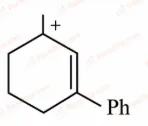
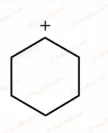
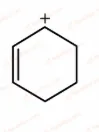
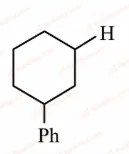
Arrange in the correct order of stability (decreasing order) for the following molecules: (I), (II), (III), (IV) - cyclohexane conformations
I.
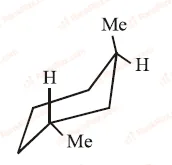
II.
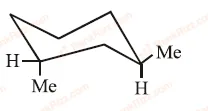
III.
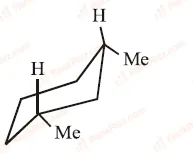
IV.
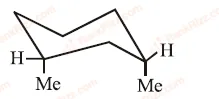
(I) > (II) > (III) > (IV)
(IV) > (III) > (II) (I)
(I) > (II) (III) > (IV)
(III) > (I) (II) > (IV)
Monocarboxylic acids are functional isomers of:
Ethers
Amines
Esters
Alcohols
The order of stability of the following carbocations:
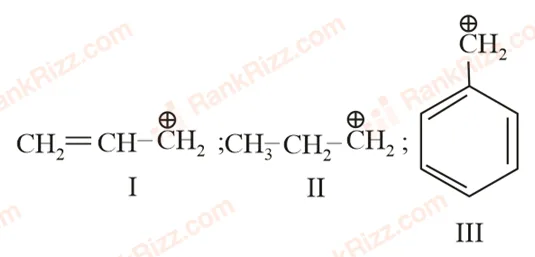
I > II > III
III > I > II
III > II > I
II > III > I
How many chiral compounds are possible on monochlorination of methyl butane?
Which of the following cannot be represented by resonance structures?
Dimethyl ether
Nitrate anion
Carboxylate anion
Toluene
The IUPAC name of the compound
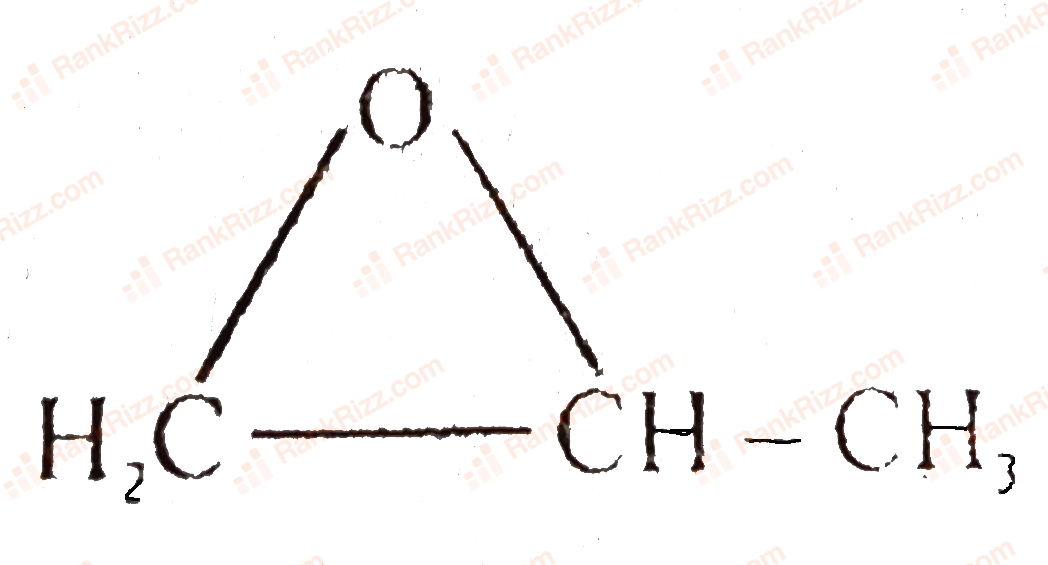
is
1, 2-Propoxide
Propylene oxide
1,2-Oxo propane
1, 2-Epoxy propane
How many cyclic structures are possible for ?
3
5
6
4
Maleic acid and fumaric acids are
Chain isomers
Functional isomers
Tautomers
Geometrical isomers
Which of the following compounds are antiaromatic
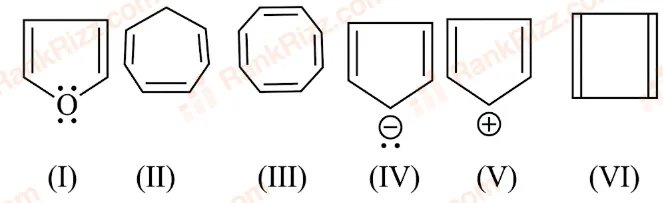
(I) and (V)
(II) and (V)
(I) and (IV)
(V) and (VI)
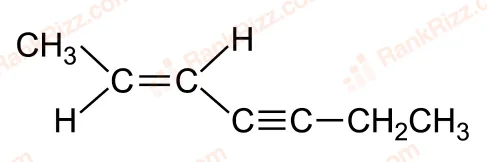
The IUPAC name of the following compound is
(E)-2-hepten-4-yne
(Z)-5-hepten-3-yne
(E)-5-hepten-3-yne
(Z)-2-hepten-4-yne
Identify the compound that exhibits tautomerism.
Lactic acid
2-Butene
Phenol
None of these
The correct order of increasing basicity of the given conjugate bases () is
RCOO^- < HC \equiv C^- < \bar{R} < \bar{N}H_2
\bar{R} < HC \equiv \bar{C} < RCOO^- < \bar{N}H_2
RCOO^- < \bar{N}H_2 < HC \equiv \bar{C} < \bar{R}
RCOO^- < HC \equiv \bar{C} < \bar{N}H_2 < \bar{R}
Out of the following, the alkene that exhibits optical isomerism is
3-methyl-2-pentene
4-methyl-1-pentene
3-methyl-1-pentene
2-methyl-2-pentene
Arrange the carbanions, , in order of their decreasing stability :
C_6H_5\bar{C}H_2 > \bar{C}Cl_3 > (CH_3)_3\bar{C} > (CH_3)_2\bar{C}H
(CH_3)_2\bar{C}H > \bar{C}Cl_3 > C_6H_5\bar{C}H_2 > (CH_3)_3\bar{C}
\bar{C}Cl_3 > C_6H_5\bar{C}H_2 > (CH_3)_2\bar{C}H > (CH_3)_3\bar{C}
(CH_3)_3\bar{C} > (CH_3)_2\bar{C}H > C_6H_5\bar{C}H_2 > \bar{C}Cl_3
The alkene that exhibits geometrical isomerism is:
propene
2-methyl propene
2-butene
2-methyl-2-butene
OTHER CHEMISTRY CHAPTERS