Q31Mole concept, atomic and molar massTRANSCRIBED
A sample of NaClO3 is converted by heat to NaCl with a loss of 0.16 g of oxygen. The residue is dissolved in water and precipitated as AgCl. The mass of AgCl (in g) obtained will be: (Given: Molar mass of AgCl = 143.5 g mol−1)
- A
- B
- C
- D
Q32Electromagnetic radiation, Planck's quantum theory and photoelectric effectTRANSCRIBED
Ejection of the photoelectron from metal in the photoelectric effect experiment can be stopped by applying 0.5 V when the radiation of 250 nm is used. The work function of the metal is:
- A
- B
- C
- D
Q33Atomic and ionic radiiTRANSCRIBED
For Na+, Mg2+, F− and O2−; the correct order of increasing ionic radii is:
- A
O2− < F− < Na+ < Mg2+
- B
Na+ < Mg2+ < F− < O2−
- C
Mg2+ < Na+ < F− < O2−
- D
Mg2+ < O2− < Na+ < F−
Q34Molecular orbital theory of diatomic speciesTRANSCRIBED
In the molecular orbital diagram for the molecular ion, N2+, the number of electrons in the σ2p molecular orbital is:
- A
- B
- C
- D
Q35VSEPR theory and shapes of molecules and ionsTRANSCRIBED
Identify the pair in which the geometry of the species is T-shape and square pyramidal, respectively:
- A
ICl2− and ICl5
- B
IO3− and IO2F2−
- C
- D
Q36Resonance and bond parametersTRANSCRIBED
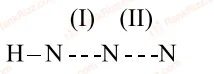
In hydrogen azide, the bond orders of bonds (I) and (II) are:
- A
- B
- C
- D
Q37Group 14: trends and carbon allotropesTRANSCRIBED
In graphite and diamond, the percentage of p characters of the hybrid orbitals in hybridization are respectively:
- A
- B
- C
- D
Q38VSEPR theory and shapes of molecules and ionsTRANSCRIBED
The decreasing order of bond angles in BF3, NH3, PF3 and I3− is:
- A
I3− > BF3 > NH3 > PF3
- B
BF3 > I3− > PF3 > NH3
- C
BF3 > NH3 > PF3 > I3−
- D
I3− > NH3 > PF3 > BF3
Q39Enthalpies of reaction and Hess's lawTRANSCRIBED
For which of the following reactions, ΔH is equal to ΔU?
- A
N2(g) + 3H2(g) → 2NH3(g)
- B
2HI(g) → H2(g) + I2(g)
- C
2SO2(g) + O2(g) → 2SO3(g)
- D
2NO2(g) → N2O4(g)
Q40First law: work, heat and internal energyTRANSCRIBED
An ideal gas undergoes a cyclic process as shown in Figure.
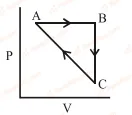
ΔUBC=−5 kJ mol−1, qAB=2 kJ mol−1
WAB=−5 kJ mol−1, WCA=3 kJ mol−1
Heat absorbed by the system during process CA is:
- A
- B
- C
- D
Q41Le Chatelier's principle and factors affecting equilibriumTRANSCRIBED
In which of the following reactions, an increase in the volume of the container will favour the formation of products?
- A
4NH3(g) + 5O2(g) ⇌ 4NO(g) + 6H2O(l)
- B
2NO2(g) ⇌ 2NO(g) + O2(g)
- C
3O2 ⇌ 2O3(g)
- D
H2(g) + I2(g) ⇌ 2HI(g)
Q42Arrhenius, Bronsted-Lowry and Lewis acid-base conceptsTRANSCRIBED
Which of the following is a Lewis acid?
- A
- B
- C
- D
Q43Solubility product and common ion effectTRANSCRIBED
The minimum volume of water required to dissolve 0.1 g lead (II) chloride to get a saturated solution (KSP of PbCl2 = 3.2×10⁻⁸; atomic mass of Pb = 207 u) is:
- A
- B
- C
- D
Q44Analysis of anionsTRANSCRIBED
A white sodium salt dissolves readily in water to give a solution which is neutral to litmus. When silver nitrate solution is added to the aforementioned solution, a white precipitate is obtained which does not dissolve in dil. nitric acid. The anion is:
- A
- B
- C
- D
Q45Methods of purification of organic compoundsTRANSCRIBED
The correct match between items of List-I and List-II is:
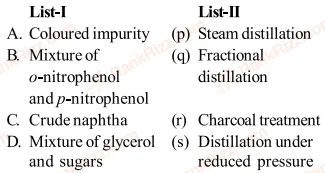
- A
(A)-(r), (B)-(s), (C)-(p), (D)-(q)
- B
(A)-(p), (B)-(s), (C)-(r), (D)-(q)
- C
(A)-(r), (B)-(p), (C)-(q), (D)-(s)
- D
(A)-(r), (B)-(p), (C)-(s), (D)-(q)
Q46IUPAC nomenclature of organic compoundsTRANSCRIBED
The IUPAC name of the following compound is:
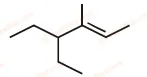
- A
3-ethyl-4-methylhex-4-ene
- B
4,4-diethyl-3-methylbut-2-ene
- C
4-methyl-3-ethylhex-4-ene
- D
4-ethyl-3-methylhex-2-ene
Q47Alkenes: preparation and stabilityTRANSCRIBED
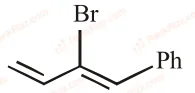
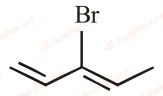
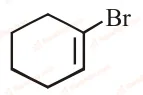
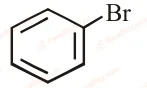
Which of the following will most readily give the dehydrohalogenation product?
- A
- B
- C
- D
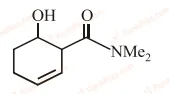
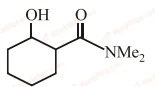
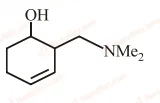
Q48Preparation of alcoholsTRANSCRIBED
The major product of the following reaction is:
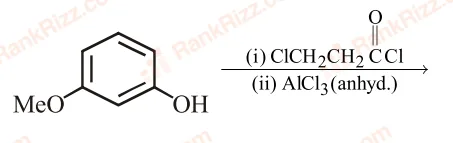
- A
- B
- C
- D
Q49Diazonium saltsTRANSCRIBED
The increasing order of nitration of the following compounds is:
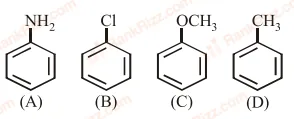
(A) Aniline, (B) Chlorobenzene, (C) Anisole, (D) Toluene
- A
- B
- C
- D
Q50Electrical and magnetic properties of solidsTRANSCRIBED
Which of the following arrangements shows the schematic alignment of magnetic moments of antiferromagnetic substance?
- A
- B
- C
- D
Q51Conductance, conductivity and molar conductivityTRANSCRIBED
When an electric current is passes through acidified water, 112 mL of hydrogen gas at N.T.P. was collected at the cathode in 965 seconds. The current passed, in ampere, is:
- A
- B
- C
- D
Q52Integrated rate laws and half-life (zero and first order)TRANSCRIBED
N2O5 decomposes to NO2 and O2 and follows first order kinetics. After 50 minutes, the pressure inside the vessel increases from 50 mm Hg to 87.5 mm Hg. The pressure of the gaseous mixture after 100 minutes at constant temperature will be:
- A
- B
- C
- D
Q53Properties of colloids and coagulationTRANSCRIBED
Which of the following statements about colloids is false?
- A
When silver nitrate solution is added to potassium iodide solution, a negatively charged colloidal solution is formed
- B
Freezing point of colloidal solution is lower than true solution at same concentration of a solute
- C
Colloidal particles can pass through ordinary filter paper
- D
When excess of electrolyte is added to colloidal solution, colloidal particle will be precipitated
Q54Group 18: noble gases and xenon compoundsTRANSCRIBED
Xenon hexafluoride on partial hydrolysis produces compounds 'X' and 'Y'. Compounds 'X' and 'Y' and the oxidation state of Xe are respectively:
- A
XeOF4(+6) and XeO3(+6)
- B
XeO2(+4) and XeO3(+6)
- C
XeOF4(+6) and XeO2F2(+6)
- D
XeO2F2(+6) and XeO2(+4)
Q55Valence bond theory of complexesTRANSCRIBED
The correct combination is:
- A
[NiCl4]2− - square-planar; [Ni(CN)4]2− - paramagnetic
- B
[Ni(CN)4]2− - tetrahedral; [Ni(CO)4] - paramagnetic
- C
[NiCl4]2− - paramagnetic; [Ni(CO)4] - tetrahedral
- D
[NiCl4]2− - diamagnetic; [Ni(CO)4] - square-planar
Q56Nucleophilic addition reactions of carbonyl compoundsTRANSCRIBED
The main reduction product of the following compound with NaBH4 in methanol is:
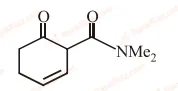
- A
- B
- C
- D
Q57Preparation of aldehydes and ketonesTRANSCRIBED
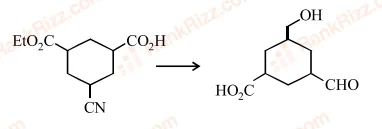
The reagent(s) required for the following conversion are:
- A
(i) NaBH4, (ii) Raney Ni/H2, (iii) H3O+
- B
(i) LiAlH4, (ii) H3O+
- C
(i) B2H6, (ii) DIBAL-H, (iii) H3O+
- D
(i) B2H6, (ii) SnCl2/HCl, (iii) H3O+
Q58Important polymers and their monomersTRANSCRIBED
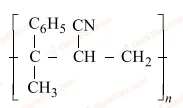
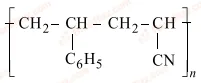
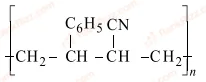
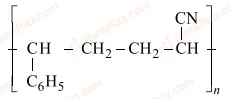
The copolymer formed by addition polymerization of styrene and acrylonitrile in the presence of peroxide is:
- A
- B
- C
- D
Q59Proteins and enzymesTRANSCRIBED
Which of the following will not exist in zwitter ionic form at pH = 7?
- A
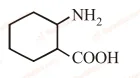
Amino acid with NH
2 and COOH
- B
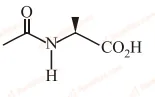
Cyclic amide with CO
2H
- C
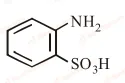
Aniline with SO
3H
- D
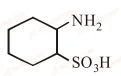
Cyclohexylamine with SO
3H
Q60Vitamins and hormonesTRANSCRIBED
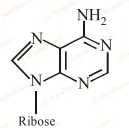
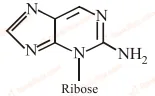
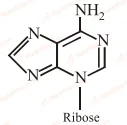
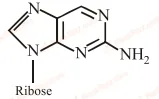
Which of the following is the correct structure of adenosine?
- A
- B
- C
- D