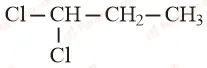
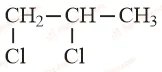
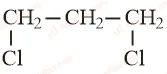
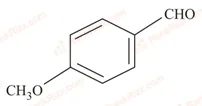
Q31Concentration terms and their interconversionTRANSCRIBED
What quantity (in mL) of a 45% acid solution of a mono-protic strong acid must be mixed with a 20% solution of the same acid to produce 800 mL of a 29.875% acid solution?
- A
- B
- C
- D
Q32Hydrogen spectrum and spectral seriesTRANSCRIBED
The electron in the hydrogen atom undergoes transition from higher orbitals to orbital of radius 211.6 pm. This transition is associated with
- A
- B
- C
- D
Q33Ionisation enthalpyTRANSCRIBED
The electronic configuration with the highest ionization enthalpy is:
- A
[Ar] 3d10 4s2 4p3
- B
- C
- D
Q34VSEPR theory and shapes of molecules and ionsTRANSCRIBED
The group having triangular planar structure is:
- A
BF3, NF3, CO32−
- B
CO32−, NO3−, SO3
- C
NH3, SO3, CO32−
- D
NCl3, BCl3, SO3
Q35Hydrogen bonding and intermolecular forcesTRANSCRIBED
The increasing order of the boiling points for the following compounds is:
(I) C2H5OH (II) C2H5Cl (III) C2H5CH3 (IV) C2H5OCH3
- A
(IV) < (III) < (I) < (II)
- B
(III) < (II) < (I) < (IV)
- C
(III) < (IV) < (II) < (I)
- D
(II) < (III) < (IV) < (I)
Q36Resonance and hyperconjugationTRANSCRIBED
Among the following compounds, the compound which shows the highest dipole-moment is

- A
- B
- C
- D
Q37Gas laws and ideal gas equationTRANSCRIBED
At 300 K, the density of a certain gaseous molecule at 2 bar is double to that of dinitrogen (N2) at 4 bar. The molar mass of the gaseous molecule is
- A
- B
- C
- D
Q38Heat capacity and calorimetryTRANSCRIBED
An ideal gas undergoes isothermal expansion at constant pressure. During the process:
- A
Enthalpy remains constant but entropy increases
- B
Enthalpy decreases but entropy increases
- C
Enthalpy increases but entropy decreases
- D
Both enthalpy and entropy remain constant
Q39First law: work, heat and internal energyTRANSCRIBED
A gas undergoes change from state A to state B. In this process, the heat absorbed and work done by the gas is 5 J and 8 J, respectively. Now gas is brought back to A by another process during which 3 J of heat is evolved. In this reverse process of B to A.
- A
6 J of the work will be done by the gas
- B
6 J of the work will be done by the surroundings on gas
- C
10 J of the work will be done by the surroundings on gas
- D
10 J of the work will be done by the gas on gas
Q40Le Chatelier's principle and factors affecting equilibriumTRANSCRIBED
The following reaction occurs in the Blast Furnace where iron ore is reduced to iron metal:
Fe2O3(s) + 3CO(g) ⇌ 2Fe(l) + 3CO2(g)
Using the Le Chatelier's principle, predict which one of the following will not disturb the equilibrium?
- A
- B
- C
Addition of Fe2O3
- D
Q41pH of acids, bases and their mixturesTRANSCRIBED
50 mL of 0.2 M ammonia solution is treated with 25 mL of 0.2 M HCl. If pKb of ammonia solution is 4.75, the pH of the mixture will be:
- A
- B
- C
- D
Q42Valency, oxidation states and nature of oxidesTRANSCRIBED
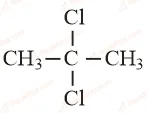
Which one of the following is an oxide?
- A
- B
- C
- D
Q43AromaticityTRANSCRIBED
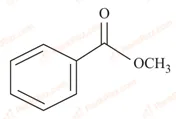
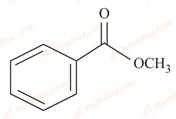
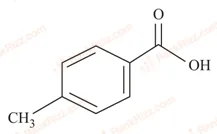
Which of the following compounds is most reactive to an aqueous solution of sodium carbonate?
- A
- B
- C
- D
Q44Structural isomerismTRANSCRIBED
In the following structure, the double bonds are marked as I, II, III and IV.
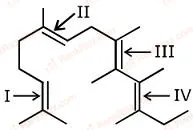
Geometrical isomerism is not possible at the site(s):
- A
- B
- C
- D
Q45Reactions of alkanesTRANSCRIBED
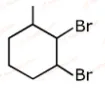
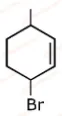
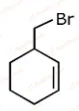
The major product of the following reaction is:
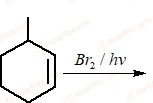
Methylcyclohexane reacts with Br2/hν
- A
- B
- C
- D
Q46Water pollutionTRANSCRIBED
Which of the following is a set of greenhouse gases?
- A
O3, NO2, SO2, Cl2
- B
CH4, O3, N2, SO2
- C
CO2, CH4, N2O, O3
- D
O3, N2, CO2, NO2
Q47Relative lowering of vapour pressureTRANSCRIBED
A solution is prepared by mixing 8.5 g of CH2Cl2 and 11.95 g of CHCl3. If vapour pressure of CH2Cl2 and CHCl3 at 298K are 415 and 200 mm Hg respectively, the mole fraction of CHCl3 in vapour form is: (Molar mass of Cl = 35.5 g mol−1)
- A
- B
- C
- D
Q48General properties of transition elementsTRANSCRIBED
Which of the following ions does not liberate hydrogen gas on reaction with dilute acids?
- A
- B
- C
- D
Q49Electrode potentials, electrochemical series and cell EMFTRANSCRIBED
To find the standard potential of M3+/M electrode, the following cell is constituted:
Pt | M/M3+ (0.001 mol L−1) / Ag+ (0.01 mol L−1) / Ag
The emf of the cell is found to be 0.421 volt at 298 K. The standard potential of half-reaction M3+ + 3e− → M at 298 K will be:
(Given: EAg+/Ag⊖ at 298 K = 0.80 volt)
- A
- B
- C
- D
Q50Arrhenius equation and activation energyTRANSCRIBED
The rate of a reaction quadruples when the temperature changes from 300 to 310 K. The activation energy of this reaction is:
(Assume Activation energy and pre-exponential factor are independent of temperature;
ln(2) = 0.693; R = 8.314 J mol−1 K−1)
- A
- B
- C
- D
Q51Adsorption and adsorption isothermsTRANSCRIBED
Adsorption of gas on a surface follows Freundlich adsorption isotherm. The plot of log mx versus log(P) gives a straight line with slope equal to 0.5, then:
(mx is the mass of the gas adsorbed per gram of adsorbent)
- A
adsorption is proportional to the square root of pressure.
- B
adsorption is proportional to the square of pressure.
- C
adsorption is proportional to the pressure.
- D
adsorption is independent of pressure.
Q52Group 15: trends and hydridesTRANSCRIBED
The number of P − OH bonds and the oxidation state of phosphorus atom in pyrophosphoric acid (H4P2O7), respectively are:
- A
- B
- C
- D
Q53Group 16: trends, dioxygen, ozone and oxidesTRANSCRIBED
The correct sequence of decreasing number of π-bonds in the structure of H2SO3, H2SO4 and H2S2O7 is:
- A
H2S2O7>H2SO3>H2SO4
- B
H2S2O7>H2SO4>H2SO3
- C
H2SO4>H2S2O7>H2SO3
- D
H2SO3>H2SO4>H2S2O7
Q54Group 18: noble gases and xenon compoundsTRANSCRIBED
XeF6 on partial hydrolysis with water, produces a compound X. The same compound X is formed when XeF6 reacts with silica. The compound X is:
- A
- B
- C
- D
Q55Werner's theory and coordination terminologyTRANSCRIBED
[Co2(CO)8] displays
- A
no Co − Co bonds, six terminal CO and two bridging CO.
- B
no Co − Co bonds, four terminal CO and four bridging CO.
- C
one Co − Co bonds, six terminal CO and two bridging CO.
- D
one Co − Co bonds, four terminal CO and four bridging CO.
Q56Nucleophilic substitution (SN1 and SN2)TRANSCRIBED
In the following reaction sequence:

Compound I is
- A
- B
- C
- D
Q57Nucleophilic addition reactions of carbonyl compoundsTRANSCRIBED
A compound of molecular formula C8H8O2 reacts with acetophenone to form a single cross-aldol product in the presence of base. The same compound on reaction with concentrated NaOH forms benzyl alcohol as one of the products. The structure of the compound is:
- A
- B
- C
- D
Q58Diazonium saltsTRANSCRIBED
Among the following compounds, the increasing order of their basic strength is:

- A
(II) < (I) < (III) < (IV)
- B
(II) < (I) < (IV) < (III)
- C
(I) < (II) < (IV) < (III)
- D
(I) < (II) < (III) < (IV)
Q59Important polymers and their monomersTRANSCRIBED
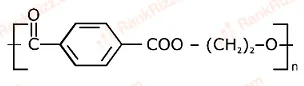
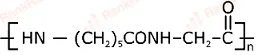
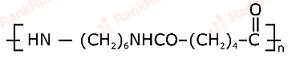
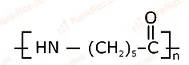
Which of the following is a biodegradable polymer?
- A
- B
- C
- D
Q60Carbohydrates: classification and monosaccharidesTRANSCRIBED
The incorrect statement among the following is
- A
α − D − glucose and β − D − glucose are enantiomers.
- B
the penta acetate of glucose does not react with hydroxyl amine.
- C
α − D − glucose and β − D − glucose are anomers.
- D
cellulose is a straight chain polysaccharide made up of only β − D − glucose units.