RankRizz

Superposition, interference and beats — JEE Main Previous Year Questions

Every JEE Main question on Superposition, interference and beats, one of the ideas inside Waves: 41 questions from 2005–2026, 17 of them in the last five years. Newest first, answer key on every one. Free to read.

Questions

41

Years asked

15

Since

2005

Of the chapter

24%

Every Superposition, interference and beats question

21–40 OF 41 · NEWEST FIRST

JEE MAIN 2021 · 31 AUG S1Superposition, interference and beatsTRANSCRIBED

A wire having a linear mass density 9.0×10−49.0 \times 10^{-4} kg m−1^{-1} is stretched between two rigid supports with a tension of 900 N. The wire resonates at a frequency of 500 Hz. The next higher frequency at which the same wire resonates is 550 Hz. The length of the wire is _________ m.
JEE MAIN 2021 · 16 MAR S2Superposition, interference and beatsTRANSCRIBED

A closed organ pipe of length LL and an open organ pipe contain gases of densities ρ1\rho_1 and ρ2\rho_2 respectively. The compressibility of gases are equal in both the pipes. Both the pipes are vibrating in their first overtone with same frequency. The length of the open pipe is x3Lρ1ρ2\frac{x}{3}L\sqrt{\frac{\rho_1}{\rho_2}}, where xx is ________. (Round off to the Nearest Integer)

JEE MAIN 2020 · 05 SEP S1Superposition, interference and beatsTRANSCRIBED

In a resonance tube experiment when the tube is filled with water up to a height of 17.0 cm17.0\,\text{cm}, from bottom, it resonates with a given tuning fork. When the water level is raised the next resonance with the same tuning fork occurs at a height of 24.5 cm24.5\,\text{cm}. If the velocity of sound in air is 330 m s−1330\,\text{m s}^{-1}, the tuning fork frequency is:

  1. A

    2200 Hz2200\,\text{Hz}

  2. B

    550 Hz550\,\text{Hz}

  3. C

    1100 Hz1100\,\text{Hz}

  4. D

    3300 Hz3300\,\text{Hz}

JEE MAIN 2020 · 09 JAN S2Superposition, interference and beatsTRANSCRIBED

A wire of length LL and mass per unit length 6.0×10−36.0 \times 10^{-3} kg m−1^{-1} is put under tension of 540 N. Two consecutive frequencies that it resonates at are: 420 Hz and 490 Hz. Then LL in meters is:

  1. A

    2.1 m

  2. B

    1.1 m

  3. C

    8.1 m

  4. D

    5.1 m

JEE MAIN 2020 · 08 JAN S1Superposition, interference and beatsTRANSCRIBED

A one metre long (both ends open) organ pipe is kept in a gas that has double the density of air at STP. Assuming the speed of sound in air at STP is 300 m/s, the frequency difference between the fundamental and second harmonic of this pipe is __________ Hz.

JEE MAIN 2020 · 02 SEP S2Superposition, interference and beatsTRANSCRIBED

A wire of density 9×10−39 \times 10^{-3} kg cm−3^{-3} is stretched between two clamps 1 m apart. The resulting strain in the wire is 4.9×10−44.9 \times 10^{-4}. The lowest frequency of the transverse vibrations in the wire (Young's modulus of wire Y=9×10¹⁰Y = 9 \times 10^{10} Nm−2^{-2}), (to the nearest integer) is ___________.

JEE MAIN 2019 · 08 APR S1Superposition, interference and beatsTRANSCRIBED

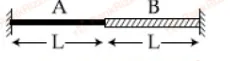
A wire of length 2L, is made by joining two wires A and B of same length but different radii r and 2r and made of the same material. It is vibrating at a frequency such that the joint of the two wires forms a node. If the number of antinodes in wire A is p and that in B is q then ratio p:q is:

Figure for JEE Main 2019 Physics question on Superposition, interference and beats
  1. A

    3 : 5

  2. B

    4 : 9

  3. C

    1 : 4

  4. D

    1 : 2

JEE MAIN 2019 · 12 JAN S2Superposition, interference and beatsTRANSCRIBED

A resonance tube is old and has a jagged end. It is still used in the laboratory to determine the velocity of sound in air. A tuning fork of frequency 512 Hz produces first resonance when the tube is filled with water to a mark 11 cm below a reference mark, near the open end of the tube. The experiment is repeated with another fork of frequency 256 Hz which produces first resonance when water reaches a mark 27 cm below the reference mark. The velocity of sound in air, obtained in the experiment, is close to

  1. A

    335 m s−1^{-1}

  2. B

    341 m s−1^{-1}

  3. C

    322 m s−1^{-1}

  4. D

    328 m s−1^{-1}

JEE MAIN 2019 · 09 APR S1Superposition, interference and beatsTRANSCRIBED

A string is clamped at both the ends and it is vibrating in its 4th harmonic. The equation of the stationary wave is y=0.3sin⁡(0.157x)cos⁡(200πt)y = 0.3 \sin(0.157x) \cos(200\pi t). The length of the string is: (All quantities are in SI units.)

  1. A

    20 m

  2. B

    60 m

  3. C

    40 m

  4. D

    80 m

JEE MAIN 2019 · 09 APR S2Superposition, interference and beatsTRANSCRIBED

A string 2.0 m long and fixed at its ends is driven by a 240 Hz vibrator. The string vibrates in its third harmonic mode. The speed of the wave and its fundamental frequency is:

  1. A

    320 m s−1^{-1}, 120 Hz

  2. B

    320 m s−1^{-1}, 80 Hz

  3. C

    180 m s−1^{-1}, 80 Hz

  4. D

    180 m s−1^{-1}, 120 Hz

JEE MAIN 2019 · 10 JAN S2Superposition, interference and beatsTRANSCRIBED

A closed organ pipe has a fundamental frequency of 1.5 kHz. The number of overtones that can be distinctly heard by a person with this organ pipe will be (Assume that the highest frequency a person can hear is 20,000 Hz).

  1. A

    7

  2. B

    4

  3. C

    6

  4. D

    5

JEE MAIN 2019 · 12 APR S2Superposition, interference and beatsTRANSCRIBED

A tuning fork of frequency 480 Hz is used in an experiment for measuring speed of sound (v) in air by resonance tube method. Resonance is observed to occur at two successive lengths of the air column, l1_1 = 30 cm and l2_2 = 70 cm. Then, v is equal to:

  1. A

    384 m s−1^{-1}

  2. B

    332 m s−1^{-1}

  3. C

    338 m s−1^{-1}

  4. D

    379 m s−1^{-1}

JEE MAIN 2018 · 15 APR S2Superposition, interference and beatsTRANSCRIBED

5 beats/second are heard when a turning fork is sounded with a sonometer wire under tension, when the length of the sonometer wire is either 0.95 m or 1 m. The frequency of the fork will be:

  1. A

    195 Hz

  2. B

    251 Hz

  3. C

    150 Hz

  4. D

    300 Hz

JEE MAIN 2018 · 16 APR ONLINESuperposition, interference and beatsTRANSCRIBED

Two sitar strings, A and B playing the note 'Dha' are slightly out of tune and produce beats of frequency 5 Hz. The tension of the string B is slightly increased and the beat frequency is found to decrease by 3 Hz. If the frequency of A is 425 Hz. The original frequency of B is:

  1. A

    428 Hz

  2. B

    430 Hz

  3. C

    422 Hz

  4. D

    420 Hz

JEE MAIN 2016 · 03 APR OFFLINESuperposition, interference and beatsTRANSCRIBED

A pipe open at both ends has a fundamental frequency ff in air. The pipe is dipped vertically in water so that half of it is in water. The fundamental frequency of the air column is now:

  1. A

    2ff

  2. B

    ff

  3. C

    f2\frac{f}{2}

  4. D

    3f4\frac{3f}{4}

JEE MAIN 2014 · 06 APR OFFLINESuperposition, interference and beatsTRANSCRIBED

A pipe of length 85 cm is closed from one end. Find the number of possible natural oscillations of air column in the pipe whose frequencies lie below 1250 Hz. The velocity of sound in air is 340 m/s.

  1. A

    12

  2. B

    8

  3. C

    6

  4. D

    4

JEE MAIN 2014 · 19 APR ONLINESuperposition, interference and beatsTRANSCRIBED

The total length of a sonometer wire fixed between two bridges is 110 cm. Now, two more bridges are placed to divide the length of the wire in the ratio 6 : 3 : 2. If the tension in the wire is 400 N and the mass per unit length of the wire is 0.01 kg m−1^{-1}, then the minimum common frequency with which all the three parts can vibrate, is:

  1. A

    1000 Hz

  2. B

    1100 Hz

  3. C

    100 Hz

  4. D

    110 Hz

JEE MAIN 2013 · 23 APR ONLINESuperposition, interference and beatsTRANSCRIBED

A sonometer wire of length 114 cm is fixed at both the ends. Where should the two bridges be placed so as to divide the wire into three segments whose fundamental frequencies are in the ratio 1 : 3 : 4?

  1. A

    At 36 cm and 84 cm from one end

  2. B

    At 24 cm and 72 cm from one end

  3. C

    At 48 cm and 96 cm from one end

  4. D

    At 72 cm and 96 cm from one end

JEE MAIN 2012Superposition, interference and beatsTRANSCRIBED

Following are expressions for four plane simple harmonic waves (i) y1=Acos⁡2π(n1t+xλ1)y_1 = A \cos 2\pi \left(n_1 t + \dfrac{x}{\lambda_1}\right) (ii) y2=Acos⁡2π(n1t+xλ1+0.5)y_2 = A \cos 2\pi \left(n_1 t + \dfrac{x}{\lambda_1} + 0.5\right) (iii) y3=Acos⁡2π(n2t+xλ2)y_3 = A \cos 2\pi \left(n_2 t + \dfrac{x}{\lambda_2}\right) (iv) y4=Acos⁡2π(n2t−xλ2)y_4 = A \cos 2\pi \left(n_2 t - \dfrac{x}{\lambda_2}\right). The pairs of waves which will produce destructive interference and stationary waves respectively in a medium, are

  1. A

    (iii, iv), (i, ii)

  2. B

    (i, iii), (ii, iv)

  3. C

    (i, iv), (ii, iii)

  4. D

    (i, ii), (iii, iv)

JEE MAIN 2009Superposition, interference and beatsTRANSCRIBED

Three sound waves of equal amplitudes have frequencies (v−1),v,(v+1)(v - 1), v, (v + 1). They superpose to give beats. The number of beats produced per second will be

  1. A

    44

  2. B

    33

  3. C

    22

  4. D

    11