RankRizz

Electrophilic addition to alkenes — JEE Main Previous Year Questions

Every JEE Main question on Electrophilic addition to alkenes, one of the ideas inside Hydrocarbons: 68 questions from 2005–2026, 39 of them in the last five years. Newest first, answer key on every one. Free to read.

Questions

68

Years asked

14

Since

2005

Of the chapter

34%

Every Electrophilic addition to alkenes question

61–68 OF 68 · NEWEST FIRST

JEE MAIN 2019 · 10 JAN S1Electrophilic addition to alkenesTRANSCRIBED

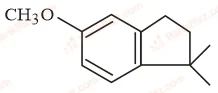
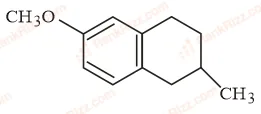
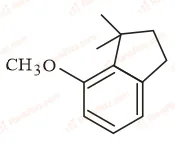
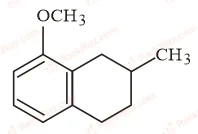
The major product of the following reaction is:
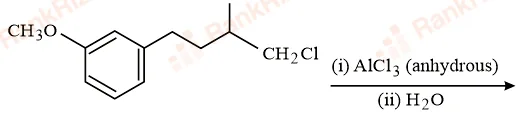
Figure for JEE Main 2019 Chemistry question on Electrophilic addition to alkenes
  1. A
    Figure for JEE Main 2019 Chemistry question on Electrophilic addition to alkenes
  2. B
    Figure for JEE Main 2019 Chemistry question on Electrophilic addition to alkenes
  3. C
    Figure for JEE Main 2019 Chemistry question on Electrophilic addition to alkenes
  4. D
    Figure for JEE Main 2019 Chemistry question on Electrophilic addition to alkenes
JEE MAIN 2016 · 03 APR OFFLINEElectrophilic addition to alkenesTRANSCRIBED

The reaction of propene with HOCl (Cl2+H2OCl_2 + H_2O) proceeds through the intermediate:

  1. A

    CH3−CH(OH)−CH2+CH_3 - CH(OH) - CH_2^+

  2. B

    CH3−CHCl−CH2+CH_3 - CHCl - CH_2^+

  3. C

    CH3−CH+−CH2−OHCH_3 - CH^+ - CH_2 - OH

  4. D

    CH3−CH+−CH2−ClCH_3 - CH^+ - CH_2 - Cl

JEE MAIN 2015 · 11 APR ONLINEElectrophilic addition to alkenesTRANSCRIBED

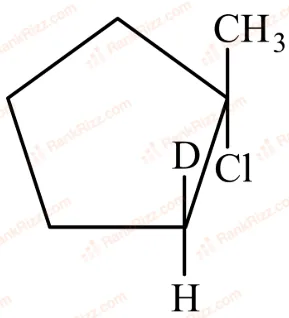
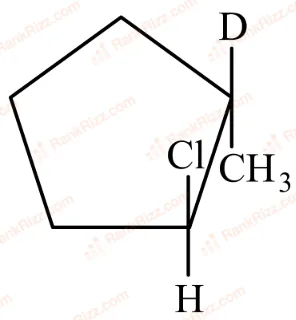
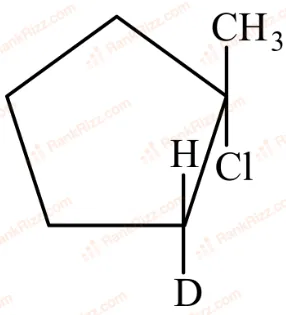
What is the major product expected from the following reaction?
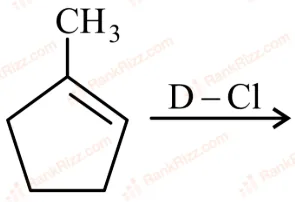
Figure for JEE Main 2015 Chemistry question on Electrophilic addition to alkenes

Where D is an isotope of hydrogen.
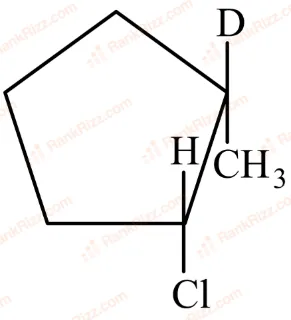
  1. A
    Figure for JEE Main 2015 Chemistry question on Electrophilic addition to alkenes
  2. B
    Figure for JEE Main 2015 Chemistry question on Electrophilic addition to alkenes
  3. C
    Figure for JEE Main 2015 Chemistry question on Electrophilic addition to alkenes
  4. D
    Figure for JEE Main 2015 Chemistry question on Electrophilic addition to alkenes
JEE MAIN 2014 · 12 APR ONLINEElectrophilic addition to alkenesTRANSCRIBED

In the presence of peroxide, HCl and HI do not give anti-Markownikoff's addition of alkenes because:

  1. A

    One of the steps is endothermic in HCl and HI

  2. B

    Both HCl and HI are strong acids

  3. C

    HCl is oxidizing and the HI is reducing

  4. D

    All the steps are exothermic is HCl and HI

JEE MAIN 2013 · 09 APR ONLINEElectrophilic addition to alkenesTRANSCRIBED

The addition of HI in the presence of peroxide catalyst does not follow anti-Markovnikov's rule because :

  1. A

    HI is a strong reducing agent.

  2. B

    H-I bond is too strong to be broken homolytically.

  3. C

    I atom combines with H atom to give back HI.

  4. D

    Iodine atom is not reactive enough to add across a double bond.

JEE MAIN 2006Electrophilic addition to alkenesTRANSCRIBED

HBr reacts with CH2=CH−OCH3CH_2 = CH - OCH_3 under anhydrous conditions at room temperature to give

  1. A

    CH3CHOCH_3CHO and CH3BrCH_3Br

  2. B

    BrCH2CHOBrCH_2CHO and CH3OHCH_3OH

  3. C

    BrCH2−CH2−OCH3BrCH_2 - CH_2 - OCH_3

  4. D

    H3C−CHBr−OCH3H_3C - CHBr - OCH_3

JEE MAIN 2005Electrophilic addition to alkenesTRANSCRIBED

Reaction of one molecule of HBr with one molecule of 1,3-butadiene at 40∘40^\circC gives predominantly

  1. A

    3-bromobutene under kinetically controlled conditions

  2. B

    1-bromo-2-butene under thermodynamically controlled conditions

  3. C

    3-bromobutene under thermodynamically controlled conditions

  4. D

    1-bromo-2-butene under kinetically controlled conditions

JEE MAIN 2005Electrophilic addition to alkenesTRANSCRIBED

Acid catalyzed hydration of alkenes except ethene leads to the formation of

  1. A

    primary alcohol

  2. B

    secondary or tertiary alcohol

  3. C

    mixture of primary and secondary alcohols

  4. D

    mixture of secondary and tertiary alcohols