RankRizz

Directive influence of substituents — JEE Main Previous Year Questions

Every JEE Main question on Directive influence of substituents, one of the ideas inside Hydrocarbons: 17 questions from 2007–2026, 12 of them in the last five years. Newest first, answer key on every one. Free to read.

Questions

17

Years asked

8

Since

2007

Of the chapter

8%

When JEE Main asked it

Questions on Directive influence of substituents in each year it was asked.

20262
20252
20246
20231
20221
20192
20121
20072

Every Directive influence of substituents question

1–17 OF 17 · NEWEST FIRST

JEE MAIN 2026 · 28 JAN S2Directive influence of substituentsTRANSCRIBED

Identify the conect statements:
The presence of - NO2NO_{2} group in benzene ring
A. activates the ring towards electrophilic substitutions.
B. deactivates the ring towards electrophilic substitutions.
C. activates the ring towards nucleophilic substitutions.
D. deactivates the ring towards nucleophilic substitutions.
choose the correct answer from the options given below :

  1. A

    C and A Only

  2. B

    B and C Only

  3. C

    B and D Only

  4. D

    A and D Only

JEE MAIN 2026 · 02 APR S1Directive influence of substituentsTRANSCRIBED

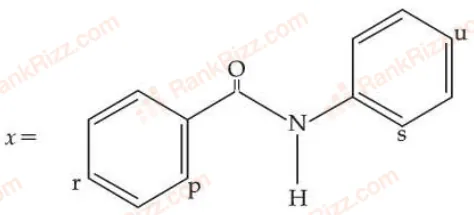
For the given molecule, "x", the preferred site for the attack of the electrophile is :

Figure for JEE Main 2026 Chemistry question on Directive influence of substituents
  1. A

    Predominantly at "r"

  2. B

    "r" and "u"

  3. C

    "p" and "s"

  4. D

    Predominantly at "u"

JEE MAIN 2025 · 24 JAN S2Directive influence of substituentsTRANSCRIBED

Identify correct statement/s : (A)−OCH3 and −NHCOCH3 are activating groups. (B)−CN and −OH are meta directing groups. (C)−CN and −SO3H\text{Identify correct statement/s : }(A) -OCH_3 \text{ and } -NHCOCH_3 \text{ are activating groups. } (B)-CN \text{ and } -OH \text{ are meta directing groups. } (C) -CN \text{ and } -SO_3H are meta directing groups.  (D)(D) Activating groups act as ortho- and para-directing groups.  (E)(E) Halides are activating groups. Choose the correct answer from the options given below:

  1. A

    (A) only

  2. B

    (A), (B) and (E) only

  3. C

    (A) and (C) only

  4. D

    (A), (C) and (D) only

JEE MAIN 2025 · 29 JAN S2Directive influence of substituentsTRANSCRIBED

Given below are two statements : Statement (I) : On nitration of m-xylene with HNO3HNO_{3}, H2SO4H_{2}SO_{4} followed by oxidation, 4-nitrobenzene-1,3-dicarboxylic acid is obtained as the major product. Statement (II) : −CH3-CH_{3} group is o/p-directing while −NO2-NO_{2} group is m-directing group. In the light of the above statements, choose the correct answer from the options given below :

  1. A

    Both Statement I and Statement II are false

  2. B

    Statement I is false but Statement II is true

  3. C

    Statement I is true but Statement II is false

  4. D

    Both Statement I and Statement II are true

JEE MAIN 2024 · 01 FEB S2Directive influence of substituentsTRANSCRIBED

The set of meta directing functional groups from the following sets is:

  1. A

    −CN,−NH2,−NHR,−OCH3-CN, -NH_2, -NHR, -OCH_3

  2. B

    −NO2,−NH2,−COOH,−COOR-NO_2, -NH_2, -COOH, -COOR

  3. C

    −NO2,−CHO,−SO3H,−COR-NO_2, -CHO, -SO_3H, -COR

  4. D

    −CN,−CHO,−NHCOCH3,−COOR-CN, -CHO, -NHCOCH_3, -COOR

JEE MAIN 2024 · 01 FEB S1Directive influence of substituentsTRANSCRIBED


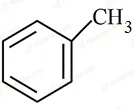
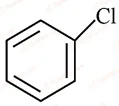
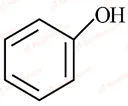
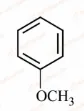
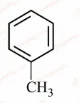
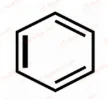
Which of the following compound will most easily be attacked by an electrophile? 

  1. A
    Figure for JEE Main 2024 Chemistry question on Directive influence of substituents
  2. B
    Q42_image_1
  3. C
    Q42_image_2
  4. D
    Q42_image_3
JEE MAIN 2024 · 06 APR S2Directive influence of substituentsTRANSCRIBED

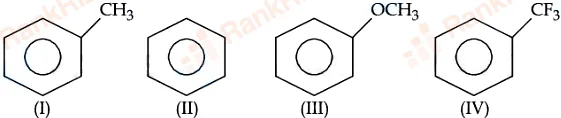
The correct arrangement for decreasing order of electrophilic substitution for above compounds is : 

Figure for JEE Main 2024 Chemistry question on Directive influence of substituents
  1. A

    (III)>(I)>(II)>(IV)(III) > (I) > (II) > (IV)

  2. B

    (IV)>(I)>(II)>(III)(IV) > (I) > (II) > (III)

  3. C

    (III)>(IV)>(II)>(I)(III) > (IV) > (II) > (I)

  4. D

    (II)>(IV)>(III)>(I)(II) > (IV) > (III) > (I)

JEE MAIN 2024 · 31 JAN S2Directive influence of substituentsTRANSCRIBED

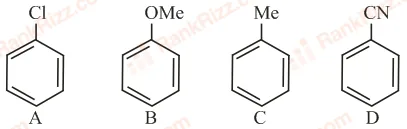
The correct order of reactivity in electrophilic substitution reaction of the following compounds is: 

Figure for JEE Main 2024 Chemistry question on Directive influence of substituents
  1. A

    B>C>A>DB > C > A > D

  2. B

    D>C>B>AD > C > B > A

  3. C

    A>B>C>DA > B > C > D

  4. D

    B>A>C>DB > A > C > D

JEE MAIN 2024 · 27 JAN S1Directive influence of substituentsTRANSCRIBED

Among the following, total number of meta directing functional groups is (Integer based) −OCH3-OCH_3, −NO2-NO_2, −CN-CN, −CH3-CH_3, −NHCOCH3-NHCOCH_3, −COR-COR, −OH-OH, −COOH-COOH, −Cl-Cl

JEE MAIN 2024 · 01 FEB S1Directive influence of substituentsTRANSCRIBED


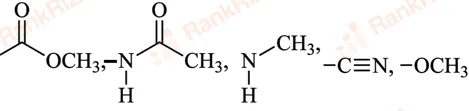
Total number of deactivating groups in aromatic electrophilic substitution reaction among the following is: 

Figure for JEE Main 2024 Chemistry question on Directive influence of substituents
JEE MAIN 2023 · 24 JAN S2Directive influence of substituentsTRANSCRIBED

Given below are two statements, one is labelled as Assertion A and the other is labelled as Reason R.
Assertion A: Benzene is more stable than hypothetical cyclohexatriene.
Reason R: The delocalized π\pi electron cloud is attracted more strongly by nuclei of carbon atoms.
In the light of the above statements, choose the correct answer from the options given below:

  1. A

    A is true but R is false.

  2. B

    A is false but R is true.

  3. C

    Both A and R are correct and R is the correct explanation of A.

  4. D

    Both A and R are correct but R is not the correct explanation of A.

JEE MAIN 2022 · 28 JUL S2Directive influence of substituentsTRANSCRIBED

Arrange the following in increasing order of reactivity towards nitration
A. p-xylene
B. bromobenzene
C. mesitylene
D. nitrobenzene
E. benzene
Choose the correct answer from the options given below

  1. A

    C<D<E<A<BC < D < E < A < B

  2. B

    D<B<E<A<CD < B < E < A < C

  3. C

    D<C<E<A<BD < C < E < A < B

  4. D

    C<D<E<B<AC < D < E < B < A

JEE MAIN 2019 · 09 APR S1Directive influence of substituentsTRANSCRIBED

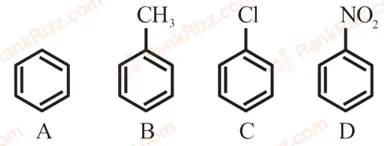
The increasing order of reactivity of the following compounds towards aromatic electrophilic substitution reaction is:

Figure for JEE Main 2019 Chemistry question on Directive influence of substituents
  1. A

    A < B < C < D

  2. B

    B < C < A < D

  3. C

    D < B < A < C

  4. D

    D < A < C < B

JEE MAIN 2019 · 10 APR S1Directive influence of substituentsTRANSCRIBED

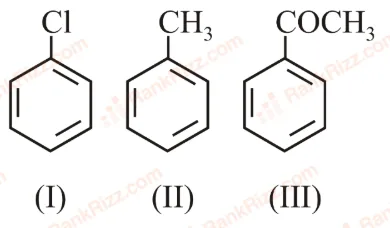
The increasing order of the reactivity of the following compounds towards electrophilic aromatic substitution reactions is:

Figure for JEE Main 2019 Chemistry question on Directive influence of substituents
  1. A

    II < I < III

  2. B

    III < II < I

  3. C

    III < I < II

  4. D

    I < III < II

JEE MAIN 2012Directive influence of substituentsTRANSCRIBED

In the below mentioned compounds the decreasing order of reactivity towards electrophilic substitution is

(i)

Figure for JEE Main 2012 Chemistry question on Directive influence of substituents

(ii)

Figure for JEE Main 2012 Chemistry question on Directive influence of substituents

(iii)

Figure for JEE Main 2012 Chemistry question on Directive influence of substituents

(iv)

Figure for JEE Main 2012 Chemistry question on Directive influence of substituents
  1. A

    (iv) > (i) > (ii) > (iii)

  2. B

    (ii) > (iii) > (i) > (iv)

  3. C

    (iii) > (i) > (iv) > (ii)

  4. D

    (i) > (ii) > (iii) > (iv)

JEE MAIN 2007Directive influence of substituentsTRANSCRIBED

The reaction of toluene with Cl2Cl_2 in presence of FeCl3FeCl_3 gives predominantly

  1. A

    benzoyl chloride

  2. B

    benzyl chloride

  3. C

    o−o- and p−p-chlorotoluene

  4. D

    m−m-chlorotoluene

JEE MAIN 2007Directive influence of substituentsTRANSCRIBED

Presence of a nitro group in a benzene ring

  1. A

    activates the ring towards electrophilic substitution

  2. B

    renders the ring basic

  3. C

    deactivates the ring towards nucleophilic substitution

  4. D

    deactivates the ring towards electrophilic substitution