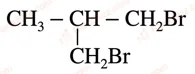
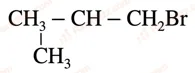
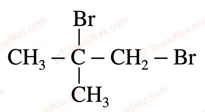
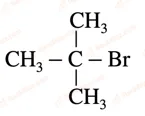
n-Butane on monochlorination under photochemical condition gives an optically active compound "P". "P" on further chlorination gives dichloro compounds. The number of dichloro compounds obtained (ignore stereoisomers) is :
- A
3
- B
4
- C
5
- D
6
Every JEE Main question on Reactions of alkanes, one of the ideas inside Hydrocarbons: 29 questions from 2005–2026, 14 of them in the last five years. Newest first, answer key on every one. Free to read.
Questions
29
Years asked
13
Since
2005
Of the chapter
14%
Questions on Reactions of alkanes in each year it was asked, the latest 12 of 13.
1–20 OF 29 · NEWEST FIRST
n-Butane on monochlorination under photochemical condition gives an optically active compound "P". "P" on further chlorination gives dichloro compounds. The number of dichloro compounds obtained (ignore stereoisomers) is :
3
4
5
6
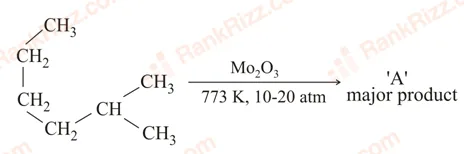
The compound (X) on
(i) on heating in the presence of anhydrous AlCl and HCl gas gives 2,4-dimethyl pentane
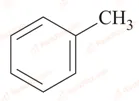
(ii) aromatization gives toluene and
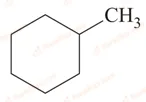
(iii) cyclisation gives methyl cyclohexane
The correct name of compound (X) is :
Hept-2-ene
Hept-1,3,5-triene
Heptane
Hept-2,4,6-triene
Consider the following reactions. Total number of electrons in the bonds and lone pair of electrons in the product (X) is :

12
16
14
18
Consider the isomers of hydrocarbon with molecular formula CH. These isomers do not decolourise KMnO solution. These isomers are subjected to chlorination with chlorine in presence of light to give monochloro compounds. The total number of monochloro compounds (structural isomers only) formed is __________.
An alkane (Y) requires 8 moles of oxygen for complete combustion and on chlorination with Cl/h, (Y) gives only one monochlorinated product (Z). The total number of primary carbon atoms in (Y) is __________.
One mole of an alkane (x) requires 8 mole oxygen for complete combustion. Sum of number of carbon and hydrogen atoms in the alkane (x) is __________.
Propane molecule on chlorination under photochemical condition gives two di-chloro products, " x " and " y ". Amongst " x " and " y ", " x " is an optically active molecule. How many tri-chloro products (consider only structural isomers) will be obtained from " x " when it is further treated with chlorine under the photochemical condition?
2
5
4
3
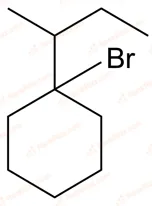
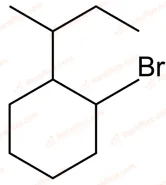
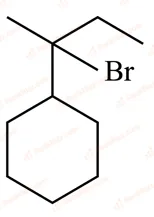
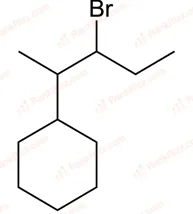
When sec-butylcyclohexane reacts with bromine in the presence of sunlight, the major product is :


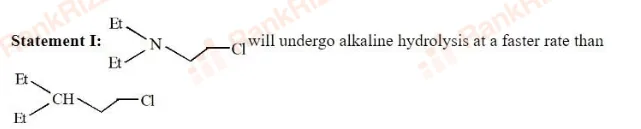
Given below are two statements:


involving lone pair of electrons on nitrogen. In the light of the above statements, choose the most appropriate answer from the options given below
Statement I is incorrect but Statement II is correct
Statement I is correct but Statement II is incorrect
Both Statement I and Statement II are correct
Both Statement I and Statement II are incorrect
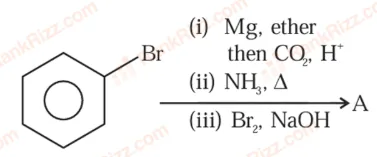
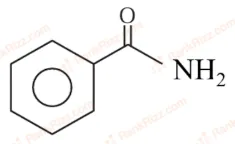
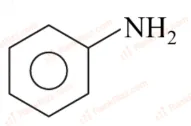
The final product , formed in the following multistep reaction sequence is:


In the following reaction 'X' is
CH(CH)CH X (major product)


CH(CH)CHCl
ClCH(CH)CHCl
Number of bromo derivatives obtained on treating ethane with excess of Br in diffused sunlight is ______
Maximum number of isomeric monochloro derivatives which can be obtained from 2,2,5,5-tetramethylhexane by chlorination is _____
. and in the above atmospheric reaction step are
and
and
and
and
Excess of isobutane on reaction with Br in presence of light at 125°C gives which one of the following, as the major product?


Presence of which reagent will affect the reversibility of the following reaction, and change it to a irreversible reaction:
HOCl
dilute HNO
Liquid NH
Concentrated HIO
Identify A in the given chemical reaction.


Given below are two statements:
Statement-I: 2-methylbutane on oxidation with KMnO gives 2-methylbutan-2-ol.
Statement-II: n-alkanes can be easily oxidised to corresponding alcohol with KMnO.
Choose the correct option:
Both statement I and statement II are correct
Both statement I and statement II are incorrect
Statement I is correct but Statement II is incorrect
Statement I is incorrect but Statement II is correct
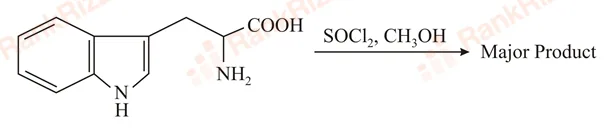
The major product formed in the following reaction is:


The minimum number of moles of required for complete combustion of 1 mole of propane and 2 moles of butane is...............