JEE MAIN 2021 · 01 SEP S2Molecular orbital theory of diatomic speciesTRANSCRIBED
The spin-only magnetic moment value of B species is _________ BM (Nearest integer)
[Given: = 1.73]
Every JEE Main question on Molecular orbital theory of diatomic species, one of the ideas inside Chemical Bonding and Molecular Structure: 79 questions from 2004–2026, 31 of them in the last five years. Newest first, answer key on every one. Free to read.
Questions
79
Years asked
20
Since
2004
Of the chapter
25%
41–60 OF 79 · NEWEST FIRST
The spin-only magnetic moment value of B species is _________ BM (Nearest integer)
[Given: = 1.73]
Of the species, NO, NO, NO and NO, the one with minimum bond strength is:
NO
NO
NO
NO
The bond order and the magnetic characteristic of CN are
, diamagnetic
3, diamagnetic
3, paramagnetic
, paramagnetic
If the magnetic moment of a di-oxygen species is 1.73 B.M., it may be:
or
or
or
or
Two pi and half sigma bonds are present in:
Among the following species, the diamagnetic molecule is:
CO
B
O
NO
According to molecular orbital theory, which of the following is true with respect to and ?
is stable and is unstable
Both are unstable
Both are stable
is unstable and is stable
During the change of O to O, the incoming electron goes to the orbital:
2p
2p
2p
2p
In which of the following processes, the bond order has increased and paramagnetic character has changed to diamagnetic?
Among the following, the molecule expected to be stabilized by anion formation is: C, O, NO, F
F
C
O
NO
Among the following molecules/ions, , , , , which one is diamagnetic and has the shortest bond length?
According to molecular orbital theory, which of the following molecule will not be available?
Which of the following compounds contain(s) no covalent bond(s)?
KCl, PH, O, BH, HSO
KCl, BH
KCl, BH, PH
KCl, HSO
KCl
Total number of lone pair of electrons in I ion is:
12
3
6
9
Which of the following best describes the diagram of molecular orbital?
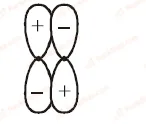
A bonding orbital
A non-bonding orbital
An antibonding orbital
An antibonding orbital
In the molecular orbital diagram for the molecular ion, N, the number of electrons in the molecular orbital is:
0
2
3
1
Which of the following are Lewis acids?
BCl and AlCl
PH and BCl
AlCl and CCl
PH and CCl
Which type of 'defect' has the presence of cations in the interstitial sites?
Metal deficiency defect
Schottky defect
Vacancy defect
Frenkel defect
Which of the following is paramagnetic?
CO
NO
Which of the following species is not paramagnetic?
CO
O
B
NO
RELATED CHEMICAL BONDING AND MOLECULAR STRUCTURE TOPICS