RankRizz

JEE Main 10 Jan 2019, Shift 2: Chemistry

The 30 Chemistry questions of JEE Main 10 Jan 2019, Shift 2, numbered across the whole paper. Pick an answer on any question to check it against the key. Free to read, nothing to download.

Chemistry

Q31Electronic configuration and Aufbau, Pauli and Hund's rulesTRANSCRIBED

The 71st^{st} electron of an element X with an atomic number of 71 enters the orbital:

  1. A

    5d

  2. B

    4f

  3. C

    6p

  4. D

    6s

Q32Bohr model of hydrogen-like speciesTRANSCRIBED

The ground state energy of a hydrogen atom is −13.6-13.6 eV. The energy of second excited state of He+^+ ion in eV is:

  1. A

    −27.2-27.2

  2. B

    −6.04-6.04

  3. C

    −3.4-3.4

  4. D

    −54.4-54.4

Q33Entropy and the second lawTRANSCRIBED

The process with negative entropy change is:

  1. A

    Synthesis of ammonia from N2_2 and H2_2.

  2. B

    Dissolution of iodine in water.

  3. C

    Dissociation of CaSO4_4 (s) to CaO (s) and SO3_3 (g).

  4. D

    Sublimation of dry ice.

Q34First law: work, heat and internal energyTRANSCRIBED

An ideal gas undergoes isothermal compression from 5 m3^3 to 1 m3^3 against a constant external pressure of 4 N m−2^{-2}. The heat released in this process is 24 J mol−1^{-1} K−1^{-1} and is used to increase the pressure of 1 mole of Al. The temperature of Al increases by:

  1. A

    23\frac{2}{3} K

  2. B

    1 K

  3. C

    32\frac{3}{2} K

  4. D

    2 K

Q35Law of mass action and equilibrium constants Kc and KpTRANSCRIBED

5.1 g NH4SHNH_4SH is introduced in 3.0 L evacuated flask at 327∘^{\circ}C. 30% of the solid NH4SHNH_4SH is decomposed to NH3NH_3 and H2SH_2S as gases. The KPK_P of the reaction at 327∘^{\circ}C is: (R=0.082R = 0.082 L atm mol−1^{-1} K−1^{-1}, Molar mass of S = 32 g mol−1^{-1}, Molar mass of N = 14 g mol−1^{-1})

  1. A

    0.242 atm2^2

  2. B

    0.242×10−40.242 \times 10^{-4} atm2^2

  3. C

    1×10−41 \times 10^{-4} atm2^2

  4. D

    4.9×10−34.9 \times 10^{-3} atm2^2

Q36Balancing redox equationsTRANSCRIBED

In the reaction of oxalate with permanganate in acidic medium, the number of electrons involved in producing one molecule of CO2_2 is:

  1. A

    2

  2. B

    10

  3. C

    1

  4. D

    5

Q37Aluminium and its compoundsTRANSCRIBED

The number of 2-centre-2-electron and 3-centre-2-electron bonds in B2H6B_2H_6, respectively, are:

  1. A

    4 and 2

  2. B

    2 and 4

  3. C

    2 and 2

  4. D

    2 and 1

Q38IUPAC nomenclature of organic compoundsTRANSCRIBED

What is the IUPAC name of the following compound?
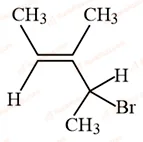
Figure for JEE Main 2019 Chemistry question on IUPAC nomenclature of organic compounds
  1. A

    4-Bromo-3-methylpent-2-ene

  2. B

    3-Bromo-3-methyl-1,2-dimethylprop-1-ene

  3. C

    2-Bromo-3-methyl pent-3-ene

  4. D

    3-Bromo-1,2-dimethylbut-1-ene

Q39Nucleophilic addition reactions of carbonyl compoundsTRANSCRIBED

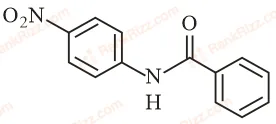
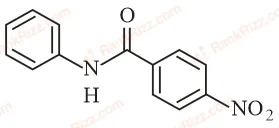
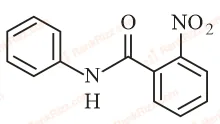
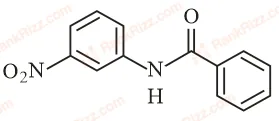
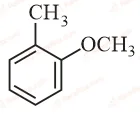
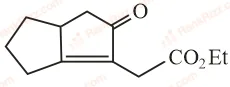
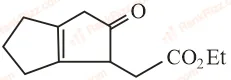
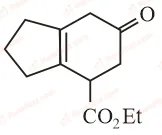
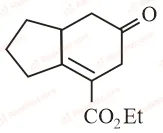
What will be the major product in the following mononitration reaction?
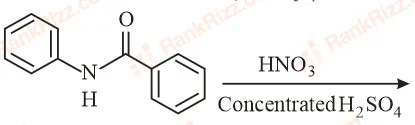
Figure for JEE Main 2019 Chemistry question on Nucleophilic addition reactions of carbonyl compounds
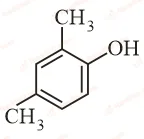
  1. A
    Figure for JEE Main 2019 Chemistry question on Nucleophilic addition reactions of carbonyl compounds
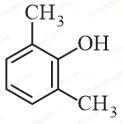
  2. B
    Figure for JEE Main 2019 Chemistry question on Nucleophilic addition reactions of carbonyl compounds
  3. C
    Figure for JEE Main 2019 Chemistry question on Nucleophilic addition reactions of carbonyl compounds
  4. D
    Figure for JEE Main 2019 Chemistry question on Nucleophilic addition reactions of carbonyl compounds
Q40Stratospheric pollution and ozone depletionTRANSCRIBED

The reaction that is not involved in the ozone layer depletion mechanism in the stratosphere is:

  1. A

    CH4+2O2→CO2+2H2OCH_4 + 2O_2 \rightarrow CO_2 + 2H_2O

  2. B

    ClO∙(g)+O(g)→Cl∙(g)+O2(g)ClO^{\bullet}(g) + O(g) \rightarrow Cl^{\bullet}(g) + O_2(g)

  3. C

    CF2Cl2(g)→uvCl∙(g)+CF2Cl(g)CF_2Cl_2(g) \xrightarrow{uv} Cl^{\bullet}(g) + CF_2Cl(g)

  4. D

    HOCl(g)→hνOH∙(g)+Cl∙(g)HOCl(g) \xrightarrow{h\nu} OH^{\bullet}(g) + Cl^{\bullet}(g)

Q41Voids, radius ratio and structures of ionic solidsTRANSCRIBED

A compound of formula A2B3A_2B_3 has the HCP lattice. Which atom forms the HCP lattice and what fraction of the tetrahedral voids are occupied by the other atoms?

  1. A

    HCP lattice - B, 23\frac{2}{3} tetrahedral voids - A

  2. B

    HCP lattice - A, 13\frac{1}{3} tetrahedral voids - B

  3. C

    HCP lattice - B, 13\frac{1}{3} tetrahedral voids - A

  4. D

    HCP lattice - A, 23\frac{2}{3} tetrahedral voids - B

Q42Concentration terms and their interconversionTRANSCRIBED

The amount of sugar (C12H22O11C_{12}H_{22}O_{11}) required to prepare 2L of its 0.1 M aqueous solution is:

  1. A

    17.1 g

  2. B

    136.8 g

  3. C

    68.4 g

  4. D

    34.2 g

Q43Depression in freezing pointTRANSCRIBED

The elevation in boiling point for 1 molal solution of glucose is 2 K. The depression in freezing point for 2 molal solution of glucose in the same solvent is 2 K. The relation between KbK_b and KfK_f is:

  1. A

    Kb=2KfK_b = 2K_f

  2. B

    Kb=1.5KfK_b = 1.5K_f

  3. C

    Kb=KfK_b = K_f

  4. D

    Kb=0.5KfK_b = 0.5K_f

Q44Electrode potentials, electrochemical series and cell EMFTRANSCRIBED

In the cell, Pt(s)|H2_2(g, 1 bar)|HCl(aq)|AgCl(s)|Ag(s)|Pt(s), the cell potential is 0.92 V when a 10−610^{-6} molar HCl solution is used. The standard electrode potential of Ag|AgCl|Cl−^- electrode is: (Given, 2.303RTF=0.06\frac{2.303RT}{F} = 0.06 V at 298 K)

  1. A

    0.76 V

  2. B

    0.20 V

  3. C

    0.40 V

  4. D

    0.94 V

Q45Rate law, order and molecularityTRANSCRIBED

For an elementary chemical reaction, A2⇌k1k−12AA_2 \underset{k_{-1}}{\overset{k_1}{\rightleftharpoons}} 2A, the expression for d[A]dt\frac{d[A]}{dt} is:

  1. A

    2k1[A2]−2k−1[A]22k_1[A_2] - 2k_{-1}[A]^2

  2. B

    2k1[A2]−k−1[A]22k_1[A_2] - k_{-1}[A]^2

  3. C

    k1[A2]+k−1[A]2k_1[A_2] + k_{-1}[A]^2

  4. D

    k1[A2]−k−1[A]2k_1[A_2] - k_{-1}[A]^2

Q46Properties of colloids and coagulationTRANSCRIBED

The haemoglobin and the gold sol are examples of:

  1. A

    positively charged sols

  2. B

    negatively and positively charged sols, respectively

  3. C

    negatively charged sols

  4. D

    positively and negatively charged sols, respectively

Q47Refining of metalsTRANSCRIBED

The electrolytes usually used in the electroplating of gold and silver, respectively, are:

  1. A

    [Au(NH3)2]+[Au(NH_3)_2]^+ and [Ag(CN)2]−[Ag(CN)_2]^-

  2. B

    [Au(CN)2]−[Au(CN)_2]^- and [AgCl2]−[AgCl_2]^-

  3. C

    [Au(OH)4]−[Au(OH)_4]^- and [Ag(OH)2]−[Ag(OH)_2]^-

  4. D

    [Au(CN)2]−[Au(CN)_2]^- and [Ag(CN)2]−[Ag(CN)_2]^-

Q48Group 17: halogens and hydrogen halidesTRANSCRIBED

Among the following reactions of hydrogen with halogens, the one that requires a catalyst is:

  1. A

    H2+Cl2→2HClH_2 + Cl_2 \rightarrow 2HCl

  2. B

    H2+I2→2HIH_2 + I_2 \rightarrow 2HI

  3. C

    H2+F2→2HFH_2 + F_2 \rightarrow 2HF

  4. D

    H2+Br2→2HBrH_2 + Br_2 \rightarrow 2HBr

Q49Group 15: trends and hydridesTRANSCRIBED

The pair that contains two P−HP - H bonds in each of the oxoacids is:

  1. A

    H3PO3H_3PO_3 and H3PO2H_3PO_2

  2. B

    H4P2O5H_4P_2O_5 and H3PO3H_3PO_3

  3. C

    H4P2O5H_4P_2O_5 and H4P2O6H_4P_2O_6

  4. D

    H3PO2H_3PO_2 and H4P2O5H_4P_2O_5

Q50Alkali metals: properties and trendsTRANSCRIBED

Sodium metal on dissolution in liquid ammonia gives a deep blue solution due to the formation of:

  1. A

    Sodamide

  2. B

    Sodium-ammonia complex

  3. C

    Sodium ion-ammonia complex

  4. D

    Ammoniated electrons

Q51Structural isomerism in complexesTRANSCRIBED

A reaction of cobalt (III) chloride and ethylenediamine in a 1 : 2 mole ratio generates two isomeric products A (violet-coloured) and B (green-coloured). A can show optical activity, but, B is optically inactive. What type of isomers do A and B represent?

  1. A

    Coordination isomers

  2. B

    Linkage isomers

  3. C

    Ionisation isomers

  4. D

    Geometrical isomers

Q52Valence bond theory of complexesTRANSCRIBED

The difference in the number of unpaired electrons of a metal ion in its high-spin and low-spin octahedral complexes is two. The metal ion is:

  1. A

    Fe2+Fe^{2+}

  2. B

    Co2+Co^{2+}

  3. C

    Ni2+Ni^{2+}

  4. D

    Mn2+Mn^{2+}

Q54Nucleophilic addition reactions of carbonyl compoundsTRANSCRIBED

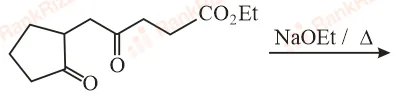
The major product obtained in the following reaction is:

Figure for JEE Main 2019 Chemistry question on Nucleophilic addition reactions of carbonyl compounds
  1. A
    Figure for JEE Main 2019 Chemistry question on Nucleophilic addition reactions of carbonyl compounds
  2. B
    Figure for JEE Main 2019 Chemistry question on Nucleophilic addition reactions of carbonyl compounds
  3. C
    Figure for JEE Main 2019 Chemistry question on Nucleophilic addition reactions of carbonyl compounds
  4. D
    Figure for JEE Main 2019 Chemistry question on Nucleophilic addition reactions of carbonyl compounds
Q55Reactions and tests of aminesTRANSCRIBED

The major product of the following reaction is:
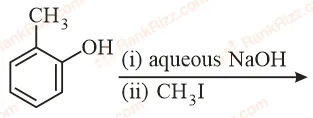
Figure for JEE Main 2019 Chemistry question on Reactions and tests of amines
  1. A
    Figure for JEE Main 2019 Chemistry question on Reactions and tests of amines
  2. B
    Figure for JEE Main 2019 Chemistry question on Reactions and tests of amines
  3. C
    Figure for JEE Main 2019 Chemistry question on Reactions and tests of amines
  4. D
    Figure for JEE Main 2019 Chemistry question on Reactions and tests of amines
Q56Distinguishing tests for aldehydes and ketonesTRANSCRIBED

Which is the most suitable reagent for the following transformation?

Figure for JEE Main 2019 Chemistry question on Distinguishing tests for aldehydes and ketones Figure for JEE Main 2019 Chemistry question on Distinguishing tests for aldehydes and ketones
  1. A

    Tollen's reagent

  2. B

    I2/NaOHI_2/NaOH

  3. C

    Alkaline KMnO4_4

  4. D

    CrO2_2Cl2_2/CS2_2

Q57Preparation of aminesTRANSCRIBED

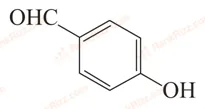
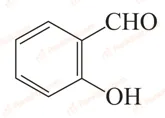
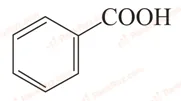
An aromatic compound 'A' having molecular formula C7H6O2C_7H_6O_2, on treating with aqueous ammonia and heating forms compound 'B'. The compound 'B' on reaction with molecular bromine and potassium hydroxide provides compound 'C' having molecular formula C6H7NC_6H_7N. The structure of 'A' is:

  1. A
    Figure for JEE Main 2019 Chemistry question on Preparation of amines
  2. B
    Figure for JEE Main 2019 Chemistry question on Preparation of amines
  3. C
    Figure for JEE Main 2019 Chemistry question on Preparation of amines
  4. D
    Figure for JEE Main 2019 Chemistry question on Preparation of amines
Q58Classification of polymers and types of polymerisationTRANSCRIBED

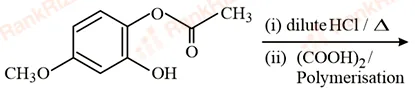
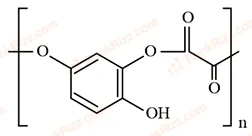
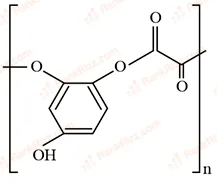
The major product of the following reaction is:
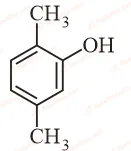
Figure for JEE Main 2019 Chemistry question on Classification of polymers and types of polymerisation
  1. A
    Figure for JEE Main 2019 Chemistry question on Classification of polymers and types of polymerisation
  2. B
    Figure for JEE Main 2019 Chemistry question on Classification of polymers and types of polymerisation
  3. C
    Figure for JEE Main 2019 Chemistry question on Classification of polymers and types of polymerisation
  4. D
    Figure for JEE Main 2019 Chemistry question on Classification of polymers and types of polymerisation
Q59Proteins and enzymesTRANSCRIBED

Which of the following tests cannot be used for identifying amino acids?

  1. A

    Biuret test

  2. B

    Xanthoproteic test

  3. C

    Barfoed test

  4. D

    Ninhydrin test

Q60Quantitative estimation of elementsTRANSCRIBED

The correct match between item I and item II is:
Item I (Compound)        Item II (Reagent)
a. Lysine                       p. 1-naphthol
b. Furfural                    q. Ninhydrin
c. Benzyl alcohol         r. KMnO4_4
d. Styrene                     s. Ceric ammonium nitrate

  1. A

    a →\rightarrow q, b →\rightarrow r, c →\rightarrow s, d →\rightarrow p

  2. B

    a →\rightarrow q, b →\rightarrow p, c →\rightarrow s, d →\rightarrow r

  3. C

    a →\rightarrow r, b →\rightarrow p, c →\rightarrow q, d →\rightarrow s

  4. D

    a →\rightarrow q, b →\rightarrow p, c →\rightarrow r, d →\rightarrow s

NEXT IN THIS PAPER →Maths, Q61 onwards