Q23Reactive intermediates and rearrangementsTRANSCRIBED
The correct stability order for the following species is

- A
(II) > (IV) > (I) > (III)
- B
(I) > (II) > (III) > (IV)
- C
(II) > (I) > (IV) > (III)
- D
(I) > (III) > (II) > (IV)
The 22 Chemistry questions of JEE Advanced 2008 Paper 2, numbered across the whole paper. Pick an answer on any question to check it against the key. Free to read, nothing to download.
The correct stability order for the following species is
(II) > (IV) > (I) > (III)
(I) > (II) > (III) > (IV)
(II) > (I) > (IV) > (III)
(I) > (III) > (II) > (IV)
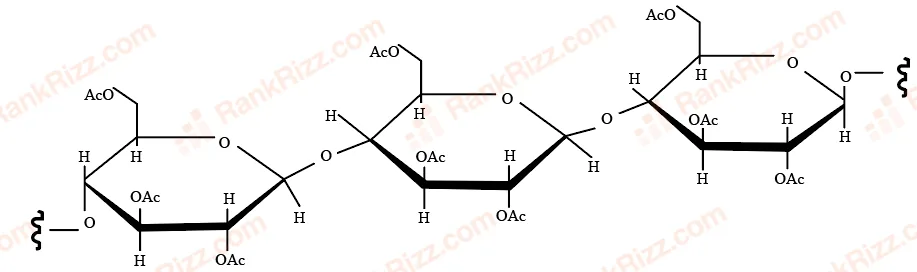
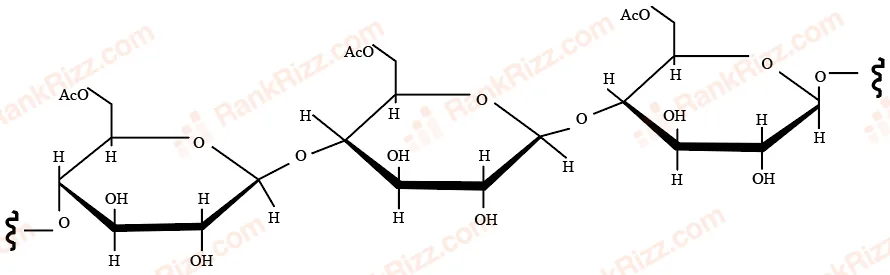
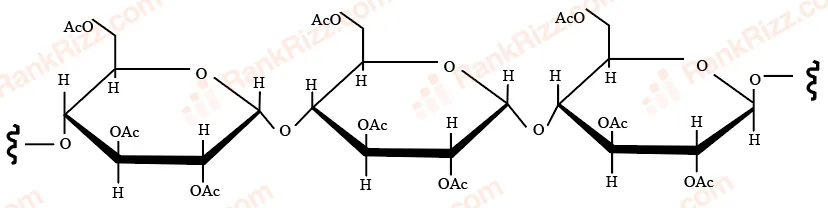
Cellulose upon acetylation with excess acetic anhydride/ (catalytic) gives cellulose triacetate whose structure is
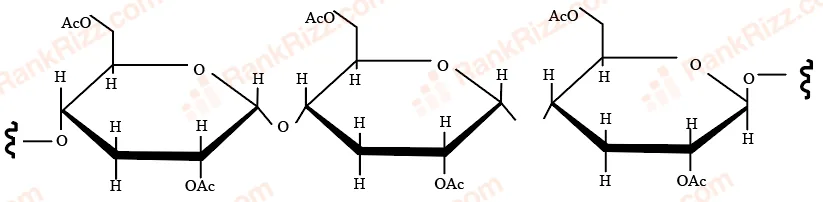
In the following reaction sequence, the correct structures of E, F and G are

(* implies labelled carbon)




Among the following, the coloured compound is
Both and are diamagnetic. The hybridisations of nickel in these complexes, respectively, are
The IUPAC name of is
Tetrachloronickel(II) - tetraamminenickel(II)
Tetraamminenickel(II) - tetrachloronickel (II)
Tetraamminenickel(II) - tetrachloronickelate (II)
Tetrachloronickel (II) - tetraamminenickelate (0)
Electrolysis of dilute aqueous NaCl solution was carried out by passing 10 milli ampere current. The time required to liberate 0.01 mol of H, gas at the cathode is (1 Faraday = 96500 C mol)
sec
sec
sec
sec
Among the following, the surfactant that will form micelles in aqueous solution at the lowest molar concentration at ambient conditions is
Solubility product constants of salts of types and at temperature ‘T’ are and , respectively. Solubilities (mol dm) of the salts at temperature 'T' are in the order
STATEMENT-1: Aniline on reaction with at followed by coupling with - naphthol gives a dark blue coloured precipitate.
and
STATEMENT-2: The colour of the compound formed in the reaction of aniline with at followed by coupling with - naphthol is due to the extended conjugation.
STATEMENT-1 is True, STATEMENT-2 is True; STATEMENT-2 is a correct explanation for STATEMENT-1
STATEMENT-1 is True, STATEMENT-2 is True; STATEMENT-2 is NOT a correct explanation for STATEMENT-1
STATEMENT-1 is True, STATEMENT-2 is False
STATEMENT-1 is False, STATEMENT-2 is True
STATEMENT-1: is paramagnetic.
and
STATEMENT-2: The Fe in has three unpaired electrons.
STATEMENT-1 is True, STATEMENT-2 is True; STATEMENT-2 is a correct explanation for STATEMENT-1
STATEMENT-1 is True, STATEMENT-2 is True; STATEMENT-2 is NOT a correct explanation for STATEMENT-1
STATEMENT-1 is True, STATEMENT-2 is False
STATEMENT-1 is False, STATEMENT-2 is True
STATEMENT-1: The geometrical isomers of the complex are optically inactive.
and
STATEMENT-2: Both geometrical isomers of the complex possess axis of symmetry.
STATEMENT-1 is True, STATEMENT-2 is True; STATEMENT-2 is a correct explanation for STATEMENT-1
STATEMENT-1 is True, STATEMENT-2 is True; STATEMENT-2 is NOT a correct explanation for STATEMENT-1
STATEMENT-1 is True, STATEMENT-2 is False
STATEMENT-1 is False, STATEMENT-2 is True
STATEMENT-1: There is a natural asymmetry between converting work to heat and converting heat to work.
and
STATEMENT-2: Noprocessis possible in which the sole result is the absorption of heat from a reservoir and its complete conversion into work.
STATEMENT-1 is True, STATEMENT-2 is True; STATEMENT-2 is a correct explanation for STATEMENT-1
STATEMENT-1 is True, STATEMENT-2 is True; STATEMENT-2 is NOT a correct explanation for STATEMENT-1
STATEMENT-1 is True, STATEMENT-2 is False
STATEMENT-1 is False, STATEMENT-2 is True
Compound H is formed by the reaction of
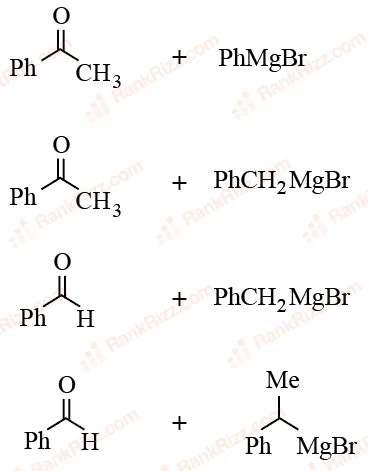
Figure 1
Figure 2
Figure 3
Figure 4
The structure of compound I is
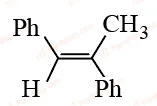
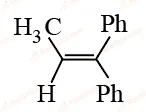
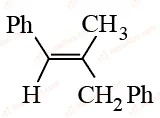
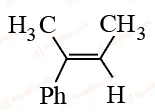
The structures of compounds J, K and L, respectively, are
and
and
and
and
The number of atoms in this HCP unitcell is
4
6
12
17
The volume of this HCP unitcell is
The emptyspace in this HCP unit cell is
74%
47.6%
32%
26%
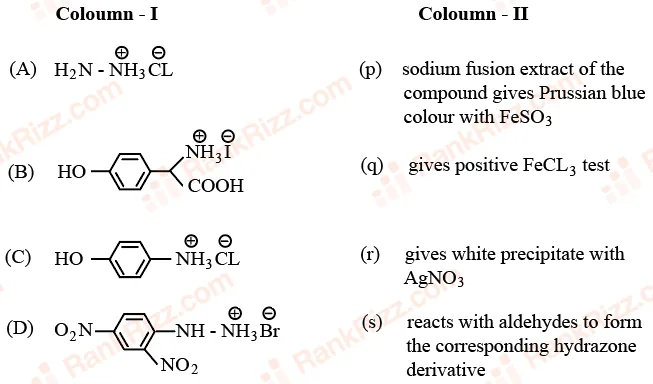
Match the compounds in Column I with their characteristic test(s)/reaction(s) given in Column II. Indicate your answer by darkening the appropriate bubbles of the matrix given in the ORS.
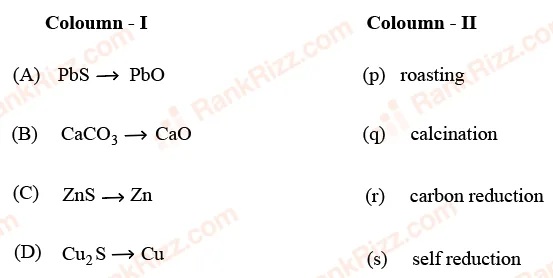
Match the conversions in Column I with the type(s) of reaction(s) given in Column II. Indicate your answer by darkening the appropriate bubbles of the matrix given in the ORS
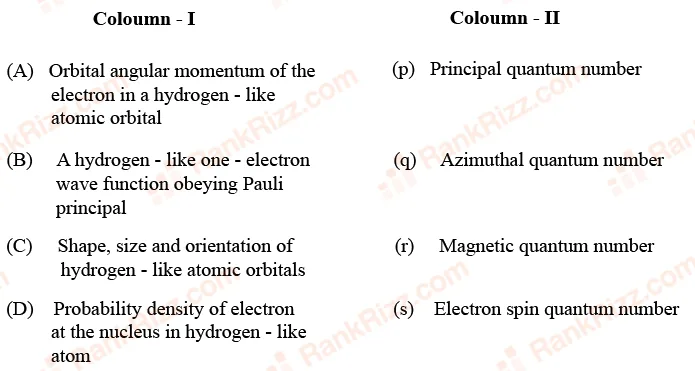
Match the entries in Column I with the correctly related quantum number(s) in Column II. Indicate your answer by darkening the appropriate bubbles of the matrix given in the ORS