RankRizz

Bond enthalpy, atomisation, phase-change and solution enthalpies — JEE Main Previous Year Questions

Every JEE Main question on Bond enthalpy, atomisation, phase-change and solution enthalpies, one of the ideas inside Chemical Thermodynamics: 12 questions from 2005–2026, 3 of them in the last five years. Newest first, answer key on every one. Free to read.

Questions

12

Years asked

9

Since

2005

Of the chapter

5%

When JEE Main asked it

Questions on Bond enthalpy, atomisation, phase-change and solution enthalpies in each year it was asked.

20261
20252
20212
20151
20131
20101
20081
20062
20051

Every Bond enthalpy, atomisation, phase-change and solution enthalpies question

1–12 OF 12 · NEWEST FIRST

JEE MAIN 2026 · 22 JAN S2Bond enthalpy, atomisation, phase-change and solution enthalpiesTRANSCRIBED

If the enthalpy of sublimation of Li is 155 kJ mol−1mol^{-1}, enthalpy of dissociation of F2F_{2} is 150 kJ mol−1mol^{-1}, ionization enthalpy of Li is 520 kJ mol−1mol^{-1}, electron gain enthalpy of F is - 313 kJ mol−1mol^{-1}, standard enthalpy of formation of LiF is - 594 kJ mol−1mol^{-1}. The magnitude of lattice enthalpy of LiF is _________ kJ mol−1mol^{-1}. (Nearest Integer)

JEE MAIN 2025 · 07 APR S2Bond enthalpy, atomisation, phase-change and solution enthalpiesTRANSCRIBED

The hydration energies of K+K^+ and Cl−Cl^- are −x-x and −y-y kJ/mol respectively. If lattice energy of KCl is −z-z kJ/mol, then the heat of solution of KCl is :

  1. A

    +x−y−z+x - y - z

  2. B

    x+y+zx + y + z

  3. C

    z−(x+y)z - (x + y)

  4. D

    −z−(x+y)-z - (x + y)

JEE MAIN 2025 · 08 APR S2Bond enthalpy, atomisation, phase-change and solution enthalpiesTRANSCRIBED

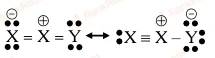
Resonance in X2YX_2Y can be represented as 

Figure for JEE Main 2025 Chemistry question on Bond enthalpy, atomisation, phase-change and solution enthalpies

The enthalpy of formation of X_2Y\left( X\equiv X(g)+\frac{1}{2}Y=Y(g)\rightarrow X_2 Y(g)\right) is 80 kJ mol−1^{-1}. The magnitude of resonance energy of X2YX_2Y is _____ kJ mol−1^{-1}  (nearest integer value). Given: Bond energies of X≡XX \equiv X, X=XX = X, Y=YY = Y and X=YX = Y are 940, 410, 500 and 602 kJ mol−1^{-1} respectively.
valence X : 3, Y : 2

JEE MAIN 2021 · 25 FEB S1Bond enthalpy, atomisation, phase-change and solution enthalpiesTRANSCRIBED

The ionization enthalpy of Na+^+ formation from Na(g)Na_{(g)} is 495.8 kJ mol−1^{-1}, while the electron gain enthalpy of Br is −325.0-325.0 kJ mol−1^{-1}. Given the lattice enthalpy of NaBr is −728.4-728.4 kJ mol−1^{-1}. The energy for the formation of NaBr ionic solid is (−)‾×10−1(-) \underline{\hspace{1cm}} \times 10^{-1} kJ mol−1^{-1}

JEE MAIN 2021 · 26 FEB S2Bond enthalpy, atomisation, phase-change and solution enthalpiesTRANSCRIBED

The average S - F bond energy in kJ mol−1^{-1} of SF6SF_6 is ______. (Rounded off to the nearest integer)
[Given: The values of standard enthalpy of formation of SF6(g)SF_6(g), S(g)S(g) and F(g)F(g) are −1100-1100, 275 and 80 kJ mol−1^{-1} respectively.]

JEE MAIN 2015 · 10 APR ONLINEBond enthalpy, atomisation, phase-change and solution enthalpiesTRANSCRIBED

The heat of atomization of methane and ethane are 360 kJ mol−1^{-1} and 620 kJ mol−1^{-1}, respectively. The longest wavelength of light capable of breaking the C - C bond is (Avogadro's number = 6.023×10236.023 \times 10^{23}, h = 6.62×10−346.62 \times 10^{-34} J s)

  1. A

    2.48×1042.48 \times 10^4 nm

  2. B

    1.49×1041.49 \times 10^4 nm

  3. C

    2.48×1032.48 \times 10^3 nm

  4. D

    1.49×1031.49 \times 10^3 nm

JEE MAIN 2013 · 25 APR ONLINEBond enthalpy, atomisation, phase-change and solution enthalpiesTRANSCRIBED

Given that: (i) ΔfH°\Delta_f H° of N2ON_2O is 82 kJ mol−1^{-1} (ii) Bond energies of N≡NN \equiv N, N=NN = N, O=OO = O and N=ON = O are 946, 418, 498 and 607 kJ mol−1^{-1} respectively. The resonance energy of N2ON_2O is :

  1. A

    -88 kJ

  2. B

    -66 kJ

  3. C

    -62 kJ

  4. D

    -44 kJ

JEE MAIN 2010Bond enthalpy, atomisation, phase-change and solution enthalpiesTRANSCRIBED

The standard enthalpy of formation of NH3\text{NH}_3 is −46.0-46.0 kJ mol−1^{-1}. If the enthalpy of formation of H2\text{H}_2 from its atoms is −436-436 kJ mol−1^{-1} and that of N2\text{N}_2 is −712-712 kJ mol−1^{-1}, the average bond enthalpy of N−-H bond in NH3\text{NH}_3 is

  1. A

    −964-964 kJ mol−1^{-1}

  2. B

    +352+352 kJ mol−1^{-1}

  3. C

    +1056+1056 kJ mol−1^{-1}

  4. D

    −1102-1102 kJ mol−1^{-1}

JEE MAIN 2008Bond enthalpy, atomisation, phase-change and solution enthalpiesTRANSCRIBED

Oxidising power of chlorine in aqueous solution can be determined by the parameters indicated below: 12Cl2(g)→12ΔdissH⊖Cl(g)→ΔegH⊖Cl−(g)→ΔhydH⊖Cl−(aq).\frac{1}{2}Cl_2(g) \xrightarrow{\frac{1}{2}\Delta_{diss}H^{\ominus}} Cl(g) \xrightarrow{\Delta_{eg}H^{\ominus}} Cl^{-}(g) \xrightarrow{\Delta_{hyd}H^{\ominus}} Cl^{-}(aq).TheenergyinvolvedintheconversionofThe energy involved in the conversion of12Cl2(g)\frac{1}{2}Cl_2(g)totoCl−(g)Cl^{-}(g)(usingthedata,(using the data,ΔdissHCl2⊖=240 kJ mol−1, ΔegHCl⊖=−349 kJ mol−1, ΔhydHCl−⊖=−381 kJ mol−1\Delta_{diss}H^{\ominus}_{Cl_2} = 240\ kJ\ mol^{-1},\ \Delta_{eg}H^{\ominus}_{Cl} = -349\ kJ\ mol^{-1},\ \Delta_{hyd}H^{\ominus}_{Cl^{-}} = -381\ kJ\ mol^{-1}$) will be

  1. A

    +152 kJ mol−1+152\ kJ\ mol^{-1}

  2. B

    −610 kJ mol−1-610\ kJ\ mol^{-1}

  3. C

    −850 kJ mol−1-850\ kJ\ mol^{-1}

  4. D

    +120 kJ mol−1+120\ kJ\ mol^{-1}

JEE MAIN 2006Bond enthalpy, atomisation, phase-change and solution enthalpiesTRANSCRIBED

The standard enthalpy of formation (ΔfH∘)(\Delta_fH^\circ) at 298 K298\,K for methane, CH4(g)CH_4(g), is −74.8 kJ mol−1-74.8\,kJ\,mol^{-1}. The additional information required to determine the average energy for C−HC - H bond formation would be

  1. A

    the dissociation energy of H2H_2 and enthalpy of sublimation of carbon

  2. B

    latent heat of vapourization of methane

  3. C

    the first four ionization energies of carbon and electron gain enthalpy of hydrogen

  4. D

    the dissociation energy of hydrogen molecule, H2H_2

JEE MAIN 2006Bond enthalpy, atomisation, phase-change and solution enthalpiesTRANSCRIBED

The enthalpy changes for the following processes are listed below: Cl2(g)=2Cl(g), 242.3 kJ mol−1Cl_2(g) = 2Cl(g),\ 242.3\,kJ\,mol^{-1}; I2(g)=2I(g), 151.0 kJ mol−1I_2(g) = 2I(g),\ 151.0\,kJ\,mol^{-1}; ICl(g)=I(g)+Cl(g), 211.3 kJ mol−1ICl(g) = I(g) + Cl(g),\ 211.3\,kJ\,mol^{-1}; I2(s)=I2(g), 62.76 kJ mol−1I_2(s) = I_2(g),\ 62.76\,kJ\,mol^{-1}. Given that the standard states for iodine and chlorine are I2(s)I_2(s) and Cl2(g)Cl_2(g), the standard enthalpy of formation for ICl(g)ICl(g) is

  1. A

    −14.6 kJ mol−1-14.6\,kJ\,mol^{-1}

  2. B

    −16.8 kJ mol−1-16.8\,kJ\,mol^{-1}

  3. C

    +16.8 kJ mol−1+16.8\,kJ\,mol^{-1}

  4. D

    +244.8 kJ mol−1+244.8\,kJ\,mol^{-1}

JEE MAIN 2005Bond enthalpy, atomisation, phase-change and solution enthalpiesTRANSCRIBED

If the bond dissociation energies of XYXY, X2X_2 and Y2Y_2 (all diatomic molecules) are in the ratio of 1:1:0.51 : 1 : 0.5 and ΔfH\Delta_f H for the formation of XYXY is −200-200 kJ mole−1^{-1}. The bond dissociation energy of X2X_2 will be

  1. A

    100100 kJ mol−1^{-1}

  2. B

    200200 kJ mol−1^{-1}

  3. C

    300300 kJ mol−1^{-1}

  4. D

    None of these