RankRizz

JEE Main 28 Jan 2025, Shift 1: Chemistry

The 25 Chemistry questions of JEE Main 28 Jan 2025, Shift 1, numbered across the whole paper. Pick an answer on any question to check it against the key. Free to read, nothing to download.

Chemistry

Q26Carbohydrates: classification and monosaccharidesTRANSCRIBED

Given below are two statements: Statement I : D-glucose pentaacetate reacts with 2, 4-dinitrophenylhydrazine Statement II : Starch, on heating with concentrated sulfuric acid at 100∘100^{\circ} and 2-3 atmosphere pressure produces glucose. In the light of the above statements, choose the correct answer from the options given below

  1. A

    Statement I is false but Statement II is true

  2. B

    Both Statement I and Statement II are false

  3. C

    Both Statement I and Statement II are true

  4. D

    Statement I is true but Statement II is false
Q27Nucleophilic addition reactions of carbonyl compoundsTRANSCRIBED

Both acetaldehyde and acetone (individually) undergo which of the following reactions? A. Iodoform Reaction B. Cannizaro Reaction C. Aldol Condensation D. Tollen's Test E. Clemmensen Reduction Choose the correct answer from the options given below:

  1. A

    A, B and D Only

  2. B

    C, and E Only

  3. C

    A, C and E Only

  4. D

    B, C and D Only

Q28Other important compounds of transition metalsTRANSCRIBED

Which of the following oxidation reactions are carried out by both K2Cr2O7K_{2}Cr_{2}O_{7} and KMnO4KMnO_{4} in acidic medium? A.Γ−→I2B.S2−→SC.Fe2+→Fe3+D.Γ−→IO3−E.S2O32−→SO42−A.\Gamma^{-}\rightarrow I_{2}B.S^{2-}\rightarrow S C.Fe^{2+}\rightarrow Fe^{3+}D.\Gamma^{-}\rightarrow IO_{3}^{-}E.S_{2}O_{3}^{2-}\rightarrow SO_{4}^{2-} Choose the correct answer from the options given below:

  1. A

    C, D and E Only

  2. B

    B, C and D Only

  3. C

    A, D and E Only

  4. D

    A, B and C Only

Q29Nucleophilic addition reactions of carbonyl compoundsTRANSCRIBED

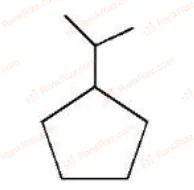
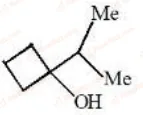
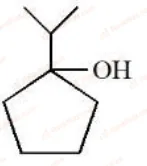
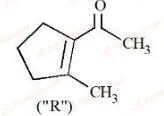
A molecule (" P ") on treatment with acid undergoes rearrangement and gives ("Q"). ("Q") on ozonolysis followed by reflux under alkaline condition gives (" R "). The structure of (" R ") is given below.

page9_img1


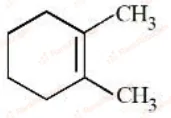
The structure of("P")is

  1. A
    page9_img2
  2. B
    page9_img3
  3. C
    page9_img4
  4. D
    page9_img5
Q30Reactive intermediates and rearrangementsTRANSCRIBED

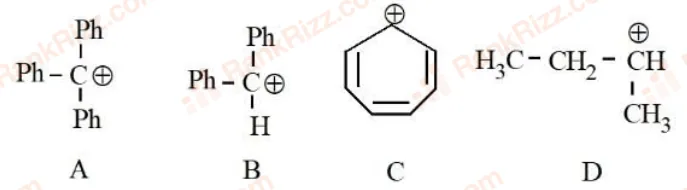
The correct order of stability of following carbocations is :

page10_img1
  1. A

    C > B > A > D

  2. B

    A > B > C > D

  3. C

    B > C > A > D

  4. D

    C > A > B > D

Q31Nucleophilic substitution (SN1 and SN2)TRANSCRIBED

The products A and B in the following reactions, respectively are

Figure for JEE Main 2025 Chemistry question on Nucleophilic substitution (SN1 and SN2)
  1. A

    CH3−CH2−CH2−NO2,CH3−CH2−CH2−CNCH_{3}-CH_{2}-CH_{2}-NO_{2},CH_{3}-CH_{2}-CH_{2}-CN

  2. B

    CH3−CH2−CH2−ONO,CH3−CH2−CH2−NCCH_{3}-CH_{2}-CH_{2}-ONO,CH_{3}-CH_{2}-CH_{2}-NC

  3. C

    CH3−CH2−CH2−ONO,CH3−CH2−CH2−CNCH_{3}-CH_{2}-CH_{2}-ONO,CH_{3}-CH_{2}-CH_{2}-CN

  4. D

    CH3−CH2−CH2−NO2,CH3−CH2−CH2−NCCH_{3}-CH_{2}-CH_{2}-NO_{2},CH_{3}-CH_{2}-CH_{2}-NC

Q32Quantum numbers and shapes of orbitalsTRANSCRIBED

In a multielectron atom, which of the following orbitals described by three quantum numbers will have same energy in absence of electric and magnetic fields? A.n=1,l=0,m1=0B.n=2,l=0,m1=0C.n=2,l=1,m1=1D.n=3,l=2,m1=1E.n=3,l=2,m1=0A. n = 1, l = 0, m_{1}=0 B.n = 2,l = 0, m_{1}=0 C.n = 2,l = 1, m_{1}=1 D.n = 3,l = 2, m_{1} = 1 E.n = 3, l = 2, m_{1} = 0 Choose the correct answer from the options given below:

  1. A

    B and C Only

  2. B

    A and B Only

  3. C

    C and D Only

  4. D

    D and E Only

Q33Ionisation of weak electrolytes and Ostwald's dilution lawTRANSCRIBED

A weak acid HA has degree of dissociation x . Which option gives the correct expression of (pHpKa)(pH pK_{a}) ?

  1. A

    0

  2. B

    log⁡(1+2x)\log(1+2x)

  3. C

    log⁡(1−xx)\log(\frac{1-x}{x})

  4. D

    log⁡(x1−x)\log(\frac{x}{1-x})

Q34VSEPR theory and shapes of molecules and ionsTRANSCRIBED

The molecules having square pyramidal geometry are

  1. A

    BrF5 & PCl5\mathrm{BrF_5} \ \& \ \mathrm{PCl_5}

  2. B

    SbF5 & PCl5\mathrm{SbF_5}\ \& \ \mathrm{PCl_5}

  3. C

    SbF5 & XeOF4S\mathrm{bF_5}\ \&\ \mathrm{XeOF_4}

  4. D

    BrF5 & XeOF4\mathrm{BrF_5}\ \&\ \mathrm{XeOF_4}

Q35Ionisation enthalpyTRANSCRIBED

Consider the following elements In, Tl, Al, Pb, Sn and Ge . The most stable oxidation states of elements with highest and lowest first ionisation enthalpies, respectively, are

  1. A

    +4 and +1

  2. B

    +1 and +4

  3. C

    +4 and +3

  4. D

    +2 and +3

Q36Methods to determine order of reactionTRANSCRIBED
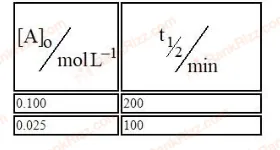
page11_img1


For a given reaction R→P,t1/2R\rightarrow P,t_{1/2} is related to [A]∘[A]_{\circ} as given in table. Given: log⁡2=0.30\log 2=0.30 Which of the following is true? A. The order of the reaction is 1/2.B.If [A]∘[A]_{\circ} is 1 M, then t1/2t_{1/2} is 20010min200\sqrt{10}min C.The order of the reaction changes to 1 if the concentration of reactant changes from 0.100 M to 0.500 M . D. t1/2t_{1/2} is 800 min for [A]∘=1.6M[A]_{\circ}=1.6M Choose the correct answer from the options given below: Options

  1. A

    A and C Only

  2. B

    A, B and D Only

  3. C

    C and D Only

  4. D

    A and B Only

Q37Oxidising/reducing agents and types of redox reactionsTRANSCRIBED

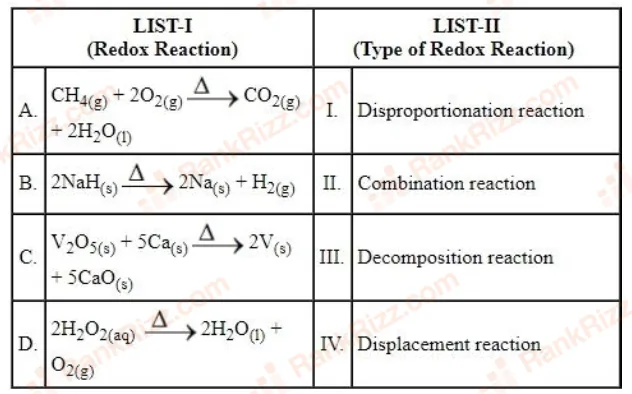
Match the LIST-I with LIST-II

page11_img2


Choose the correct answer from the options given below:

  1. A

    A-II, B-III, C-I, D-IV

  2. B

    A-III, B-IV, C-I, D-II

  3. C

    A-IV, B-I, C-II, D-III

  4. D

    A-II, B-III, C-IV, D-I

Q38Redox titrationsTRANSCRIBED

Given below are two statements: Statement I: In the oxalic acid vs KMnO4KMnO_{4} (in the presence of dil H2SO4H_{2}SO_{4}) titration the solution needs to be heated initially to 60∘C60^{\circ}C, but no heating is required in Ferrous ammonium sulphate (FAS) vs KMnO4KMnO_{4} (in the presence of dil H2SO4H_{2}SO_{4}) Statement II: In oxalic acid vs KMnO4KMnO_{4} titration, the initial formation of Mnso4Mnso_{4} takes place at high temperature, which then acts as catalyst for further reaction. In the case of FAS vs KMnO4KMnO_{4}, heating oxidizes Fe2+Fe^{2+} and Fe3+Fe^{3+} by oxygen of air and error may be introduced in the experiment. In the light of the above statements, choose the correct answer from the options given below

  1. A

    Both Statement I and Statement II are false

  2. B

    Both Statement I and Statement II are true

  3. C

    Statement I is false but Statement II is true

  4. D

    Statement I is true but Statement II is false
Q39Preliminary and dry testsTRANSCRIBED

The metal ion whose electronic configuration is not affected by the nature of the ligand and which gives a violet colour in non-luminous flame under hot condition in borax bead test is

  1. A

    Mn2+Mn^{2+}

  2. B

    Cr3+Cr^{3+}

  3. C

    Ni2+Ni^{2+}

  4. D

    Ti3+Ti^{3+}

Q40Reactions of carboxylic acidsTRANSCRIBED

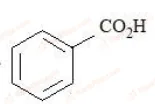
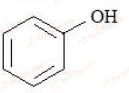
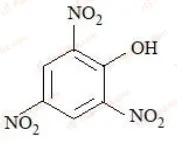
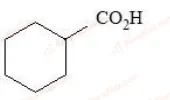
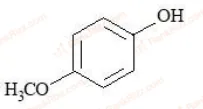
The compounds that produce CO2CO_{2} with aqueous NaHCO3NaHCO_{3} solution are:
A. 

page12_img1


B. 

page12_img2


C. 

page12_img3


D. 

page12_img4


E. 

page12_img5


Choose the correct answer from the options given below:

  1. A

    A, C and D Only

  2. B

    A, B and E Only

  3. C

    A and C Only

  4. D

    A and B Only

Q41Depression in freezing pointTRANSCRIBED

What is the freezing point depression constant of a solvent, 50g of which contain 1 g non volatile solute (molar mass 256 g mol−1mol^{-1}) and the decrease in freezing point is 0.40 K ?

  1. A

    3.72Kkgmol−13.72 K kg mol^{-1}

  2. B

    1.86Kkgmol−11.86 K kg mol^{-1}

  3. C

    4.43Kkgmol−14.43 K kg mol^{-1}

  4. D

    5.12Kkgmol−15.12 K kg mol^{-1}

Q42Reactions of alkanesTRANSCRIBED

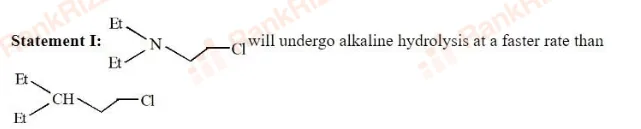
Given below are two statements:

page13_img1page13_img2


involving lone pair of electrons on nitrogen. In the light of the above statements, choose the most appropriate answer from the options given below

  1. A

    Statement I is incorrect but Statement II is correct

  2. B

    Statement I is correct but Statement II is incorrect

  3. C

    Both Statement I and Statement II are correct

  4. D

    Both Statement I and Statement II are incorrect

Q43Le Chatelier's principle and factors affecting equilibriumTRANSCRIBED

Ice and water are placed in a closed container at a pressure of 1 atm and temperature 273.15 K . If pressure of the system is increased 2 times, keeping temperature constant, then identify correct observation from following

  1. A

    Volume of system increases .

  2. B

    The solid phase (ice) disappears completely.

  3. C

    Liquid phase disappears completely.

  4. D

    The amount of ice decreases.

Q44Atomic and ionic radiiTRANSCRIBED

The incorrect decreasing order of atomic radii is

  1. A

    Si > P > Cl > F

  2. B

    Be > Mg > Al > Si

  3. C

    Al > B > N > F

  4. D

    Mg > Al > C > O

Q45VSEPR theory and shapes of molecules and ionsTRANSCRIBED

Consider ′n′'n' is the number of lone pair of electrons present in the equatorial position of the most stable structure of ClF3ClF_{3}. The ions from the following with ′n′'n' number of unpaired electrons are A.V3+B.Ti3+C.Cu2+D.Ni2+E.Ti2+A. V^{3+} B.Ti^{3+} C.Cu^{2+} D.Ni^{2+} E.Ti^{2+} Choose the correct answer from the options given below :

  1. A

    A and C Only

  2. B

    A, D and E Only

  3. C

    B and D Only

  4. D

    B and C Only

Q46Enthalpies of reaction and Hess's lawTRANSCRIBED

The formation enthalpies, ΔHf⊖\Delta H_{f}\ominus for HgH_{g} and OgO_{g} are 220.0 and 250.0kJmol−1250.0 kJ mol^{-1}, respectively, at 298.15 K , and ΔHf⊖\Delta H_{f}\ominus for H2OgH_{2}O_{g} is −242.5kJmol−1-242.5 kJ mol^{-1} at the same temperature. The average bond enthalpy of the O−HO-H bond in water at 298.15 K is __________kJmol−1kJ mol^{-1}(nearest integer).

Q47Concentration terms and their interconversionTRANSCRIBED

The molarity of a 70% (mass /mass) aqueous solution of a monobasic acid (X) is __________ ×10−1\times10^{-1} M(Nearest integer) [Given: Density of aqueous solution of (X) is 1.25 g mL−1mL^{-1} Molar mass of the acid is 70gmol−170 g mol^{-1}]

Q48Electrophilic substitution of anilineTRANSCRIBED

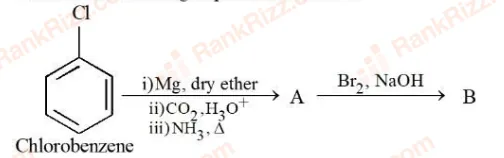
Consider the following sequence of reactions:

page14_img1


11.25 mg of chlorobenzene will produce __________×10−1mg\times 10^{-1}mg of product B . (Consider the reactions result in complete conversion.) [Given molar mass of C, H, O, N and Cl as 12, 1, 16, 14 and 35.5gmol−135.5 g mol^{-1} respectively]

Q49Mole concept, atomic and molar massTRANSCRIBED

Quantitative analysis of an organic compound (X) shows following \% omposition. C : 14.5% Cl: 64.46\% H: 1.8 \%(Empirical formula mass of the compound (X) is__________×10−1\times 10^{-1} (Given molar mass in gmil−1gmil^{-1} of C : 12, H : 1, O : 16, Cl : 35.5 )

Q50Conductance, conductivity and molar conductivityTRANSCRIBED

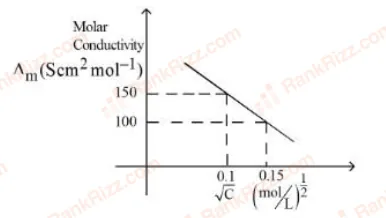
Given below is the plot of the molar conductivity vs concentration\sqrt{concentration} for KCl in aqueous solution.

page14_img2


If, for the higher concentration of KCl solution, the resistance of the conductivity cell is 100Ω, then the resistance of the same cell with the dilute solution is ′n′'n' Ω The value of xx is __________ (Nearest integer)

NEXT IN THIS PAPER →Maths, Q51 onwards