RankRizz

JEE Main 09 Apr 2024, Shift 2: Chemistry

The 30 Chemistry questions of JEE Main 09 Apr 2024, Shift 2, numbered across the whole paper. Pick an answer on any question to check it against the key. Free to read, nothing to download.

Chemistry

Q31Units, significant figures and laws of chemical combinationTRANSCRIBED

The candela is the luminous intensity, in a given direction, of a source that emits monochromatic radiation of frequency 'AA' ×1012\times 10^{12} hertz and that has a radiant intensity in that direction of 1B′\frac{1}{B'} watt per steradian. 'AA' and 'BB' are respectively

  1. A

    540 and 683

  2. B

    450 and 683

  3. C

    450 and 1683\frac{1}{683}

  4. D

    540 and 1683\frac{1}{683}

Q32Lanthanoids and lanthanoid contractionTRANSCRIBED

The electronic configuration of Einsteinium is : (Given atomic number of Einsteinium =99= 99)

  1. A

    [Rn]5f106d07s2[Rn]5f^{10}6d^0 7s^2

  2. B

    [Rn]5f136d07s2[Rn]5f^{13}6d^0 7s^2

  3. C

    [Rn]5f116d07s2[Rn]5f^{11}6d^0 7s^2

  4. D

    [Rn]5f126d07s2[Rn]5f^{12}6d^0 7s^2

Q33Batteries, fuel cells and corrosionTRANSCRIBED

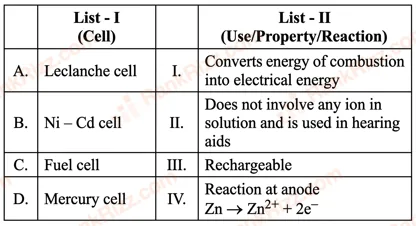
Match List I with List II:

Figure for JEE Main 2024 Chemistry question on Batteries, fuel cells and corrosion


Choose the correct answer from the options given below:

  1. A

    A-III, B-II, C-I, D-IV

  2. B

    A-II, B-I, C-IV, D-III

  3. C

    A-I, B-IV, C-III, D-II

  4. D

    A-IV, B-III, C-II, D-I

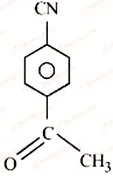
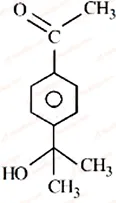
Q34Detection of functional groupsTRANSCRIBED

Match List I with List II:

Figure for JEE Main 2024 Chemistry question on Detection of functional groups


Choose the correct answer from the options given below:

  1. A

    A-II, B-III, C-IV, D-I

  2. B

    A-IV, B-I, C-II, D-III

  3. C

    A-I, B-II, C-III, D-IV

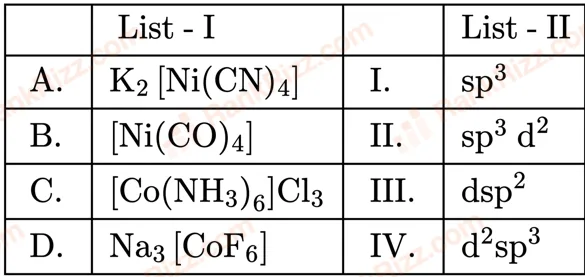
  4. D

    A-III, B-IV, C-I, D-II

Q35VSEPR theory and shapes of molecules and ionsTRANSCRIBED

The correct increasing order for bond angles among BF3BF_3, PF3PF_3 and ClF3ClF_3 is :

  1. A

    BF3<PF3<ClF3BF_3 < PF_3 < ClF_3

  2. B

    ClF3<PF3<BF3ClF_3 < PF_3 < BF_3

  3. C

    PF3<BF3<ClF3PF_3 < BF_3 < ClF_3

  4. D

    BF3=PF3<ClF3BF_3 = PF_3 < ClF_3

Q36Alkynes: preparation and acidityTRANSCRIBED

The incorrect statement regarding ethyne is

  1. A

    The C−CC - C bonds in ethyne is shorter than that in ethene

  2. B

    Both carbons are sp hybridised

  3. C

    Ethyne is linear

  4. D

    The carbon - carbon bonds in ethyne is weaker than that in ethene

Q37Solubility product and common ion effectTRANSCRIBED

For a sparingly soluble salt AB2AB_2, the equilibrium concentrations of A2+A^{2+} ions and B−B^- ions are 1.2×10⁻⁴M1.2 \times 10^{-4} M and 0.24×10⁻³M0.24 \times 10^{-3} M, respectively. The solubility product of AB2AB_2 is :

  1. A

    6.91×10−126.91 \times 10^{-12}

  2. B

    0.276×10−120.276 \times 10^{-12}

  3. C

    27.65×10−1227.65 \times 10^{-12}

  4. D

    0.069×10−120.069 \times 10^{-12}

Q38Resonance and hyperconjugationTRANSCRIBED

The correct stability order of the following resonance structures of CH3−CH=CH−CHOCH_3 - CH = CH - CHO i

page6_img1
  1. A

    I>II>IIII > II > III

  2. B

    II>III>III > III > I

  3. C

    II>I>IIIII > I > III

  4. D

    III>II>IIII > II > I

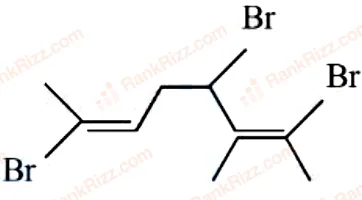
Q39Structural isomerismTRANSCRIBED


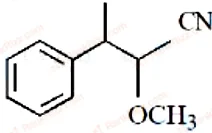
Total number of stereo isomers possible for the given structure :

page6_img2
  1. A

    2

  2. B

    4

  3. C

    3

  4. D

    8

Q40Conductance, conductivity and molar conductivityTRANSCRIBED

Which out of the following is a correct equation to show change in molar conductivity with respect to concentration for a weak electrolyte, if the symbols carry their usual meaning :

  1. A

    Λm−Λm0+AC1/2=0\Lambda_m - \Lambda^0_m + AC^{1/2} = 0

  2. B

    Λm2C−KaΛm∘2+KaΛmΛm∘ =0\Lambda_m^2C-K_a\Lambda_m^{\circ2}+K_a\Lambda_m\Lambda_m^{\circ\ }=0

  3. C

    Λm2C+KaΛm∘2−KaΛmΛm∘=0\Lambda^2_m C + K_a \Lambda^{\circ 2}_m - K_a \Lambda_m \Lambda^\circ_m = 0

  4. D

    Λm−Λm∘−AC1/2=0\Lambda_m - \Lambda^\circ_m - AC^{1/2} = 0

Q41Modern periodic table and classification of elementsTRANSCRIBED

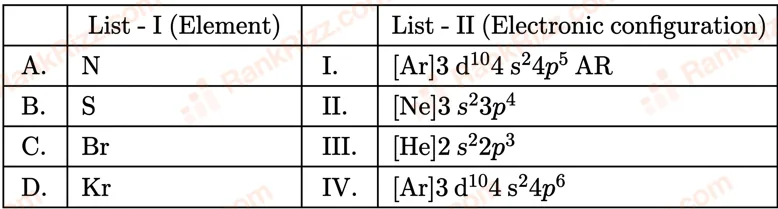
Match List I with List II:

Figure for JEE Main 2024 Chemistry question on Modern periodic table and classification of elements


Choose the correct answer from the options given below:

  1. A

    A-II, B-III, C-IV, D-I

  2. B

    A-I, B-II, C-III, D-IV

  3. C

    A-III, B-I, C-IV, D-II

  4. D

    A-IV, B-III, C-I, D-II

Q42General properties of transition elementsTRANSCRIBED

Given below are two statements: Statement I : The higher oxidation states are more stable down the group among transition elements unlike p-block elements. Statement II : Copper can not liberate hydrogen from weak acids. In the light of the above statements, choose the correct answer from the options given below :

  1. A

    Both Statement I and Statement II are true

  2. B

    Statement I is false but Statement II is true

  3. C

    Both Statement I and Statement II are false

  4. D

    Statement I is true but Statement II is false

Q43Group 13: general trends and inert pair effectTRANSCRIBED

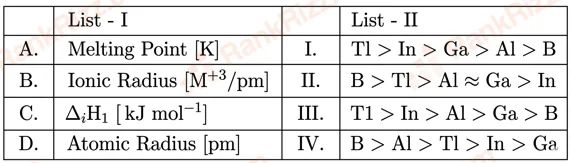
Match List I with List II:

Figure for JEE Main 2024 Chemistry question on Group 13: general trends and inert pair effect


Choose the correct answer from the options given below:

  1. A

    A-III, B-I, C-IV, D-II

  2. B

    A-III, B-I, C-II, D-IV

  3. C

    A-I, B-III, C-II, D-IV

  4. D

    A-III, B-II, C-IV, D-I

Q44Valence bond theory of complexesTRANSCRIBED

The coordination environment of Ca2+Ca^{2+} ion in its complex with EDTA4−EDTA^{4-} is :

  1. A

    tetrahedral

  2. B

    trigonal prismatic

  3. C

    octahedral

  4. D

    square planar

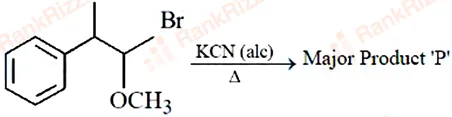
Q45Nucleophilic substitution (SN1 and SN2)TRANSCRIBED
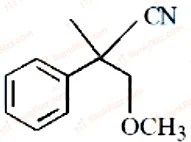
page7_img1


In the above reaction product 'PP' is :

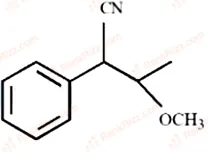
  1. A
    page8_img1
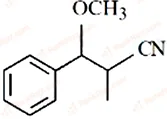
  2. B
    page8_img2
  3. C
    page8_img3
  4. D
    page8_img4
Q46Valence bond theory of complexesTRANSCRIBED

Match List I with List II:

Figure for JEE Main 2024 Chemistry question on Valence bond theory of complexes


Choose the correct answer from the options given below:

  1. A

    A-III, B-IV, C-I, D-II

  2. B

    A-I, B-II, C-III, D-IV

  3. C

    A-IV, B-I, C-II, D-III

  4. D

    A-II, B-III, C-IV, D-I

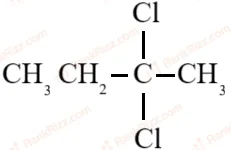
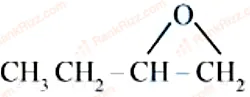
Q47Distinguishing tests for aldehydes and ketonesTRANSCRIBED


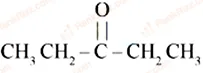
Which of the following compound can give positive iodoform test when treated with aqueous KOHKOH solution followed by potassium hypoiodite.

  1. A
    page8_img5
  2. B
    page8_img6
  3. C
    page8_img7
  4. D

    CH3CH2CH2CHOCH_3CH_2CH_2CHO

Q48Distinguishing tests for aldehydes and ketonesTRANSCRIBED

Which of the following compounds will give silver mirror with ammoniacal silver nitrate? A. Formic acid B. Formaldehyde C. Benzaldehyde D. Acetone. Choose the correct answer from the options given below :

  1. A

    A, B and C only

  2. B

    C and D only

  3. C

    B and C only

  4. D

    A only

Q49Nucleophilic addition reactions of carbonyl compoundsTRANSCRIBED
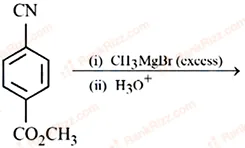
page8_img8


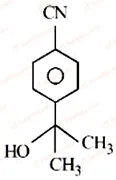
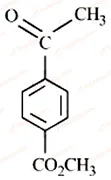
Major product of the following reaction is: A compound with CO2CH3CO_2CH_3 group reacts with (i) CH3MgBrCH_3MgBr (excess) (ii) H3O+H_3O^+

  1. A
    page9_img1
  2. B
    page9_img2
  3. C
    page9_img3
  4. D
    page9_img4
Q50Carbohydrates: classification and monosaccharidesTRANSCRIBED

The incorrect statement about Glucose is :

  1. A

    Glucose is soluble in water because of having aldehyde functional group

  2. B

    Glucose remains in multiple isomeric form in its aqueous solution

  3. C

    Glucose is one of the monomer unit in sucrose

  4. D

    Glucose is an aldohexose

Q51de Broglie wavelength and Heisenberg uncertainty principleTRANSCRIBED

Based on Heisenberg's uncertainty principle, the uncertainty in the velocity of the electron to be found within an atomic nucleus of diameter 10−15 m10^{-15} \text{ m} is ______ ×109 ms−1\times 10^9 \text{ ms}^{-1} (nearest integer) [Given : mass of electron =9.1×10⁻³¹ kg= 9.1 \times 10^{-31} \text{ kg}, Planck's constant (h)=6.626×10⁻³⁴ Js(h) = 6.626 \times 10^{-34} \text{ Js}] (Value of π=3.14\pi = 3.14)

Q52Molecular orbital theory of diatomic speciesTRANSCRIBED

Total number of electrons present in (π∗)(\pi^*) molecular orbitals of O2O_2, O2+O_2^+ and O2−O_2^- is ______.

Q53Gibbs energy and spontaneityTRANSCRIBED

When ΔHvap=30 kJ/mol\Delta H_{vap} = 30 \text{ kJ/mol} and ΔSvap=75 J mol−1K−1\Delta S_{vap} = 75 \text{ J mol}^{-1} \text{K}^{-1}, then the temperature of vapour, at one atmosphere is ______ K.

Q54Methods of purification of organic compoundsTRANSCRIBED
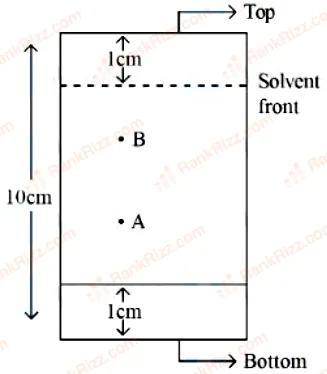
page9_img5


In the given TLC, the distance of spot A & B are 5 cm5 \text{ cm} & 7 cm7 \text{ cm}, from the bottom of TLC plate, respectively. RfR_f value of B is x×10−1x \times 10^{-1} times more than A. The value of xx is ______.

Q55Electrophilic aromatic substitutionTRANSCRIBED

Number of compounds from the following which cannot undergo Friedel-Crafts reactions is: ________. toluene, nitrobenzene, xylene, cumene, aniline, chlorobenzene, mm-nitroaniline, mm-dinitrobenzene

Q56Relative lowering of vapour pressureTRANSCRIBED

The vapour pressure of pure benzene and methyl benzene at 27°C27°C is given as 80 Torr and 24 Torr, respectively. The mole fraction of methyl benzene in vapour phase, in equilibrium with an equimolar mixture of those two liquids (ideal solution) at the same temperature is ______ ×10−2\times 10^{-2} (nearest integer)

Q57Integrated rate laws and half-life (zero and first order)TRANSCRIBED

Consider the following first order gas phase reaction at constant temperature A(g)→2B(g)+C(g)A(g) \to 2B(g) + C(g). If the total pressure of the gases is found to be 200 torr after 23 sec. and 300 torr upon the complete decomposition of A after a very long time, then the rate constant of the given reaction is ______ ×10−2 s−1\times 10^{-2} \text{ s}^{-1} (nearest integer) [Given : log⁡10(2)=0.301\log_{10}(2) = 0.301]

Q58Sulphur and its compoundsTRANSCRIBED

Number of oxygen atoms present in chemical formula of fuming sulphuric acid is ______.

Q59General properties of transition elementsTRANSCRIBED

A transition metal 'MM' among Sc,Ti,V,Cr,MnSc, Ti, V, Cr, Mn and FeFe has the highest second ionisation enthalpy. The spin-only magnetic moment value of M+M^+ ion is ______ BM (Near integer) (Given atomic number Sc:21,Ti:22,V:23,Cr:24,Mn:25,Fe:26Sc : 21, Ti : 22, V : 23, Cr : 24, Mn : 25, Fe : 26)

Q60Group analysis and confirmatory tests of cationsTRANSCRIBED

M2++H2S→A (Black precipitate)+by productM^{2+} + H_2S \to A \text{ (Black precipitate)} + \text{by product}
A+aqua regia→B+NOCl+S+H2OA + \text{aqua regia} \to B + NOCl + S + H_2O
B+KNO2+CH3COOH→C+by productB + KNO_2 + CH_3COOH \to C + \text{by product}
Consider the following test for a group-IV cation. The spin-only magnetic moment value of the metal complex C is ______ BM (Nearest integer)

NEXT IN THIS PAPER →Maths, Q61 onwards