RankRizz

JEE Main 04 Sep 2020, Shift 1: Chemistry

The 25 Chemistry questions of JEE Main 04 Sep 2020, Shift 1, numbered across the whole paper. Pick an answer on any question to check it against the key. Free to read, nothing to download.

Chemistry

Q26Hydrogen spectrum and spectral seriesTRANSCRIBED

The region in the electromagnetic spectrum where the Balmer series lines appear is:

  1. A

    Visible

  2. B

    Microwave

  3. C

    Infrared

  4. D

    Ultraviolet

Q27Modern periodic table and classification of elementsTRANSCRIBED

The elements with atomic numbers 101 and 104 belong to, respectively:

  1. A

    Group 11 and Group 4

  2. B

    Actinoids and Group 6

  3. C

    Actinoids and Group 4

  4. D

    Group 6 and Actinoids

Q28Atomic and ionic radiiTRANSCRIBED

The ionic radii of O2−O^{2-}, F−F^-, Na+Na^+ and Mg2+Mg^{2+} are in the order:

  1. A

    F−>O2−>Na+>Mg2+F^- > O^{2-} > Na^+ > Mg^{2+}

  2. B

    O2−>F−>Na+>Mg2+O^{2-} > F^- > Na^+ > Mg^{2+}

  3. C

    Mg2+>Na+>F−>O2−Mg^{2+} > Na^+ > F^- > O^{2-}

  4. D

    O2−>F−>Mg2+>Na+O^{2-} > F^- > Mg^{2+} > Na^+

Q29Resonance and bond parametersTRANSCRIBED

The intermolecular potential energy for the molecules A, B, C and D given below suggests that:
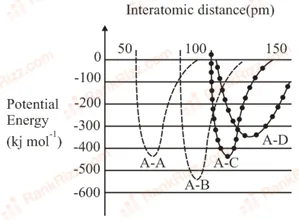
Figure for JEE Main 2020 Chemistry question on Resonance and bond parameters
  1. A

    A - D has the shortest bond length

  2. B

    A - A has the largest bond enthalpy

  3. C

    D is more electronegative than other atoms.

  4. D

    A - B has the stiffest bond.

Q30Heat capacity and calorimetryTRANSCRIBED

For one mole of an ideal gas, which of these statements must be true?
(a) Internal energy (U) and enthalpy (H) each depends on temperature.
(b) Compressibility factor Z is not equal to 1
(c) CP,m−CV,m=RC_{P,m} - C_{V,m} = R
(d) dU=CvdTdU = C_v dT for any process

  1. A

    (a) and (c)

  2. B

    (b), (c) and (d)

  3. C

    (c) and (d)

  4. D

    (a), (c) and (d)

Q31Alkali metals: properties and trendsTRANSCRIBED

On combustion of Li, Na and K in excess of air, the major oxides formed, respectively, are:

  1. A

    Li2O2Li_2O_2, Na2ONa_2O and K2O2K_2O_2

  2. B

    Li2OLi_2O, Na2O2Na_2O_2 and KO2KO_2

  3. C

    Li2OLi_2O, Na2ONa_2O and K2O2K_2O_2

  4. D

    Li2OLi_2O, Na2O2Na_2O_2 and K2OK_2O

Q32Group 15: trends and hydridesTRANSCRIBED

On heating, lead (II) nitrate gives a brown gas (A). The gas (A) on cooling changes to a colourless solid/liquid (B). (B) on heating with NO changes to a blue solid (C). The oxidation number of nitrogen in solid (C) is:

  1. A

    +5

  2. B

    +2

  3. C

    +3

  4. D

    +4

Q33IUPAC nomenclature of organic compoundsTRANSCRIBED

The IUPAC name of the following compound is:
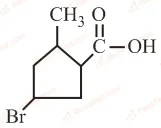
Figure for JEE Main 2020 Chemistry question on IUPAC nomenclature of organic compounds
  1. A

    5-Bromo-3-methylcyclopentanoic acid

  2. B

    4-Bromo-2-methylcyclopentane carboxylic acid

  3. C

    3-Bromo-5-methylcyclopentanoic acid

  4. D

    3-Bromo-5-methylcyclopentanoic carboxylic acid

Q34Nucleophilic substitution (SN1 and SN2)TRANSCRIBED

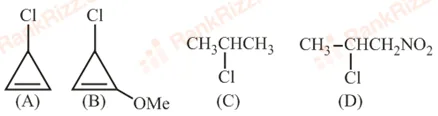
The decreasing order of reactivity of the following organic molecules towards AgNO3_3 solution is:

Figure for JEE Main 2020 Chemistry question on Nucleophilic substitution (SN1 and SN2)
  1. A

    (C) > (D) > (A) > (B)

  2. B

    (A) > (B) > (D) > (C)

  3. C

    (A) > (B) > (C) > (D)

  4. D

    (B) > (A) > (C) > (D)

Q35Electrode potentials, electrochemical series and cell EMFTRANSCRIBED

Identify the incorrect statement from the options below for the above cell:
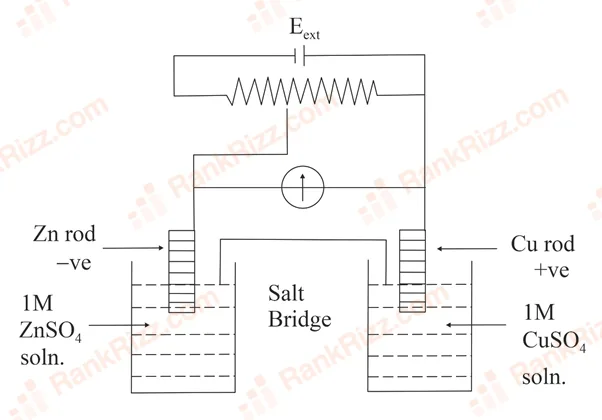
Figure for JEE Main 2020 Chemistry question on Electrode potentials, electrochemical series and cell EMF

ECu2+∣Cu0=+0.34E^0_{Cu^{2+}|Cu} = +0.34 V,
EZn2+∣Zn0=−0.76E^0_{Zn^{2+}|Zn} = -0.76 V

  1. A

    If Eext>1.1E_{ext} > 1.1 V, e−^- flow from Cu to Zn

  2. B

    If Eext>1.1E_{ext} > 1.1 V, Zn dissolves at Zn electrode and Cu deposits at Cu electrode

  3. C

    If Eext<1.1E_{ext} < 1.1 V, Zn dissolves at anode and Cu deposits at cathode

  4. D

    If Eext=1.1E_{ext} = 1.1 V, no flow of e−^- or current occurs

Q36Law of mass action and equilibrium constants Kc and KpTRANSCRIBED

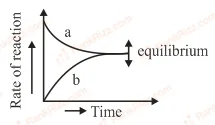
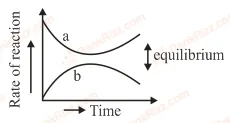
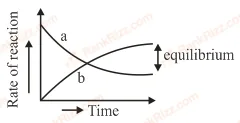
For the equilibrium A⇌BA \rightleftharpoons B, the variation of the rate of the forward (a) and reverse (b) reaction with time is given by:
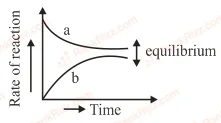
  1. A
    Figure for JEE Main 2020 Chemistry question on Law of mass action and equilibrium constants Kc and Kp
  2. B
    Figure for JEE Main 2020 Chemistry question on Law of mass action and equilibrium constants Kc and Kp
  3. C
    Figure for JEE Main 2020 Chemistry question on Law of mass action and equilibrium constants Kc and Kp
  4. D
    Figure for JEE Main 2020 Chemistry question on Law of mass action and equilibrium constants Kc and Kp
Q37Properties of colloids and coagulationTRANSCRIBED

Match the following:
(i) Foam            (a) smoke
(ii) Gel              (b) cell fluid
(iii) Aerosol       (c) jellies
(iv) Emulsion     (d) rubber
                          (e) froth
                          (f) milk

  1. A

    (i)-(b), (ii)-(c), (iii)-(e), (iv)-(d)

  2. B

    (i)-(d), (ii)-(b), (iii)-(a), (iv)-(e)

  3. C

    (i)-(e), (ii)-(c), (iii)-(a), (iv)-(f)

  4. D

    (i)-(d), (ii)-(b), (iii)-(e), (iv)-(f)

Q38Refining of metalsTRANSCRIBED

Among statements (a) - (d), the correct ones are:
(a) Lime stone is decomposed to CaO during the extraction of iron from its oxides.
(b) In the extraction of silver, silver is extracted as an anionic complex.
(c) Nickel is purified by Mond's process.
(d) Zr and Ti are purified by Van Arkel method.

  1. A

    (a), (b), (c) and (d)

  2. B

    (a), (c) and (d) only

  3. C

    (b), (c) and (d) only

  4. D

    (c) and (d) only

Q39Structural isomerism in complexesTRANSCRIBED

The number of isomers possible for [Pt(en)(NO2)2][Pt(en)(NO_2)_2] is:

  1. A

    2

  2. B

    4

  3. C

    1

  4. D

    3

Q40Valence bond theory of complexesTRANSCRIBED

The pair in which both the species have the same magnetic moment (spin only) is:

  1. A

    [Cr(H2O)6]2+[Cr(H_2O)_6]^{2+} and [Fe(H2O)6]2+[Fe(H_2O)_6]^{2+}

  2. B

    [Co(OH)4]2−[Co(OH)_4]^{2-} and [Fe(NH3)6]2+[Fe(NH_3)_6]^{2+}

  3. C

    [Mn(H2O)6]2+[Mn(H_2O)_6]^{2+} and [Cr(H2O)6]2+[Cr(H_2O)_6]^{2+}

  4. D

    [Cr(H2O)6]2+[Cr(H_2O)_6]^{2+} and [CoCl4]2−[CoCl_4]^{2-}

Q41Distinguishing tests for aldehydes and ketonesTRANSCRIBED

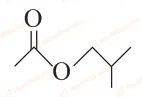
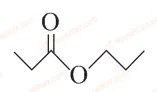
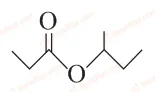
An organic compound (A) (molecular formula C6H12O2C_6H_{12}O_2) was hydrolysed with dil. H2SO4H_2SO_4 to give a carboxylic acid (B) and an alcohol (C). 'C' gives white turbidity immediately when treated with anhydrous ZnCl2ZnCl_2 and conc. HCl. The organic compound (A) is:
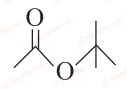
  1. A
    Figure for JEE Main 2020 Chemistry question on Distinguishing tests for aldehydes and ketones
  2. B
    Figure for JEE Main 2020 Chemistry question on Distinguishing tests for aldehydes and ketones
  3. C
    Figure for JEE Main 2020 Chemistry question on Distinguishing tests for aldehydes and ketones
  4. D
    Figure for JEE Main 2020 Chemistry question on Distinguishing tests for aldehydes and ketones
Q42Properties and reactions of alcoholsTRANSCRIBED

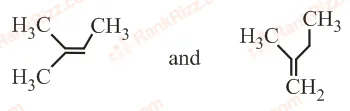
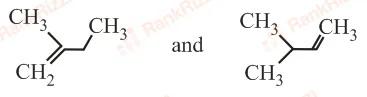
When neopentyl alcohol is heated with an acid, it slowly converted into an 85:15 mixture of alkenes A and B, respectively. What are these alkenes?
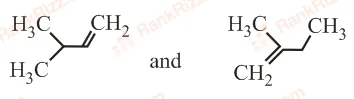
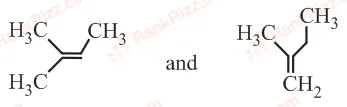
  1. A
    Figure for JEE Main 2020 Chemistry question on Properties and reactions of alcohols
  2. B
    Figure for JEE Main 2020 Chemistry question on Properties and reactions of alcohols
  3. C
    Figure for JEE Main 2020 Chemistry question on Properties and reactions of alcohols
  4. D
    Figure for JEE Main 2020 Chemistry question on Properties and reactions of alcohols
Q43Reactions of carboxylic acidsTRANSCRIBED

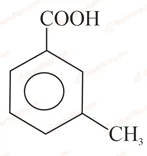
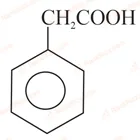
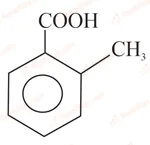
[P] on treatment with Br2/FeBr3Br_2/FeBr_3 in CCl4CCl_4 produced a single isomer C8H7O2BrC_8H_7O_2Br while heating [P] with sodalime gives toluene. The compound [P] is:
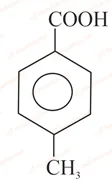
  1. A
    Figure for JEE Main 2020 Chemistry question on Reactions of carboxylic acids
  2. B
    Figure for JEE Main 2020 Chemistry question on Reactions of carboxylic acids
  3. C
    Figure for JEE Main 2020 Chemistry question on Reactions of carboxylic acids
  4. D
    Figure for JEE Main 2020 Chemistry question on Reactions of carboxylic acids
Q44Nucleic acidsTRANSCRIBED

Which of the following will react with CHCl3CHCl_3 + alc. KOH?

  1. A

    Adenine and proline

  2. B

    Thymine and proline

  3. C

    Adenine and lysine

  4. D

    Adenine and thymine

Q45Carbohydrates: classification and monosaccharidesTRANSCRIBED

What are the functional groups present in the structure of maltose?

  1. A

    One ketal and one hemiketal

  2. B

    Two acetals

  3. C

    One acetal and one hemiacetal

  4. D

    One acetal and one ketal

Q46Stoichiometry, limiting reagent and percentage yieldTRANSCRIBED

The mass of ammonia in grams produced when 2.8 kg of dinitrogen quantitatively reacts with 1 kg of dihydrogen is __________

Q47Concentration terms and their interconversionTRANSCRIBED

A 20.0 mL solution containing 0.2 g impure H2O2H_2O_2 reacts completely with 0.316 g of KMnO4KMnO_4 in acid solution. The purity of H2O2H_2O_2 (in %) is __________ (mol. wt. of H2O2H_2O_2 = 34; mol. wt. of KMnO4KMnO_4 = 158)

Q48Relative lowering of vapour pressureTRANSCRIBED

At 300 K, the vapour pressure of a solution containing 1 mole of n-hexane and 3 moles of n-heptane is 550 mm of Hg. At the same temperature, if one more mole of n-heptane is added to this solution, the vapour pressure of the solution increases by 10 mm of Hg. What is the vapour pressure in mmHg of n-heptane in its pure state?

Q49Integrated rate laws and half-life (zero and first order)TRANSCRIBED

If 75% of a first order reaction was completed in 90 minutes, 60% of the same reaction would be completed in approximately (in minutes) __________ (Take: log 2 = 0.30; log 2.5 = 0.40)

Q50Methods of purification of organic compoundsTRANSCRIBED

The number of chiral centres present in [B] is __________

Figure for JEE Main 2020 Chemistry question on Methods of purification of organic compounds
NEXT IN THIS PAPER →Maths, Q51 onwards