RankRizz

JEE Main 09 Apr 2019, Shift 1: Chemistry

The 30 Chemistry questions of JEE Main 09 Apr 2019, Shift 1, numbered across the whole paper. Pick an answer on any question to check it against the key. Free to read, nothing to download.

Chemistry

Q31Stoichiometry, limiting reagent and percentage yieldTRANSCRIBED

For a reaction, N2_2(g) + 3H2_2(g) →\rightarrow 2NH3_3(g), identify di-hydrogen (H2_2) as a limiting reagent in the following reaction mixtures.

  1. A

    28 g of N2_2 + 6 g of H2_2

  2. B

    35 g of N2_2 + 8 g of H2_2

  3. C

    56 g of N2_2 + 10 g of H2_2

  4. D

    14 g of N2_2 + 4 g of H2_2

Q32Hydrogen spectrum and spectral seriesTRANSCRIBED

For any given series of spectral lines of atomic hydrogen, let Δvˉ=vˉmax−vˉmin\Delta\bar{v} = \bar{v}_{max} - \bar{v}_{min} be the difference in maximum and minimum wave number in cm−1^{-1}. The ratio ΔvˉLyman/ΔvˉBalmer\Delta\bar{v}_{Lyman}/\Delta\bar{v}_{Balmer} is:

  1. A

    5 : 4

  2. B

    27 : 5

  3. C

    4 : 1

  4. D

    9 : 4

Q33Ionisation enthalpyTRANSCRIBED

The element having the greatest difference between its first and second ionization energies, is:

  1. A

    Ba

  2. B

    K

  3. C

    Ca

  4. D

    Sc

Q34Molecular orbital theory of diatomic speciesTRANSCRIBED

Among the following, the molecule expected to be stabilized by anion formation is: C2_2, O2_2, NO, F2_2

  1. A

    F2_2

  2. B

    C2_2

  3. C

    O2_2

  4. D

    NO

Q35Real gases, compressibility factor and van der Waals equationTRANSCRIBED

Consider the van der Waal's constants, a and b, for the following gases.

Figure for JEE Main 2019 Chemistry question on Real gases, compressibility factor and van der Waals equation

Which gas is expected to have the highest critical temperature?

  1. A

    Kr

  2. B

    Ar

  3. C

    Xe

  4. D

    Ne

Q36System, surroundings and state functionsTRANSCRIBED

Among the following, the set of parameters that represents path functions, is:
i) q + w
ii) q
iii) w
iv) H - TS

  1. A

    (ii) and (iii)

  2. B

    (i), (ii), and (iii)

  3. C

    (ii), (iii) and (iv)

  4. D

    (i) and (iv)

Q37Compounds of alkaline earth metalsTRANSCRIBED

Magnesium powder burns in air to give:

  1. A

    MgO and Mg3_3N2_2

  2. B

    MgO only

  3. C

    Mg(NO3_3)2_2 and Mg3_3N2_2

  4. D

    MgO and Mg(NO3_3)2_2

Q38Group 14: trends and carbon allotropesTRANSCRIBED

C60_{60}, an allotrope of carbon contains:

  1. A

    12 hexagons and 20 pentagons.

  2. B

    16 hexagons and 16 pentagons.

  3. C

    18 hexagons and 14 pentagons.

  4. D

    20 hexagons and 12 pentagons.

Q39IUPAC nomenclature of organic compoundsTRANSCRIBED

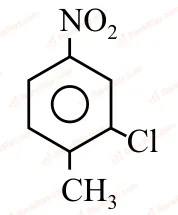
The correct IUPAC name of the following compound is:

Figure for JEE Main 2019 Chemistry question on IUPAC nomenclature of organic compounds
  1. A

    5-chloro-4-methyl-1-nitrobenzene.

  2. B

    2-chloro-1-methyl-4-nitrobenzene.

  3. C

    2-methyl-5-nitro-1-chlorobenzene.

  4. D

    3-chloro-4-methyl-1-nitrobenzene.

Q40Directive influence of substituentsTRANSCRIBED

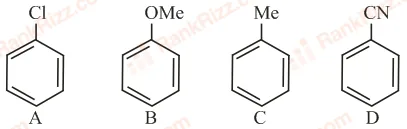
The increasing order of reactivity of the following compounds towards aromatic electrophilic substitution reaction is:

Figure for JEE Main 2019 Chemistry question on Directive influence of substituents
  1. A

    A < B < C < D

  2. B

    B < C < A < D

  3. C

    D < B < A < C

  4. D

    D < A < C < B

Q41Alkenes: preparation and stabilityTRANSCRIBED

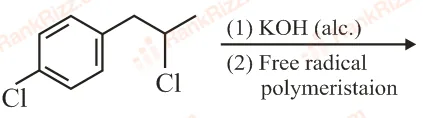
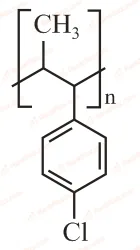
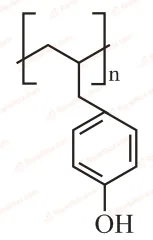
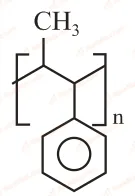
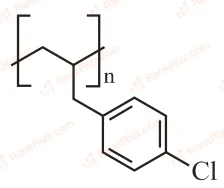
The major product of the following reaction is:

Figure for JEE Main 2019 Chemistry question on Alkenes: preparation and stability
  1. A
    Figure for JEE Main 2019 Chemistry question on Alkenes: preparation and stability
  2. B
    Figure for JEE Main 2019 Chemistry question on Alkenes: preparation and stability
  3. C
    Figure for JEE Main 2019 Chemistry question on Alkenes: preparation and stability
  4. D
    Figure for JEE Main 2019 Chemistry question on Alkenes: preparation and stability
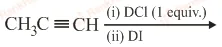
Q42Reactions of alkynesTRANSCRIBED

The major product of the following reaction is:

Figure for JEE Main 2019 Chemistry question on Reactions of alkynes
  1. A

    CH3_3CD(I)CHD(Cl)

  2. B

    CH3_3CD(Cl)CHD(I)

  3. C

    CH3_3CD2_2CH(Cl)(I)

  4. D

    CH3_3C(I)(Cl)CHD2_2

Q43Air pollution: tropospheric pollutants, smog, acid rain and greenhouse effectTRANSCRIBED

Excessive release of CO2_2 into the atmosphere results in:

  1. A

    global warming.

  2. B

    polar vortex.

  3. C

    depletion of ozone.

  4. D

    formation of smog.

Q44Osmosis and osmotic pressureTRANSCRIBED

The osmotic pressure of a dilute solution of an ionic compound XY in water is four times that of a solution of 0.01 M BaCl2_2 in water. Assuming complete dissociation of the given ionic compounds in water, the concentration of XY (in mol L−1^{-1}) in solution is:

  1. A

    4×10⁻²⁴ \times 10^{-2}

  2. B

    16×10−416 \times 10^{-4}

  3. C

    4×10−44 \times 10^{-4}

  4. D

    6×10⁻²⁶ \times 10^{-2}

Q45Relative lowering of vapour pressureTRANSCRIBED

Liquid M and liquid N form an ideal solution. The vapour pressures of pure liquids M and N are 450 and 700 mmHg, respectively, at the same temperature. Then correct statements is:
(xM_M = Mole fraction of 'M' in solution; xN_N = Mole fraction of 'N' in solution; yM_M = Mole fraction of 'M' in vapour phase; yN_N = Mole fraction of 'N' in vapour phase)

  1. A

    xMxN>yMyN\frac{x_M}{x_N} > \frac{y_M}{y_N}

  2. B

    xMxN=yMyN\frac{x_M}{x_N} = \frac{y_M}{y_N}

  3. C

    xMxN<yMyN\frac{x_M}{x_N} < \frac{y_M}{y_N}

  4. D

    (xM−yM)<(xN−yN)(x_M - y_M) < (x_N - y_N)

Q46Electrode potentials, electrochemical series and cell EMFTRANSCRIBED

The standard Gibbs energy for the given cell reaction in kJ mol−1^{-1} at 298 K is:
Zn(s) + Cu2+^{2+}(aq) →\rightarrow Zn2+^{2+}(aq) + Cu(s),
E0^0 = 2 V at 298 K
(Faraday's constant, F = 96000 C mol−1^{-1})

  1. A

    -192

  2. B

    192

  3. C

    384

  4. D

    -384

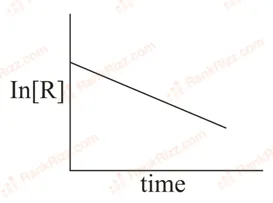
Q47Integrated rate laws and half-life (zero and first order)TRANSCRIBED

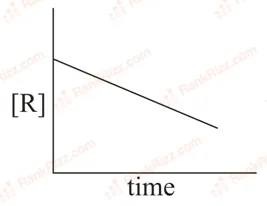
The given plots represent the variation of the concentration of a reactant R with time for two different reactions (i) and (ii). The respective orders of the reaction are:

Figure for JEE Main 2019 Chemistry question on Integrated rate laws and half-life (zero and first order) Figure for JEE Main 2019 Chemistry question on Integrated rate laws and half-life (zero and first order)
  1. A

    1, 1

  2. B

    0, 1

  3. C

    1, 0

  4. D

    0, 2

Q48Properties of colloids and coagulationTRANSCRIBED

The aerosol is a kind of colloid in which:

  1. A

    solid is dispersed in gas.

  2. B

    liquid is dispersed in water.

  3. C

    gas is dispersed in solid.

  4. D

    gas is dispersed in liquid.

Q49Occurrence of metals: minerals and oresTRANSCRIBED

The ore that contains the metal in the form of fluoride is known as which of the following?

  1. A

    cryolite

  2. B

    magnetite

  3. C

    malachite

  4. D

    sphalerite

Q50Catalysis: homogeneous, heterogeneous and enzymeTRANSCRIBED

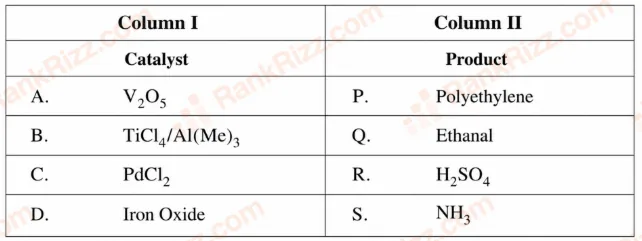
Match the catalysts (Column I) with products (Column II)

Figure for JEE Main 2019 Chemistry question on Catalysis: homogeneous, heterogeneous and enzyme
  1. A

    (A)-(S); (B)-(R); (C)-(Q); (D)-(P)

  2. B

    (A)-(R); (B)-(S); (C)-(P); (D)-(Q)

  3. C

    (A)-(Q); (B)-(R); (C)-(P); (D)-(S)

  4. D

    (A)-(R); (B)-(P); (C)-(Q); (D)-(S)

Q51Oxidation numberTRANSCRIBED

The correct order of the oxidation states of nitrogen in NO, N2_2O, NO2_2 and N2_2O3_3 is:

  1. A

    N2_2O < NO < N2_2O3_3 < NO2_2

  2. B

    NO2_2 < N2_2O3_3 < NO < N2_2O

  3. C

    NO2_2 < NO < N2_2O3_3 < N2_2O

  4. D

    N2_2O < N2_2O3_3 < NO < NO2_2

Q52Other important compounds of transition metalsTRANSCRIBED

The number of water molecules not coordinated to copper ion directly in CuSO4_4 . 5H2_2O, is:

  1. A

    4

  2. B

    2

  3. C

    1

  4. D

    3

Q53Colour and magnetic behaviour of complexes from CFTTRANSCRIBED

The degenerate orbitals of [Cr(H2_2O)6_6]3+^{3+} are:

  1. A

    dx2−y2d_{x^2-y^2} and dxyd_{xy}

  2. B

    dz2d_{z^2} and dxzd_{xz}

  3. C

    dyzd_{yz} and dz2d_{z^2}

  4. D

    dxzd_{xz} and dyzd_{yz}

Q54Structural isomerism in complexesTRANSCRIBED

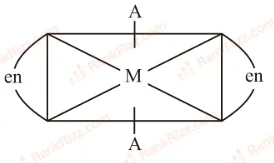
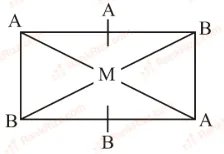
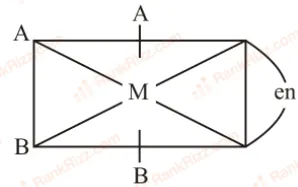
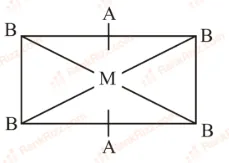
The one that will show optical activity is (en = ethane-1, 2-diamine):

  1. A
    Figure for JEE Main 2019 Chemistry question on Structural isomerism in complexes
  2. B
    Figure for JEE Main 2019 Chemistry question on Structural isomerism in complexes
  3. C
    Figure for JEE Main 2019 Chemistry question on Structural isomerism in complexes
  4. D
    Figure for JEE Main 2019 Chemistry question on Structural isomerism in complexes

    Option (4)

Q55Hydrogen bonding and intermolecular forcesTRANSCRIBED

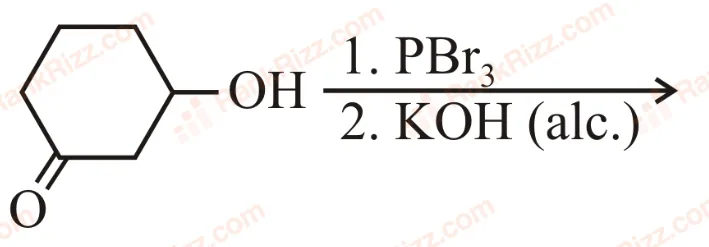
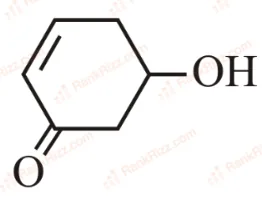
The major product of the following reaction is:

Figure for JEE Main 2019 Chemistry question on Hydrogen bonding and intermolecular forces


1. PBr3_3
2. KOH (alc.)

  1. A
    Figure for JEE Main 2019 Chemistry question on Hydrogen bonding and intermolecular forces
  2. B
    Figure for JEE Main 2019 Chemistry question on Hydrogen bonding and intermolecular forces
  3. C
    Figure for JEE Main 2019 Chemistry question on Hydrogen bonding and intermolecular forces
  4. D
    Figure for JEE Main 2019 Chemistry question on Hydrogen bonding and intermolecular forces
Q56Quantitative estimation of elementsTRANSCRIBED

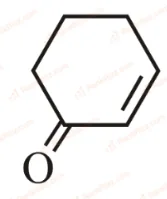
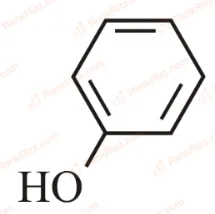
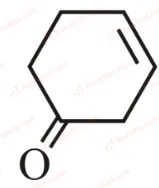
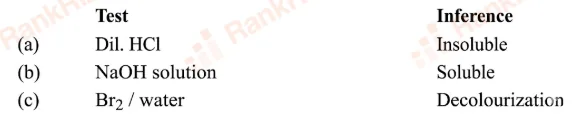
The organic compound that gives following qualitative analysis is:

Figure for JEE Main 2019 Chemistry question on Quantitative estimation of elements
  1. A
    Figure for JEE Main 2019 Chemistry question on Quantitative estimation of elements
  2. B
    Figure for JEE Main 2019 Chemistry question on Quantitative estimation of elements
  3. C
    Figure for JEE Main 2019 Chemistry question on Quantitative estimation of elements
  4. D
    Figure for JEE Main 2019 Chemistry question on Quantitative estimation of elements
Q57Reactions of phenolsTRANSCRIBED

The major product of the following reaction is:

Figure for JEE Main 2019 Chemistry question on Reactions of phenols
  1. A
    Figure for JEE Main 2019 Chemistry question on Reactions of phenols
  2. B
    Figure for JEE Main 2019 Chemistry question on Reactions of phenols
  3. C
    Figure for JEE Main 2019 Chemistry question on Reactions of phenols
  4. D
    Figure for JEE Main 2019 Chemistry question on Reactions of phenols
Q58Properties and reactions of alcoholsTRANSCRIBED

The major product of the following reaction is:
CH3_3CH = CHCO2_2CH3_3 →LiAlH4\xrightarrow{\text{LiAlH}_4}

  1. A

    CH3_3CH2_2CH2_2CO2_2CH3_3

  2. B

    CH3_3CH = CHCH2_2OH

  3. C

    CH3_3CH2_2CH2_2CH2_2OH

  4. D

    CH3_3CH2_2CH2_2CHO

Q59Diazonium saltsTRANSCRIBED

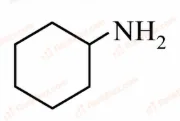
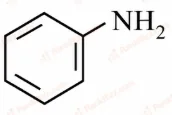
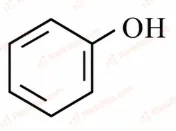
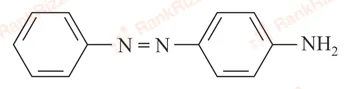
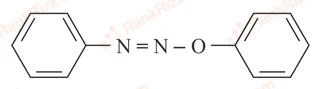
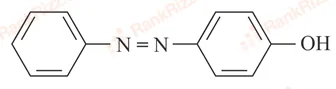
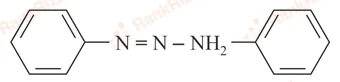
Aniline dissolved in dilute HCl is reacted with sodium nitrite at 0°C. This solution was added dropwise to a solution containing an equimolar mixture of aniline and phenol in dilute HCl. The structure of the major product is:

  1. A
    Figure for JEE Main 2019 Chemistry question on Diazonium salts
  2. B
    Figure for JEE Main 2019 Chemistry question on Diazonium salts
  3. C
    Figure for JEE Main 2019 Chemistry question on Diazonium salts
  4. D
    Figure for JEE Main 2019 Chemistry question on Diazonium salts
Q60Carbohydrates: classification and monosaccharidesTRANSCRIBED

Which of the following statements is not true about sucrose?

  1. A

    It is also named as invert sugar.

  2. B

    It is a non-reducing sugar.

  3. C

    The glycosidic linkage is present between C1_1 of α\alpha-glucose and C1_1 of β\beta-fructose.

  4. D

    On hydrolysis, it produces glucose and fructose.

NEXT IN THIS PAPER →Maths, Q61 onwards