RankRizz

JEE Main 08 Apr 2019, Shift 1: Chemistry

The 30 Chemistry questions of JEE Main 08 Apr 2019, Shift 1, numbered across the whole paper. Pick an answer on any question to check it against the key. Free to read, nothing to download.

Chemistry

Q31Quantum numbers and shapes of orbitalsTRANSCRIBED

The quantum number of four electrons are given below:
I. n=4,l=2,ml=−2,ms=−1/2n = 4, l = 2, m_l = -2, m_s = -1/2
II. n=3,l=2,ml=1,ms=+1/2n = 3, l = 2, m_l = 1, m_s = +1/2
III. n=4,l=1,ml=0,ms=+1/2n = 4, l = 1, m_l = 0, m_s = +1/2
IV. n=3,l=1,ml=1,ms=−1/2n = 3, l = 1, m_l = 1, m_s = -1/2
The correct order of their increasing energies will be:

  1. A

    I < III < II < IV

  2. B

    IV < II < III < I

  3. C

    I < II < III < II

  4. D

    IV < III < II < I
Q32Electronegativity, effective nuclear charge and shieldingTRANSCRIBED

The size of the iso-electronic species Cl−^{-}, Ar and Ca2+^{2+} is affected by:

  1. A

    nuclear charge

  2. B

    azimuthal quantum number of valence shell

  3. C

    electron-electron interaction in the outer orbitals

  4. D

    Principal quantum number of valence shell

Q33First law: work, heat and internal energyTRANSCRIBED

Which one of the following equations does not correctly represent the first law of thermodynamics for the given processes involving an ideal gas? (Assume non-expansion work is zero)

  1. A

    Isochoric process: ΔU=q\Delta U = q

  2. B

    Isochoric process: q=−wq = -w

  3. C

    Cyclic process: q=−wq = -w

  4. D

    Adiabatic process: ΔU=−w\Delta U = -w

Q34Enthalpies of reaction and Hess's lawTRANSCRIBED

For silver, CpC_p (J K−1^{-1} mol−1^{-1}) = 23 + 0.01T. If the temperature T of 3 moles of silver is raised from 300 K to 1000 K at 1 atm pressure, the value of ΔH\Delta H will be close to:

  1. A

    16 kJ

  2. B

    62 kJ

  3. C

    13 kJ

  4. D

    21 kJ

Q35Solubility product and common ion effectTRANSCRIBED

If solubility product of Zr3_3(PO4_4)4_4 is denoted by Ksp_{sp} and its molar solubility is denoted by S, then which of the following relation between S and Ksp_{sp} is correct?

  1. A

    S=(Ksp144)1/6S = \left(\frac{K_{sp}}{144}\right)^{1/6}

  2. B

    S=(Ksp6912)1/7S = \left(\frac{K_{sp}}{6912}\right)^{1/7}

  3. C

    S=(Ksp929)1/9S = \left(\frac{K_{sp}}{929}\right)^{1/9}

  4. D

    S=(Ksp216)1/7S = \left(\frac{K_{sp}}{216}\right)^{1/7}

Q36Equivalent weight, n-factor and law of equivalenceTRANSCRIBED

In order to oxidize a mixture of one mole of each of FeC2_2O4_4, Fe2_2(C2_2O4_4)3_3, FeSO4_4 and Fe2_2(SO4_4)3_3 in acidic medium, the number of moles of KMnO4_4 is:

  1. A

    1

  2. B

    2

  3. C

    3

  4. D

    1.5

Q37Electrode potentials, electrochemical series and cell EMFTRANSCRIBED

Given that,
EO2/H2O0=+1.23E^{0}_{O_2/H_2O} = +1.23 V;
ES2O82−/SO42−0=2.05E^{0}_{S_2O_8^{2-}/SO_4^{2-}} = 2.05 V;
EBr2/Br−0=+1.09E^{0}_{Br_2/Br^{-}} = +1.09 V;
EAu3+/Au0=1.4E^{0}_{Au^{3+}/Au} = 1.4 V

The strongest oxidizing agent is:

  1. A

    O2O_2

  2. B

    S2O82−S_2O_8^{2-}

  3. C

    Br2Br_2

  4. D

    Au3+Au^{3+}

Q38Hardness of water and its removalTRANSCRIBED

100 mL of a water sample contains 0.81 g of calcium bicarbonate and 0.73 g of magnesium bicarbonate. The hardness of this water sample expressed in terms of equivalents of CaCO3_3 is: (molar mass of calcium bicarbonate is 162 g mol−1^{-1} and magnesium bicarbonate is 146 g mol−1^{-1})

  1. A

    100 ppm

  2. B

    1,000 ppm

  3. C

    5,000 ppm

  4. D

    10,000 ppm

Q39Alkali metals: properties and trendsTRANSCRIBED

The correct order of hydration enthalpies of alkali metal ions is:

  1. A

    Na+>Li+>K+>Rb+Na^{+} > Li^{+} > K^{+} > Rb^{+}

  2. B

    Na+>Li+>K+>Cs+>Rb+Na^{+} > Li^{+} > K^{+} > Cs^{+} > Rb^{+}

  3. C

    Li+>Na+>K+>Rb+>Cs+Li^{+} > Na^{+} > K^{+} > Rb^{+} > Cs^{+}

  4. D

    Na+>K+>Cs+>Rb+Na^{+} > K^{+} > Cs^{+} > Rb^{+}

Q40Group 13: general trends and inert pair effectTRANSCRIBED

Diborane B2_2H6_6 reacts independently with O2_2 and H2_2O to produce, respectively:

  1. A

    HBO2_2 and H3_3BO3_3

  2. B

    H3_3BO3_3 and B2_2O3_3

  3. C

    B2_2O3_3 and [BH4_4]−^{-}

  4. D

    B2_2O3_3 and H3_3BO3_3

Q41IUPAC nomenclature of organic compoundsTRANSCRIBED

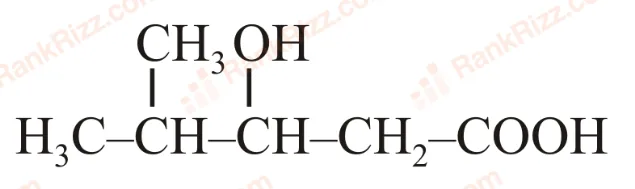
The IUPAC name of the following compound is:

Figure for JEE Main 2019 Chemistry question on IUPAC nomenclature of organic compounds
  1. A

    4-Methyl-3-hydroxypentanoic acid

  2. B

    2-Methyl-3-hydroxybutanoic acid

  3. C

    3-Methyl-4-hydroxypentanoic acid

  4. D

    3-Hydroxy-4-methylpentanoic acid

Q42Nucleophilic addition reactions of carbonyl compoundsTRANSCRIBED

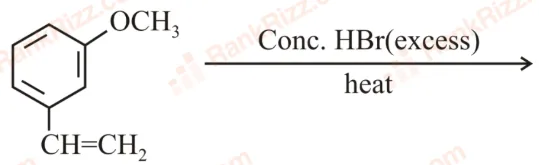
The major product of the following reaction is:

Figure for JEE Main 2019 Chemistry question on Nucleophilic addition reactions of carbonyl compounds
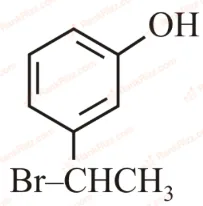
  1. A
    Figure for JEE Main 2019 Chemistry question on Nucleophilic addition reactions of carbonyl compounds
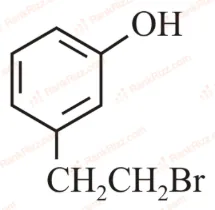
  2. B
    Figure for JEE Main 2019 Chemistry question on Nucleophilic addition reactions of carbonyl compounds
  3. C
    Figure for JEE Main 2019 Chemistry question on Nucleophilic addition reactions of carbonyl compounds
  4. D
    Figure for JEE Main 2019 Chemistry question on Nucleophilic addition reactions of carbonyl compounds
Q43Nucleophilic addition reactions of carbonyl compoundsTRANSCRIBED

The major product of the following reaction is:

Figure for JEE Main 2019 Chemistry question on Nucleophilic addition reactions of carbonyl compounds
  1. A
    Figure for JEE Main 2019 Chemistry question on Nucleophilic addition reactions of carbonyl compounds
  2. B
    Figure for JEE Main 2019 Chemistry question on Nucleophilic addition reactions of carbonyl compounds
  3. C
    Figure for JEE Main 2019 Chemistry question on Nucleophilic addition reactions of carbonyl compounds
  4. D
    Figure for JEE Main 2019 Chemistry question on Nucleophilic addition reactions of carbonyl compounds
Q44Water pollutionTRANSCRIBED

Which is wrong with respect to our responsibility as a human being to protect our environment?

  1. A

    Using plastic bags.

  2. B

    Restricting the use of vehicles

  3. C

    Avoiding the use of floodlighted facilities

  4. D

    Setting up compost tin in gardens

Q45Stratospheric pollution and ozone depletionTRANSCRIBED

Assertion: Ozone is destroyed by CFCs in the upper stratosphere.
Reason: Ozone holes increase the amount of UV radiation reaching the earth.

  1. A

    Assertion and reason are correct, but the reason is not the explanation for the assertion.

  2. B

    The assertion is false, but the reason is correct.

  3. C

    Assertion and reason are incorrect.

  4. D

    Assertion and reason are both correct, and the reason is the correct explanation for the assertion.

Q46Crystal lattices, unit cells and densityTRANSCRIBED

Element B forms ccp structure and A occupies half of the octahedral voids, while oxygen atoms occupy all the tetrahedral voids. The structure of bimetallic oxide is:

  1. A

    A2BO4A_2BO_4

  2. B

    AB2O4AB_2O_4

  3. C

    A2B2OA_2B_2O

  4. D

    A4B2OA_4B_2O

Q47Relative lowering of vapour pressureTRANSCRIBED

The vapour pressures of pure liquids A and B are 400 and 600 mm Hg respectively at 298 K. On mixing the two liquids, the sum of their volumes is equal to the volume of the final mixture. The mole fraction of liquid B is 0.5 in the mixture. The vapour pressure of the final solution, the mole fractions of components A and B in the vapour phase, respectively are:

  1. A

    500 mm Hg, 0.5, 0.5

  2. B

    450 mm Hg, 0.4, 0.6

  3. C

    450 mm Hg, 0.5, 0.5

  4. D

    500 mm Hg, 0.4, 0.6

Q48Rate law, order and molecularityTRANSCRIBED

For the reaction 2A + B →\rightarrow C, the values of initial rate at different reactant concentrations are given in the table below.

[A] (mol L−1^{-1})    [B] (mol L−1^{-1})    Initial Rate (mol L−1^{-1}s−1^{-1})
0.05            0.05                0.045
0.10                0.05                0.090
0.20                0.10                0.72

The rate law for the reactions is:

  1. A

    Rate = k[A]2^{2}[B]

  2. B

    Rate = k[A]2^{2}[B]2^{2}

  3. C

    Rate = k[A][B]

  4. D

    Rate = k[A][B]2^{2}

Q49Adsorption and adsorption isothermsTRANSCRIBED

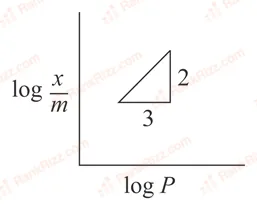
Adsorption of a gas follows Freundlich adsorption isotherm. x is the mass of the gas adsorbed on mass m of the adsorbent. The plot of log⁡xm\log\frac{x}{m} vs log⁡p\log p is shown in the given graph. xm\frac{x}{m} is proportional to:

Figure for JEE Main 2019 Chemistry question on Adsorption and adsorption isotherms
  1. A

    p3p^{3}

  2. B

    p2p^{2}

  3. C

    p2/3p^{2/3}

  4. D

    p3/2p^{3/2}

Q50Thermodynamic principles and Ellingham diagramTRANSCRIBED

Which respect to an ore, Ellingham diagram helps to predict the feasibility of its:

  1. A

    Electrolysis

  2. B

    Zone refining

  3. C

    Vapour phase refining

  4. D

    Thermal reduction

Q51Lanthanoids and lanthanoid contractionTRANSCRIBED

The lanthanide ion that would show colour is:

  1. A

    Lu3+^{3+}

  2. B

    La3+^{3+}

  3. C

    Gd3+^{3+}

  4. D

    Sm3+^{3+}

Q52Colour and magnetic behaviour of complexes from CFTTRANSCRIBED

The correct order of the spin-only magnetic moment of metal ions in the following low-spin complexes, [V(CN)6_6]4−^{4-}, [Fe(CN)6_6]4−^{4-}, [Ru(NH3_3)6_6]3+^{3+} and [Cr(NH3_3)6_6]2+^{2+}, is:

  1. A

    V2+>Cr2+>Ru3+>Fe2+V^{2+} > Cr^{2+} > Ru^{3+} > Fe^{2+}

  2. B

    Cr2+>V2+>Ru3+>Fe2+Cr^{2+} > V^{2+} > Ru^{3+} > Fe^{2+}

  3. C

    Cr2+>Ru3+>Fe2+>V2+Cr^{2+} > Ru^{3+} > Fe^{2+} > V^{2+}

  4. D

    V2+>Ru3+>Cr2+>Fe2+V^{2+} > Ru^{3+} > Cr^{2+} > Fe^{2+}

Q53Werner's theory and coordination terminologyTRANSCRIBED

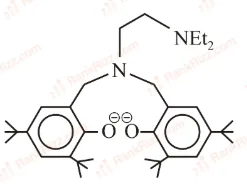
The following ligand is:

Figure for JEE Main 2019 Chemistry question on Werner's theory and coordination terminology
  1. A

    tridentate

  2. B

    hex dentate

  3. C

    bidentate

  4. D

    tetradentate

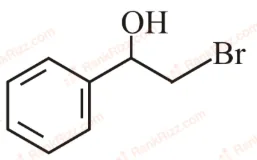
Q54Detection of functional groupsTRANSCRIBED

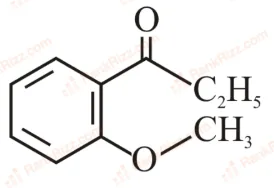
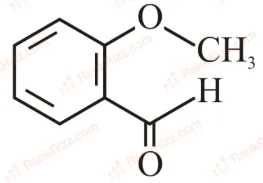
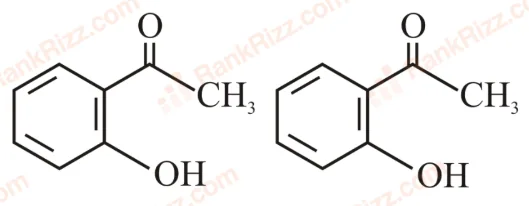
An organic compound neither reacts with neutral ferric chloride solution nor with Fehling solution. It however, reacts with Grignard reagent and gives positive iodoform test. The compound is:

  1. A
    Figure for JEE Main 2019 Chemistry question on Detection of functional groups
  2. B
    Figure for JEE Main 2019 Chemistry question on Detection of functional groups
  3. C
    Figure for JEE Main 2019 Chemistry question on Detection of functional groups
  4. D
    Figure for JEE Main 2019 Chemistry question on Detection of functional groups
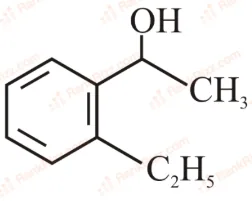
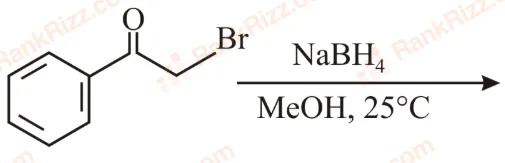
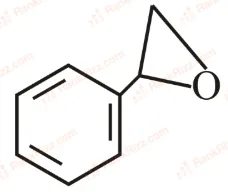
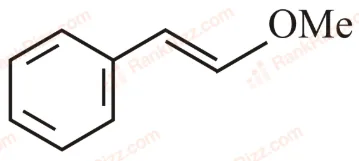
Q55Reactions of phenolsTRANSCRIBED

The major product of the following reaction is:

Figure for JEE Main 2019 Chemistry question on Reactions of phenols


NaBH4_4, MeOH, 25°C

  1. A
    Figure for JEE Main 2019 Chemistry question on Reactions of phenols
  2. B
    Figure for JEE Main 2019 Chemistry question on Reactions of phenols
  3. C
    Figure for JEE Main 2019 Chemistry question on Reactions of phenols
  4. D
    Figure for JEE Main 2019 Chemistry question on Reactions of phenols
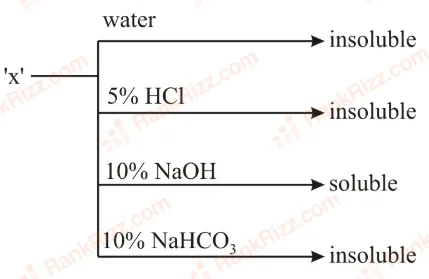
Q56Methods of purification of organic compoundsTRANSCRIBED

An organic compound 'X' showing the following solubility profile is:

Figure for JEE Main 2019 Chemistry question on Methods of purification of organic compounds
  1. A

    m-Cresol

  2. B

    o-Toluidine

  3. C

    Oleic acid

  4. D

    Benzamide

Q57Reactions and tests of aminesTRANSCRIBED

Which of the following amines can be prepared by Gabriel phthalimide reaction?

  1. A

    t-butylamine

  2. B

    n-butylamine

  3. C

    triethylamine

  4. D

    neo-pentylamine

Q58Diazonium saltsTRANSCRIBED

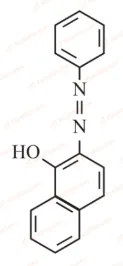
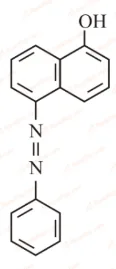
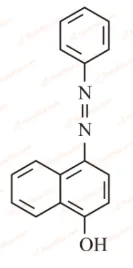
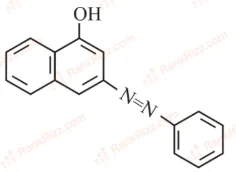
Coupling of benzene diazonium chloride with 1-naphthol in alkaline medium will give:

  1. A
    Figure for JEE Main 2019 Chemistry question on Diazonium salts
  2. B
    Figure for JEE Main 2019 Chemistry question on Diazonium salts
  3. C
    Figure for JEE Main 2019 Chemistry question on Diazonium salts
  4. D
    Figure for JEE Main 2019 Chemistry question on Diazonium salts
Q59Reactions and tests of aminesTRANSCRIBED

In the following compounds, the decreasing order of basic strength will be:

  1. A

    C2H5NH2>NH3>(C2H5)2NHC_2H_5NH_2 > NH_3 > (C_2H_5)_2NH

  2. B

    (C2H5)NH>NH3>C2H5NH2(C_2H_5)NH > NH_3 > C_2H_5NH_2

  3. C

    NH3>C2H5NH2>(C2H5)2NHNH_3 > C_2H_5NH_2 > (C_2H_5)_2NH

  4. D

    (C2H5)2NH>C2H5NH2>NH3(C_2H_5)_2NH > C_2H_5NH_2 > NH_3

Q60Carbohydrates: classification and monosaccharidesTRANSCRIBED

Maltose on treatment with dilute HCl gives:

  1. A

    D-Glucose

  2. B

    D-Fructose

  3. C

    D-Galactose

  4. D

    D-Glucose and D-Fructose

NEXT IN THIS PAPER →Maths, Q61 onwards