RankRizz

JEE Main 11 Jan 2019, Shift 1: Chemistry

The 30 Chemistry questions of JEE Main 11 Jan 2019, Shift 1, numbered across the whole paper. Pick an answer on any question to check it against the key. Free to read, nothing to download.

Chemistry

Q31Units, significant figures and laws of chemical combinationTRANSCRIBED

A 10 mg effervescent tablet containing sodium bicarbonate and oxalic acid releases 0.25 mL of CO2CO_2 at T = 298.15 K and P = 1 bar. If molar volume of CO2CO_2 is 25.0 L under such condition, what is the percentage of sodium bicarbonate in each tablet? [Molar mass of NaHCO3=84NaHCO_3 = 84 g mol−1mol^{-1}]

  1. A

    0.84

  2. B

    33.6

  3. C

    16.8

  4. D

    8.4

Q32Hydrogen spectrum and spectral seriesTRANSCRIBED

Heat treatment of muscular pain involves radiation of wavelength of about 900 nm. Which spectral line of H atom is suitable for this purpose? [RH=1×105 cm−1R_H = 1 \times 10^5 \text{ cm}^{-1}, h=6.6×10⁻³⁴h = 6.6 \times 10^{-34} Js, c=3×10⁸ ms−1c = 3 \times 10^8 \text{ ms}^{-1}]

  1. A

    Paschen, ∞→3\infty \to 3

  2. B

    Paschen, 5→35 \to 3

  3. C

    Balmer, ∞→2\infty \to 2

  4. D

    Lyman, ∞→1\infty \to 1

Q33Atomic and ionic radiiTRANSCRIBED

The correct order of the atomic radii of C, Cs, Al, and S is:

  1. A

    C<S<Al<CsC < S < Al < Cs

  2. B

    S<C<Cs<AlS < C < Cs < Al

  3. C

    S<C<Al<CsS < C < Al < Cs

  4. D

    C<S<Cs<AlC < S < Cs < Al

Q34Entropy and the second lawTRANSCRIBED

Two blocks of the same metal having same mass and at temperature T1T_1, and T2T_2, respectively, are brought in contact with each other and allowed to attain thermal equilibrium at constant pressure. The change in entropy, ΔS\Delta S, for this process is:

  1. A

    Cpln⁡[(T1+T2)24T1T2]C_p \ln\left[\frac{(T_1+T_2)^2}{4T_1 T_2}\right]

  2. B

    2Cpln⁡[(T1+T2)12T1T2]2C_p \ln\left[\frac{(T_1+T_2)^{\frac{1}{2}}}{T_1 T_2}\right]

  3. C

    2CPln⁡(T1+T24T1T2)2C_P \ln\left(\frac{T_1+T_2}{4T_1 T_2}\right)

  4. D

    2CPln⁡[T1+T22T1T2]2C_P \ln\left[\frac{T_1+T_2}{2\sqrt{T_1 T_2}}\right]

Q35Gibbs energy and spontaneityTRANSCRIBED

For the chemical reaction X⇌YX \rightleftharpoons Y, the standard reaction Gibbs energy depends on temperature T (in K) as ΔrG°\Delta_r G° (in kJ mol−1^{-1}) =120−38T= 120 - \frac{3}{8}T. The major component of the reaction mixture at T is:

  1. A

    Y if T = 300 K

  2. B

    Y if T = 280 K

  3. C

    X if T = 350 K

  4. D

    X if T = 315 K

Q36Law of mass action and equilibrium constants Kc and KpTRANSCRIBED

Consider the reaction N2(g)+3H2(g)⇌2NH3(g)N_2(g) + 3H_2(g) \rightleftharpoons 2NH_3(g). The equilibrium constant of the above reaction is KPK_P. If pure ammonia is left to dissociate, the partial pressure of ammonia at equilibrium is given by (Assume that PNH3≪PtotalP_{NH_3} \ll P_{total} at equilibrium)

  1. A

    33/2KP1/2P216\frac{3^{3/2} K_P^{1/2} P^2}{16}

  2. B

    KP1/2P216\frac{K_P^{1/2} P^2}{16}

  3. C

    KP1/2P24\frac{K_P^{1/2} P^2}{4}

  4. D

    33/2KP1/2P24\frac{3^{3/2} K_P^{1/2} P^2}{4}

Q37Valency, oxidation states and nature of oxidesTRANSCRIBED

The amphoteric hydroxide is:

  1. A

    Be(OH)2Be(OH)_2

  2. B

    Ca(OH)2Ca(OH)_2

  3. C

    Mg(OH)2Mg(OH)_2

  4. D

    Sr(OH)Sr(OH)

Q38Position, isotopes, preparation and properties of dihydrogenTRANSCRIBED

The correct statements among (a) to (d) regarding H2H_2 as a fuel are: (i) It produces less pollutants than petrol. (ii) A cylinder of compressed dihydrogen weighs ~ 30 times more than a petrol tank producing the same amount of energy. (iii) Dihydrogen is stored in tanks of metal alloys like NaNi5NaNi_5. (iv) On combustion, values of energy released per gram of liquid dihydrogen and LPG are 50 and 142 kJ, respectively.

  1. A

    (ii) and (iv) only

  2. B

    (i) and (iii) only

  3. C

    (i), (iii) and (iv) only

  4. D

    (i), (ii) and (iii) only

Q39HydridesTRANSCRIBED

NaH is an example of:

  1. A

    Electron-rich hydride

  2. B

    Metallic hydride

  3. C

    Saline hydride

  4. D

    Molecular hydride

Q40AromaticityTRANSCRIBED

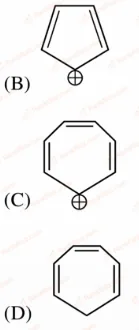
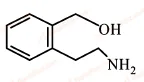
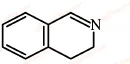
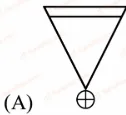
Which compound(s) out of the following is/are not aromatic?

Figure for JEE Main 2019 Chemistry question on Aromaticity Figure for JEE Main 2019 Chemistry question on Aromaticity
  1. A

    (B) and (D)

  2. B

    (C) and (D)

  3. C

    (B)

  4. D

    (A) and (C)

Q41Methods of purification of organic compoundsTRANSCRIBED

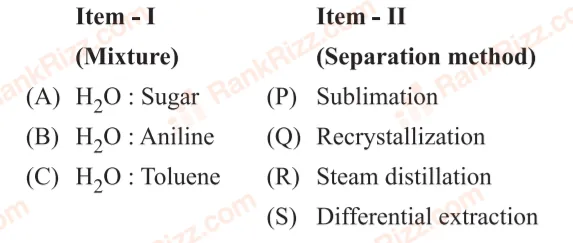
The correct match between items I and II is:

Figure for JEE Main 2019 Chemistry question on Methods of purification of organic compounds
  1. A

    (A) →\rightarrow (S); (B) →\rightarrow (R); (C) →\rightarrow (P)

  2. B

    (A) →\rightarrow (Q); (B) →\rightarrow (R); (C) →\rightarrow (S)

  3. C

    (A) →\rightarrow (R); (B) →\rightarrow (P); (C) →\rightarrow (S)

  4. D

    (A) →\rightarrow (Q); (B) →\rightarrow (R); (C) →\rightarrow (P)

Q42Percentage composition, empirical and molecular formulaTRANSCRIBED

An organic compound is estimated through Dumas method and was found to evolve 6 moles of CO2CO_2, 4 moles of H2OH_2O and 1 mole of nitrogen gas. The formula of the compound is:

  1. A

    C12H8NC_{12}H_8 N

  2. B

    C12H8N2C_{12}H_8 N_2

  3. C

    C6H8N2C_6H_8 N_2

  4. D

    C6H8NC_6H_8 N

Q43Air pollution: tropospheric pollutants, smog, acid rain and greenhouse effectTRANSCRIBED

Peroxyacetyl nitrate (PAN), an eye irritant, is produced by:

  1. A

    Classical smog

  2. B

    Acid rain

  3. C

    Organic waste

  4. D

    Photochemical smog

Q44Water pollutionTRANSCRIBED

The concentration of dissolved oxygen (DO) in cold water can go upto

  1. A

    14 ppm

  2. B

    8 ppm

  3. C

    10 ppm

  4. D

    16 ppm

Q45Crystal lattices, unit cells and densityTRANSCRIBED

A solid having density of 9×1039 \times 10^3 kg m−3^{-3} forms face centred cubic crystals of edge length 2002200\sqrt{2} pm. What is the molar mass of the solid? [Avogadro constant ≈6×10²³\approx 6 \times 10^{23} mol−1^{-1}, π≈3\pi \approx 3]

  1. A

    0.0432 kg mol−1^{-1}

  2. B

    0.0216 kg mol−1^{-1}

  3. C

    0.0305 kg mol−1^{-1}

  4. D

    0.4320 kg mol−1^{-1}

Q46Abnormal molar mass and van't Hoff factorTRANSCRIBED

The freezing point of a diluted milk sample is found to be −0.2°C-0.2°C, while it should have been −0.5°C-0.5°C for pure milk. How much water has been added to pure milk to make the diluted sample?

  1. A

    1 cup of water to 2 cups of pure milk

  2. B

    3 cups of water to 2 cups of pure milk

  3. C

    1 cup of water to 3 cups of pure milk

  4. D

    2 cups of water to 3 cups of pure milk

Q47Electrode potentials, electrochemical series and cell EMFTRANSCRIBED

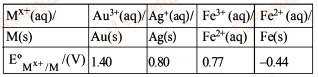
For the cell Zn(s)∣Zn2+(aq)∣∣Mx+(aq)∣M(s)Zn(s) | Zn^{2+}(aq) || M^{x+}(aq) | M(s), different half cells and their standard electrode potentials are given below:

Figure for JEE Main 2019 Chemistry question on Electrode potentials, electrochemical series and cell EMF

If E°Zn2+/Zn=−0.76E°_{Zn^{2+}/Zn} = -0.76 V, which cathode will give a maximum value of E°cellE°_{cell} per electron transferred?

  1. A

    Ag+/AgAg^+/Ag

  2. B

    Fe3+/Fe2+Fe^{3+}/Fe^{2+}

  3. C

    Au3+/AuAu^{3+}/Au

  4. D

    Fe2+/FeFe^{2+}/Fe

Q48Arrhenius equation and activation energyTRANSCRIBED

If a reaction follows the Arrhenius equation, the plot ln⁡k\ln k vs 1(RT)\frac{1}{(RT)} gives straight line with a gradient (−y)(-y) unit. The energy required to activate the reactant is:
  1. A

    y/Ry/R unit

  2. B

    yy unit

  3. C

    yRyR unit

  4. D

    −y-y unit

Q49Properties of colloids and coagulationTRANSCRIBED

An example of solid sol is:

  1. A

    Paint

  2. B

    Gem stones

  3. C

    Butter

  4. D

    Hair cream

Q50Occurrence of metals: minerals and oresTRANSCRIBED

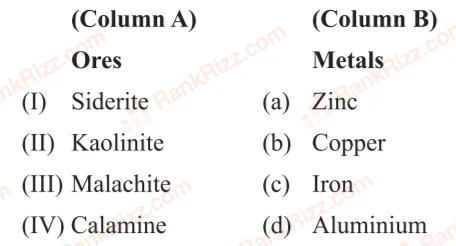
Match the ores (column A) with the metals (column B):

Figure for JEE Main 2019 Chemistry question on Occurrence of metals: minerals and ores
  1. A

    (I)-(a); (II)-(b); (III)-(c); (IV)-(d)

  2. B

    (I)-(c); (II)-(d); (III)-(b); (IV)-(a)

  3. C

    (I)-(c); (II)-(d); (III)-(a); (IV)-(b)

  4. D

    (I)-(b); (II)-(c); (III)-(d); (IV)-(a)

Q51Group 14: trends and carbon allotropesTRANSCRIBED

The chloride that CANNOT get hydrolysed is:

  1. A

    PbCl4PbCl_4

  2. B

    CCl4CCl_4

  3. C

    SnCl4SnCl_4

  4. D

    SiCl4SiCl_4

Q52General properties of transition elementsTRANSCRIBED

The element that usually does NOT show variable oxidation states is:

  1. A

    Cu

  2. B

    Ti

  3. C

    Sc

  4. D

    V

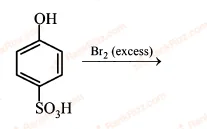
Q53Electrophilic substitution of anilineTRANSCRIBED

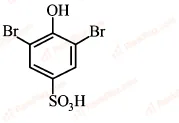
The major product of the following reaction is:

Figure for JEE Main 2019 Chemistry question on Electrophilic substitution of aniline
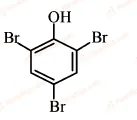
  1. A
    Figure for JEE Main 2019 Chemistry question on Electrophilic substitution of aniline
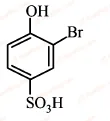
  2. B
    Figure for JEE Main 2019 Chemistry question on Electrophilic substitution of aniline
  3. C
    Figure for JEE Main 2019 Chemistry question on Electrophilic substitution of aniline
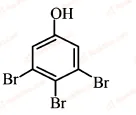
  4. D
    Figure for JEE Main 2019 Chemistry question on Electrophilic substitution of aniline
Q55Properties and reactions of alcoholsTRANSCRIBED

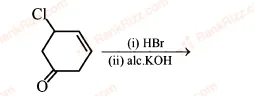
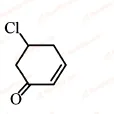
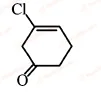
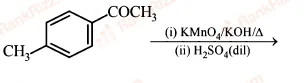
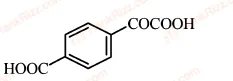
The major product of the following reaction is:

Figure for JEE Main 2019 Chemistry question on Properties and reactions of alcohols
  1. A
    Figure for JEE Main 2019 Chemistry question on Properties and reactions of alcohols
  2. B
    Figure for JEE Main 2019 Chemistry question on Properties and reactions of alcohols
  3. C
    Figure for JEE Main 2019 Chemistry question on Properties and reactions of alcohols
  4. D
    Figure for JEE Main 2019 Chemistry question on Properties and reactions of alcohols
Q56Acid derivatives: esters, amides, anhydrides and acid chloridesTRANSCRIBED

The major product of the following reaction is:

Figure for JEE Main 2019 Chemistry question on Acid derivatives: esters, amides, anhydrides and acid chlorides
  1. A
    Figure for JEE Main 2019 Chemistry question on Acid derivatives: esters, amides, anhydrides and acid chlorides
  2. B
    Figure for JEE Main 2019 Chemistry question on Acid derivatives: esters, amides, anhydrides and acid chlorides
  3. C
    Figure for JEE Main 2019 Chemistry question on Acid derivatives: esters, amides, anhydrides and acid chlorides
  4. D
    Figure for JEE Main 2019 Chemistry question on Acid derivatives: esters, amides, anhydrides and acid chlorides
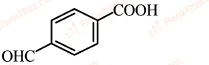
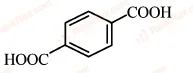
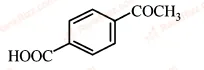
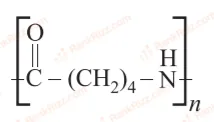
Q57Important polymers and their monomersTRANSCRIBED

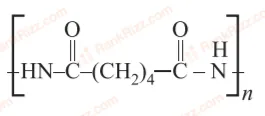
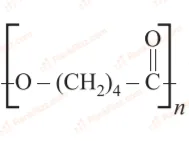
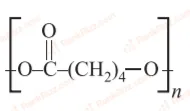
The polymer obtained from the following reactions is:

Figure for JEE Main 2019 Chemistry question on Important polymers and their monomers
  1. A
    Figure for JEE Main 2019 Chemistry question on Important polymers and their monomers
  2. B
    Figure for JEE Main 2019 Chemistry question on Important polymers and their monomers
  3. C
    Figure for JEE Main 2019 Chemistry question on Important polymers and their monomers
  4. D
    Figure for JEE Main 2019 Chemistry question on Important polymers and their monomers
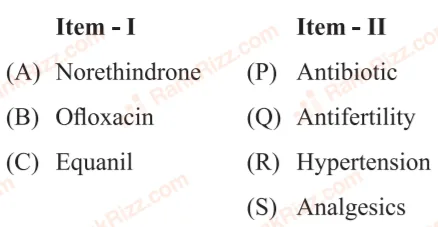
Q58Drugs and medicinesTRANSCRIBED

The correct match between item (I) and item (II) is:

Figure for JEE Main 2019 Chemistry question on Drugs and medicines
  1. A

    (A) →\rightarrow (Q); (B) →\rightarrow (R); (C) →\rightarrow (S)

  2. B

    (A) →\rightarrow (Q); (B) →\rightarrow (P); (C) →\rightarrow (R)

  3. C

    (A) →\rightarrow (R); (B) →\rightarrow (P); (C) →\rightarrow (S)

  4. D

    (A) →\rightarrow (R); (B) →\rightarrow (P); (C) →\rightarrow (R)

Q59Stability and applications of coordination compoundsTRANSCRIBED

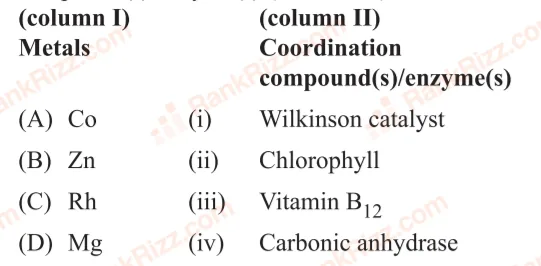
Match the metals (column I) with the coordination compound(s)/enzyme(s) (column II):

Figure for JEE Main 2019 Chemistry question on Stability and applications of coordination compounds
  1. A

    (A)-(iii); (B)-(iv); (C)-(i); (D)-(ii)

  2. B

    (A)-(i); (B)-(ii); (C)-(iii); (D)-(iv)

  3. C

    (A)-(ii); (B)-(i); (C)-(iv); (D)-(iii)

  4. D

    (A)-(iv); (B)-(iii); (C)-(i); (D)-(ii)

Q60Vitamins and hormonesTRANSCRIBED

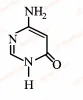
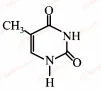
Among the following compounds, which one is found in RNA?

  1. A
    Figure for JEE Main 2019 Chemistry question on Vitamins and hormones
  2. B
    Figure for JEE Main 2019 Chemistry question on Vitamins and hormones
  3. C
    Figure for JEE Main 2019 Chemistry question on Vitamins and hormones
  4. D
    Figure for JEE Main 2019 Chemistry question on Vitamins and hormones
NEXT IN THIS PAPER →Maths, Q61 onwards