RankRizzStart free

Wave Optics — JEE Main Previous Year Questions

Every Wave Optics question JEE Main has set, grouped by the idea it tests rather than the order of the syllabus. 198 questions across 6 distinct ideas. Free to read, answer key on every one.

Questions

198

Distinct ideas

6

Share of marks

4.8%

Difficulty

MEDIUM

The ideas inside Wave Optics

A chapter is not one subject — it is a handful of procedures the examiner reuses. These are the ones Wave Optics questions actually test.

01Wavefronts and Huygens' principleset 50×
02Young's double slit experiment: fringe width and intensityset 68×
03YDSE with slabs, white light and modified setupsset 1×
04Single slit diffractionset 29×
05Resolving power of microscopes and telescopesset 12×
06Polarisation: Malus's law and Brewster's lawset 38×

Every Wave Optics question

121–140 OF 198 · NEWEST FIRST

JEE MAIN 2020 · 03 SEP S1Wavefronts and Huygens' principleTRANSCRIBED

In a Young's double slit experiment, light of 500 nm is used to produce and interference pattern. When the distance between the slits is 0.05 mm, the angular width (in degree) of the fringes formed on the distance screen is close to:

  1. A

    0.17°

  2. B

    0.57°

  3. C

    1.7°

  4. D

    0.07°

JEE MAIN 2020 · 06 SEP S1Wavefronts and Huygens' principleTRANSCRIBED

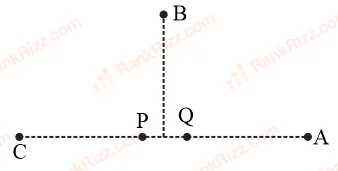
In the figure below, and are two equally intense coherent sources emitting radiation of wavelength . The separation between P and Q is and the phase of P is ahead of that of Q by . A, B and C are three distinct point of observation, each equidistant from the midpoint of PQ. The intensities of radiation at A, B, C will be in the ratio:

  1. A

    0 : 1 : 4

  2. B

    2 : 1 : 0

  3. C

    0 : 1 : 2

  4. D

    4 : 1 : 0

JEE MAIN 2020 · 07 JAN S1Polarisation: Malus's law and Brewster's lawTRANSCRIBED

A polarizer - analyser set is adjusted such that the intensity of light coming out of the analyser is just 36% of the original intensity. Assuming that the polarizer - analyser set does not absorb any light, the angle by which the analyser needs to be rotated further, to reduce the output intensity to zero, is ()

  1. A

    53

  2. B

    37

  3. C

    90

  4. D

    45

JEE MAIN 2020 · 04 SEP S1Polarisation: Malus's law and Brewster's lawTRANSCRIBED

A beam of plane polarized light of large cross-sectional area and uniform intensity of 3.3 W m falls normally on a polarizer (cross-sectional area m), which rotates about its axis with an angular speed of 31.4 rad s. The energy of light passing through the polarizer per revolution, is close to:

  1. A

    J

  2. B

    J

  3. C

    J

  4. D

    J

JEE MAIN 2020 · 02 SEP S2Wavefronts and Huygens' principleTRANSCRIBED

In a Young's double slit experiment, 16 fringes are observed in a certain segment of the screen when light of wavelength 700 nm is used. If the wavelength of light is changed to 400 nm, the number of fringes observed in the same segment of the screen would be:

  1. A

    24

  2. B

    30

  3. C

    18

  4. D

    28

JEE MAIN 2020 · 07 JAN S1Single slit diffractionTRANSCRIBED

Visible light of wavelength cm falls normally on a single slit and produces a diffraction pattern. It is found that the second diffraction minimum is at 60 from the central maximum. If the first minimum is produced at , then is close to

  1. A

    20

  2. B

    30

  3. C

    25

  4. D

    45

JEE MAIN 2020 · 09 JAN S1Resolving power of microscopes and telescopesTRANSCRIBED

The aperture diameter of a telescope is m. The separation between the moon and the earth is km. With light of wavelength Å, the minimum separation between objects on the surface of moon, so that they are just resolved, is close to:

  1. A

    60 m

  2. B

    20 m

  3. C

    200 m

  4. D

    600 m

JEE MAIN 2020 · 03 SEP S2Wavefronts and Huygens' principleTRANSCRIBED

Two light waves having the same wavelength in vacuum are in phase initially. Then the first wave travels a path through a medium of refractive index while the second wave travels a path of length through a medium of refractive index . After this the phase difference between the two waves is:

  1. A

  2. B

  3. C

  4. D

JEE MAIN 2020 · 07 JAN S2Young's double slit experiment: fringe width and intensityTRANSCRIBED

In a Young's double slit experiment, the separation between the slits is 0.15 mm. In the experiment, a source of light of wavelength 589 nm is used and the interference pattern is observed on a screen kept 1.5 m away. The separation between the successive bright fringes on the screen is:

  1. A

    6.9 mm

  2. B

    3.9 mm

  3. C

    5.9 mm

  4. D

    4.9 mm

JEE MAIN 2020 · 02 SEP S1Wavefronts and Huygens' principleTRANSCRIBED

Interference fringes are observed on a screen by illuminating two thin slits 1 mm apart with a light source . The distance between the screen and the slits is 100 cm. If a bright fringe is observed on a screen at distance of 1.27 mm from the central bright fringe, then the path difference between the waves, which are reaching this point from the slits is close to:

  1. A

    1.27 m

  2. B

    2.87 nm

  3. C

    2 nm

  4. D

    2.05 m

JEE MAIN 2020 · 08 JAN S2Wavefronts and Huygens' principleTRANSCRIBED

In a double-slit experiment, at a certain point on the screen the path difference between the two interfering waves is th of a wavelength. The ratio of the intensity of light at that point to that at the center of a bright fringe is:

  1. A

    0.853

  2. B

    0.672

  3. C

    0.568

  4. D

    0.760

JEE MAIN 2020 · 09 JAN S2Young's double slit experiment: fringe width and intensityTRANSCRIBED

In a Young's double slit experiment 15 fringes are observed on a small portion of the screen when light of wavelength 500 nm is used. Ten fringes are observed on the same section of the screen when another light source of wavelength is used. Then the value of is (in nm) ___________.

JEE MAIN 2020 · 06 SEP S2Wavefronts and Huygens' principleTRANSCRIBED

A Young's double-slit experiment is performed using monochromatic light of wavelength . The intensity of light at a point on the screen, where the path difference is , is units. The intensity of light at a point where the path difference is is given by , where n is an integer. The value of n is___

JEE MAIN 2020 · 04 SEP S2Single slit diffractionTRANSCRIBED

Orange light of wavelength m illuminates a single slit of width m. The maximum possible number of diffraction minima produced on both sides of the central maximum is __________

JEE MAIN 2019 · 12 APR S2Polarisation: Malus's law and Brewster's lawTRANSCRIBED

A system of three polarizers P, P, P is set up such that the pass axis of P is crossed with respect to that of P. The pass axis of P is inclined at 60° to the pass axis of P. When a beam of unpolarized light of intensity I is incident on P, the intensity of light transmitted by the three polarizers is I. The ratio (I/I) equals (nearly):

  1. A

    5.33

  2. B

    16.00

  3. C

    1.80

  4. D

    10.67

JEE MAIN 2019 · 11 JAN S1Wavefronts and Huygens' principleTRANSCRIBED

In a Young's double slit experiment, the path difference, at a certain point on the screen, between two interfering waves is th of wavelength. The ratio of the intensity at this point to that at the centre of a bright fringe is close to:

  1. A

    0.74

  2. B

    0.85

  3. C

    0.94

  4. D

    0.8

JEE MAIN 2019 · 09 JAN S2Young's double slit experiment: fringe width and intensityTRANSCRIBED

In a young's double slit experiment, the slits are placed 0.320 mm apart. Light of wavelength nm is incident on the slits. The total number of bright fringes that are observed in the angular range is:

  1. A

    321

  2. B

    641

  3. C

    320

  4. D

    640

JEE MAIN 2019 · 11 JAN S2Single slit diffractionTRANSCRIBED

In a double-slit experiment, green light (5303 Å) falls on a double slit having a separation of and a width of . The number of bright fringes between the first and the second diffraction minima is

  1. A

    10

  2. B

    5

  3. C

    4

  4. D

    9

JEE MAIN 2019 · 08 APR S2Resolving power of microscopes and telescopesTRANSCRIBED

Calculate the limit of resolution of a telescope objective having a diameter of 200 cm, if it has to detect light of wavelength 500 nm coming from a star.

  1. A

    radian

  2. B

    radian

  3. C

    radian

  4. D

    radian

JEE MAIN 2019 · 10 APR S2Wavefronts and Huygens' principleTRANSCRIBED

In a Young's double-slit experiment, the ratio of the slit's width is 4:1. The ratio of the intensity of maxima to minima, close to the central fringe on the screen, will be

  1. A

    25 : 9

  2. B

    9 : 1

  3. C

    : 16

  4. D

    4 : 1